

Executive Overview
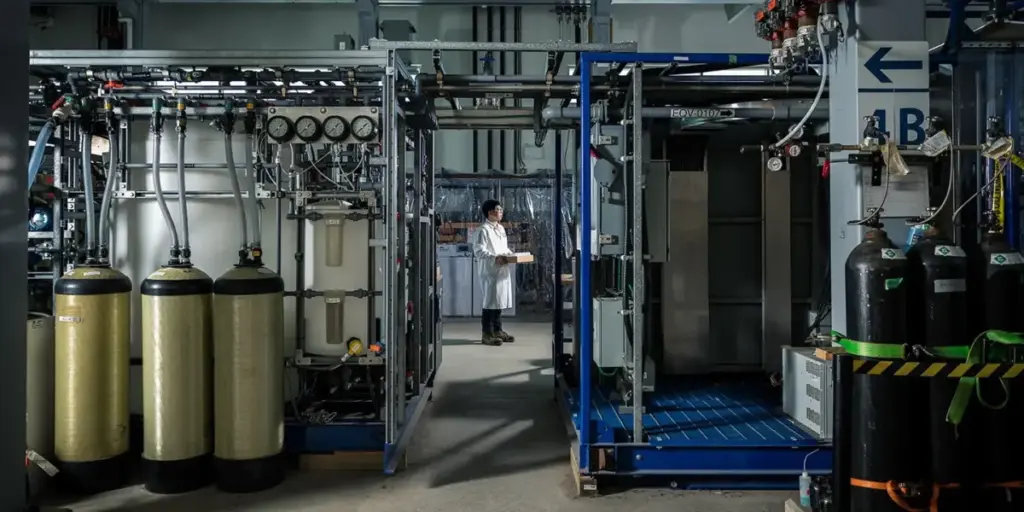
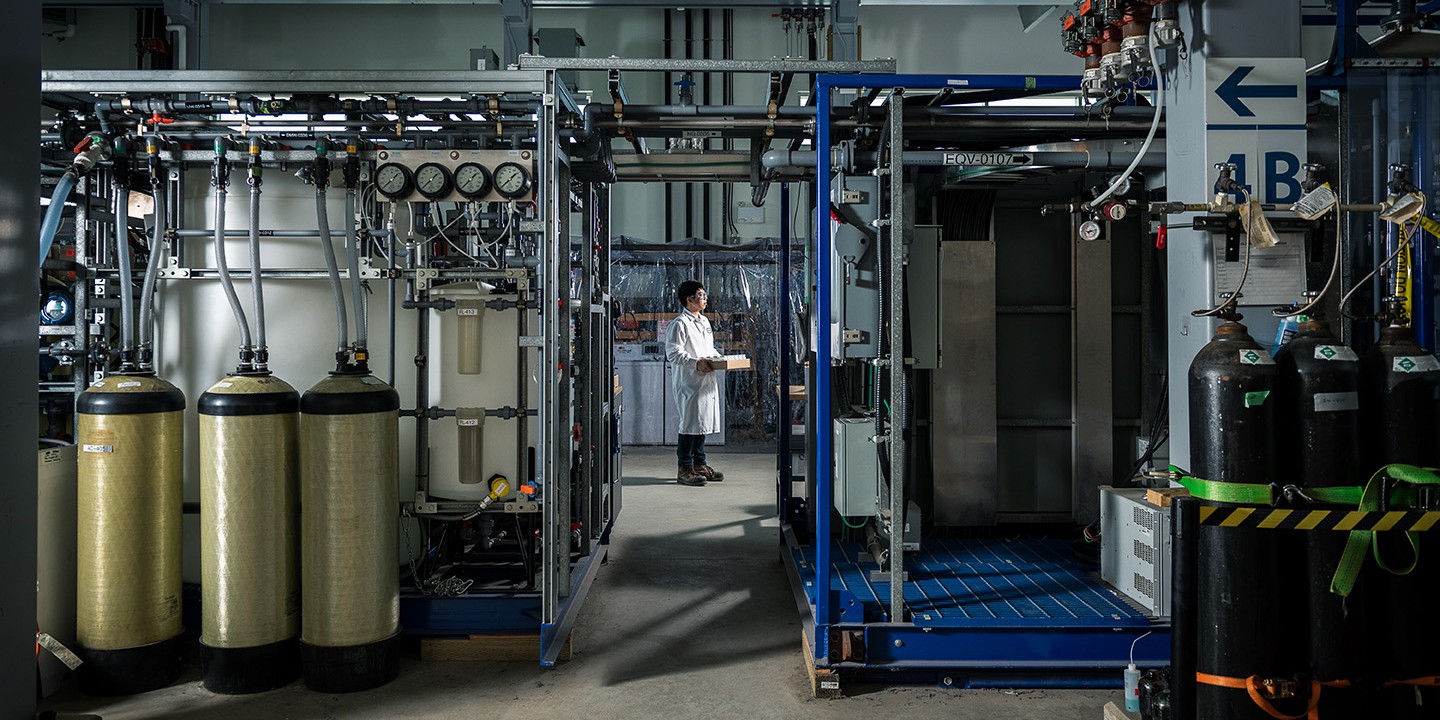
In a milestone development for the North American clean energy supply chain, clean-tech innovator Mangrove Lithium has officially inaugurated the continent’s first commercial electrochemical lithium refinery. Located in Delta, British Columbia, the state-of-the-art facility—commercially designated as the Single Stack Plant (SSP)—represents a monumental shift in how the critical raw materials essential for electric vehicles (EVs) are processed.
Operating at a nameplate capacity of 1,000 metric tonnes of battery-grade lithium per year, the Delta facility bridges a long-standing chasm in North America’s green industrial strategy. Historically, the Western hemisphere has excelled at mining raw minerals or assembling finished battery packs and vehicles, but it has suffered from a critical vulnerability in the middle: the refining bottleneck. The vast majority of the world’s lithium has traditionally been shipped overseas for chemical conversion, introducing severe logistical vulnerabilities, high carbon footprints, and systemic price volatility.
Mangrove Lithium’s proprietary electrochemical technology offers an elegant and sustainable antidote to this structural weakness. By eschewing conventional, highly toxic chemical refining methods in favor of a cleaner, more flexible, and economically viable electrochemical process, the company is proving that domestic refining is not only possible but commercially advantageous.
As North America races to secure its automotive future against the backdrop of intensifying geopolitical trade friction and soaring global EV adoption, the opening of the SSP marks the dawn of a truly indigenous, "mine-to-cathode" supply ecosystem.
Detailed Chronology and Facility Overview
The ribbon-cutting ceremony in Delta, British Columbia, represents the culmination of years of targeted research, engineering breakthroughs, and strategic scaling by Mangrove Lithium. The journey from bench-scale chemistry to a commercial-scale plant has been marked by methodical milestones designed to de-risk the technology before widespread deployment.
The Evolution of the Single Stack Plant (SSP)
- Pre-Commercial Development & Pilots: Long before breaking ground in Delta, Mangrove spent years validating its electrochemical platform through pilot operations. These initial phases proved that the technology could process diverse feedstock streams—ranging from brine deposits to hard-rock mineral extracts—without relying on the heavy, hazardous acid washes characteristic of legacy refining methodologies.
- Site Selection and Groundbreaking: The company selected Delta, British Columbia, not only for its strategic logistical advantages as a Pacific gateway but also for its proximity to a burgeoning Canadian clean-tech talent pool. The facility was engineered to serve as both the company’s corporate headquarters and its primary operational proving ground.
- Commissioning and Commercial Launch: Following rigorous dry and wet commissioning phases, the Single Stack Plant officially came online, achieving its initial output milestones. Operating at peak capacity, the 1,000-tonne-per-year facility is capable of processing enough battery-grade lithium hydroxide or lithium carbonate to supply roughly 25,000 electric vehicles annually.
Beyond its immediate production metrics, the SSP functions as an operational template for Mangrove’s ambitious expansion roadmap. By demonstrating continuous, reliable, and commercially viable electrochemical processing at scale, the plant lays the groundwork for the company’s next evolutionary leap: a massive, industrial-scale facility in Eastern Canada designed to supercharge the nation’s domestic supply network.
Supporting Context & Metrics: The Geopolitics of Lithium Refining
To understand the true significance of Mangrove’s commercial breakthrough, one must examine the macroeconomic realities of the global lithium market.
The Processing Paradox
For over a decade, Western governments have heavily subsidized EV adoption, offering consumer rebates, tax credits, and capital grants for gigafactories. However, a glaring structural flaw has persisted: North America mines a fraction of the world’s lithium and refines even less. Historically, raw spodumene concentrate mined in regions like Western Australia or Quebec was routinely loaded onto cargo ships, sent thousands of miles across the Pacific to overseas refineries—predominantly in Asia—and then shipped back as refined battery-grade chemical compounds to North American battery cell manufacturers.
This trans-oceanic supply chain model exposes automakers to severe vulnerabilities:
- Logistical Bottlenecks: Global shipping disruptions, port congestions, and geopolitical flashpoints can instantly choke the flow of critical battery inputs.
- Carbon Penalties: Hauling raw materials across oceans just to process them using carbon-intensive, legacy chemical methodologies completely undercuts the environmental ethos of the electric vehicle movement.
- Price Volatility: Heavy reliance on centralized overseas processing hubs leaves North American original equipment manufacturers (OEMs) entirely at the mercy of foreign market fluctuations and export restrictions.
Mangrove’s Electrochemical Advantage
Mangrove Lithium addresses these vulnerabilities at their core through its proprietary electrochemical conversion process. Traditional lithium refining relies heavily on massive quantities of reagents, fresh water, and strong acids to strip impurities and upgrade the material to battery grade. This process generates substantial waste streams and requires rigorous, expensive tailing management.
In contrast, Mangrove’s electrochemical approach utilizes electrical current to drive chemical separations and conversions directly. This method offers several distinct advantages:
- Feedstock Versatility: The technology can seamlessly process unconventional or complex lithium feeds, including recycled battery black mass and varied brine compositions.
- Reduced Chemical Footprint: By minimizing the use of external chemical reagents, the process drastically cuts down hazardous waste generation and lowers operational expenditure.
- Decarbonization Potential: When powered by clean regional grids—such as British Columbia’s hydroelectric-dominated energy network—the refining process achieves a near-zero carbon footprint, aligning perfectly with Scope 3 emissions targets demanded by modern automakers.
Strategic Partnerships and Funding: Building the "Mine-to-Cathode" Pipeline
While the Delta facility represents a vital proof-of-concept, Mangrove Lithium’s long-term vision encompasses a fully integrated, domestic North American supply chain. Achieving this requires bridging the gap between raw mineral extraction and advanced chemical processing—a concept industry insiders refer to as "mine-to-cathode."
Scaling Up in Eastern Canada
Building upon the momentum of the Delta plant, Mangrove has unveiled plans for a second, vastly larger facility to be established in Eastern Canada. Designed to process hard-rock spodumene concentrates, this upcoming industrial site will operate at a scale capable of supplying battery-grade materials for approximately 500,000 electric vehicles annually—a fifty-fold increase over the Delta SSP’s capacity.
Government Backing and Public-Private Synergy
To accelerate the engineering and piloting studies required for the Eastern Canadian facility, the Canadian federal government has stepped in with substantial financial backing. Natural Resources Canada (NRCan) has awarded Mangrove conditional funding support of up to $21.88 million CAD through its flagship Critical Minerals Research, Development, and Demonstration (CMRDD) program.

This public-private partnership underscores the strategic importance Ottawa places on critical mineral processing. By co-funding early-stage engineering and piloting for domestic refining infrastructure, the Canadian government is actively de-risking private capital investment in the green transition.
Securing the Feedstock: The Élévra Partnership
A refinery is only as reliable as its feedstock supply. To ensure a steady, secure stream of raw materials for its future operations, Mangrove has signed a crucial Memorandum of Understanding (MOU) with prominent lithium developer Élévra.
Under the terms of the MOU, Mangrove plans to source raw spodumene directly from Élévra’s mining operations in Quebec. This direct-to-refinery pipeline bypasses traditional international trading brokers, locking in predictable input costs and guaranteeing a secure, traceable domestic supply chain. By keeping the entire lifecycle—from the rock pulled out of the Canadian Shield to the refined chemical powders destined for domestic battery cells—within national borders, Canada is establishing a blueprint for economic resilience and national security.
Official Statements and Industry Leadership
The inauguration of North America’s first commercial electrochemical lithium refinery drew praise from industry pioneers, investors, and political leaders alike, all of whom recognized the systemic importance of the event.
Saad Dara, CEO and Founder of Mangrove Lithium, delivered a visionary address during the ribbon-cutting ceremony in Delta:
"This is a landmark moment not just for Mangrove, but for Canada. By commissioning the first commercial electrochemical lithium refinery in North America, we are proving that lithium can be refined domestically, sustainably, and competitively. This facility is an important step toward a fully Canadian lithium supply chain, one that strengthens our energy security, accelerates the transition to EVs, and positions Canada as a global leader in critical mineral processing."
Industry analysts point out that Dara’s emphasis on "competitive domestic refining" is the crux of the matter. For decades, skeptics argued that Western environmental regulations and labor costs would make domestic chemical processing economically unviable against heavily subsidized foreign competitors. Mangrove’s technological innovation shatters that paradigm, proving that process engineering efficiencies can offset geographical cost disparities while simultaneously meeting the stringent ESG (Environmental, Social, and Governance) standards demanded by institutional investors and global automakers.

Future Outlook: A New Era for North American Energy Independence
The successful commissioning of Mangrove Lithium’s Single Stack Plant in Delta, British Columbia, is much more than a corporate milestone for a single clean-tech startup—it is a watershed moment for North American industrial policy.
As the United States and Canada continue to roll out aggressive legislative frameworks aimed at decoupling critical supply chains from geopolitical adversaries—such as the United States’ Inflation Reduction Act (IRA) and Canada’s complementary Critical Minerals Strategy—domestic processing capacity has become the ultimate bottleneck and the ultimate prize. Automakers are increasingly legally mandated to source battery components from domestic or free-trade partner nations to qualify for lucrative consumer tax credits.
By establishing a proven, scalable, and environmentally sustainable electrochemical refining method, Mangrove Lithium has positioned itself at the absolute center of this industrial transformation.
Looking ahead over the next five to ten years, the trajectory is clear. As the Delta facility ramps up to full utilization, and as engineering studies for the massive Eastern Canadian spodumene-processing facility advance with the backing of Natural Resources Canada, the country is well on its way to realizing a fully integrated, domestic "mine-to-cathode" ecosystem.
For the North American electric vehicle market, this means enhanced price stability, guaranteed supply security, and a radically reduced carbon footprint. For Canada, it marks a historic economic evolution: transitioning from a simple exporter of raw earth into a sophisticated, high-tech global powerhouse in critical mineral processing and advanced energy manufacturing.



