Executive Overview
The global acceleration toward a low-carbon future—anchored by electric vehicles, wind turbines, and massive solar arrays—depends on an unprecedented appetite for transition minerals. Lithium, cobalt, nickel, copper, and rare earth elements have become the new oil, touted as the fundamental building blocks of climate salvation under the Paris Agreement. Yet, beneath the veneer of green technology lies a sobering reality: the financing mechanisms driving this transition are replicating, and in some cases exacerbating, the historical exploitation of the Global South.
According to a landmark report released by the International Accountability Project (IAP), major international development banks are heavily bankrolling transition mineral projects that are systematically linked to severe environmental degradation, systemic human rights violations, and the criminalization of local communities. Analyzing 77 projects approved globally between 2023 and 2025, the IAP’s newly launched Transition Minerals Finance Tracker reveals an alarming trend: more than half of all analyzed projects—and an staggering three-quarters of those situated in Africa—exhibit evidence of actual, probable, or potential harm to local populations.
Rather than ushering in a sustainable, equitable era of clean energy, the current financial architecture risks institutionalizing a "green colonialism." In this paradigm, developing nations in the Global South bear the toxic externalities—including water depletion, heavy metal contamination, forced displacement, and the evisceration of indigenous livelihoods—while the economic dividends and refined tech components are shipped directly to the Global North. As geopolitical rivalries intensify over critical mineral supply chains, advocates warn that unless rigorous environmental and social safeguards are urgently instituted, the green energy transition will be built upon a foundation of profound injustice.
Detailed Chronology: The Evolution of the Critical Minerals Boom and Oversight Failures
To understand the current crisis, one must trace the convergence of global climate policy, escalating geopolitical competition, and the institutional mandates of international development finance.
2015–2020: The Post-Paris Agreement Scramble
Following the adoption of the Paris Agreement in December 2015, industrialized nations made binding commitments to slash greenhouse gas emissions. This spurred exponential demand for decarbonization technologies. Automakers, tech giants, and energy conglomerates quickly realized that achieving net-zero targets required massive quantities of transition minerals.
Initially, the market was dominated by private-sector capital and aggressive state-backed industrial strategies, most notably from China. However, as supply chain vulnerabilities became painfully apparent during the COVID-19 pandemic and subsequent geopolitical realignments, Western governments recognized that controlling critical mineral supply chains was no longer just an economic priority—it was a matter of national security.
2021–2022: The Pivot of Development Finance Institutions
Recognizing the strategic imperative to secure critical minerals outside of China’s sphere of influence, Western development finance institutions (DFIs) dramatically shifted their lending portfolios. Publicly backed lenders—such as the U.S. International Development Finance Corporation (DFC), the World Bank’s International Finance Corporation (IFC), and various European export-credit agencies—began injecting billions of dollars into high-risk mining ventures across Africa, Latin America, and Southeast Asia.
These institutions justified their investments under the banner of sustainable development, poverty alleviation, and clean energy enablement. However, advocacy groups and on-the-ground watchdogs noted a disturbing pattern: environmental and social impact assessments (ESIAs) were frequently rushed, superficial, or entirely absent, allowing corporate actors with notoriously poor human rights records to secure substantial public loans.
2023–2025: The IAP Investigation and Empirical Exposure
Between 2023 and 2025, the International Accountability Project undertook a comprehensive global investigation to scrutinize the footprint of development bank-financed transition mineral projects. By examining 77 distinct projects across multiple continents, the IAP compiled empirical data that challenged the narrative of clean, responsible green mining.
The culmination of this research was the Transition Minerals Finance Tracker, an interactive database that maps out the geography of extraction against the backdrop of community grievances. The findings exposed a systemic failure of due diligence by development banks. Rather than serving as neutral arbiters of sustainable development, these institutions were found to be underwriting operations that systematically bypassed free, prior, and informed consent (FPIC) from indigenous and rural communities.
Supporting Context & Metrics: The Anatomy of "Green Colonialism"
The numbers emerging from the IAP database paint a grim picture of how public money is being deployed in the name of climate action.
Key Metrics from the IAP Report
- Global Exposure: More than 50% of the 77 analyzed transition mineral projects approved between 2023 and 2025 show documented evidence of actual, probable, or potential harm to local communities.
- The African Hotspot: The situation is disproportionately severe in Africa, where nearly 75% of analyzed development bank-backed projects are linked to community harm.
- Mineral Focus in Sub-Saharan Africa: Approximately 75% of all projects financed in Sub-Saharan Africa are dedicated to the extraction of cobalt, copper, and nickel—the critical triad required for high-capacity batteries and renewable energy storage.
- U.S. DFC Involvement: Roughly 44% of these sub-Saharan projects receive direct backing or financial support from the U.S. International Development Finance Corporation (DFC), highlighting America’s aggressive push to counter Chinese market dominance in the region.
The Geopolitical Scramble and Sub-Saharan Realities
The heavy involvement of the DFC in Africa is far from accidental. China has spent decades successfully consolidating its grip on the global transition minerals market, securing processing facilities, mining concessions, and infrastructure investments across the African continent.
Faced with this strategic dominance, Washington and its allies have ramped up public financing to secure alternative supply lines. However, critics argue that in their haste to outpace Beijing, Western development banks are bypassing essential human rights safeguards. By lowering the regulatory bar to compete in high-risk jurisdictions, these institutions are inadvertently replicating the worst extractive practices of the past.
Environmental Degradation and Social Trauma
The impacts of this inadequately regulated extraction are felt acutely on the ground. In regions rich in transition minerals, communities frequently experience:
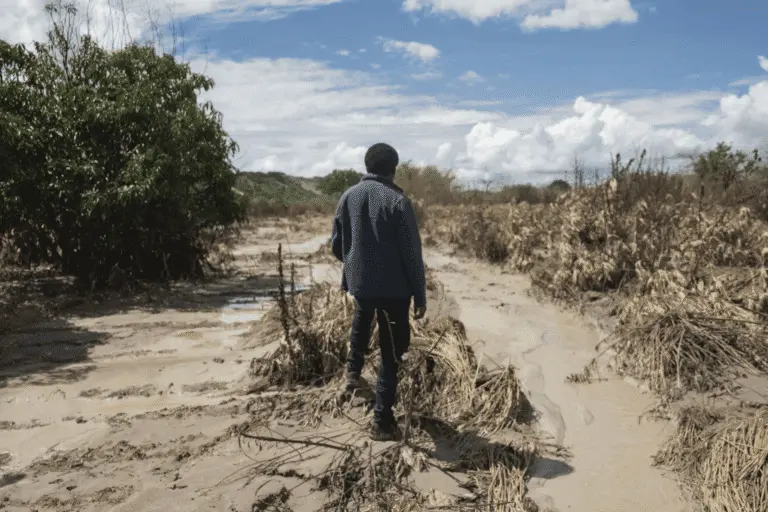
- Water Scarcity and Contamination: Industrial-scale mining requires millions of gallons of water, frequently depleting local aquifers and leaving agricultural communities parched. Furthermore, toxic tailings and chemical spills—such as those documented along the Chambishi Stream in Zambia—devastate local crops, poison aquatic life, and render water sources unsafe for human consumption.
- Forced Displacement: Communities living atop lucrative mineral deposits are routinely evicted from their ancestral lands without adequate compensation or resettlement plans.
- Criminalization of Environmental Defenders: Local activists, journalists, and indigenous leaders who speak out against mining abuses face intimidation, legal harassment, arbitrary detention, and physical violence.
- Reinforcement of Extractive Hierarchies: Raw materials are extracted under punishing conditions in the Global South, shipped unprocessed or semi-processed to the Global North, and manufactured into high-value clean energy technologies abroad. This structure locks developing nations into the bottom tier of the global value chain, offering negligible long-term economic diversification.
Official Statements & Stakeholder Perspectives
The disconnect between the corporate rhetoric of sustainability and the lived reality of impacted communities is a central theme emerging from the IAP’s findings.

Voices from the International Accountability Project
In an exclusive interview with Mongabay, Vaishnavi Varadarajan, program coordinator at the IAP, underscored the core structural flaws of current DFI lending practices:
"There are many companies that are multinational mining corporations who have a very bad track record in terms of human rights, yet they do get loans from the development banks. It is raising the question of the due diligence that is being done by the banks beforehand."
Varadarajan also pointed out the inherent neo-colonial dynamic underpinning the global green transition:
"Since the Paris Agreement in 2015, a growing number of countries are investing in renewable energy sources such as solar and wind power as well as electric vehicles to limit their greenhouse gas emissions. Such technologies require components made from minerals and rare earth elements that are often found in the Global South and shipped to the Global North for value-added processing. It is kind of reinforcing a colonial way of extraction."
Echoing these concerns, Elias Jika, IAP’s program coordinator for Africa, highlighted the profound ideological shift between how these projects are marketed and how they operate in practice:
"Many projects started out with like, ‘Oh, let’s end poverty!’ But at the end of the day, the motivations of most development banks are profit-related."
Jika stressed that the advocacy community is not categorically opposed to the extraction of transition minerals—recognizing their necessity for climate mitigation—but rather demands strict accountability and institutional reform:
"We are fighting for them to put safeguards in place, to require government social impact studies to be done, to require mitigation measures."
Analyzing the geopolitical motives driving Western lenders into African markets, Jika explained:
"The DFC has over time increased its presence and interest in the African region. As you know, China owns the majority of transition mineral projects, they dominate the market. The U.S. government is trying to compete with China. So, banks like the DFC and the IFC are increasingly financing transition mineral projects."
Despite direct inquiries from journalists regarding their due diligence processes and risk management frameworks in Sub-Saharan Africa, the U.S. International Development Finance Corporation (DFC) failed to provide a response prior to publication.
Future Outlook: Charting a Just and Sustainable Path Forward
As the world presses forward with decarbonization targets, the paradox of the green energy transition has reached a critical inflection point. Climate action cannot succeed if it is achieved by sacrificing vulnerable communities and degrading ecosystems in the Global South.
Necessary Reforms for Development Finance Institutions
To rectify the trajectory highlighted by the IAP’s Transition Minerals Finance Tracker, systemic reforms must be enacted across all major development banks, export-credit agencies, and international financial institutions:
- Rigorous and Independent Due Diligence: DFIs must mandate comprehensive, independent environmental and social impact assessments (ESIAs) before any loan is approved, moving away from tick-box compliance and corporate self-reporting.
- Enforcement of Free, Prior, and Informed Consent (FPIC): Indigenous and local communities must be granted genuine veto power over extractive projects on their lands. Respecting sovereignty and land rights is non-negotiable for ethical financing.
- Supply Chain Transparency and Traceability: Financial institutions must publish the exact destinations and corporate beneficiaries of all extracted minerals, ensuring full accountability throughout the supply chain.
- Protection for Land and Environmental Defenders: Development banks must establish zero-tolerance policies regarding the harassment, criminalization, or violence directed at community activists, making loan disbursements conditional on the active protection of human rights defenders.
- Shifting the Value Chain: Rather than exporting raw materials for foreign processing, DFIs should invest in localized value-addition infrastructure within producer countries. This approach fosters genuine economic development, job creation, and long-term poverty alleviation, moving away from extractive exploitation.
Conclusion
The transition away from fossil fuels is imperative for the survival of human civilization. However, the methods used to source the raw materials for this transition must align with principles of universal human rights, environmental stewardship, and global equity. If international development banks continue to prioritize geopolitical competition and corporate profit over community wellbeing, the green energy transition will be remembered not as a triumph of sustainability, but as another chapter of historic exploitation under a coat of green paint.