In an era where heavy industry and environmental responsibility must find a harmonious coexistence, major automotive legacy brands are facing unprecedented pressure to decarbonize. Leading this charge in the American Midwest is a monumental collaboration between Detroit-based energy titan DTE Energy and American automotive icon Ford Motor Company.
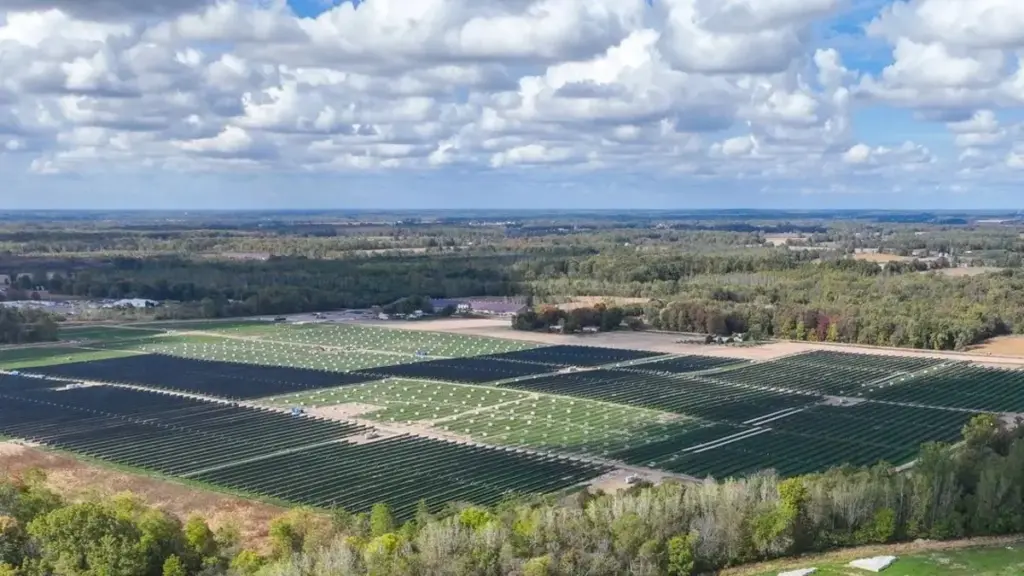
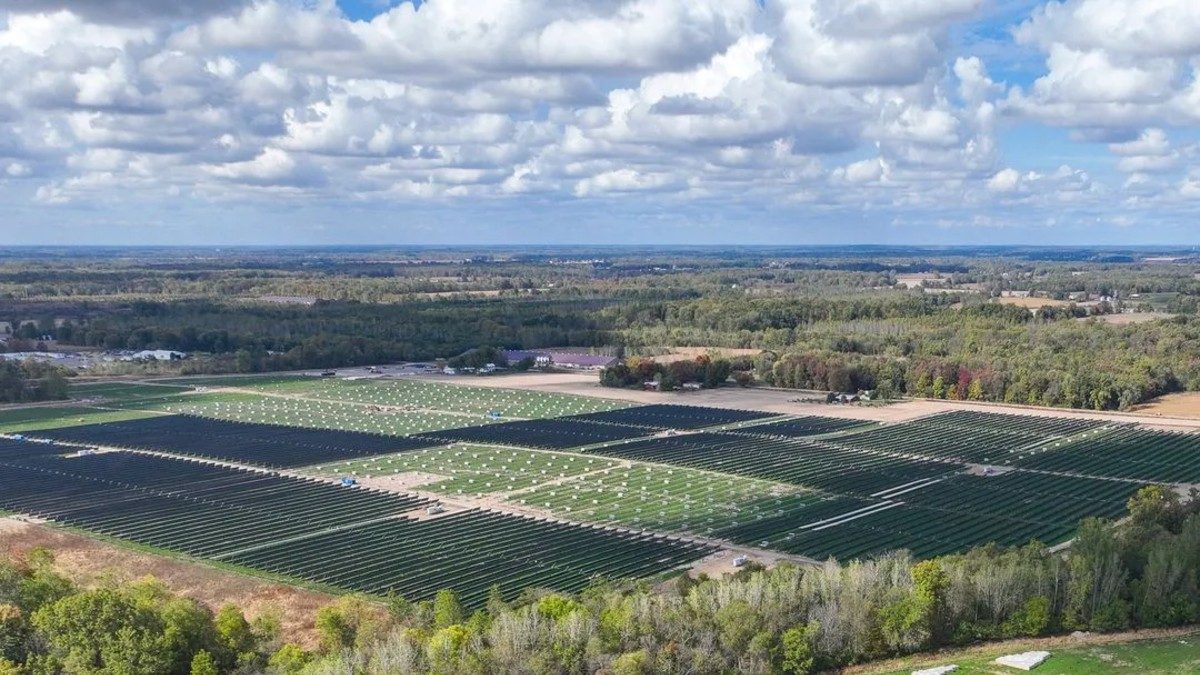
The centerpiece of this green energy transition has just cleared a major hurdle: DTE Energy officially announced the completion of construction on the Cold Creek Solar Park. Spanning a sprawling expanse near Coldwater, Michigan, this $194 million, 100-megawatt (MW) photovoltaic installation represents a pivotal milestone. Funded entirely by Ford through its active participation in DTE’s voluntary renewable energy program, CleanVision MIGreenPower, the newly operational solar park will pump massive quantities of clean, renewable electricity straight into the grid to directly power Ford’s home-state manufacturing facilities.
To put its sheer output into perspective, the Cold Creek facility is designed to generate enough electricity to power the equivalent of 23,000 to 25,000 typical Michigan households annually. Yet, this is not merely a localized feel-good green initiative. It is the vanguard of a sweeping, multi-project endeavor that highlights a broader corporate pivot. Ford has committed to utilizing its massive capital to reshape how internal combustion engine and electric vehicle manufacturing is powered from the ground up.
However, the journey has faced minor adjustments. While the monumental ambition remains intact—aiming to manufacture every single vehicle Ford builds in Michigan with the equivalent of 100% carbon-free electricity—the timeline for this achievement has subtly shifted. Originally targeted for 2025 when the landmark agreement was first struck in August 2022, the deadline has now been pushed to the end of 2027.
Despite the slight delay, the economic and environmental ramifications of Cold Creek Solar Park—and the broader 650 MW framework agreement it anchors—extend deep into the local Michigan communities hosting these clean energy assets. From localized job creation to vital municipal tax revenues, the marriage of automotive manufacturing and utility-scale solar power is forging a new economic blueprint for the Rust Belt.
Detailed Chronology: From Blueprint to Volt
The realization of the Cold Creek Solar Park is the culmination of years of strategic planning, regulatory navigation, and heavy engineering. Understanding how this project came to fruition requires a granular look at the timeline governing Ford and DTE Energy’s partnership.
August 2022: The Landmark Agreement
The foundational stone for this clean energy era was laid in late summer 2022. Ford and DTE Energy proudly announced a historic framework agreement. Under the terms of the deal, Ford agreed to purchase up to 650 megawatts of renewable energy through DTE’s CleanVision MIGreenPower program. At the time, this stood as the single largest renewable energy purchase ever from a U.S. utility by a corporate customer.
The initial press releases carried an aggressive target: Ford pledged to assemble all vehicles manufactured in Michigan using 100% carbon-free electricity by 2025. This ambitious goal was designed to jumpstart Ford’s overarching sustainability trajectory, serving as a proof-of-concept that legacy heavy manufacturing could run on intermittent renewable sources without sacrificing operational reliability.
April 2025: Groundbreaking at Cold Creek
Following months of site acquisition, environmental impact assessments, engineering design, and permitting approvals, physical work commenced. In April 2025, heavy machinery moved onto the rural landscape near Coldwater, Michigan, signaling the official start of construction for the Cold Creek Solar Park.
As the first shovel hit the dirt, the project transformed from a paper agreement into a sprawling industrial reality. Managed in coordination with regional construction partners like Roncelli, the site quickly became a bustling hub of civil engineering. Thousands of steel pile foundations were driven into the Michigan soil, followed by the meticulous mounting of tracking photovoltaic panels designed to follow the sun from east to west, maximizing energy capture throughout the day.
Late 2026: Completion and Grid Integration
Fast forward to late 2026, and construction dust has settled. DTE Energy officially declared the 100 MW Cold Creek Solar Park complete and ready for commercial operation. The facility successfully synchronized with the local electrical grid, routing its first clean electrons toward the manufacturing plants where iconic Ford vehicles—ranging from commercial transit vans to heavy-duty trucks—are brought to life.
Cold Creek stands proudly as the very first major solar project to be fully completed and brought online under the expansive 650 MW umbrella agreement forged four years prior. Its successful energization serves as a critical stress test and a resounding success for DTE’s capability to scale up industrial-grade renewables rapidly.
Supporting Context & Metrics: The Scale of Sustainability
To fully comprehend the significance of the Cold Creek Solar Park, one must examine the hard metrics driving the installation, as well as the broader corporate sustainability frameworks governing both DTE Energy and Ford Motor Company.
The Power Metrics of Cold Creek
Capacity: 100 Megawatts (MW) of alternating current (AC) solar generation.
Capital Investment: $194 million, fully funded via Ford’s enrollment in the CleanVision MIGreenPower program.
Equivalent Household Power: Approximately 23,000 to 25,000 average Michigan homes supplied with electricity annually.
Land Footprint: Hundreds of acres of strategically utilized rural Michigan land optimized for maximum solar irradiance.
Decoding CleanVision MIGreenPower
DTE Energy’s CleanVision MIGreenPower program is a cornerstone of Michigan’s clean energy transition. It operates as a voluntary green tariff program, allowing residential, commercial, and industrial customers to match a portion—or up to 100%—of their electricity usage with clean, renewable energy generated directly within the state of Michigan.
For large corporations like Ford, the program offers a mechanism to bypass standard fossil-fuel-heavy utility mixes by directly underwriting the construction of new wind and solar parks. Every dollar invested by corporate participants funnels directly into developing localized renewable infrastructure, ensuring that the green energy they purchase is newly added to the grid rather than simply reallocated from existing supplies.
The Timeline Adjustment: Analyzing the 2027 Shift
One of the most noteworthy disclosures accompanying the completion of Cold Creek is the quiet adjustment of Ford’s Michigan manufacturing decarbonization target. When the partnership was heralded in August 2022, executives painted a picture of 100% carbon-free electricity across all Michigan factories by 2025.
The latest DTE announcements, however, place that definitive deadline at the end of 2027. Neither DTE Energy nor Ford Motor Company has offered a formal, granular explanation for the two-year slip. Industry analysts, however, point to a constellation of familiar bottlenecks that have plagued the clean energy sector over the past several years:
Supply Chain Constraints: Global shortages of critical raw materials, specialized transformers, and high-voltage electrical components frequently push back utility-scale project timelines.
Interconnection Backlogs: Regional transmission organizations (RTOs) face historic backlogs of renewable energy projects waiting in queue for grid interconnection studies and infrastructure upgrades.
Regulatory and Permitting Complexities: Local zoning hurdles and environmental reviews often introduce unforeseen delays into multi-million-dollar land developments.
Despite this two-year adjustment, the overarching commitment remains intact. A 2027 realization still represents a breathtakingly rapid transformation for industrial operations that have relied on coal and natural gas for over a century.
Macro-Sustainability Goals
Cold Creek is merely a stepping stone in a much grander, multi-decade environmental strategy:
Michigan Manufacturing Goal: 100% carbon-free electricity for all Michigan-assembled vehicles by the end of 2027.
Global Manufacturing Goal: 100% carbon-free electricity across all of Ford’s global manufacturing facilities by 2035.
Ultimate Enterprise Target: Complete carbon neutrality across its vehicles, manufacturing footprint, and global supply chain no later than 2050.
Official Statements & Local Economic Impact
While the environmental wins are clear, utility-scale renewable energy projects carry immense economic weight for the host communities where they are built. The buildout of the Cold Creek Solar Park—and the subsequent projects slated to follow under the 650 MW agreement—brings tangible economic dividends to rural Michigan.
Economic Ripples in Host Communities
DTE Energy has consistently emphasized that the CleanVision MIGreenPower program acts as an economic engine for rural areas that traditionally rely heavily on agriculture or cyclical manufacturing economies.
When the broader 650 MW framework was initially announced, DTE and independent economic analysts projected that the massive infusion of capital would yield substantial regional benefits:
Job Creation: Construction of the various solar arrays tied to the Ford agreement was estimated to inject approximately 250 temporary, high-paying construction and engineering jobs into the local economy, alongside roughly 10 permanent, specialized operations and maintenance positions.
Municipal Tax Revenues: Host townships and counties stand to gain millions of dollars in long-term tax revenues over the operational lifespan of these solar parks. Local governments frequently earmark these unexpected financial windfalls to bolster critical public services—upgrading local road networks, modernizing public school systems, funding community libraries, and equipping local fire departments and first responders with state-of-the-art gear.
Corporate Perspectives on the Energy Transition
Executives from both DTE and Ford have framed the partnership as a win-win-win model, balancing corporate sustainability mandates with fiscal responsibility and regional economic development.
"Our collaboration with DTE Energy proves that heavy manufacturing and aggressive climate action are not mutually exclusive," noted corporate sustainability representatives during the initial partnership rollouts. By anchoring utility-scale renewable projects through long-term corporate power purchase agreements, companies like Ford can guarantee predictable energy costs while directly driving the regional grid toward decarbonization.
DTE Energy executives have similarly championed the MIGreenPower initiative as a blueprint for modern utility management. By leveraging private corporate capital to fund the upfront capital expenditures of massive solar and wind parks, DTE can accelerate its clean energy transition without unfairly shifting the immediate financial burden onto residential ratepayers.
Future Outlook: The Road Ahead for Michigan’s Grid
The completion of the Cold Creek Solar Park is not a finish line; it is a starting gate. With 100 MW now successfully feeding carbon-free electricity into the grid for Ford’s factories, attention immediately pivots to the remaining capacity required to fulfill the 650 MW agreement.
What Comes Next?
To reach the threshold required to power every Michigan-based Ford assembly plant with 100% equivalent carbon-free electricity by late 2027, DTE Energy will need to bring several additional utility-scale solar and wind projects online over the next 12 to 24 months. These upcoming installations will likely mirror the financial and structural model established by Cold Creek: privately funded through MIGreenPower enrollment, engineered for high efficiency, and strategically sited across Michigan’s rural acreage.
The Broader Industrial Trend
Ford’s aggressive posture reflects a wider metamorphosis sweeping through the automotive sector. As consumer demand for electric vehicles (EVs) matures and regulatory bodies worldwide tighten tailpipe and corporate carbon emissions standards, automakers are discovering that building zero-emission vehicles in factories powered by fossil fuels creates a glaring hypocrisy in their marketing narratives.
True sustainability requires a holistic approach—from the green extraction of battery minerals to the carbon-free assembly of the vehicle chassis on the factory floor. By locking in hundreds of megawatts of dedicated renewable generation now, Ford is insulating its manufacturing operations from the volatile price fluctuations of traditional fossil fuel markets while future-proofing its industrial base against tightening carbon regulations.
As the Cold Creek Solar Park begins its first full cycle of power generation, it stands as a towering testament to what can be achieved when utility innovation and corporate climate commitments intersect. Michigan’s Rust Belt industrial legacy is quietly, deliberately, and permanently transforming into a shining beacon of the clean energy economy.