Executive Overview
For decades, home bakers have nurtured sourdough starters with scientific precision, experimenting with hydration percentages, wild fermentation, and complex stretch-and-fold techniques. Yet, many face a frustrating culinary ceiling: despite meticulous preparation, their homemade loaves rarely match the golden, crackling crusts and open, airy crumbs of commercial artisanal bakeries. The discrepancy does not lie in the recipe or the baker’s technique, but in the physics of the baking environment. Professional bakeries utilize heavy-duty, commercial-grade deck ovens featuring rotating stone shelves that retain and distribute radiant heat far more aggressively than standard residential wire racks and thin metal sheet pans.
Bridging the gap between a domestic kitchen and a professional patisserie requires a thermal catalyst. Enter the heavy, cast-iron bread oven—a specialized category of cookware engineered to revolutionize home baking. By combining intense, direct heat transfer with a precision-sealed steam environment, these vessels transform standard dough into bakery-quality art. Following rigorous hands-on testing of the market’s top contenders, three distinct options emerge as leaders: the heavy-duty Challenger Breadware Bread Pan for serious artisans, the high-value Tramontina Cast Iron Bread Oven for budget-conscious bakers, and the iconic, design-forward Le Creuset Bread Oven for premium performance. This comprehensive review examines the science, performance metrics, and distinct advantages of these kitchen upgrades, offering a definitive roadmap to perfecting your bake.
Detailed Chronology: The Evolution of Home Bread Baking and Equipment
The renaissance of home bread baking—accelerated significantly over the last decade and amplified globally by cultural shifts toward scratch-cooking—has forced manufacturers to rethink traditional cookware. Historically, home bakers relied on standard Dutch ovens designed for stews and braises. While a conventional Dutch oven outperforms an open baking sheet, its deep, vertical walls and narrow openings present significant ergonomic challenges. Dropping a delicate, proofed boule of high-hydration sourdough into a scorching, deep round pot often results in burned knuckles or distorted loaves.
Recognizing these frustrations, artisan bakers and cookware designers began tracing the historical lineage of bread baking back to ancient hearths and commercial deck ovens.
- The Early Adaptation Phase (1990s–2010s): Early home sourdough adopters experimented with inverted Dutch ovens, using the flat lid as the base and the deep pot as the cover. While this trick improved ergonomics, it lacked the targeted surface area and customized thermal dynamics required for diverse loaf shapes, such as oblong batards or baguettes.
- The Specialty Design Era (Late 2010s–Present): Innovators like Jim Challenger entered the market by designing purpose-built vessels from the ground up. By creating broad, low-profile bases paired with tightly sealing, domed lids, manufacturers solved the fundamental physics problem of home-oven baking: how to replicate a steam-injected commercial hearth in a standard 500-degree residential oven.
Today, the market offers sophisticated choices divided across metallurgical lines: bare cast iron, prized for maximum crust blistering, and enameled cast iron, valued for ease of maintenance and aesthetic versatility.
Supporting Context & Metrics: The Physics of the Crust
To understand why a cast-iron bread oven is non-negotiable for serious home bakers, one must examine the thermodynamic principles governing dough during its crucial first twenty minutes in the oven.
The Science of Heat Transfer and Oven Spring
When cold, fermented dough—often chilled from a cold retard in the refrigerator—makes contact with piping-hot cast iron, instantaneous thermal energy transfers into the loaf. This massive shock of heat activates residual yeast and bacterial activity, causing the gases within the gluten matrix to expand rapidly. This phenomenon, known as "oven spring," dictates the ultimate volume and internal crumb structure of the bread.
Unlike thin aluminum baking sheets that warp and dissipate heat, dense cast iron absorbs thermal energy slowly, holds it evenly, and releases it with unwavering consistency. This ensures that the base of the loaf receives a deep, even caramelization while the interior structure sets properly.
The Role of Moisture and Steam Retention
Commercial deck ovens inject high-pressure steam into the baking chamber during the initial stages of the bake. Steam condenses on the cool surface of the unbaked dough, gelatinizing the outer starches and keeping the outer crust soft and pliable. This temporary flexibility allows the bread to expand to its maximum volumetric potential without prematurely splitting or tearing the skin. Once the expansion phase concludes, the steam dissipates, allowing the dry oven heat to caramelize the sugars and starches, creating a shattering, blistered crust.
In a home kitchen, standard ovens are explicitly engineered to vent steam to keep components dry. A dedicated cast-iron bread oven solves this by trapping the moisture naturally released by the hydrating dough inside its enclosed chamber. The tight-fitting lid acts as a micro-climate generator, holding the steam precisely where it is needed before it is removed halfway through the bake to encourage browning.
Comprehensive Product Analysis & Field Testing
Following extensive testing focused on heat retention, steam-trapping efficiency, ergonomic handling, and overall value, three standout bread ovens earned top honors.
1. Challenger Breadware Bread Pan: Best for Serious Bakers
- Price: $299.00
- Material: Bare Black Cast Iron
- Overall Rating: 4.6/5
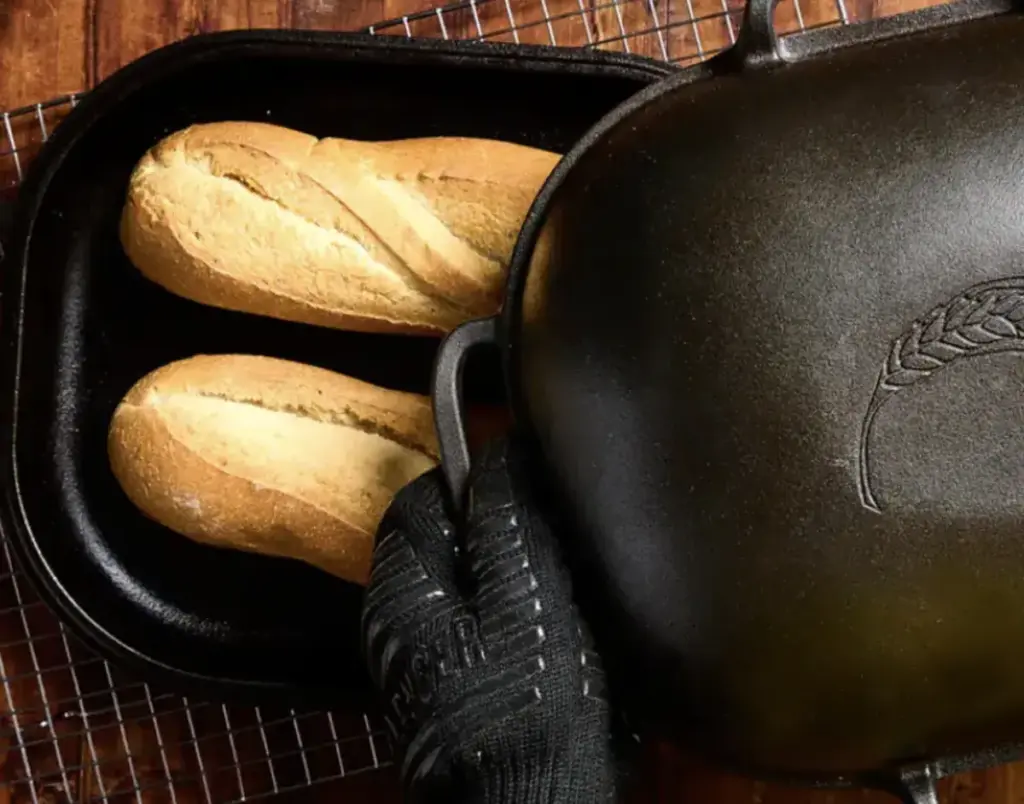
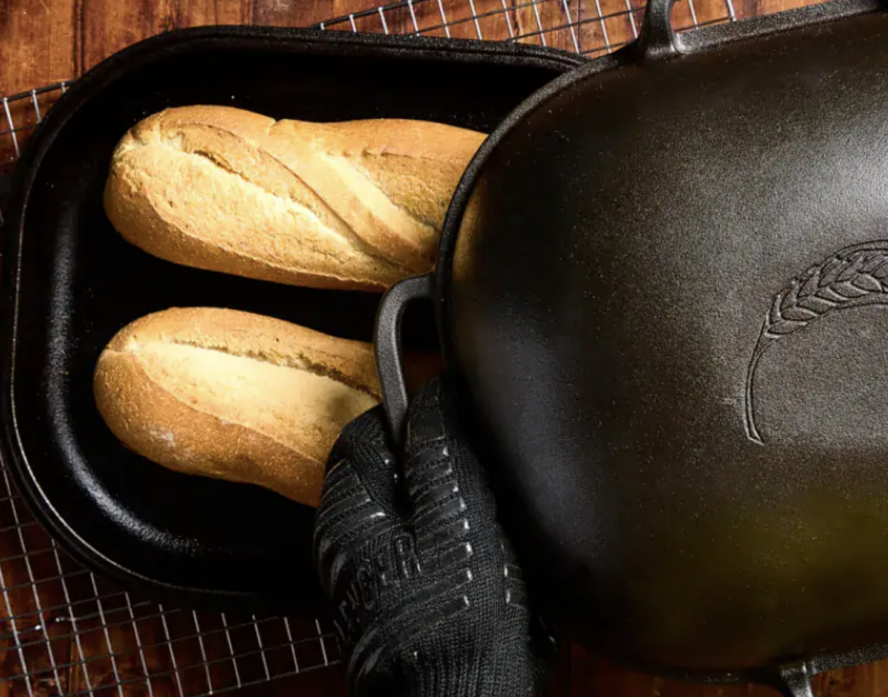
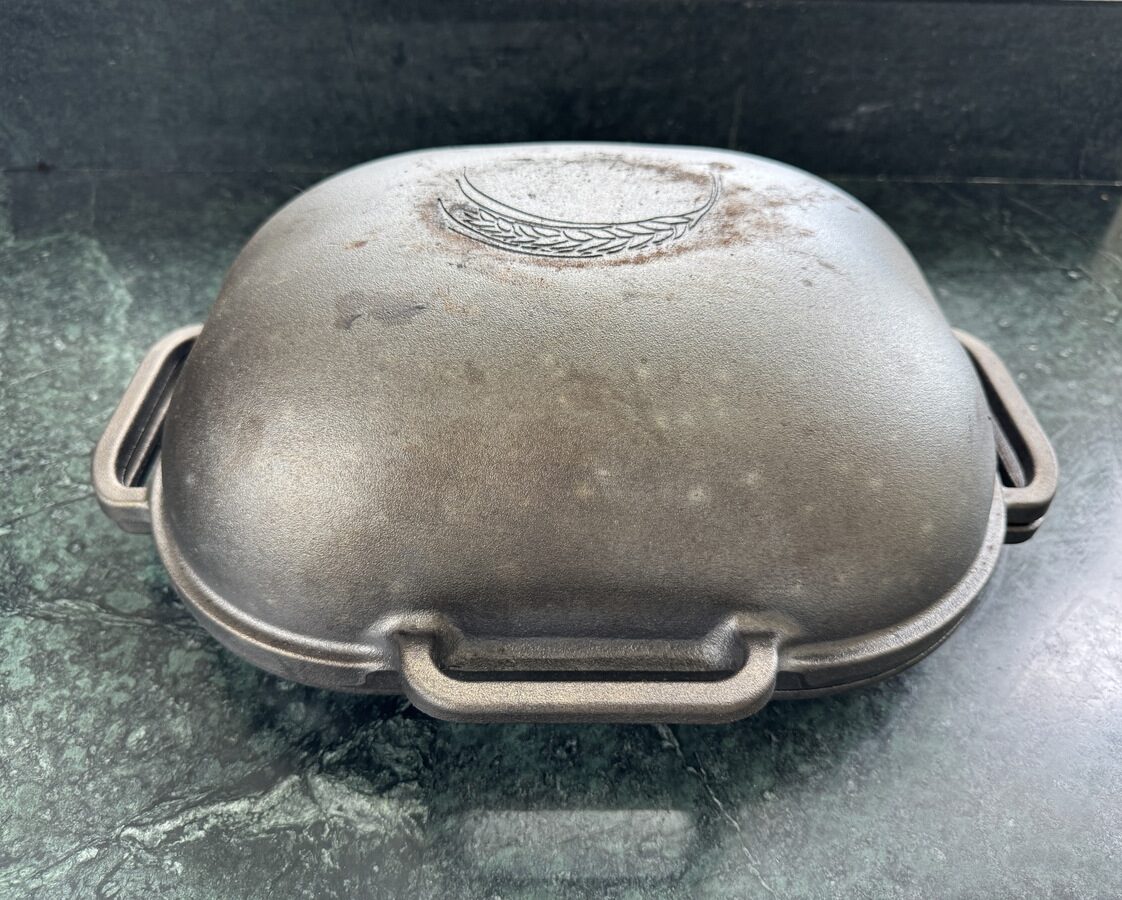
Designed by a home baker frustrated by the limitations of standard cookware, the Challenger Bread Pan is an industrial-strength masterpiece. Built from thick, heavy, bare cast iron, it features a broad, low-profile base measuring 15.5 x 10.5 inches.
Performance and Versatility
The expansive surface area accommodates not only traditional round boules but also full-sized oval batards, delicate baguettes, focaccias, and even roasting chickens. During testing, loaves baked in the Challenger pan consistently exhibited rich, dark bottom crusts and a complex, crackling exterior texture driven by the direct radiation of bare metal. The gently domed rectangular lid forms an airtight seal with the base, locking in steam effectively. Furthermore, the lid can be inverted and used as an independent baking surface for flatbreads, pizzas, or pull-apart breads.
Ergonomics and Maintenance
Weighing in at a substantial 20 pounds, the Challenger is undeniably heavy, requiring deliberate care when maneuvering in and out of a hot oven. However, well-placed handles on both the base and lid provide a secure grip. Because it arrives pre-seasoned and handles temperatures up to 500°F with ease, maintenance is straightforward for anyone familiar with traditional cast iron care.
Pros:
- Exceptionally large base accommodates batards, boules, and non-bread dishes.
- Bare black cast iron delivers maximum thermal transfer for deep, crackling crusts.
- Tight-sealing lid creates an optimal steam environment for superior oven spring.
- Pre-seasoned and ready for immediate use up to 500°F.
Cons:
- Heavy footprint at 20 pounds can be cumbersome.
- Bare cast iron requires periodic seasoning to prevent rust.
- Premium price point.
2. Tramontina Cast Iron Bread Oven: Best Budget Option
- Price: $59.95
- Material: Enameled Cast Iron
- Overall Rating: 4.2/5
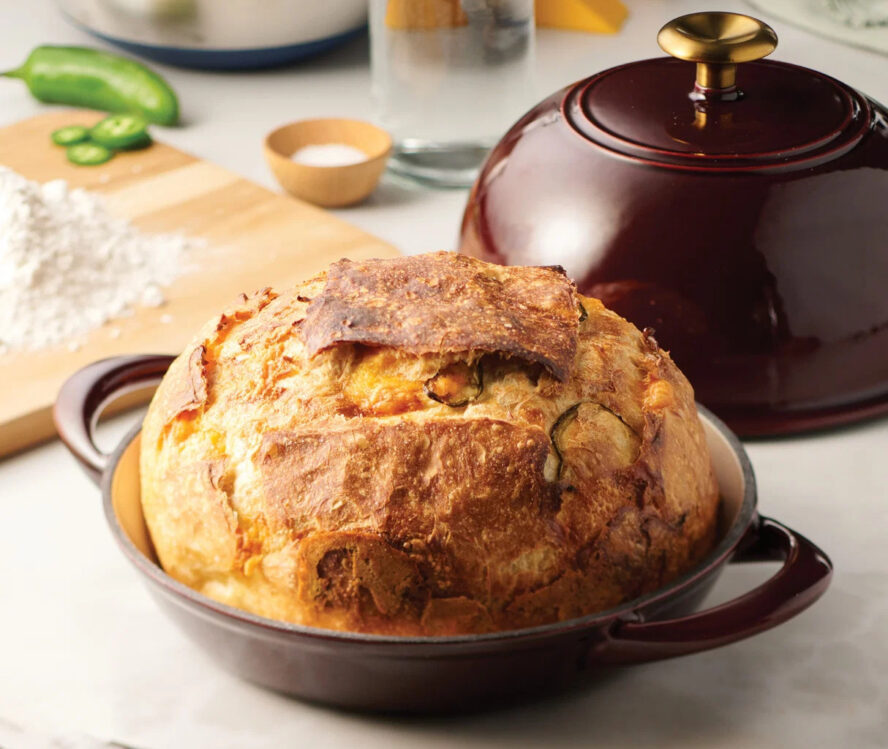
For bakers seeking professional performance without investing hundreds of dollars, the Tramontina Cast Iron Bread Oven delivers remarkable value. Despite costing a fraction of its high-end competitors, it incorporates the core structural attributes necessary for artisan bread baking: dense cast iron construction for consistent heat distribution and a high-domed lid that sits flush to trap steam.
Performance and Aesthetics
Coated in an attractive porcelain enamel exterior—available in five distinct colorways—and finished with an off-white interior, this vessel is designed for visual appeal and convenience. The 9.5-inch round base is ideally proportioned for standard, everyday boules. While the enameled interior diffuses direct thermal radiation slightly compared to bare cast iron (yielding a slightly lighter bottom crust), the overall rise, texture, and golden color of test loaves remained impressive.
Usability
The enameled surface requires zero seasoning and cleans up effortlessly, though light-colored interiors and exteriors can show smudges, dings, and discoloration over time. Additionally, the round 9.5-inch footprint limits bakers to round loaves, ruling out elongated batards.
Pros:
- Highly accessible price point for entry-level and intermediate bakers.
- Porcelain enamel interior requires no seasoning and cleans easily.
- Oven-safe up to 500°F with a lifetime warranty and aesthetic color options.
Cons:
- Limited 9.5-inch diameter restricts loaf shaping to round boules.
- Enameled coating provides slightly less aggressive heat transfer than bare metal.
- Light-colored exterior/interior prone to showing smudges and wear.
3. Le Creuset Bread Oven: Best Premium Option
- Price: $324.95
- Material: Enameled Cast Iron
- Overall Rating: 4.4/5
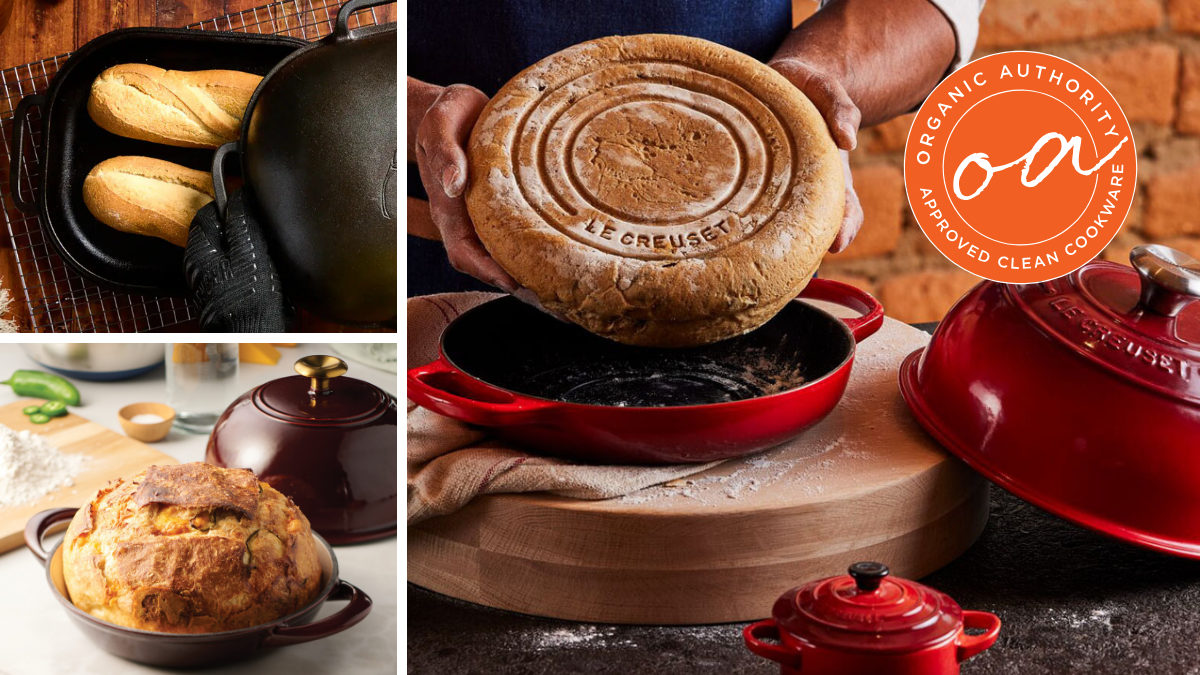
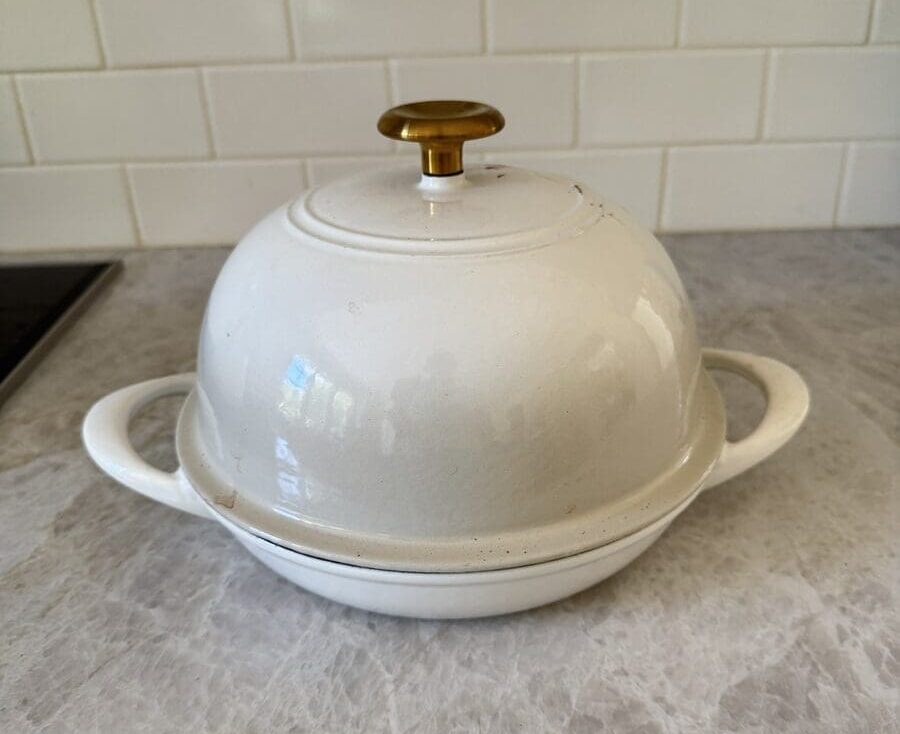
For collectors of fine French cookware and dedicated bakers alike, the Le Creuset Bread Oven represents the pinnacle of luxury kitchen engineering. Building on the brand’s legendary Dutch oven heritage, this piece utilizes an inverted architecture: the deep, domed lid rests on a shallow, ridged base.
Design and Thermal Dynamics
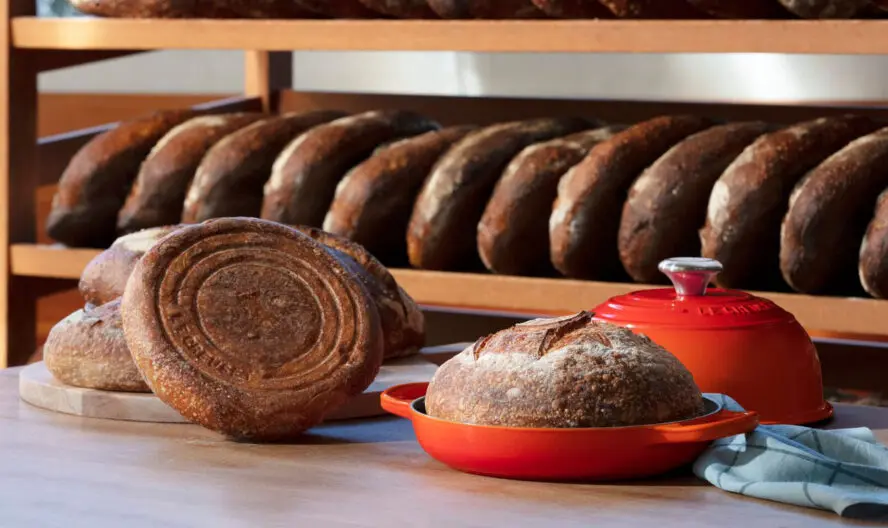
The 9.5-inch round base features three concentric ridge circles that promote airflow underneath the loaf while imparting a subtle, elegant Le Creuset brand signature onto the bottom crust. The heavy, deep lid acts as a thermal dome, trapping and circulating steam precisely where the dough expands. The matte black enameled interior absorbs and transfers heat efficiently, producing dark, golden bottom crusts and crisp exteriors.
Ergonomics
Noticeably lighter and more maneuverable than the Challenger pan, the Le Creuset model is a joy to handle. It is tailor-made for bakers who specialize in classic boules and value aesthetic continuity in their kitchen cookware collections.
Pros:
- Premium enameled cast iron construction built to last generations.
- Deep domed lid provides an exceptional micro-climate for steam and rise.
- Zero seasoning required; lightweight and easy to maneuver.
- Available in Le Creuset’s signature, vibrant glaze colors.
Cons:
- The most expensive option tested.
- Round 9.5-inch diameter limits baking to spherical boules.
Comparative Specification Matrix
| Oven Model | Best For | Material Construction | Footprint / Size | Steam Retention | Key Architectural Features | Price Point |
|---|---|---|---|---|---|---|
| Challenger Bread Pan | Serious Artisans | Bare Black Cast Iron | 15.5 × 10.5-inch base | Excellent | Pre-seasoned, versatile wide base, dual handles | $299.00 |
| Tramontina Bread Oven | Value Seekers | Enameled Cast Iron | 9.5-inch round base | Very Good | No seasoning required, striking color options | $59.95 |
| Le Creuset Bread Oven | Luxury Performance | Enameled Cast Iron | 9.5-inch round base | Excellent | Inverted design, ridged base stamp, lightweight | $324.95 |
Bare Cast Iron vs. Enameled Cast Iron: The Metallurgical Debate
Choosing between bare cast iron and enameled cast iron comes down to a philosophical choice between culinary performance and kitchen convenience.
- Bare Cast Iron Dynamics: Because there is no barrier between the metal and the dough, bare cast iron radiates heat directly into the loaf. This uninhibited energy transfer results in a darker bottom crust, a more aggressive rise, and deeper surface blistering. However, maintenance requires mindfulness: bare cast iron must be hand-dried immediately after washing and periodically seasoned with oil to prevent oxidation and rust.
- Enameled Cast Iron Dynamics: The porcelain enamel layer seals the iron, rendering the vessel entirely rust-proof and eliminating the need for seasoning. Cleanup is exceptionally forgiving. The trade-off is a slightly moderated thermal transfer; the glass-like coating acts as a thermal buffer, often resulting in a slightly lighter, less aggressive crust coloration.
For the average home baker, both styles yield dramatic improvements over baking on standard metal sheets.
Future Outlook: Trends in Home Baking Technology
As the culinary equipment market continues to evolve, several distinct trends are shaping the future of home bread making:
- Hybrid Materials and Modular Design: Manufacturers are actively researching lightweight composite metals and modular cast-iron inserts that offer the heat retention of heavy cast iron without the burdensome weight, addressing common ergonomics complaints.
- Smart Thermal Integration: While cast iron remains fundamentally traditional, future developments may integrate precision thermal sensors embedded in baking vessels, syncing with mobile applications to monitor internal dough temperature and crust development in real-time.
- Sustainability and Longevity: With consumer awareness shifting toward sustainable, lifetime-guarantee goods, single-use silicone and flimsy non-stick bakeware are steadily declining in market share, ceding ground to heirloom-quality cast iron that can be passed down through generations.
Conclusion and Final Recommendations
Investing in a dedicated cast-iron bread oven is the single most effective upgrade a home baker can make to bridge the quality gap between amateur experiments and professional artisan loaves.
- Choose the Challenger Breadware Bread Pan if you are an uncompromising artisan baker seeking maximum crust blistering, versatility across various loaf shapes (like batards and baguettes), and industrial-grade durability.
- Choose the Tramontina Cast Iron Bread Oven if you want incredible value, effortless cleanup, and reliable boule performance without breaking the bank.
- Choose the Le Creuset Bread Oven if you appreciate luxury craftsmanship, effortless handling, and a seamless match with your existing enameled cookware collection.
By replacing warped baking sheets with a precision thermal vessel, your kitchen will effortlessly produce bakery-worthy sourdough boules, savory focaccias, and crackling artisan crusts for years to come.