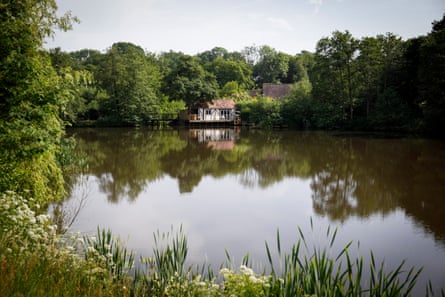
In the picturesque High Weald of East Sussex, an idyllic, stream-fed fishing lake known as Furnace Brook once stood as a testament to the tranquil beauty of the English countryside. For over a decade, owners Alistair and Diane Gould nurtured this 2.4-hectare lake and its surrounding 8-hectare estate, transforming it into a vibrant local haven comprising at least 15 species of fish, thriving aquatic life, and a deeply dedicated angling community.
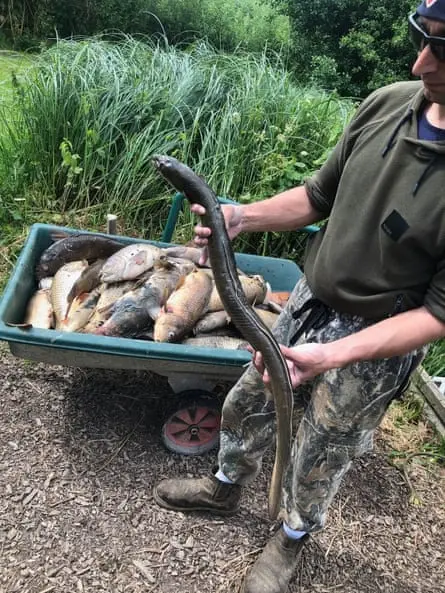
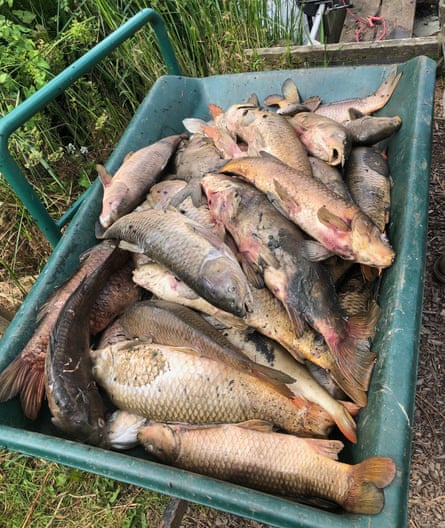
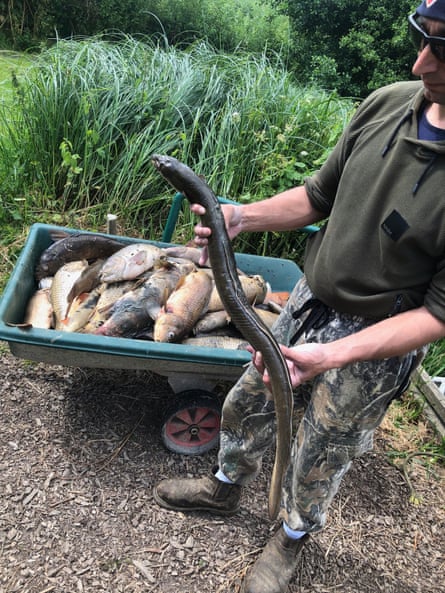
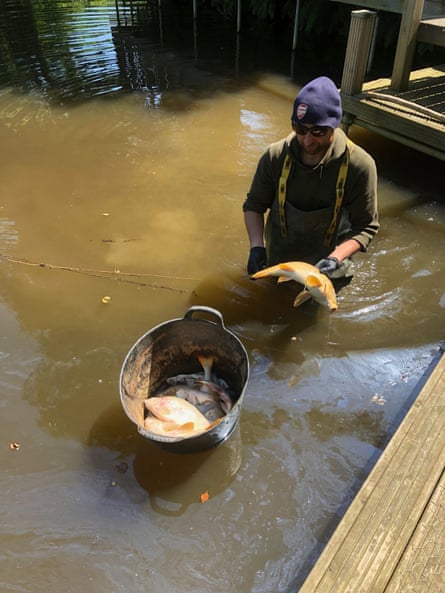
However, on the morning of June 20, 2024, that ecosystem was catastrophically dismantled. An influx of severe pollution swept down the feeding Clippenham stream, wiping out nearly all aquatic life within the water body. Eels were observed desperately crawling onto dry land to die, massive trout and carp succumbed to oxygen-depleted waters, and over 2,000 dead fish had to be cleared in 15 separate trailer loads.
More than two years later, the ecological devastation of Furnace Brook remains an unresolved symbol of a wider, systemic crisis plaguing rural Britain. While national headlines frequently focus on the scandalous discharge of raw sewage by privatized water companies, Furnace Brook’s tragedy points to an equally insidious, less-publicized threat: the unregulated dumping of industrial waste, contaminated soils, and unregulated agricultural runoff onto rural land. Despite categorizing the event as a severe "Category 1 incident," the Environment Agency (EA) has yet to take definitive enforcement action. Local authorities, hamstrung by chronic underfunding and fragmented jurisdictions, appear powerless to intervene.
Rather than succumbing to despair, the Goulds have chosen to turn Furnace Brook into a pioneering "living laboratory." Expanding their footprint by acquiring a neighboring farm, they are spearheading a revolutionary model of bioremediation, community-led land stewardship, and localized ecological resilience. This long-form investigation examines the chronology of the Furnace Brook disaster, the systemic failures of regulatory oversight, and the bold grassroots blueprint emerging from the ashes of environmental catastrophe.
Detailed Chronology: The Anatomy of a Ecological Disaster
The Vision and the Golden Years
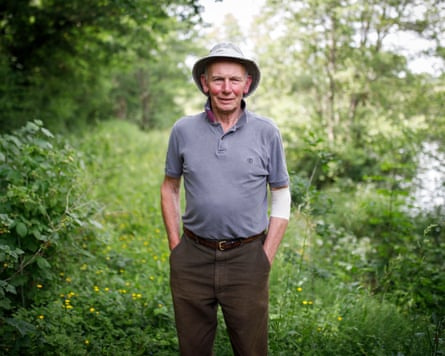
When Alistair Gould, an ecological consultant specializing in low-carbon design, and his wife Diane purchased Furnace Brook in 2013, they inherited a beloved local institution. Diane’s family had been associated with the site since 2000, and her son Simon had served as the dedicated fishery bailiff for over 15 years, intimately tracking the health and lives of the lake’s resident fish population—many of which had grown large enough to earn individual names.
The couple’s vision was expansive yet harmonious: to protect and enhance the natural ecosystem of the High Weald Area of Outstanding Natural Beauty while maintaining a sustainable angling and recreational retreat.
June 20, 2024: The Apocalyptic Event
The illusion of an untouched, secure rural sanctuary shattered abruptly on June 20, 2024. Walking down to the water’s edge at dawn, Alistair and Simon noticed a surreal and horrifying sight: hundreds of dead fish floating listlessly on the surface.
As inspection intensified, the scale of the disaster became painfully clear. Almost the entire biomass of the 2.4-hectare lake had perished. Hardy species like eels were driven to erratic behaviors, abandoning the water to suffocate on the banks. The stench of decaying organic matter rapidly filled the valley.
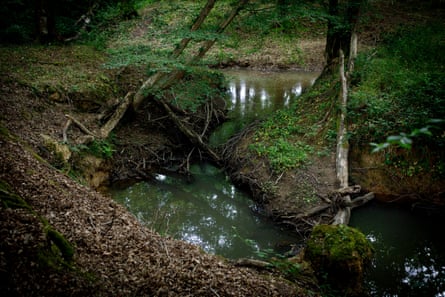
Initially suspecting an internal management failure, Alistair walked upstream to investigate the source. He discovered that the Clippenham stream—the watercourse feeding the lake—was similarly choked with dead life, including lampreys, brown trout, and freshwater mussels. The pollution was undeniably originating from further up the valley.
The Source: Morgans Farm and the "Slurry Lagoon"
Jack, a veteran ecological consultant familiar with the local landscape, traced the toxic plume upstream to a tributary originating from the neighboring Morgans Farm, an enterprise spanning roughly 243 hectares of cattle and sheep pasture.
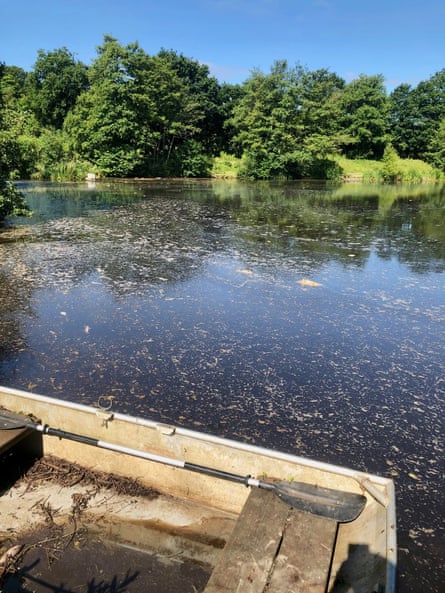
Upstream of the tributary, the water remained clear and normal; downstream, it transformed into a stagnant, blue-black mixture overlaid with a thick, toxic layer of scum known colloquially among biologists as "bacterial cheese." This biological mat is symptomatic of an overwhelming nutrient influx that triggers an explosion of bacteria, rapidly stripping the water column of dissolved oxygen and asphyxiating aquatic life.
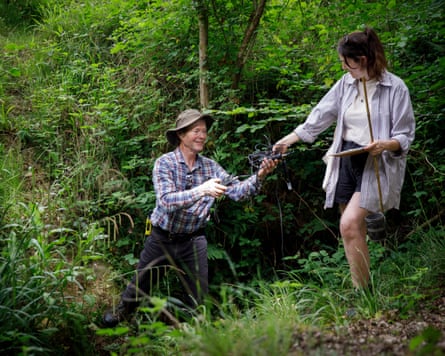
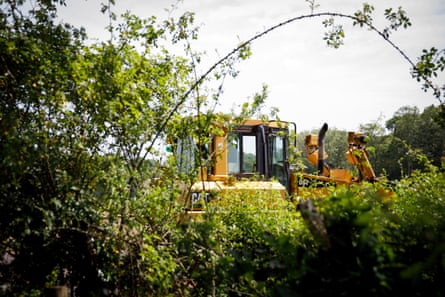
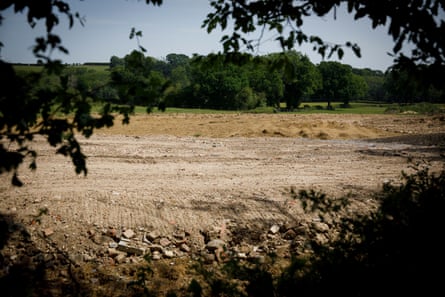
Investigations by the team and supporting neighbors revealed intense, continuous activity at Morgans Farm. Over the preceding months and years, a steady stream of heavy tipper trucks—predominantly belonging to a local waste transfer and topsoil supplier, Robins of Herstmonceux—had been depositing large volumes of material onto the farm’s fields. Drone footage and eyewitness accounts documented mechanical excavators digging deep trenches, dumping imported construction waste, crushed concrete, tarmac scalpings, and industrial byproducts, and subsequently covering them over with topsoil.
Testing and Chemical Realities
Independent water testing commissioned by Furnace Brook revealed alarming toxicity levels:
Heavy Metals: Concentrations of lead, cadmium, arsenic, and mercury were found to be "off the chart," registering far beyond natural parameters and indicating industrial rather than agricultural origins.
Ammonia and Nitrogen: Levels were recorded well outside acceptable thresholds for freshwater survival, capable of inducing immediate mortality in aquatic organisms.
Long-chain Hydrocarbons: Persistent chemical compounds associated with heavy industrial processes continued to leach into the waterways months after the initial event.
Supporting Context & Metrics: A National Crisis of Oversight
The tragedy at Furnace Brook does not exist in a vacuum; it is a microscopic lens reflecting systemic decay across the United Kingdom’s environmental and regulatory architecture.
The State of England’s Waters
According to official government statistics, a staggering 86% of England’s rivers and lakes fail to achieve a "good ecological status," with every single monitored water body chemically polluted. Decades of under-investment, lax enforcement, and political deregulation have eroded the protective barriers meant to safeguard Britain’s natural heritage.
The Waste Crime Epidemic
Parallel to the river pollution scandal is the exponential rise of illegal waste dumping. Research shared with environmental authorities indicates that the UK is currently home to at least 8,000 illegal waste sites, containing an estimated 13 million tonnes of unmanaged rubbish. High-profile disasters—such as the massive illegal dump in Hoad’s Wood, Kent, carrying a £15m cleanup bill—demonstrate that organized waste crime has become lucrative, systemic, and largely unchecked.
A significant loophole enabling this activity involves environmental exemptions and self-regulated schemes like CL:AIRE (Contaminated Land: Applications in Real Environments). While designed to encourage sustainable recycling of construction soils and prevent landfill waste, the lack of transparent, rigorous oversight has allowed unscrupulous actors to exploit these frameworks. Landowners can import massive tonnages of low-grade, contaminated commercial waste under the guise of agricultural "construction or maintenance projects," transforming permanent pastures into toxic sponges.
Official Statements and Institutional Paralysis
The Environment Agency Under Fire
The Environment Agency, tasked with the "protection and enhancement" of the English environment, classified the Furnace Brook event as a Category 1 incident—the most severe classification denoting serious, extensive, or persistent environmental damage.
Yet, nearly two years later, the EA has failed to bring forward any prosecutions or public enforcement actions. In correspondence reviewed during the investigation, the EA stated it had inspected Morgans Farm in late 2024 and early 2025 and "not found any evidence of the illegal importation of waste."
When approached for comment regarding the ongoing delays, an EA spokesperson reiterated:
"We take the incident at Furnace Brook Fishery very seriously and are progressing with our investigation. As this is an ongoing case, further details cannot be provided at this time."
This defensive opacity echoes findings from parliamentary watchdogs. In March, the House of Commons Public Accounts Select Committee issued a scathing report on environmental regulation, concluding that gaps in the EA’s powers and intelligence have allowed illegal waste dumping to spiral out of control. Whistleblowers within the agency have repeatedly testified that staffing shortages, budget constraints, and structural discouragement of enforcement action have neutered the organization’s ability to act as an effective deterrent.
Local Government Impotence
Local authorities face similar institutional paralysis. Greg Collins, a Green Party councillor for Wealden District Council, voiced profound frustration regarding the limits of local powers:
"My understanding is that the district council has no effective powers in respect of the event that damaged the ecology of Furnace Brook. That is an EA matter… they’ve effectively gone: ‘Nothing to see here. Move along. Hey-ho, life’s a bit shit sometimes.’"
Rachel Millward, leader of Wealden District Council and deputy leader of the Green Party in England and Wales, highlighted the structural hollow-out of local enforcement mechanisms:
"The basic issue is that the policy is there, but it has no teeth, because it doesn’t have funding so that the authorities who are meant to do it can do it, and then there’s no real threat of prosecution."
Furthermore, statutory registers for contaminated land (mandated under Part 2A of the Environmental Protection Act) have effectively lapsed across many districts because cash-strapped councils can no longer afford strategic site inspections.
Future Outlook: Furnace Brook as a Living Laboratory
Faced with institutional abandonment and unrecovered financial losses exceeding £500,000, Alistair and Diane Gould have refused to let Furnace Brook become a permanent casualty of environmental negligence. Instead, they have dramatically expanded their vision, acquiring a neighboring farm to quadruple the site’s footprint and transforming the entire property into an ambitious "living laboratory."
Bioremediation and Ecological Healing
Led by ecological consultant Cassandra Shaffer and supported by environmental experts, the immediate priority is restoring the aquatic ecosystem through bioremediation—leveraging natural materials rather than harsh chemicals to cleanse the water:
Floating Wetlands: Deployment of straw and reed mats integrated with biochar and mycorrhizal fungi filtration systems to trap sediments and cultivate pollutant-digesting microorganisms.
Targeted Phytoremediation: Planting specialized vegetation, such as specific Juncus rush species proven to absorb heavy metals like cadmium, along the newly engineered wetlands upstream from the lake.
According to project experts, these nature-based interventions are projected to achieve near-complete ecosystem remediation within 18 months.
A Blueprint for Regenerative Community Stewardship
Beyond ecological recovery, the Goulds are pioneering a radical socio-economic model for rural Britain. Challenging the traditional industrial-agricultural model that extracts value from rural areas without reinvesting in them, Furnace Brook is designed to operate as a shared, community-anchored foundation:
Local Food Resilience: Developing market gardening initiatives, community composting clubs (via soil expert Michael Kennard’s Compost Club), and emergency food preservation networks.
Educational and Social Hubs: Establishing forest schools, beekeeping programs, and cohousing initiatives. The project already engages local volunteers and international organizers, such as Dutch community facilitator Maarten Klop, using creative enterprises like "Clean the Lake" craft lager and community baking to draw public engagement into the core of ecological activism.
Permanent Affordability: The land is structured so that aligned farmers, educators, and families steward it cooperatively, ensuring that financial returns progressively clear initial capital costs and permanently anchor the land in community ownership.
As Alistair Gould summarizes:
"At the heart of the model is the idea that land should function as a shared foundation for regenerative activity, rather than as a commodity."
While the legal battle for accountability and compensation from the polluters of Morgans Farm crawls forward at a glacial pace, the transformation of Furnace Brook offers a powerful beacon of hope. It demonstrates that while centralized regulatory frameworks may falter under the weight of bureaucracy and deregulation, grassroots resilience, scientific innovation, and community solidarity can forge a viable path toward healing Britain’s fractured rural landscape.