
Originally published by Capital B and reproduced here as part of the Climate Desk collaboration.
Executive Overview
For years, the residents of Jackson, Mississippi, have contended with an infrastructure in systemic collapse. For households in this predominantly Black city, turning on the kitchen tap frequently produced little more than a trickle of brown, foul-smelling liquid. This chronic water crisis left elders and infants covered in severe rashes and triggered a wave of public health emergencies. Relief finally seemed within reach in 2023 when a federal grant was awarded to fund vital resilience infrastructure.
However, that glimmer of hope was abruptly extinguished when President Donald Trump assumed office and moved swiftly to dismantle a $2.8 billion environmental program designed to mitigate climate and health harms in marginalized communities. The move was part of a broader, aggressive campaign to roll back the cornerstone climate investments authorized by Congress under the Inflation Reduction Act (IRA) of President Joe Biden.
Now, federal courts are pushing back. In a series of sweeping judicial rebukes, federal judges in South Carolina and Washington, D.C., have ordered the Environmental Protection Agency (EPA) to resume the distribution of billions of dollars in frozen environmental justice and green energy grants. These landmark rulings have unlocked more than $22 billion in climate and environmental projects nationwide. Yet, as the legal battles wage on, communities that once anticipated life-saving transformations are left picking up the pieces of dismantled programs, navigating staff shortages, and confronting an administration determined to test the limits of executive authority.
Detailed Chronology: From Promise to Pause, and the Judicial Pushback
The conflict over environmental justice funding represents a high-stakes clash between the executive branch and the judicial system over the separation of powers. The timeline of events highlights how quickly federal priorities shifted—and how rapidly federal courts intervened to restore congressional intent.
The 2023 Promise of Relief
In the twilight years of the Biden administration, billions of dollars were earmarked for historically underserved communities under the umbrella of the Inflation Reduction Act. Programs like the Environmental and Climate Justice Block Grant Program and the Greenhouse Gas Reduction Fund were crafted to rectify decades of systemic environmental racism. For cities like Jackson, Mississippi—which had endured years of catastrophic water failures—these federal grants represented an unprecedented opportunity to build systemic resilience against climate change and infrastructure failures.
The Freeze and Executive Rollbacks
Upon returning to office, President Trump moved aggressively to fulfill campaign promises regarding energy deregulation and government spending cuts. Beginning in February 2025, the administration systematically stalled the disbursement of billions in climate and environmental grants. Concurrently, the administration embarked on an aggressive restructuring of the EPA, slashing approximately 25% of the agency’s workforce through layoffs, buyouts, and attrition. This reduction brought the EPA’s staffing levels to historic lows, severely hampering its operational capacity.
The administration’s rationale for pausing and attempting to rescind the funds centered on claims that the agency lacked the necessary manpower and institutional resources to oversee such massive grant portfolios. Independent analysts and environmental watchdogs, however, viewed the maneuver as a politically motivated effort to defund progressive climate policies by administrative fiat.
The Judicial Interventions
The legal firewall against the administration’s rollbacks began to hold in mid-2025.
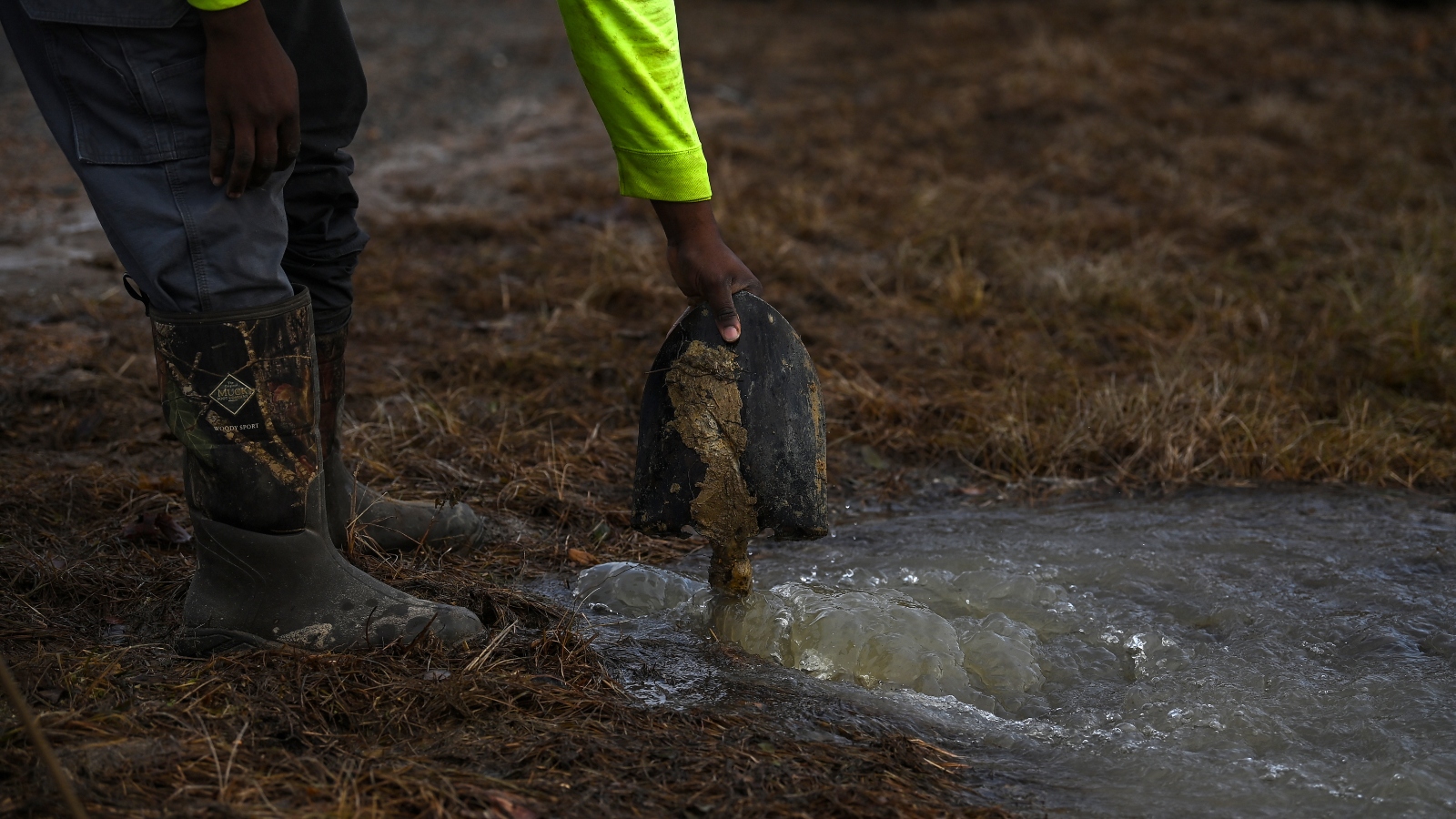
- The South Carolina Ruling: Last month, a federal judge in South Carolina issued a decisive injunction ordering the EPA to immediately resume the distribution of funds aimed at addressing environmental and health disparities in underserved populations. The court ruled that the administration’s unilateral freezing of funds violated federal statutes enacted by Congress.
- The D.C. Circuit Court Decision: Shortly after the South Carolina ruling, the U.S. Court of Appeals for the District of Columbia Circuit blocked the EPA from rescinding nearly $20 billion in Greenhouse Gas Reduction Fund awards.
Together, these rulings mean that over $22 billion intended for climate and environmental adaptation in disadvantaged communities may soon find its way to the projects that desperately need them. Matt Sedlar, a climate analyst at the Center for Economic and Policy Research, noted that the outcomes of these lawsuits are “sending a message to the administration that the separation of powers exists and that it must follow the law.”
Supporting Context & Metrics: The Human and Economic Toll
While the legal battles play out in federal courtrooms, the real-world impact of the funding freeze has been profound. Programs that once offered beacons of hope were forced to shutter, leaving vulnerable populations even more exposed to environmental degradation.
The Jackson, Mississippi Resilience Hub
In 2023, Dominika Parry—founder of 2C Mississippi, a Ridgeland-based nonprofit focused on regional climate resilience—secured a $20 million federal grant designed to offer a life-saving lifeline to Jackson’s poorest residents.
The plan was visionary: to construct a comprehensive resilience hub capable of providing year-round access to secure shelter, continuous electricity, and clean drinking water during municipal disasters. The facility was designed to feature:
- A dedicated micro-electric grid powered by renewable energy.
- Advanced backup generators to ensure uninterrupted power during grid failures.
- An independent water well to bypass municipal supply contaminations.
- Shower facilities and overnight emergency lodging for up to 150 people at a time.
“The goal was building a place where people can come, stay overnight, have access to energy, be in healthy conditions,” Parry explained during the height of the planning phase. When the funding was frozen in early 2025, projects like this were left in limbo, threatening to abandon communities that had waited generations for infrastructural justice.
The Human Cost in Houston and Beyond
The disruption of federal grants extended far beyond infrastructure projects into workforce development and community empowerment initiatives. In Houston, Texas, a specialized solar installation training program was created specifically to provide career pathways and economic mobility for formerly incarcerated individuals.
Leon Dillard, a participant in the program, found not only vocational training through the initiative but also a renewed sense of purpose. Reflecting on his time in the program before it was abruptly defunded, Dillard shared, “I really just needed to be a part of [the program], be a part of something. You have to make a choice to take a chance, or your life will never change. But you need other people with you on that journey.”
When the EPA funding dried up under the administration’s cuts, the program collapsed entirely, leaving participants like Dillard without the institutional support systems they relied upon for reintegration.
Broader Public Health Implications
The Associated Press reported that the cumulative effect of the EPA program cuts and rule rollbacks implemented by the administration was projected to prevent roughly 30,000 deaths per year. The vast majority of these preventable health crises were concentrated in Black, low-income, and industrial fence-line communities that bear the heaviest burdens of air and water pollution.
Furthermore, the Greenhouse Gas Reduction Fund—envisioned as a $27 billion national clean-energy financing engine—was designed to bridge the wealth gap in the green energy transition. By unlocking affordable financing for home energy upgrades, rooftop solar installations, and electric vehicle adoption in low-income neighborhoods, the fund aimed to lower utility bills and reduce carbon footprints simultaneously. The freezing of these assets threatened to lock disadvantaged communities out of the clean energy economy entirely.
Official Statements and Legal Strategy
The administration has shown no inclination to back down despite consecutive courtroom losses. Attorneys representing the executive branch have already initiated legal appeals against the South Carolina federal judge’s ruling.
The core argument of the administration’s defense relies on administrative incapacity. Government lawyers maintain that the EPA simply lacks the administrative infrastructure, staff, and budgetary allocations necessary to execute the programs. With staffing levels reduced by a quarter since 2024—leaving the agency at its lowest headcount in history—the administration argues that compliance with the court order is operationally unfeasible.
Legal scholars, however, argue that manufactured staff shortages cannot serve as a legal justification for defying congressional appropriations. The separation of powers doctrine enshrined in the U.S. Constitution mandates that the executive branch faithfully execute laws passed by Congress, regardless of political opposition to those policies.
Anticipation is high that the administration will similarly appeal the D.C. Circuit Court’s ruling regarding the Greenhouse Gas Reduction Fund, setting the stage for potential Supreme Court intervention on executive impoundment powers.
Future Outlook: Navigating the Road Ahead
As the legal dust begins to settle from last month’s rulings, community leaders, legal experts, and federal agencies face an uncertain and complex transition period.
- Disbursement Hurdles: Even with court orders mandating the release of funds, the severe depletion of EPA staff poses a significant logistical bottleneck. Distributing over $22 billion requires rigorous oversight, environmental reviews, and grant management—capacities that have been severely degraded by the administration’s workforce reductions.
- Resilience in the Balance: For grassroots organizations like 2C Mississippi, the rulings offer a renewed chance to resurrect projects like the Jackson resilience hub. However, leaders must now reassess timelines, inflation adjustments, and local partnerships that may have frayed during the months-long funding freeze.
- The Precedent of Executive Power: The ultimate resolution of these lawsuits will likely redefine the boundaries of presidential authority over federal spending. If the courts successfully compel the administration to disburse the funds, it will reinforce the power of the purse held by Congress and protect future climate and social investments from unilateral executive dismantling.
For Dominika Parry, Leon Dillard, and millions of residents in communities historically sidelined by environmental policy, the courtroom battles are more than abstract constitutional debates—they are a fight for survival, dignity, and the basic right to clean air, safe water, and a sustainable future.