

Originally published by WIRED as part of the Climate Desk collaboration.
Executive Overview
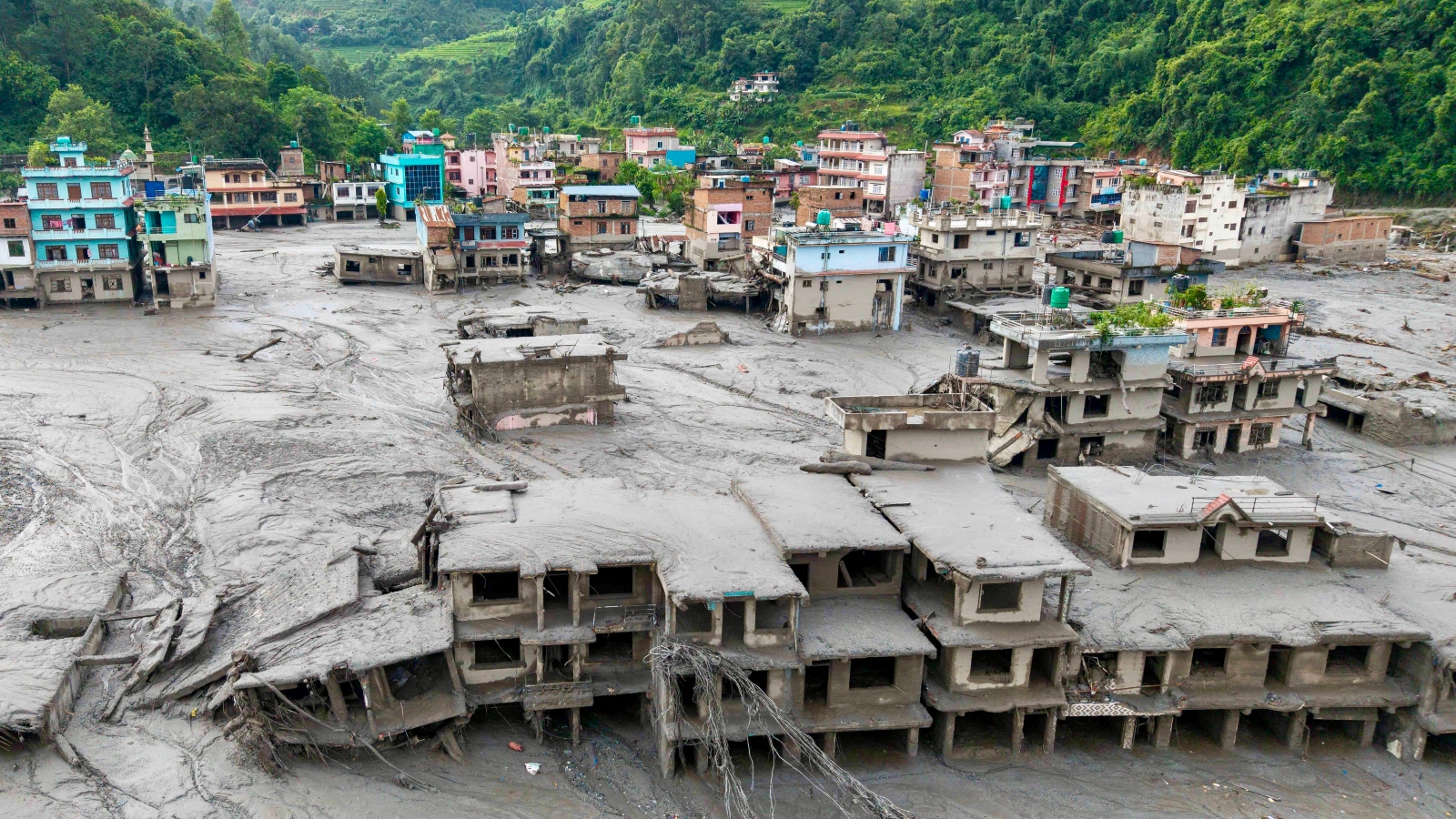
The fragile roof of the world has delivered yet another catastrophic warning. In late August, a violent, climate-primed flash flood ripped through a rugged, mountainous border zone between Nepal and the Tibet Autonomous Region, leaving an unfolding humanitarian crisis in its wake. Initial estimates place the death toll at approximately 160 individuals, with hundreds more officially listed as missing. Among the missing are dozens of international tourists and trekkers drawn to the remote Himalayan wilderness, complicating rescue and recovery operations across treacherous, debris-choked terrain.
Disturbing footage captured by survivors and posted widely on social media platforms shows residents and travelers desperately fleeing a terrifying wall of water, mud, and pulverized ice. The torrent swept away entire buildings, infrastructure, and vehicles within seconds.
Preliminary scientific assessments—derived from high-resolution satellite imagery, seismic data, and ground reports from the Nepalese government—point to a staggering geological failure. A colossal segment of a high-altitude glacier catastrophically detached, plunging thousands of feet into the valley below. Experts indicate that unseasonably high regional temperatures and accelerated melting caused by global climate change served as the primary catalysts for the disaster.
As global greenhouse gas emissions continue to push planetary temperatures upward, high-mountain Asia—often referred to as the "Third Pole"—is warming at rates significantly higher than the global average. This relentless thermal shift is destabilizing ancient ice formations, threatening millions of downstream inhabitants with sudden, high-altitude flash floods, glacial lake outbursts, and massive alpine landslides.
Detailed Chronology of the Disaster
The Sudden Strike
The disaster unfolded with terrifying speed on a Wednesday afternoon. Without warning, communities nestled in the deep mountain river valleys of the Nepalese borderland heard a low, subterranean rumble—a sound initially mistaken by some locals for an earthquake. Within moments, a roaring wall of water, sediment, and glacial debris surged down the mountain channels.
Eyewitness accounts describe a sudden, unnatural darkening of the river water followed by a violent swell that obliterated bridges, traditional stone homes, and tourist lodges situated along the valley floors. Traditional escape routes were instantly cut off as roads crumbled and hillsides gave way. Because the region is a popular destination for hikers and climbers during the late summer season, a significant population of transient foreign visitors was caught directly in the path of the torrent.
The Catastrophic Collapse
According to specialized geological analysis of pre- and post-event satellite data, the disaster was triggered by the structural failure of an unstable ice mass. Daniel Shugar, a geomorphologist and professor at the University of Calgary, told The New York Times that imagery suggests a massive slab of ice—measuring roughly 2,000 feet wide—sheared off a high-altitude wall and plummeted nearly 4,000 feet into the valley.
The sheer kinetic energy of the fall was unfathomable. As the multi-ton block of ice crashed downward, the impact pulverized the solid mass into an avalanche of water and slurry.
The force of the collapse and subsequent debris flow was so immense that it registered on global seismographs. The United States Geological Survey (USGS) recorded the impact as a magnitude 5.2 seismic event, demonstrating the massive physical scale of the mountain’s collapse. Furthermore, researchers noted that unseasonal warmth earlier in the week had accelerated surface snowmelt on the glacier, lubricating the bedrock and reducing the friction that kept the massive ice sheet anchored to the slope.
Supporting Context & Metrics: The Crisis of Shrinking Glaciers
The disaster in Nepal is not an isolated anomaly; it is part of a rapidly accelerating global trend driven by anthropogenic climate change. Mountain glaciers across the globe are acting as canaries in the coal mine, reacting swiftly and violently to rising atmospheric temperatures.
The Accelerating Retreat of Himalayan Ice
The glaciers of the Hindu Kush-Himalaya region are experiencing unprecedented mass loss. Joseph Shea, an associate professor of geography at the University of Northern British Columbia, emphasizes the dramatic structural changes taking place across high-altitude Asia.
"The glaciers over there are definitely in retreat," Shea explains. "There’s a lot of glacier mass up there, but we’re seeing thinning, we’re seeing retreating."
Global data paints a sobering picture of this cryospheric decline. Since the turn of the millennium, the world’s glaciers have lost roughly 5 percent of their total ice volume, with localized regions suffering far more severe degradation. In Nepal specifically, historical tracking reveals that glaciers lost nearly a quarter of their total surface area between 1970 and 2010. Comprehensive scientific studies have documented that more than 160 smaller glaciers within the country have vanished entirely, leaving behind barren rock basins and unstable moraine walls.
Tipping Points and Global Thresholds
The rate of glacial loss is directly tied to international climate targets. A landmark scientific study published recently warns that humanity could lose nearly 40 percent of all remaining glacial ice worldwide if global temperature increases are allowed to breach the critical threshold of 1.5 degrees Celsius above pre-industrial levels. Every fraction of a degree past this benchmark drastically increases the probability of structural failures in alpine environments.
Official Statements and Expert Analysis
As international organizations, Nepalese authorities, and disaster response teams coordinate search and rescue efforts, glaciologists and climate scientists are sounding the alarm about the complex, cascading hazards associated with melting mountain environments.
The Mechanics of Alpine Destabilization
The hazards posed by retreating glaciers extend far beyond simple volume loss. As glaciers thin and retreat, they leave behind massive piles of loose rock and sediment known as moraines. Without the structural support of the ice, these unstable slopes frequently collapse into high-altitude meltwater basins.
Joseph Shea details this dangerous feedback loop:
"If you have a landslide suddenly into a lake, you get an overtopping of the dam, and then the whole thing can collapse catastrophically."
These devastating events—known as Glacial Lake Outburst Floods (GLOFs)—represent a ticking time bomb for Himalayan communities. Two major GLOF events struck Nepal in the preceding year alone, and comprehensive vulnerability assessments indicate that millions of people currently live downstream in the direct path of potential outburst floods across the globe.
Parallels Across the Globe
The physical mechanisms that triggered the tragedy in Nepal have mirrored catastrophic events in other mountainous regions of the world. In 2022, a massive section of the Marmolada Glacier in the Italian Alps collapsed without warning, unleashing an avalanche of ice and rock that killed 11 mountaineers. Similarly, a catastrophic Swiss glacier collapse buried parts of an alpine valley community last year.
Subsequent scientific investigations published by the American Geophysical Union (AGU) and various international journals confirmed that both European disasters were directly primed by rising summer temperatures, thawing alpine permafrost, and structural fatigue within the ice.
As Professor Shea points out, a warming world introduces multiple compounding variables:
"It’s summertime. There’s lots of warming, lots of melt happening, lots of water around. There’s also things like alpine permafrost thaws: the ground temperatures warm up, and big blocks and chunks that would have been frozen in place are now suddenly becoming mobile."
Future Outlook: Living on Borrowed Time
The humanitarian tragedy on the Nepal-Tibet border serves as a stark reminder of the hidden costs of climate change. While international climate policy debates often focus on sea-level rise, agricultural droughts, and extreme weather events in coastal cities, the high-altitude regions of the world are undergoing an equally profound and violent transformation.
Immediate Priorities: Search, Rescue, and Infrastructure Hardening
In the immediate term, the government of Nepal, supported by international aid agencies and search-and-rescue specialists, faces a monumental challenge. Locating the hundreds of missing persons—many trapped beneath deep layers of mud, silt, and shattered ice—requires specialized heavy equipment, canine units, and aerial reconnaissance that are difficult to deploy in remote, high-altitude gorges.
Long-term survival for communities in the shadow of the Himalayas will require massive investments in adaptation and early-warning infrastructure. Governments across the Hindu Kush-Himalaya region are under increasing pressure to install automated sensor networks downstream from high-risk glacial lakes, map unstable rock and ice slopes using advanced satellite radar, and relocate vulnerable settlements away from narrow river floodplains.
The Imperative for Global Action
Ultimately, regional adaptation measures can only serve as a temporary band-aid against a systemic global crisis. Scientists emphasize that unless global carbon emissions are radically curtailed to stabilize atmospheric temperatures, the Third Pole will continue to lose its structural integrity.
The tragedy in Nepal is not merely a localized natural disaster; it is a vivid manifestation of a rapidly destabilizing planetary climate system. As the glaciers of the Himalayas continue to retreat, weep, and fracture, they issue a relentless, urgent ultimatum to the international community: immediate, decisive climate action is the only path to preventing future catastrophes of this magnitude.



