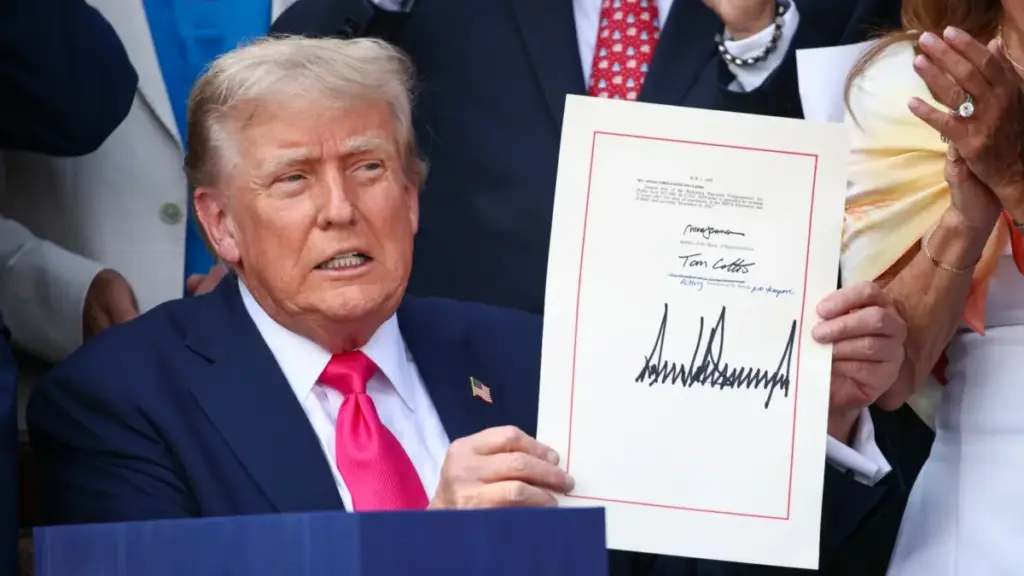
Originally published by Capital B and reproduced as part of the Climate Desk collaboration.
Executive Overview
In a series of landmark federal court decisions, the judiciary has reasserted the boundaries of executive power, pushing back against a sweeping administration effort to dismantle billions of dollars in critical climate and environmental justice investments. At the center of this high-stakes legal battle are two monumental funding streams: the $2.8 billion Environmental and Climate Justice Block Grant Program and a nearly $20 billion slice of the Greenhouse Gas Reduction Fund.
Authored under the legislative architecture of the Inflation Reduction Act (IRA)—President Joe Biden’s cornerstone economic and environmental policy—these programs were explicitly designed to redirect resources toward Black, low-income, and historically marginalized communities. These populations have long borne the disproportionate burden of industrial pollution, substandard infrastructure, and climate change-induced disasters.
However, following a shift in political administration, these generational investments were abruptly frozen and targeted for termination. The ensuing legal showdown has exposed a fundamental constitutional clash over the separation of powers. While federal judges in South Carolina and Washington, D.C., have ordered the Environmental Protection Agency (EPA) to resume the distribution of funds, the administration has doubled down, citing staffing shortages and institutional restructuring to justify further delays and appeals.
For communities like Jackson, Mississippi—where systemic water crises have plagued residents for years—the court rulings represent a fragile lifeline. Yet, as the legal battle lines harden, the real-world toll of frozen funding has already disrupted green-collar workforce programs, delayed emergency resilience infrastructure, and left vulnerable populations caught in the crossfire of national politics.
Detailed Chronology: From Legislative Triumph to Executive Freeze and Judicial Reversal
The turbulent trajectory of these environmental justice funds illustrates the volatile nature of modern climate policy, shifting from hard-fought legislative victories to executive obstruction and, ultimately, judicial intervention.
The Genesis: Investing in the Overburdened (2022–2023)
The foundation for these programs was laid with the passage of the Inflation Reduction Act. Recognizing that low-income and minority communities suffer disproportionately from environmental degradation, lawmakers crafted specific provisions to target funding directly to grassroots organizations, local municipalities, and tribal entities.
By 2023, the EPA had begun rolling out competitive grant allocations under the Environmental and Climate Justice Block Grant Program. Among the prospective beneficiaries was 2C Mississippi, a Ridgeland-based nonprofit founded by climate advocate Dominika Parry. The group secured a life-saving $20 million federal grant earmarked for Jackson, a predominantly Black city still reeling from a catastrophic water infrastructure collapse. For years, residents had faced brown tap water, boil-water notices, and health hazards that disproportionately impacted the city’s elderly and youngest citizens.
Concurrently, the Greenhouse Gas Reduction Fund was structured as a $27 billion national clean-energy financing initiative. Its purpose was to inject capital into historically underserved neighborhoods, making solar installations, home-energy retrofits, and electric vehicle infrastructure financially accessible where traditional green financing had failed to reach.
The Administration’s Pivot: Freezing and Gutting (2024–Early 2025)
The political landscape shifted dramatically with the return of Donald Trump to the White House. Prompted by an aggressive agenda aimed at rolling back federal climate policies and dismantling regulatory structures, the administration moved swiftly to freeze billions in out-the-door environmental grants.
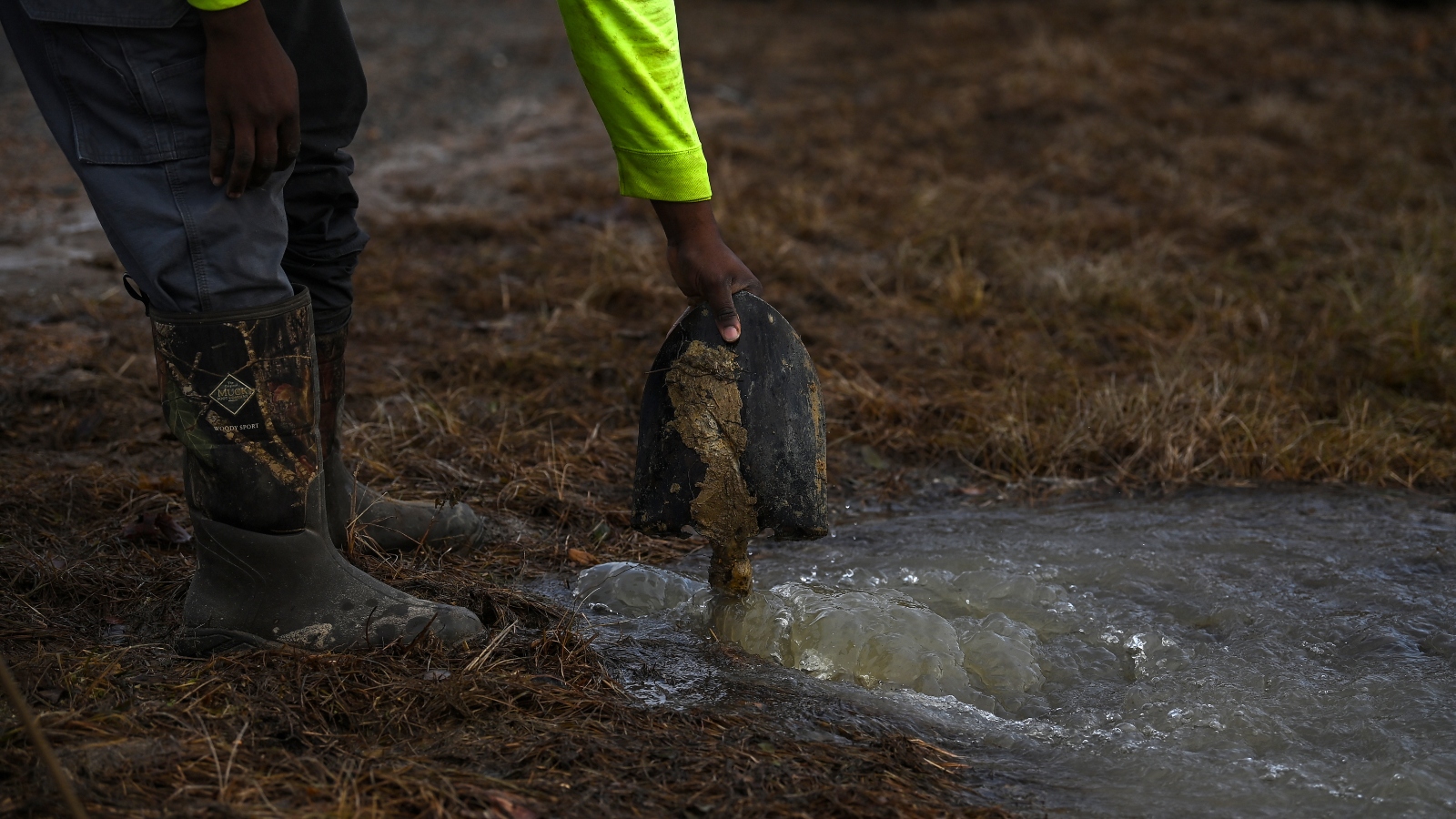
Beginning in February 2025, funds authorized under the IRA were deliberately withheld. According to analyses by the Associated Press, the deliberate dismantling of EPA programs and pollution rules by the new administration was projected to strip away protections that historically prevented roughly 30,000 deaths annually—mortality rates heavily concentrated in Black and low-income neighborhoods.
During this freeze, grassroots initiatives that had received initial 2024 approval found themselves starved of capital. Workforce development programs, such as a Houston-based solar installation initiative designed specifically for formerly incarcerated individuals, were forced to shut down before they could fully establish roots.
The Judicial Pushback: Courts Step In (Mid-2025)
Facing existential threats to their funded projects, environmental justice advocates, non-profits, and municipal leaders joined forces to challenge the administration’s actions in federal court. Their core argument rested on a straightforward constitutional principle: the executive branch cannot unilaterally nullify funding appropriated by Congress.
The judiciary agreed. In a decisive ruling last month, a federal judge in South Carolina ordered the EPA to immediately resume the distribution of grants designed to address environmental and health challenges in underserved communities.
This victory was swiftly compounded by the Washington, D.C. Circuit Court of Appeals, which blocked the EPA from rescinding nearly $20 billion in Greenhouse Gas Reduction Fund awards. Combined, these rulings have pried open more than $22 billion intended to transform the environmental landscape of America’s most vulnerable communities.
Supporting Context & Metrics: The Human and Economic Toll
To understand the gravity of these legal proceedings, one must examine the specific projects and systemic disparities the funding was meant to address. The freezing of capital was not merely an administrative delay; it froze tangible solutions to life-threatening conditions.
The Jackson, Mississippi Resilience Hub
The $20 million federal grant targeted for Jackson through 2C Mississippi was more than an environmental upgrade—it was an emergency lifeline. Decades of infrastructural neglect left Jackson’s municipal water system deeply vulnerable. When severe weather or routine failures occurred, water pressure vanished, and what little liquid emerged from household taps was frequently brown and contaminated, leaving residents with skin rashes and severe health complications.
The proposed resilience hub aimed to change this dynamic by funding:
- An Independent Micro-Electric Grid: Designed to keep lights and power operational even during citywide grid failures.
- An Independent Water Well: Providing a reliable, clean source of drinking water entirely separate from the failing municipal supply.
- Emergency Shelter Infrastructure: Providing overnight accommodations, showers, and safe conditions for up to 150 people at a time during environmental or infrastructural disasters.
As Dominika Parry previously noted, the goal was to construct "a place where people can come, stay overnight, have access to energy, be in healthy conditions."
Workforce Development and the Loss of Human Potential
The impact of the funding freeze extended far beyond civic infrastructure; it disrupted human lives. In Houston, a solar installation training program tailored for formerly incarcerated individuals provided a crucial second chance at economic stability.
Leon Dillard, a participant in the program before federal cuts pulled the plug, spoke candidly about the transformation the initiative provided. "I really just needed to be a part of it, be a part of something," Dillard explained. "You have to make a choice to take a chance, or your life will never change. But you need other people with you on that journey." With the program’s demise, participants lost both a reliable pathway to the green-energy economy and the institutional support network vital for successful reentry.
Institutional Strain at the EPA
Compounding the administrative gridlock is the unprecedented contraction of the EPA itself. Since 2024, the agency has shed roughly 25% of its workforce through buyouts, attrition, and targeted reductions, bringing its staff totals to historical lows. The administration has weaponized these self-inflicted staffing shortages in legal briefs, arguing that the EPA currently lacks the personnel and administrative capacity required to disburse the billions in contested funds.
Official Statements and Expert Analysis
The conflict has drawn sharp reactions from legal scholars, policy analysts, and economists who view the administration’s actions as a dangerous expansion of executive overreach.
Matt Sedlar, a climate analyst at the Center for Economic and Policy Research, underscored the broader constitutional implications of the court rulings. In the wake of the South Carolina and D.C. Circuit decisions, Sedlar emphasized that the outcomes are "sending a message to the administration that the separation of powers exists and that it must follow the law."
Legal experts point out that while the executive branch holds wide discretion in how it manages agencies, it cannot ignore statutory appropriations enacted by Congress under Article I of the Constitution. The Inflation Reduction Act remains the law of the land unless explicitly repealed or amended by the legislative branch—a hurdle the administration has struggled to clear entirely, despite legislative maneuvers like the so-called "One Big Beautiful Bill Act" signed into law in mid-2025, which aimed to repeal major portions of the original IRA.
Conversely, administration officials have maintained that federal agencies possess the authority to pause spending programs that do not align with current executive priorities, arguing that legacy programs stretch agency resources thin and require structural review.
Future Outlook: What Lies Ahead for Environmental Justice Funding?
Despite the recent victories secured by plaintiffs in federal courts, the fight over the $22 billion in climate and environmental justice funds is far from over.
- Pending Appeals: The administration has already initiated legal steps to appeal the South Carolina federal judge’s ruling regarding the Environmental and Climate Justice Block Grant Program. Legal observers anticipate similar appeals targeting the D.C. Circuit Court’s decision on the Greenhouse Gas Reduction Fund.
- Administrative Drag: Even if the courts ultimately compel the EPA to disburse the funds, the severe depletion of agency staff—down a quarter since 2024—creates a profound operational bottleneck. Distributing billions of dollars requires rigorous oversight, grant management, and technical assistance, capacities that have been intentionally hobbled by internal reductions.
- Resilience on the Ground: Local organizations and grassroots leaders like Dominika Parry in Jackson remain steadfast. While federal bureaucracy and political crosswinds stall immediate execution, community networks are pressing forward, relying on coalition-building and ongoing legal representation to ensure that the promises made under the Inflation Reduction Act eventually translate into clean water, stable micro-grids, and green jobs for the Americans who need them most.
Ultimately, these court rulings serve as a vital stress test for American democratic institutions. They demonstrate that while political winds can abruptly shift the priorities of the executive branch, the system of checks and balances—enforced by an independent judiciary and vigilant community advocates—remains a powerful bulwark for environmental justice.