The built environment has long operated on a paradigm of extraction, dominance, and separation from the living world. Buildings are designed to conquer sites, sealing occupants inside climate-controlled envelopes while treating the surrounding ecology as an afterthought or an aesthetic backdrop. As the compounding crises of climate breakdown, biodiversity loss, and resource depletion accelerate, this human-centric orthodoxy is no longer just ecologically untenable; it is professionally obsolete.
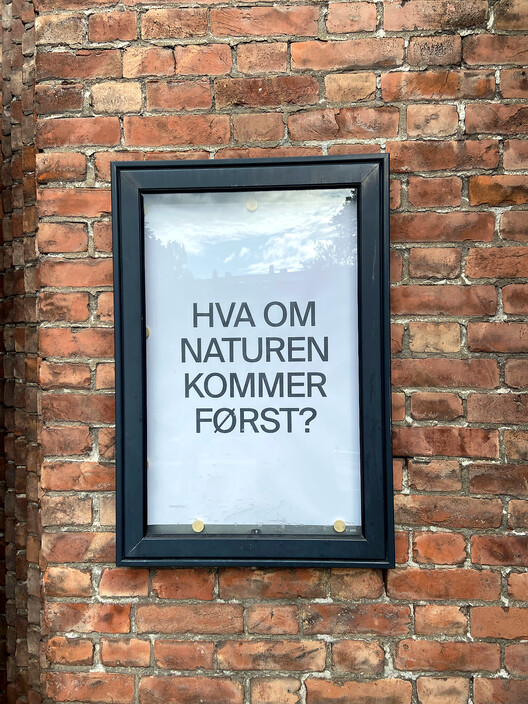
It is against this urgent backdrop that the 9th Oslo Architecture Triennale (OAT) unfolds. Running from September 17 to October 1, 2026, the biennial-turned-triennial event has positioned itself as one of the most critical testing grounds for architectural ideology in the twenty-first century. Under the provocative overarching theme "What if Nature Comes First?", the 2026 edition challenges architects, urban planners, designers, and policymakers to invert their foundational methodologies. Rather than asking how nature can be integrated into architecture, the Triennale asks what happens when architecture submits to, learns from, and serves as an active participant within natural systems.
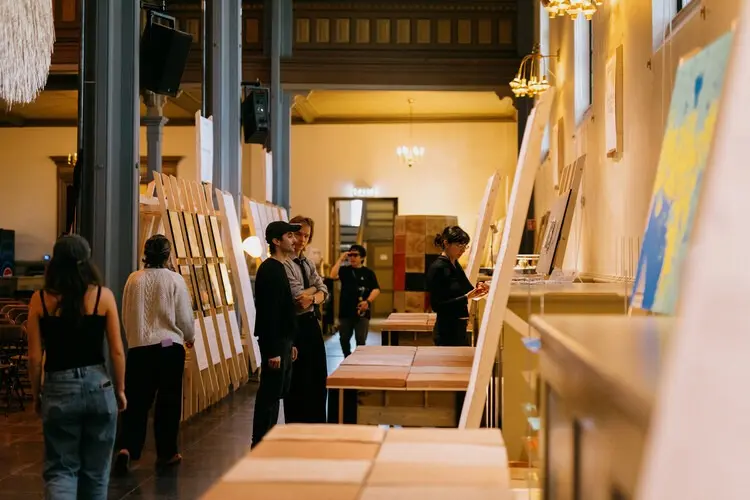
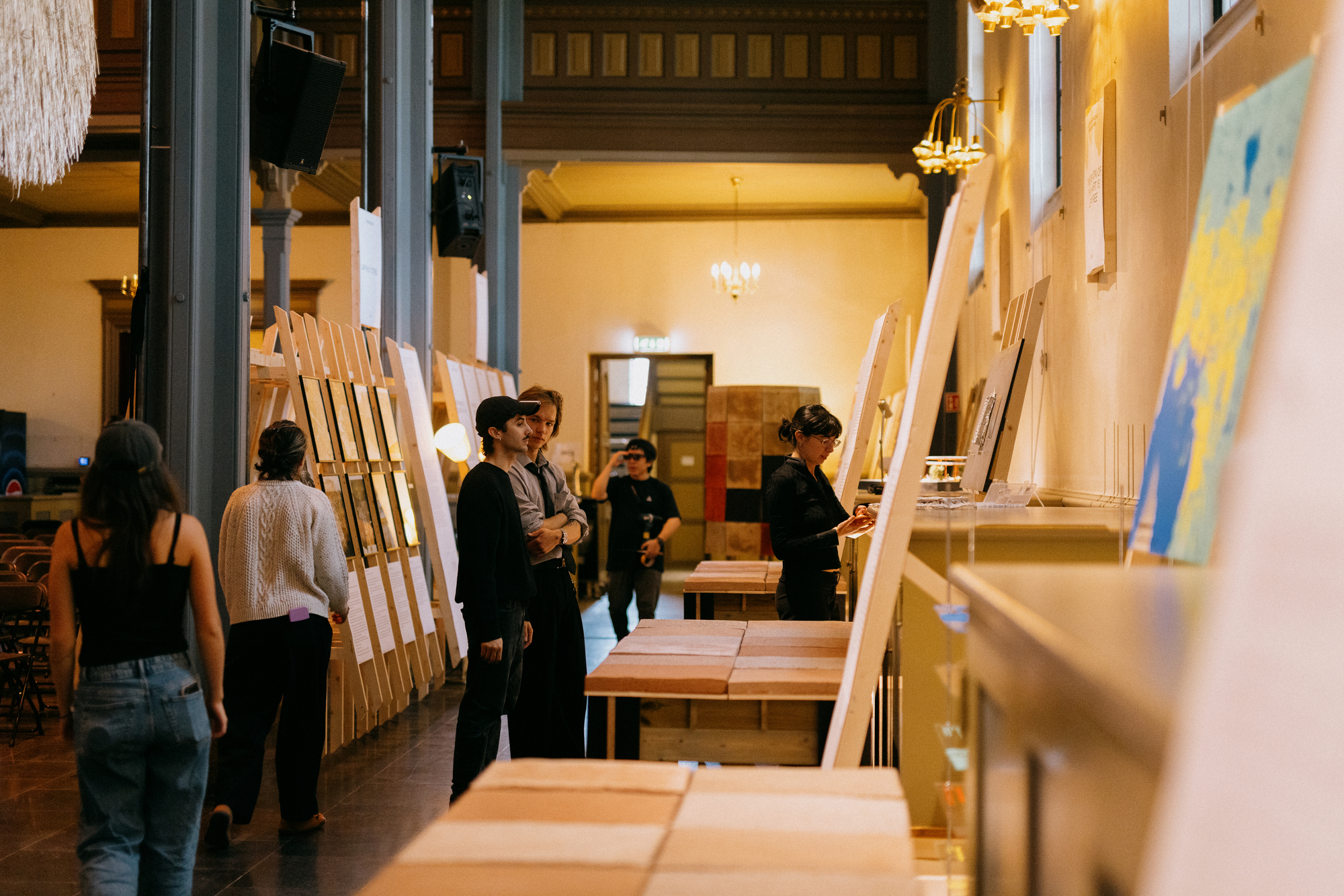
The main venue for this year’s discourse is as symbolic as the ideas housed within it: the historic Sofienberg Church. A 19th-century Gothic brick landmark currently undergoing a complex adaptive reuse transformation from a place of worship into a vibrant cultural center, the building itself embodies the themes of cyclical transformation, resource stewardship, and spatial reinterpretation. Inside its vaulted halls, an international roster of thinkers and practitioners are gathering for two weeks of rigorous seminars, debates, collaborative workshops, and boundary-pushing exhibitions.
This comprehensive report explores the ideological shifts, spatial experiments, and pragmatic lessons emerging from the 2026 Oslo Architecture Triennale, charting a course toward an era where nature is no longer a resource to be managed, but the absolute starting point for design.
Detailed Chronology: Unfolding the Triennale
The trajectory of the 9th Oslo Architecture Triennale has been carefully orchestrated to move participants and visitors from philosophical provocation to tangible, systemic execution. The event’s schedule is structured as a progressive narrative across its two-week intensive window.
Phase One: Awakening and Deconstruction (September 17 – September 20)
The opening days of the Triennale were dedicated to confronting the architectural industry’s complicity in ecological degradation. Opening ceremonies at Sofienberg Church drew international delegations of architects, landscape urbanists, and environmental scientists.
Keynotes on opening weekend focused on the "epistemic shock" required to shift from sustainable development—which critics argue still prioritizes human economic growth—to regenerative design, which prioritizes the health of the biosphere. Exhibitions curated by international collectives laid bare the material flows of contemporary construction, tracking the lifecycle of concrete, steel, and timber from extraction sites in the Global South and North to urban centers like Oslo. Workshops during this initial block challenged participants to design structural interventions that leave zero ecological footprint behind, forcing a reckoning with temporary, reversible, and biodegradable architecture.
Phase Two: Dialogue, Friction, and Cross-Disciplinary Synthesis (September 21 – September 25)
As the Triennale entered its second week, the focus shifted from critique to active debate. Panel discussions tackled the knotty intersections of policy, zoning laws, and ecological priorities. Urban planners from Scandinavian municipalities debated the friction between densification mandates and the preservation of urban green corridors and micro-ecosystems.
A standout series of symposiums during this mid-week window explored the concept of "more-than-human" design. Presenters showcased case studies where non-human stakeholders—such as migratory birds, river networks, fungal networks, and local pollinators—were formally accounted for in spatial planning matrices. Architects collaborated directly with ecologists and indigenous land stewards to draft theoretical manifestos for "biocentric governance" in urban development.
Phase Three: Legacy, Synthesis, and Future Horizons (September 26 – October 1)
The final stretch of the 2026 Triennale focuses on consolidation and legacy. As public attendance peaks, the emphasis turns to translating the theoretical explorations housed within Sofienberg Church into actionable frameworks that firms can adopt upon returning to their home practices.
Closing debates are scheduled to synthesize the findings of the various workshops into an open-source charter for ecological architecture. Furthermore, guided tours of the ongoing adaptive reuse of Sofienberg Church provide a live, physical demonstration of how historic preservation can intersect with circular economy principles, ensuring that the venue itself remains a permanent monument to the lessons of OAT26.
Supporting Context & Metrics: The Paradigm Shift in Numbers
To understand the weight of the questions posed by the 2026 Oslo Architecture Triennale, one must examine the stark metrics defining the contemporary building sector. Architecture and construction are responsible for roughly 37% of global energy-related carbon emissions and over 50% of global material extraction. In Norway—a nation that prides itself on progressive environmental policies—the construction industry remains a massive consumer of virgin resources and a primary driver of habitat fragmentation.
Metric Indicator
Global Construction Sector
OAT26 Target / Ideal Benchmark
Global Carbon Emissions
~37% of total energy-related emissions
Net-zero embodied & operational carbon by 2040
Raw Material Consumption
>50% of global resource extraction
>75% circular, bio-based, or reused materials
Ecosystem Net Impact
Net-negative (habitat loss, fragmentation)
Net-positive biodiversity gain per project
Water Stewardship
High linear consumption & runoff generation
Closed-loop on-site retention & filtration
The discourse at Sofienberg Church directly challenges these baselines. Speakers have repeatedly emphasized that decarbonizing operations (making buildings energy efficient) is no longer sufficient; the industry must aggressively tackle embodied emissions and ecological footprint.
This is where the Triennale’s central theme—"What if Nature Comes First?"—transforms from a poetic abstraction into a rigorous technical metric. If nature comes first, a building cannot be designed simply to meet energy codes while its structural components strip-mine foreign ecosystems. Instead, material selection becomes an exercise in regional ecological health: utilizing rapidly renewable bio-materials like hemp-crete, local earth, mycelium composites, and responsibly managed regional timber.
Moreover, the venue itself—Sofienberg Church—serves as a primary metric of success. By choosing an adaptive reuse project rather than a new construction showcase, the Triennale organizers underscore a vital statistical reality: the greenest building is already the one that has been built. Transforming an obsolete 19th-century house of worship into a modern cultural hub avoids the carbon spike of demolition and new structural framing, proving that heritage conservation and forward-thinking ecological design are deeply intertwined.
Official Statements and Curatorial Vision
The intellectual backbone of the 9th Oslo Architecture Triennale is shaped by its curatorial team, advisors, and participating international thinkers. Their statements illuminate the urgent philosophy driving this year’s exhibitions.
In the lead-up to the event, the curatorial collective articulated the core dilemma facing modern designers:
"For centuries, architecture has defined its success through its separation from nature—its ability to keep the elements out, to master the site, and to project human order onto chaotic terrain. But this mastery has become a trap. By treating the biosphere as a secondary consideration, we have engineered our own vulnerability. The 2026 Triennale is not an exercise in greenwashing or cosmetic landscaping. It is an invitation to dismantle the architectural ego and rebuild our discipline from the soil up."
Reflecting on the choice of venue, local cultural authorities and OAT organizers noted the profound symbolism of Sofienberg Church:
"A church is traditionally a space that connects humanity to the transcendental, the divine, and the eternal. By repurposing Sofienberg Church as the epicentre for a Triennale dedicated to nature, we are shifting the object of our reverence. We are asking our community to look past human dogma and recognize the complex, living web of our local and global ecosystems as the ultimate sacred structure that requires our absolute stewardship."
Participants across the workshops have echoed these sentiments, emphasizing that the shift requires a fundamental retraining of architects. Designers must learn to read landscapes not as blank slates or real estate opportunities, but as active archives of hydrology, geology, and biodiversity that dictate the terms of any structural intervention before a single line is drawn.
Future Outlook: Beyond Oslo 2026
As the 9th Oslo Architecture Triennale draws to a close on October 1, 2026, the critical question facing the international design community is what happens next. Exhibitions dismantle, visitors depart, and temporary installations are recycled or returned to the earth. However, the intellectual shockwaves generated within the vaulted brick walls of Sofienberg Church are designed to ripple outward across global architectural practice for years to come.
1. Re-engineering Architectural Education
One of the most immediate impacts of OAT26 is expected to be felt in university architecture faculties. Traditional curricula—which have historically prioritized formal composition, structural heroics, and financial yield per square meter—are facing renewed pressure to integrate ecological literacy as a foundational core requirement. Schools of architecture are expected to adopt "nature-first" design studios, where students must co-design human habitations alongside non-human life forms, factoring in watershed dynamics, soil restoration, and seasonal ecological shifts from day one.
2. Regulatory and Policy Shifts
While festivals and triennales can inspire, systemic change requires legislative backing. Municipal leaders and urban policymakers attending the Oslo sessions are taking home new frameworks for spatial planning. The concept of granting legal personhood or protected rights to natural features—such as rivers, forests, and urban parks—is gaining traction in European governance. Architects working in tandem with city planners will increasingly find themselves bound by municipal codes that penalize ecological disruption and reward regenerative, nature-integrated development.
3. The Rise of Biocentric Practice
Ultimately, the legacy of the 2026 Oslo Architecture Triennale lies in its challenge to the professional identity of the architect. The romanticized archetype of the lone designer imposing a heroic, sculptural monument onto a passive landscape is giving way to a more humble, collaborative role: that of the custodian, the facilitator, and the ecological translator.
As the construction industry grapples with tightening planetary boundaries, the lessons of OAT26 offer a clear and uncompromising roadmap. Nature cannot remain an accessory, a green roof garnish, or a late-stage mitigation strategy. For architecture to remain relevant—and indeed, for human civilization to persist—nature must be acknowledged as what it has always been: the absolute foundation upon which all human endeavor rests.