

Executive Overview
The global transition toward a circular economy has positioned the biogas and renewable natural gas (RNG) industries at the forefront of modern environmental infrastructure. As legacy waste management firms near the completion of their initial wave of landfill-gas-to-RNG commitments, the sector is undergoing a strategic pivot. Rather than focusing solely on basic capture, industry leaders are increasingly diversifying their portfolios—optimizing existing infrastructure, venturing into wastewater treatment advancements, and pioneering agricultural waste-to-energy projects.
According to a landmark report released by the American Biogas Council (ABC), wastewater treatment plants (WWTPs) continue to anchor the U.S. biogas landscape. Operating nearly half of all anaerobic digesters in the country, these facilities are demonstrating that municipal infrastructure can serve dual purposes: safeguarding public health while simultaneously generating green energy and valuable byproducts. Concurrently, private sector players are securing massive agricultural and landfill contracts, supported by fluctuating yet resilient carbon credit markets.
This comprehensive review examines the state of the biogas industry, analyzing the latest statistical reports from the ABC, corporate developments from major energy and waste firms throughout September, and the broader economic metrics shaping the renewable energy economy.
Detailed Chronology: September Industry Milestones
The month of September 2026 was marked by significant capital deployment, strategic partnerships, and facility inaugurations across the North American biogas sector. From North Carolina to California and Illinois, project developers demonstrated the growing commercial viability of converting organic waste streams into high-value energy products.
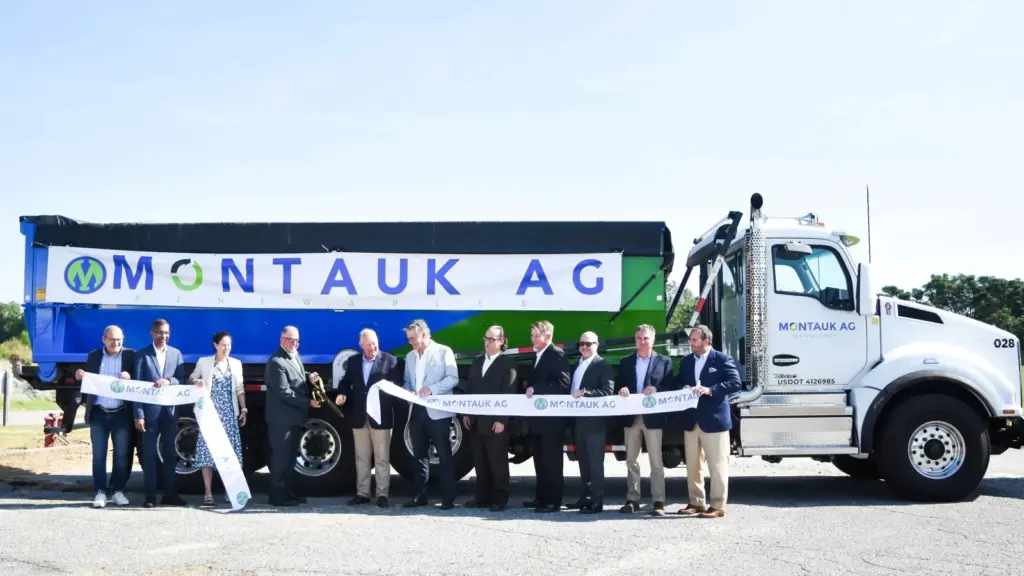
Mid-September: Montauk Renewables Opens Swine Waste Facility
On September 15, executives from Montauk Renewables, alongside local dignitaries, officially inaugurated a massive $200 million anaerobic digestion facility in Turkey, North Carolina. The state-of-the-art project is designed to capture agricultural methane emissions by harvesting manure biogas from a vast network of partner locations to generate electricity.
According to statements from Montauk Renewables CEO Sean McClain, the enterprise is underpinned by long-term feedstock agreements spanning more than 80 farming locations in the region. To secure economic stability, Montauk has locked in a 10-year power purchase agreement to sell its electricity output. Additionally, the company finalized a secondary agreement to market roughly one-third of the renewable energy certificates (RECs) generated by the facility directly to Duke Energy, as detailed in Montauk’s 2025 annual report.
At full operational capacity, the Turkey facility is expected to yield up to 41 megawatt-hours (MWh) of electric power annually. Furthermore, the digestion process yields roughly 870 tons of high-grade organic fertilizer alternatives each year, providing regional agriculture with a sustainable substitute for synthetic, fossil-fuel-derived fertilizers. This milestone coincides with robust financial health for Montauk Renewables, which reported a 19.7% year-over-year surge in second-quarter revenues, reaching $54 million, alongside a 3% increase in RNG production to 1.5 million million British thermal units (mmBtus).
Mid-September: Waga Energy Secures LRS Partnership in Illinois
On September 15, French RNG developer Waga Energy—backed by private equity—announced that Lakeshore Recycling Systems (LRS) had selected the firm to engineer, construct, own, and operate a pioneering RNG facility at the Eco-Hill Landfill. Situated in Atkinson, Illinois, the Eco-Hill site serves as LRS’s sole owned landfill asset and plays a critical operational role for the greater Chicago waste market.
The incoming facility is projected to process landfill gas with an initial capacity of 3,000 standard cubic feet per minute (scfm), translating to an estimated annual output of 610,000 mmBtus of pipeline-quality RNG. Under the terms of the agreement, LRS will secure an ongoing share of the revenues generated from the commercial sale of the RNG produced on-site. Construction is currently underway, with commercial operations slated to commence in 2028.
Early September: Casella and Waga Energy Commission Third RNG Facility
Earlier in the month, on September 3, Waga Energy and Casella Waste Systems jointly announced the successful commercial startup of their third collaborative landfill gas project. Located at Casella’s McKean Landfill in Mount Jewett, Pennsylvania, the facility represents another milestone in the multi-site partnership between the two companies.
The McKean plant is designed to process 2,000 scfm of landfill gas, yielding up to 407,000 mmBtus of RNG annually once fully ramped up. Production at the site is actively scaling. The broader partnership between Casella and Waga encompasses three distinct landfill sites. Under the agreement framework, Waga provides 100% of the capital expenditure for construction, retaining ownership and operational control for a 20-year term, while revenue from RNG sales is shared dynamically between the two entities.
Mid-September: Opal Fuels Expands California Footprint
Opal Fuels made significant headlines in mid-September regarding its dual-pronged biogas and compressed natural gas (CNG) portfolio in California. On September 16, Opal announced the successful five-year renewal of its operating agreement with the City of San Diego for the landfill-gas-to-energy project located at the Miramar Landfill. Operating continuously since 1998, this mature facility generates approximately 400,000 MWh of electricity annually, providing reliable baseload renewable power to the local grid.
This renewal followed closely on the heels of an August-into-September expansion at Opal’s CNG fueling station in Goshen, California. Following comprehensive facility renovations, Opal added 1.7 million gasoline gallon equivalent (GGE) units of throughput capacity, integrated with RNG capabilities. Opal originally acquired the Goshen site in 2025 and has aggressively invested capital into its broader project portfolio—injecting $52.7 million during the first half of 2026 alone. When Opal reported its Q2 2026 financial results, it highlighted a 4% year-over-year revenue increase, with total half-year RNG production reaching 2.4 million mmBtus, representing a 6% volumetric growth over the prior-year period.
Supporting Context & Metrics: The American Biogas Council Wastewater Report
To understand where the industry is heading, one must examine the foundational infrastructure highlighted in the American Biogas Council’s newly released wastewater report. Wastewater treatment plants (WWTPs) were the pioneering adopters of anaerobic digestion technology, and they continue to maintain a dominant market share.
According to the ABC report, wastewater facilities operate 47% of all anaerobic digesters installed in the United States. The data reveals that 29 new wastewater digestion facilities have come online nationwide since 2020, bringing the total count of active WWTP digester sites to 1,213.
The Opportunity in Flow Rates and Adoption
Industry analysts generally consider wastewater treatment plants ideal candidates for anaerobic digestion when their daily influent flow rate reaches or exceeds 1 million gallons per day (MGD). However, ABC’s analysis indicates that only about 24% of qualifying facilities currently operate active digesters. This leaves a vast, untapped market of municipal facilities that could adopt anaerobic digestion to capture fugitive emissions, reduce sludge volumes, and generate valuable renewable energy.
"Our survey shows there are opportunities to do more — by expanding anaerobic digestion where it makes sense and getting more value from the digesters already in place," stated ABC Executive Director Patrick Serfass.
Evolution Beyond Basic Power Generation
Historically, WWTP digesters focused narrowly on generating thermal energy or electricity for on-site facility use. However, the nature of these installations has shifted dramatically since 2018. A growing percentage of facilities are now retrofitting their infrastructure to:
- Upgrade Biogas to RNG: Transforming raw biogas into pipeline-grade biomethane to inject into local gas distribution grids or sell to the transportation sector.
- Combined Heat and Power (CHP): Maximizing thermodynamic efficiency by simultaneously producing electricity and usable thermal energy.
- Co-Digestion: Accepting high-strength organic wastes (such as food scraps, fats, oils, and greases) alongside traditional municipal wastewater sludge to significantly boost gas yields and tipping fee revenues.
Currently, wastewater digesters capture more than 100 billion cubic feet of biogas annually across the United States. ABC estimates that if the remaining qualifying facilities adopted anaerobic digestion, the sector could capture an additional 70 billion cubic feet of biogas each year.
Carbon and Environmental Credit Markets Snapshot
The financial viability of biogas and RNG projects is deeply intertwined with regulatory credit pricing. Below is a snapshot of carbon and renewable fuel credit valuations as of October 7, 2026, tracked by EcoEngineers:
- D3 RIN (Renewable Identification Number) Prices: Sitting at $2.294, down slightly from $2.380 in 2025. D3 RINs are generated specifically from cellulosic biofuels such as RNG derived from agricultural waste and landfills.
- D5 RIN Prices: Registered at $2.085, up modestly from $2.060 in 2025, reflecting steady demand for advanced biofuels.
- Oregon Clean Fuels Program (CFP): Priced at $81 per metric ton of carbon dioxide equivalent ($/MT CO2e).
- California Low Carbon Fuel Standard (LCFS): Valued at $88 per metric ton of carbon dioxide equivalent ($/MT CO2e).
These credit mechanisms provide crucial secondary revenue streams for project developers, subsidizing capital-intensive infrastructure and buffering against raw commodity price fluctuations.
Official Statements and Industry Perspectives
The convergence of municipal policy, private equity investment, and agricultural partnership has elicited commentary from key figures across the renewable energy ecosystem.
Industry leaders emphasize that the low-hanging fruit of the biogas revolution—such as easily accessible large landfills—is gradually being tapped out. Consequently, future growth relies on innovation in more complex sectors.
"Our survey shows there are opportunities to do more — by expanding anaerobic digestion where it makes sense and getting more value from the digesters already in place."
— Patrick Serfass, Executive Director, American Biogas Council
Meanwhile, agricultural developers are leaning into localized partnerships. Commenting on the multi-farm aggregation model deployed in North Carolina, Montauk Renewables leadership highlighted the complexity and reward of integrating dozens of independent swine operations into a unified energy grid.
Similarly, private equity-backed players like Waga Energy have validated a decentralized infrastructure model, where developers shoulder 100% of the capital expenditure risk while partnering with established regional waste haulers like LRS and Casella. This risk-sharing framework has accelerated deployment times and expanded geographic footprints across secondary and tertiary markets.
Future Outlook: The Next Phase of Biogas Integration
As the biogas industry looks toward the late 2020s, several critical trends are poised to shape its trajectory:
- Monetization of End-Uses: With many large-scale landfill RNG commitments reaching maturity, developers are exploring novel end-uses. This includes direct-wire electricity for electric vehicle (EV) charging fleets, hydrogen production via biomethane reforming, and the creation of specialized biological chemicals.
- Municipal Co-Digestion Expansion: Given that three-quarters of qualifying wastewater plants still lack anaerobic digesters, municipal infrastructure represents the single largest growth frontier. Driven by local zero-waste mandates and tightening state-level organic waste landfill bans, cities are increasingly viewing WWTPs as regional organic processing hubs.
- Regulatory and Market Adaptation: Fluctuations in D3 RIN pricing and state-level LCFS markets (such as those in California and Oregon) underscore the need for financial resilience. Developers are structuring long-term offtake agreements with corporate buyers and utilities to hedge against regulatory volatility.
- Agricultural Consolidation: Projects like Montauk’s swine waste facility in North Carolina prove that decentralized agricultural feedstocks can be aggregated successfully. As environmental scrutiny over concentrated animal feeding operations (CAFOs) intensifies, manure-to-RNG and manure-to-power projects will likely attract substantial institutional capital.
In conclusion, the biogas sector has graduated from an experimental environmental niche into a sophisticated, capital-intensive pillar of the modern energy economy. By bridging municipal wastewater management, agricultural waste mitigation, and advanced landfill gas capture, the industry is well-positioned to deliver sustained environmental and financial dividends in the years ahead.



