As the global community grapples with the compounding crises of rapid climate change and severe biodiversity loss, scientists and conservationists are increasingly turning to the past to chart a sustainable future. Historical archives, long sitting dormant in dusty museum basements and specialized research libraries, represent an invaluable, untapped reservoir of baseline ecological data. For two decades, the Biodiversity Heritage Library (BHL)—the world’s largest open-access digital library for biodiversity literature and archives—has stood at the vanguard of preserving and democratizing this wealth of information.
Housing a staggering corpus of over 64 million pages, the BHL is evolving from a passive digital repository into an active engine for scientific discovery. Recently, a landmark initiative spearheaded by Harvard University’s Ernst Mayr Library (EML) and the Museum of Comparative Zoology (MCZ) has successfully digitized and transcribed the ornithological field journals, notebooks, and bird lists of Walter Faxon, a prominent 19th- and early 20th-century Harvard zoologist.
Spanning 33 years of meticulous observations (1886–1919), Faxon’s writings contain thousands of granular species occurrences detailing dates, localities, population counts, life stages, and vocalizations. By harnessing cutting-edge artificial intelligence models—specifically ChatGPT and Claude—in tandem with human oversight via a prestigious Pforzheimer Fellowship, researchers have bridged the gap between fragile handwritten manuscripts and global biodiversity databases like the Global Biodiversity Information Facility (GBIF). This project not only showcases the immense potential of AI in historical document transcription but also underscores the indispensable role of human expertise in navigating the complexities of historical ecology.
Detailed Chronology
The journey of Walter Faxon’s papers from physical artifacts to globally searchable, open-access datasets is a testament to the intersection of historical preservation and modern computational power.
The Life and Legacy of Walter Faxon (1848–1920)
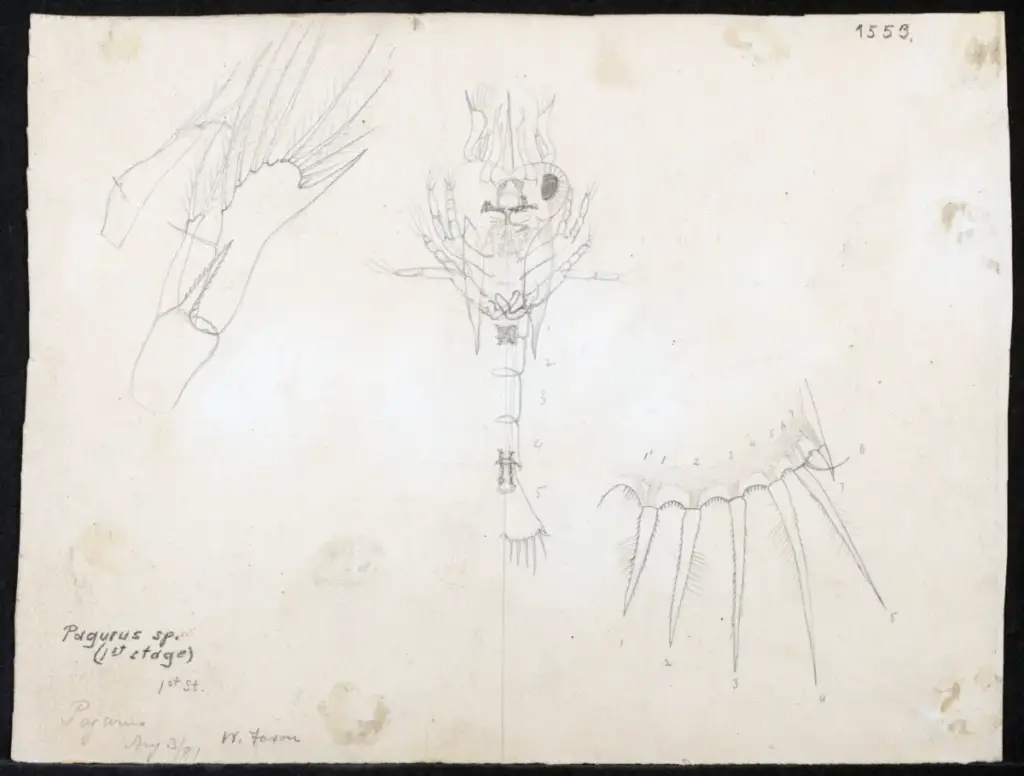
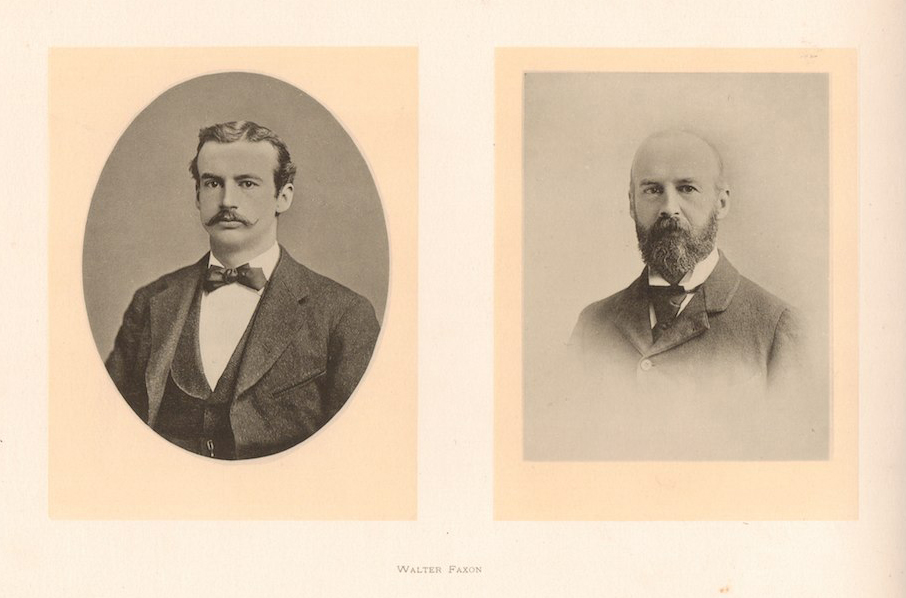
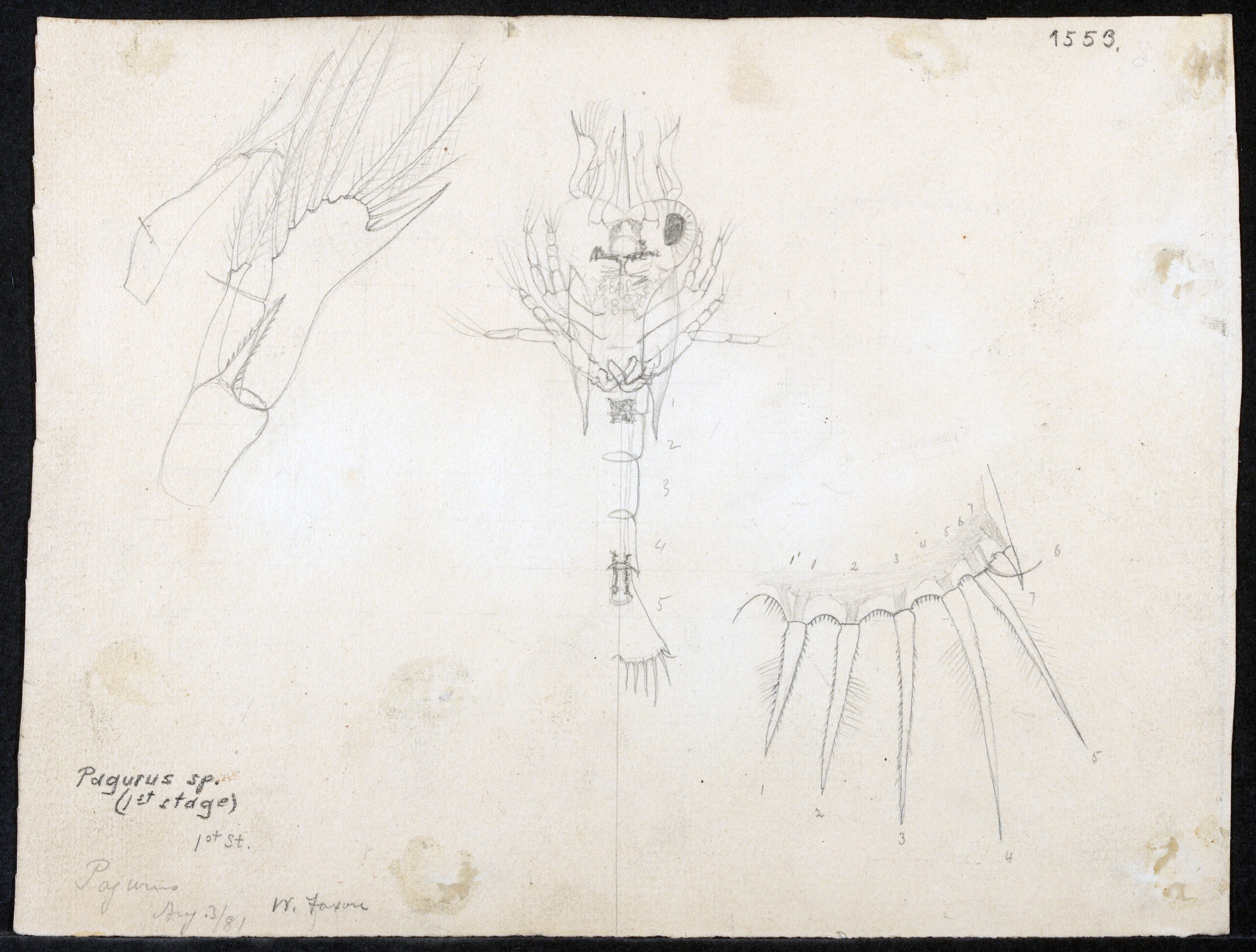
Born in Massachusetts on February 4, 1848, Walter Faxon established himself as a towering figure in American zoology. He served as an Assistant Professor of Zoology at Harvard University from 1872 to 1886 and dedicated an astonishing 46 years (1874–1920) as the Curator of the Invertebrate Department at Harvard’s Museum of Comparative Zoology (MCZ). While his professional academic career focused primarily on crustaceans and mollusks—publishing foundational works and crafting precise pencil illustrations of hermit crabs and other arthropods—Faxon harbored a lifelong passion for ornithology.
Though bird watching was technically an avocation, Faxon approached it with the rigorous discipline of a master scientist. He spent nearly six decades in the field, earning election as a Fellow of the American Ornithologists’ Union from 1901 to 1904. Contemporaries lauded his extraordinary fieldcraft, noting that his scrupulous care to avoid error made his bird identifications virtually unquestionable.
Modern Digitization and the Pforzheimer Fellowship (2025–2026)
Following decades of quiet preservation within the Ernst Mayr Library—where they sat alongside related collections such as the papers of William Brewster—Faxon’s ornithological manuscripts were prioritized for modern digital rescue.
2025: With financial and logistical support from the Harvard Library Collections Digitization Program under its designated Climate Change theme, the fragile physical collection—consisting of approximately 2,200 pages of manuscripts, drawings, and field notes—was professionally imaged.
June 1 – August 31, 2026: The EML hosted Mohit Mandal, a Harvard PhD candidate in Anthropology, as the 2026 Pforzheimer Fellow. Mandal’s core mission was to evaluate, test, and deploy AI-powered transcription workflows capable of converting Faxon’s complex, handwritten field journals and bird lists into clean, standardized digital text.
Mandal’s methodological approach began with a rigorous comparative evaluation of leading large language models, pitting OpenAI’s ChatGPT against Google Gemini. While Gemini demonstrated exceptional transcription accuracy, its utility was hampered by restrictive file upload limits and closed ecosystem constraints (such as an incompatibility with Microsoft Word). Consequently, Mandal selected ChatGPT for its superior flexibility in follow-up prompting and its capacity to maintain formatting consistency through custom user instructions.
To ensure maximum fidelity, Mandal implemented a dual-AI verification pipeline: initial transcriptions generated by ChatGPT were cross-examined and refined using Anthropic’s Claude, leveraging the complementary strengths of both architectures to mitigate errors. By the conclusion of the fellowship in late August 2026, the ambitious goal of transcribing nearly 2,000 manuscript pages had been successfully achieved.
Supporting Context & Metrics
To fully appreciate the significance of the Faxon collection, one must examine the quantitative scope of the materials and the specific technical hurdles overcome during the AI-assisted transcription process.
Collection Metrics & Composition
Total Corpus Size: Over 2,200 pages of manuscript materials, including field journals, bird lists, field notebooks, correspondence, and eight detailed pencil drawings of Arthropoda and Crustacea.
Core Ecological Data: 1,640 pages dedicated specifically to field journals, bird lists, and notebooks compiled between 1886 and 1919.
Data Density: Thousands of individual species occurrence records containing precise binomial nomenclature, dates, geographic localities, and population counts, frequently enriched with behavioral notes such as vocalizations, sex, and life stage.
Technical Challenges in AI Handwriting Recognition
Despite the sophistication of models like ChatGPT-5.5 and Claude, transcribing 19th-century cursive and handwritten notes exposed distinct technological limitations. The primary obstacles encountered during the project included:
Physical Degradation: Faded pencil markings, smudged text, and marginalia written at irregular angles frequently eluded standard optical character recognition and AI pattern recognition. In some instances, angular marginal notes were ignored entirely by the models.
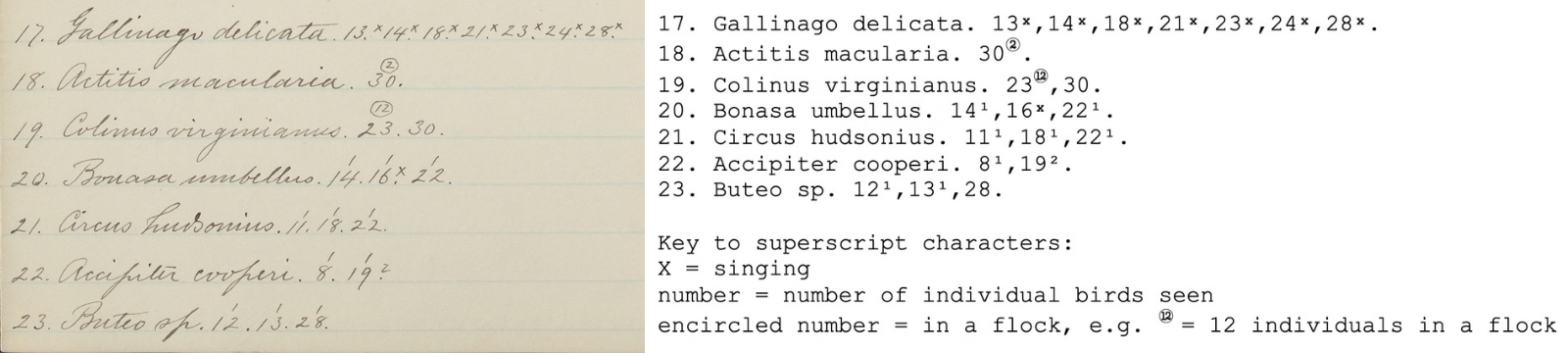
The "Interlinear" Problem: One of Faxon’s distinct record-keeping habits was placing tiny numbers and symbols between the primary lines of text to denote population sizes, singing behavior, or flock structures. Standard word processors (like Microsoft Word and Google Docs) and baseline AI tokenization models struggled with these vertical spatial constraints, often stripping the interlinear characters out entirely. Mandal ultimately resolved this by training ChatGPT to format these notes as superscript text.
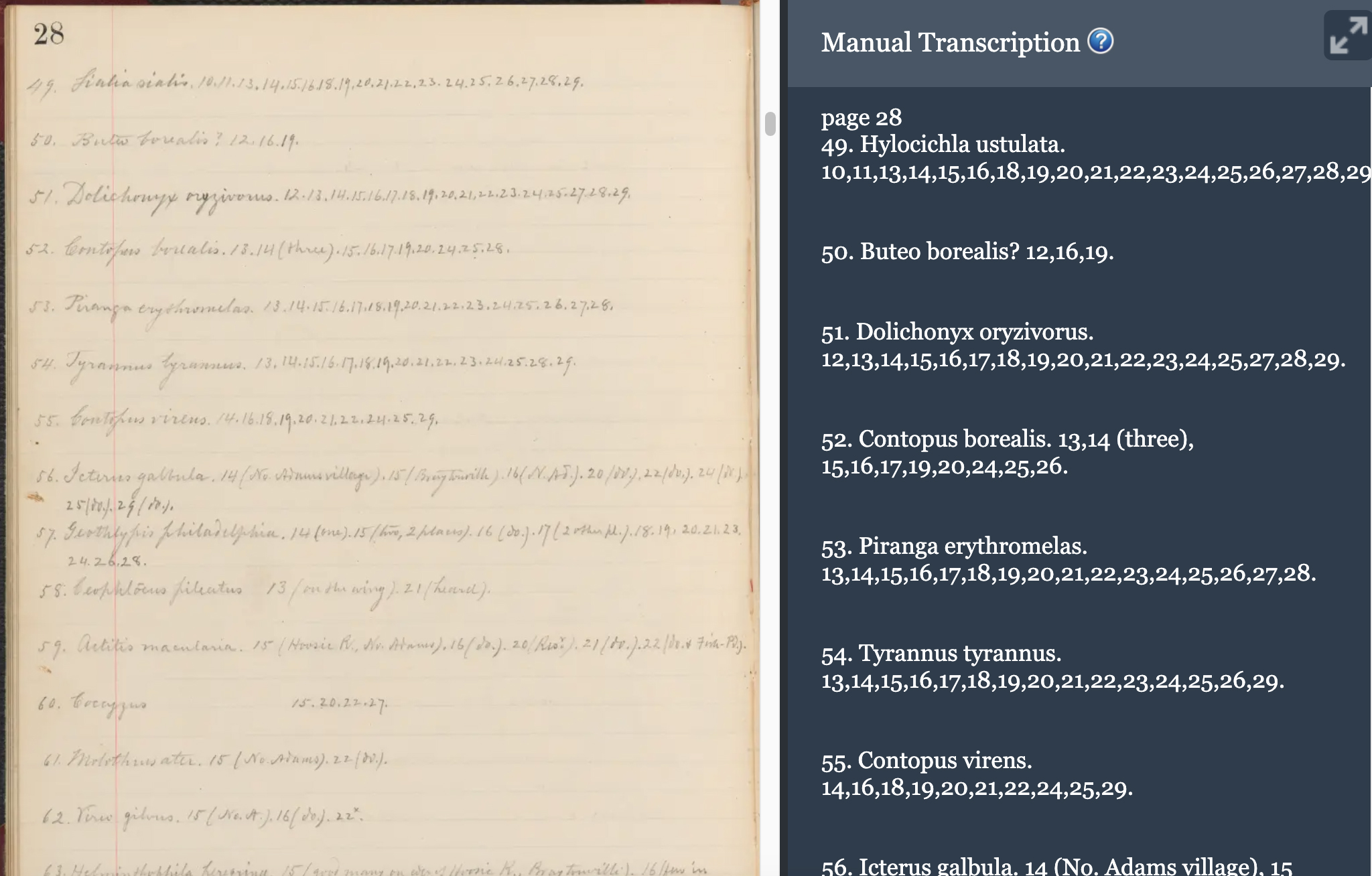
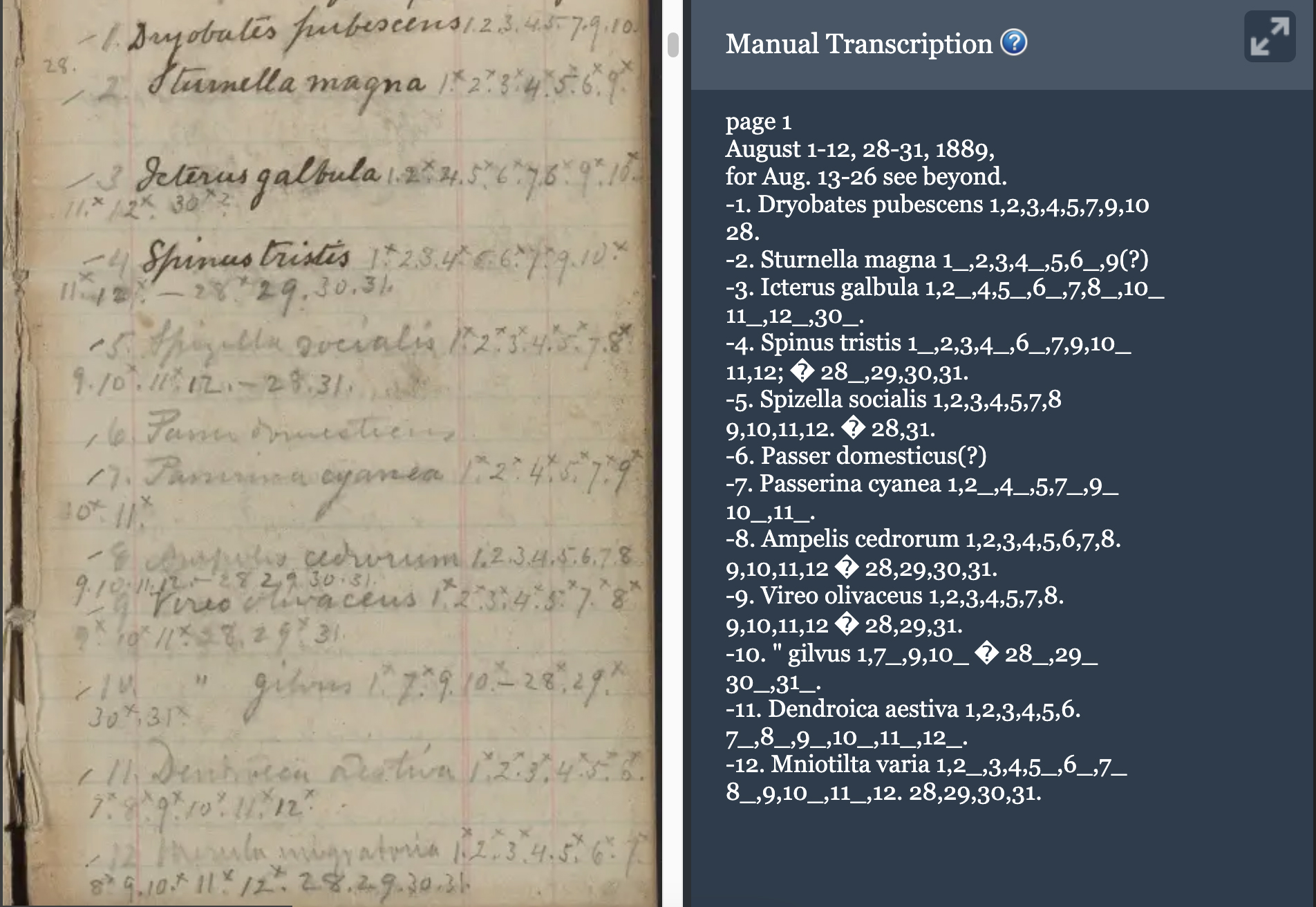
Hallucinations and Mis-transcriptions: In specific test pages reviewed within the BHL book viewer, AI models occasionally generated plausible-sounding botanical or ornithological hallucinations. For example, in Faxon’s Field Journal v.1 (1889–91), the species Sialia sialis (Eastern Bluebird) was erroneously transcribed as Hylocichla ustulata (Swainson’s Thrush) by ChatGPT-5.5 Pro. Similarly, Merula migratoria was mis-transcribed as Mniotilta varia in a field notebook.
These errors reinforce the fundamental truth that while AI drastically accelerates the mechanical throughput of archival transcription, human oversight remains irreplaceable.
Official Statements
Reflecting on the milestone achieved during the fellowship and the broader mission of the Ernst Mayr Library and the Biodiversity Heritage Library, project leaders and administrators emphasize the symbiotic relationship between historical archives and computational innovation.
Highlighting the irreplaceable value of human guidance in technological workflows, project lead Mohit Mandal observed:
"The human element remains central to guide the goals and direction of the project, without which A.I. tools—at least at this stage of their development—often falter in accuracy, especially when handling complex page layouts and difficult handwriting."
Reflecting on the 20-year trajectory of the institution, Joe deVeer, Co-Secretary of the BHL Executive Committee and Digital Projects Manager at the Ernst Mayr Library, noted the profound impact of global collaboration:
"For 20 years, BHL has made biodiversity knowledge freely accessible to the world. Your support helps us preserve treasures like Walter Faxon’s field journals and unlock the valuable biodiversity data they contain. The Ernst Mayr Library is proud to have been a founding member of BHL, working alongside a fantastic team of international colleagues to safeguard humanity’s shared natural heritage."
Future Outlook
The successful transcription and integration of Walter Faxon’s ornithological records mark a pivotal turning point for the Ernst Mayr Library and the broader Biodiversity Heritage Library network. As the BHL prepares for comprehensive platform modernization, the methodologies pioneered during Mandal’s Pforzheimer Fellowship provide a scalable blueprint for unlocking millions of additional pages of handwritten natural history archives currently locked in global repositories.
By transforming static manuscript images into searchable, machine-readable text containing structured scientific names, institutions like Harvard are clearing the path for seamless data exports to the Global Biodiversity Information Facility (GBIF). Once integrated into GBIF, Faxon’s late-19th and early-20th-century Massachusetts bird observations will merge with modern ecological datasets.
This macro-level aggregation of century-old baseline data with contemporary monitoring efforts is vital. It enables climate scientists and conservation biologists to track shifts in avian migration patterns, range expansions, and population collapses over a 140-year timeline. Ultimately, by rescuing the observations of naturalists like Walter Faxon from historical obscurity, the scientific community gains a sharper, empirically grounded lens through which to understand—and mitigate—the accelerating ecological transformations of the Anthropocene.