

Executive Overview
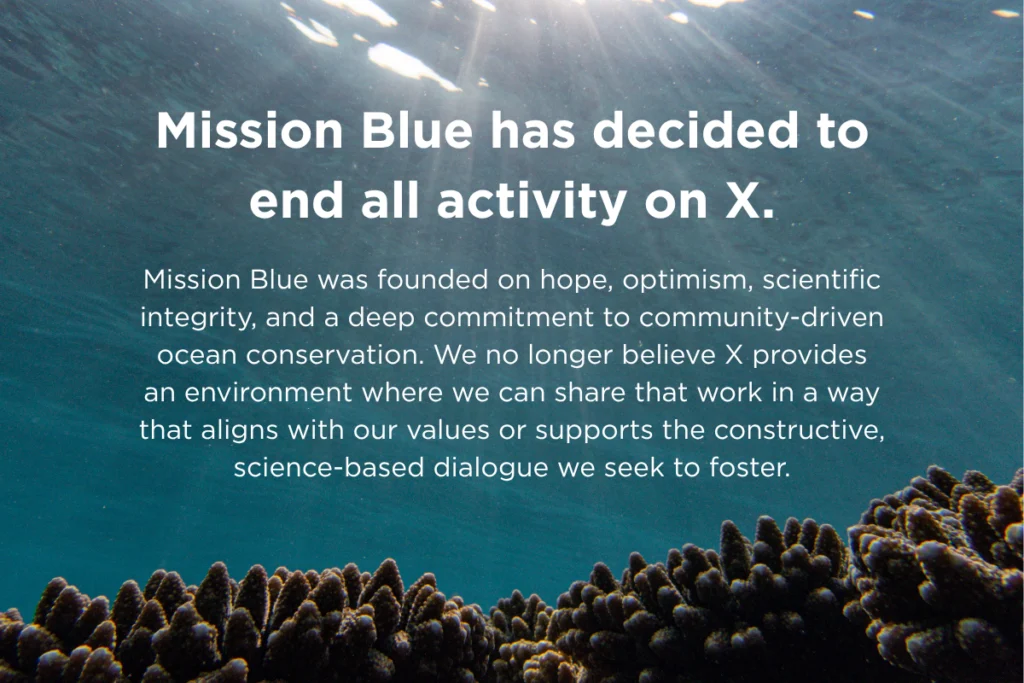
In an era where digital communication serves as the lifeblood of global advocacy, the decision of a major environmental organization to abandon a leading social media platform marks a significant turning point. Mission Blue, the internationally renowned marine conservation initiative founded by legendary oceanographer Dr. Sylvia Earle, has officially announced that it is ending its active use of X (formerly Twitter). Citing a deteriorating digital landscape characterized by rising hostility, unchecked misinformation, and a concerted undermining of scientific consensus, the organization is pivoting its resources toward platforms it believes better align with its core values of hope, optimism, and constructive community-building.
This strategic retreat from X is not merely an isolated PR maneuver; it is part of a growing migration of academic, scientific, and environmental institutions reassessing the utility and safety of high-profile digital town squares. For years, platforms like Twitter functioned as vital pipelines for real-time field updates from marine biologists, policymakers, and ocean advocates. However, as structural changes have swept across X—including shifts in moderation policies, verification systems, and algorithmic prioritization—many non-governmental organizations (NGOs) have found the environment increasingly hostile to evidence-based discourse.
Mission Blue’s departure highlights a broader existential question facing the environmental movement: How can conservationists effectively mobilize global audiences when the digital architecture of major platforms actively rewards polarization over nuance? By redirecting its digital footprint toward Instagram, Facebook, LinkedIn, YouTube, and its proprietary newsletter, Mission Blue is drawing a firm boundary between constructive engagement and toxic digital engagement. This article explores the motivations behind Mission Blue’s exit from X, the broader systemic challenges facing science communication in the modern social media ecosystem, and the organization’s forward-looking digital strategy to protect the global ocean.
Detailed Chronology: The Evolution and Exit of an Environmental Advocate
To understand the weight of Mission Blue’s decision, one must trace the trajectory of the organization’s engagement with social media, mapping the intersection of marine conservation and the digital revolution over the past decade and a half.
Phase 1: The Promise of the Digital Commons
When Mission Blue first established its presence on Twitter, the platform was widely heralded as a democratizing force for global advocacy. For an organization dedicated to establishing "Hope Spots"—special places that are critical to the health of the ocean—Twitter offered an unprecedented, real-time mechanism for connection. Field researchers aboard research vessels could tweet live updates from remote coral reefs; marine policy advocates could coordinate rapid responses to destructive industrial fishing proposals; and ocean lovers worldwide could find a centralized community united by a shared passion for marine biodiversity.
During these formative years, Mission Blue utilized the platform to amplify grassroots campaigns, share peer-reviewed scientific breakthroughs, and bridge the geographical divide between scientists in the field and citizens sitting at home. The early culture of the platform, while occasionally chaotic, largely rewarded brevity, immediacy, and intellectual exchange. It was an environment where hope and optimism could be broadcast rapidly across borders, serving as an effective force multiplier for Dr. Sylvia Earle’s lifelong mission to ignite public support for a network of marine protected areas.
Phase 2: Structural Shifts and the Rise of Friction
As the years progressed, the operational and cultural dynamics of the platform began to warp. Following major corporate restructuring and ownership changes, the platform underwent a series of rapid transformations. Content moderation teams were drastically reduced, verification badges were commercialized, and algorithms were retuned to maximize user engagement through high-arousal emotional triggers—most notably outrage, controversy, and polarization.
For Mission Blue, these changes manifested as a steady accumulation of digital friction. Scientists and conservationists attempting to share data on climate change, ocean acidification, and overfishing found their posts routinely met with orchestrated campaigns of climate denialism, personal attacks, and bad-faith arguments. The nuance required to explain complex marine ecosystems was consistently drowned out by sensationalized, divisive content. The digital town square was increasingly resembling a hostile battleground, rendering constructive dialogue nearly impossible.
Phase 3: The Breaking Point and Strategic Realignment
The tipping point arrived as the prevalence of misinformation regarding environmental science reached critical mass on X. Mission Blue leadership observed that the platform was no longer serving as an effective vehicle for education and mobilization; instead, it was actively undermining the scientific consensus necessary to enact meaningful environmental policy.
Recognizing that staying on the platform risked associating the organization’s brand with toxicity and anti-science rhetoric, leadership made the definitive choice to step away. In a calculated move, Mission Blue decided not to delete its historical archive—preserving past educational threads and historical milestones for posterity—but to freeze all future publishing. By ceasing active operations on X, the organization has sent a powerful signal to the tech and conservation sectors alike: the pursuit of digital reach must never supersede an organization’s commitment to truth, respect, and scientific integrity.
Supporting Context & Metrics: The Crisis of Science Communication Online
Mission Blue’s exodus from X does not occur in a vacuum. It reflects a systemic crisis within the broader ecosystem of digital science communication, where empirical data increasingly competes with coordinated disinformation campaigns.
The Amplification of Misinformation
Academic research into social media algorithms consistently demonstrates that polarizing and inflammatory content achieves significantly higher algorithmic velocity than nuanced, evidence-based reporting. Within the environmental sector, this dynamic has proven particularly devastating. Climate denial, skepticism regarding marine protected areas, and outright fabrications about industrial impacts on ocean health frequently generate massive engagement loops driven by algorithmic favoritism.
For organizations like Mission Blue, whose core currency is trust and scientific accuracy, fighting a daily tide of disinformation on X became an inefficient use of limited conservation resources. Maintaining a dedicated social media presence requires human capital—hours spent monitoring feeds, responding to comments, and managing community standards. When those hours are systematically drained by relentless hostility and bad-faith actors, the opportunity cost to actual conservation work becomes unacceptably high.
The Migration of the Scientific Community
Mission Blue is far from alone in its reassessment of X. Over the past two years, a significant exodus of academic institutions, researchers, medical professionals, and environmental NGOs has unfolded quietly across the digital landscape. Prominent marine biologists, oceanographic institutes, and climate bodies have either deactivated their accounts or severely curtailed their activity, migrating instead to decentralized networks, specialized professional platforms, or deeply localized community spaces.
This mass migration poses a severe threat to public science literacy. When credible scientific voices abandon mainstream public forums, the vacuum is invariably filled by unverified sources, conspiracy theorists, and commercial interests seeking to greenwash destructive practices. However, as Mission Blue’s calculus suggests, staying in a compromised arena can sometimes lend unearned legitimacy to a toxic ecosystem. The organization has chosen to prioritize the health of its own community over the pursuit of diminishing returns in a fractured public square.
Official Statements: In Their Own Words
The philosophical underpinnings of Mission Blue’s decision are articulated clearly in their public transition statements. Rather than adopting a combative tone, the organization has chosen to frame its departure around its founding ethos of hope, resilience, and community-driven action.
"Mission Blue was founded with a spirit of hope, optimism, and dedication to community-driven ocean conservation. When we first started our Twitter account, it offered a great way to connect with our Champions, scientists in the field, and an audience of people who love the ocean. Thank you for connecting with us there and supporting our mission to spread awareness and ocean hope."
This acknowledgment of the platform’s historical utility underscores that the decision was not made lightly. It honors the supporters who engaged with the organization during its earlier, more productive years on the platform. However, the organization’s leadership remains unwavering regarding the shift in the platform’s operational reality:
"Over time, however, the environment on X has changed significantly. We have become increasingly concerned about the prevalence of misinformation, hostility, and divisive content on the platform, including content that undermines science and constructive dialogue around environmental issues. We do not believe this environment is aligned with the kind of informed, respectful, and solutions-oriented community Mission Blue seeks to foster."
Emphasizing the interconnected nature of both the global ecosystem and the digital communities that advocate for it, Mission Blue reinforced its commitment to maintaining spaces defined by curiosity and mutual respect:
"We are all connected to the same ocean. Through our digital strategy, we seek to build a curious, welcoming online community. We cannot, in good faith, continue to use the X platform. The Mission Blue page will remain archived on X, but we do not plan to publish any new material on the account."
Future Outlook: Rebuilding the Digital Blueprint for Ocean Conservation
As Mission Blue closes the chapter on X, the organization is aggressively pivoting its digital energy toward channels where it can cultivate deeper, more meaningful relationships with its global audience. This strategic realignment offers a blueprint for how modern environmental NGOs can navigate a fragmented digital world without compromising their core values.
Diversifying the Digital Ecosystem
Rather than relying on a single dominant platform, Mission Blue is diversifying its digital outreach across four primary channels, each serving a distinct community-building function:
- Instagram: Serving as the visual anchor for Mission Blue’s storytelling, Instagram allows the organization to showcase the breathtaking beauty of Hope Spots through high-resolution photography, immersive Reels, and direct visual narratives that evoke empathy and wonder for the marine environment.
- Facebook: Acting as a robust hub for community mobilization, Facebook enables Mission Blue to connect with intergenerational audiences, facilitate localized discussions, and organize grassroots advocacy campaigns around specific marine protected areas.
- LinkedIn: Recognizing the critical intersection between marine conservation, corporate responsibility, and global policy, LinkedIn provides a professional forum to engage with policymakers, corporate leaders, scientists, and industry stakeholders driving structural change.
- YouTube: As a long-form video platform, YouTube offers the ideal canvas for documentaries, deep-dive interviews with Dr. Sylvia Earle, expedition logs, and educational mini-series that unpack complex marine science in an accessible format.
- Proprietary Newsletters: Moving away from rent-owned platforms entirely, Mission Blue is heavily emphasizing direct-to-inbox communication via its newsletter. By owning its subscriber list, the organization ensures an uninterrupted, algorithm-free channel to deliver Hope Spot updates, conservation victories, and actionable ways for citizens to get involved.
Cultivating a "Community of Hope"
At the heart of Mission Blue’s new digital strategy is a rejection of outrage culture in favor of constructive empowerment. Environmental doomism can often paralyze public action, leading to apathy rather than advocacy. By curating platforms that emphasize solutions, scientific triumph, and community-led conservation wins, Mission Blue aims to foster what it calls a "community of hope."
This transition represents a maturation of digital environmentalism. As social media platforms continue to evolve—frequently driven by commercial and political incentives that run counter to the public good—environmental organizations must retain the agility to walk away from toxic spaces. Mission Blue’s bold step away from X demonstrates that the true power of a global conservation movement lies not in algorithmic reach, but in the authenticity of its message, the integrity of its science, and the depth of its connection with a passionate, ocean-loving public.



