

Executive Overview
In an era defined by rapid digital transformation, environmental organizations find themselves navigating a complex landscape of social media platforms to champion their causes. For decades, these digital networks have served as vital megaphones, broadcasting critical scientific data, rallying grassroots support, and amplifying the voices of marine conservationists to global audiences. However, the calculus of digital engagement is shifting.
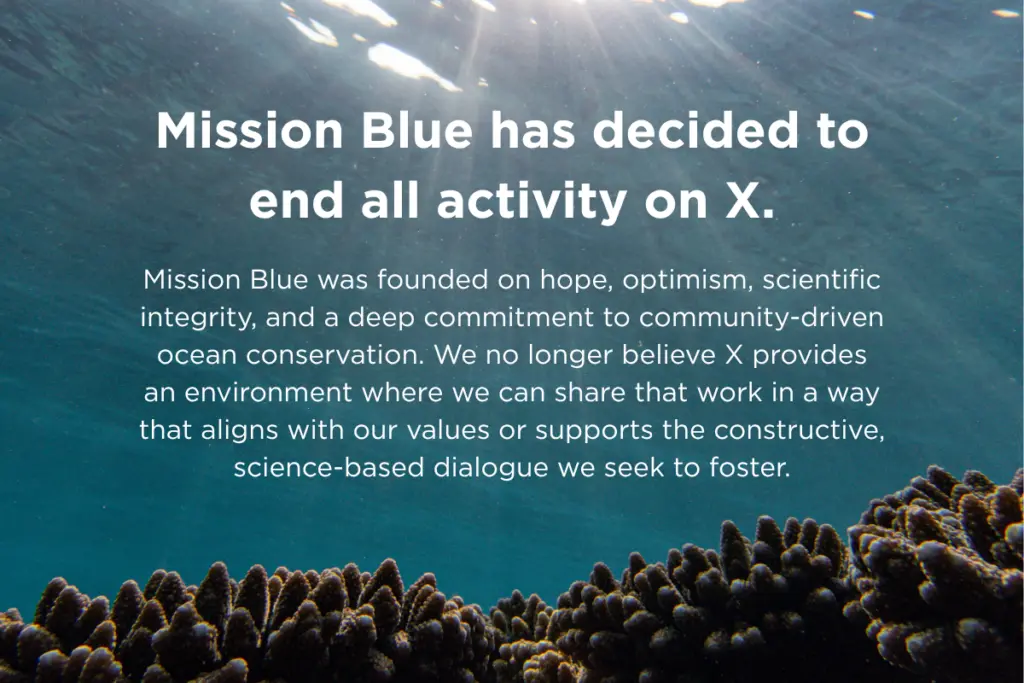
Mission Blue—the globally renowned ocean conservation foundation founded by legendary oceanographer Dr. Sylvia Earle—has officially announced the cessation of its active engagement on X (formerly Twitter). Moving forward, the organization will redirect its digital strategy toward platforms that it believes better align with its core values of hope, scientific integrity, and constructive dialogue: Instagram, Facebook, LinkedIn, and YouTube.
This move is far from an isolated incident; it reflects a broader, growing trend among non-governmental organizations (NGOs), scientific institutions, and public interest groups evaluating the health and utility of digital communication channels. As online spaces experience increased polarization, algorithmic promotion of outrage, and the proliferation of climate and environmental misinformation, organizations dedicated to empirical reality are reassessing where they invest their limited time and resources.
Mission Blue’s departure from X marks a poignant inflection point. It underscores a fundamental tension in modern communications: how can organizations committed to global community-building and science-based advocacy engage the public when the underlying architecture of a platform appears to reward hostility over nuance? This comprehensive report explores the background of Mission Blue’s decision, the shifting dynamics of digital conservation outreach, the broader industry context, and the organization’s strategic vision for its digital future.
Detailed Chronology: The Evolution and Exit from X
To understand Mission Blue’s recent strategic pivot, it is essential to examine the trajectory of its relationship with the platform formerly known as Twitter.
The Early Days: Optimism and Real-Time Connection
When Mission Blue first established its presence on Twitter, the platform was heralded as a revolutionary tool for real-time communication. For an organization dedicated to safeguarding the world’s oceans through a global network of "Hope Spots"—special places that are critical to the health of the ocean—Twitter offered an unprecedented direct line to marine scientists, field researchers, policy-makers, and passionate ocean advocates.
During this formative era, the platform functioned largely as a collaborative digital town square. Mission Blue utilized the channel to share breaking discoveries from oceanographic expeditions, coordinate advocacy campaigns, and celebrate grassroots conservation wins. The atmosphere, while fast-paced, largely supported the organization’s foundational ethos: a spirit of hope, optimism, and community-driven action. For years, this digital bridge connected the organization with a dedicated cohort of ocean champions who helped propel the mission forward.
The Turning Point: Shifting Tides on the Platform
Over time, however, the internal and external dynamics of the platform began to experience a profound transformation. Following ownership and structural changes, systemic shifts in content moderation policies, algorithmic priorities, and overall platform culture drastically altered the user experience.
For Mission Blue, the warning signs materialized in the steady creep of environmental skepticism, institutional hostility, and unmitigated misinformation. Marine conservation is deeply rooted in peer-reviewed science, empirical data, and international cooperation. As climate change denialism and anti-science rhetoric found increasingly permissive environments on X, organizations communicating complex environmental truths frequently found themselves subjected to coordinated hostility and abusive discourse.
Constructive dialogue—the lifeblood of effective environmental policy and public education—began to be drowned out by divisive content designed to maximize algorithmic engagement through outrage. Mission Blue leadership noted a rising tide of content that actively undermined scientific consensus. For an organization whose entire brand and operational mandate rely on fostering trust, hope, and actionable solutions, the platform environment transformed from a productive communication channel into a persistent liability.
The Decision: Prioritizing Brand Safety and Core Values
The culmination of these mounting concerns led to a comprehensive internal review of Mission Blue’s digital communication strategy. The leadership weighed the diminishing returns of maintaining an active presence against the reputational and cultural costs of operating within an increasingly toxic digital ecosystem.
The conclusion was unequivocal: Mission Blue could not, in good conscience, continue to invest its resources in a platform that conflicted so starkly with its institutional values. Rather than deleting the account entirely—which would erase historical records of past campaigns—the organization decided to archive its X profile. As of this announcement, the account remains frozen as a static historical repository, while all active communication efforts have been permanently redirected elsewhere.
Supporting Context & Metrics: The Digital Dilemma of Modern Conservation
Mission Blue’s retreat from X is part of a larger, systemic re-evaluation currently sweeping through the scientific, academic, and non-profit sectors. Understanding this migration requires a look at the broader metrics of platform migration and the unique challenges digital communication poses to environmental advocacy today.
The Rise of Eco-Misinformation
Recent studies by digital rights groups and climate communication researchers highlight a disturbing surge in climate and environmental misinformation across major social media platforms. While platforms like X have rolled back various trust-and-safety teams and relaxed content moderation guidelines, climate skeptics and industrial lobbyists have increasingly utilized these gaps to sow doubt regarding ecological crises.
For marine conservation specifically, misinformation often manifests as the minimization of overfishing impacts, denial of ocean acidification trends, or skepticism regarding the efficacy of Marine Protected Areas (MPAs). When scientific organizations post data regarding coral bleaching or collapsing fish stocks, their posts frequently encounter coordinated waves of denialism. While online debate is a standard feature of public discourse, the structural design of X often amplifies bad-faith actors, creating an asymmetrical burden of proof for scientists and conservationists who must continually debunk falsehoods rather than advance constructive solutions.
The Economics of Attention vs. Hope-Based Messaging
Conservation communications face a unique psychological hurdle: doomism. Constant streams of apocalyptic environmental news can easily induce climate fatigue, leading to public disengagement and apathy. To counter this, Mission Blue built its communication strategy around "Hope Spots"—highlighting successful community-led conservation efforts to prove that positive change is not only possible, but actively happening.
However, the attention economy of modern social media platforms often operates on the opposite principle. Algorithms are frequently optimized to promote high-arousal emotions, chief among them being anger, fear, and moral outrage. Nuanced stories about successful mangrove restorations or community-managed fisheries struggle to break through the algorithmic noise compared to polarizing political discourse. By stepping away from X, Mission Blue is consciously stepping out of an attention market that penalizes nuanced, optimistic, and science-based storytelling.
Comparative Platform Demographics and Engagement
In restructuring its digital footprint, Mission Blue has chosen to double down on platforms that offer healthier environments for community cultivation:
- Instagram: Serving as the visual anchor of modern conservation, Instagram allows Mission Blue to leverage breathtaking underwater photography and short-form video to forge emotional connections with younger, visually oriented audiences.
- Facebook: Despite its own historical challenges with misinformation, Facebook’s robust group infrastructure enables Mission Blue to foster localized, highly engaged communities of Hope Spot champions who can organize offline actions.
- LinkedIn: Offering a professional and institutional setting, LinkedIn connects Mission Blue directly with corporate partners, policy-makers, scientists, and donors who view ocean conservation through the lens of strategic ESG (Environmental, Social, and Governance) goals and international policy frameworks.
- YouTube: As the premier destination for long-form educational content and documentary storytelling, YouTube provides a permanent home for deep-dive explorations of marine ecosystems, interviews with Dr. Sylvia Earle, and comprehensive updates from conservation expeditions.
Official Statements and Institutional Perspective
The strategic pivot away from X has been met with broad alignment internally, reflecting a unified leadership stance on the digital ethics of modern non-profit management.
While the official announcement was deliberately concise, focusing heavily on a reaffirmation of the organization’s core mission, internal communications emphasize that this was a values-driven imperative rather than a mere tactical adjustment. Representatives from Mission Blue have repeatedly stressed that digital real estate is not neutral. Where an organization places its logo, invests its staff hours, and directs its supporters implicitly validates the ecosystem in which those actions take place.
"We are all connected to the same ocean," notes the official Mission Blue directive. "Through our digital strategy, we seek to build a curious, welcoming online community. We cannot, in good faith, continue to use the X platform."
This statement encapsulates a growing philosophical shift within the non-profit sector: the recognition that audience size must never supersede organizational integrity. For years, digital metrics dictated that organizations must maintain a presence on every major platform regardless of the cultural cost. Mission Blue’s decision signals that the quality of engagement, the safety of the community, and the alignment of platform ethos with organizational values now outweigh raw follower counts.
Furthermore, environmental leaders have increasingly pointed out that maintaining an active presence on a platform can be interpreted by donors and partners as an endorsement of that platform’s broader corporate behavior and content moderation standards. By cleanly severing active ties while preserving the historical archive, Mission Blue has drawn a sharp boundary between its past utilization of a digital tool and its current refusal to prop up an ecosystem hostile to scientific consensus.
Future Outlook: Charting a Course for Digital Conservation
As Mission Blue closes the chapter on its X era, the organization is looking forward with a revitalized digital strategy designed to maximize impact while fiercely protecting its community-oriented ethos.
Deepening Engagement on Core Channels
The immediate future involves supercharging content output across Instagram, Facebook, LinkedIn, and YouTube. Supporters can expect richer multimedia storytelling, including immersive virtual expeditions, live Q&A sessions with marine biologists on the ground, and enhanced transparency regarding the status of global Hope Spots.
By concentrating resources that were once scattered across toxic or unproductive channels, Mission Blue’s communications team can focus on higher-fidelity production values and more meaningful, two-way interactions with its digital community. The goal is to transform passive scrollers into active ocean champions equipped with the knowledge and tools necessary to advocate for marine protection in their local communities and governments.
The Direct-to-Inbox Strategy: The Power of Newsletters
In an age where social media algorithms can change overnight, gatekeeping reach and choking organic visibility for non-profits, Mission Blue is placing renewed emphasis on owned media—specifically, its direct-to-inbox newsletter.
Relying on social media platforms means building a house on rented land. Algorithms can suppress posts, paywalls can restrict visibility, and platform toxicity can alienate supporters. By driving social media followers toward direct newsletter subscriptions, Mission Blue is future-proofing its communication channels. The newsletter will serve as the premier, unfiltered hub for Hope Spot updates, exclusive ocean stories, and direct calls to action, ensuring an unbroken line of communication between the foundation and its global base of supporters.
A Call to Action for the Global Community
Mission Blue’s transition serves as a powerful case study for the broader environmental movement. It raises vital questions about the responsibilities of technology platforms in housing scientific discourse and challenges other non-profits to critically evaluate their own digital footprints.
As Dr. Sylvia Earle frequently notes, "With knowledge comes responsibility." For Mission Blue, that responsibility now extends to the digital spaces they inhabit, ensuring that their online presence mirrors the clarity, respect, and boundless hope of the ocean they strive to protect.
The foundation invites all its ocean champions, scientists, donors, and friends to join them in this next chapter. By subscribing to the newsletter and following the journey on Instagram, Facebook, LinkedIn, and YouTube, supporters can continue to fuel a global movement of hope—ensuring that the blue heart of our planet receives the vocal, unified advocacy it so urgently requires.



