A nationwide investigation has revealed that climate-driven heatwaves in the United Kingdom are causing severe disruptions inside National Health Service (NHS) operating theatres, leading to the cancellation of more than 1,000 surgical procedures during peak heat events in May and June.
Data obtained through Freedom of Information (FOI) requests sent to 140 NHS trusts and health boards across England and Wales exposes how rising ambient temperatures are crippling critical clinical infrastructure. High environmental temperatures cause specialized surgical ventilation systems to fail, raise humidity levels that compromise sterile environments, and induce severe heat stress among clinical staff wearing heavy personal protective equipment (PPE).
Of the 1,110 confirmed heat-related surgery cancellations across a 17-day window, procedures ranged from routine orthopaedic replacements to time-critical cardiac surgeries, oncological interventions, and emergency operations for life-threatening conditions. In 18 instances, surgeons were forced to abandon operations mid-way through due to intolerable indoor heat or equipment failure.
Because less than half of the queried health trusts routinely log temperature-driven disruptions, medical experts and researchers emphasize that this figure represents a significant underestimate. The findings reveal an acute vulnerability within the UK’s healthcare infrastructure, demonstrating that extreme heat—amplified by global climate change—has evolved from a seasonal public health concern into an operational crisis threatening elective care backlogs and patient safety.
Detailed Chronology & Investigative Findings
The FOI Investigation Framework
To quantify the operational impact of extreme thermal events on surgical delivery, FOI requests were submitted to 140 NHS trusts and health boards in England and Wales responsible for managing acute hospitals with operating theatres. Specialist, community, and mental health trusts were excluded.
The inquiry targeted two distinct windows of severe heat during the late spring and early summer:
May 22 – May 28: A period marked by widespread UK Health Security Agency (UKHSA) "Amber" heat-health alerts and corresponding regional warnings in Wales.
June 18 – June 27: A severe heatwave characterized by "Red" and "Amber" alerts, with localized outdoor temperatures approaching 36°C in southern regions.
63 trusts responded without disclosing specific heat data, with many explicitly stating that temperature-related operational disruptions are not standardly categorized in their incident reporting systems.
19 trusts failed to respond within the statutory timeframe.
NHS Trust FOI Response Breakdown (140 Total Contacted)
├── Confirmed Heat-Related Cancellations: 59 Trusts (1,110 surgeries)
├── Responded Without Categorized Heat Data: 63 Trusts
└── Non-Responsive / Pending: 19 Trusts
Among trusts that provided complete surgical cancellation logs for the surveyed dates, heat-related issues accounted for approximately 7% of all postponed operations.
Regional Hotspots & Geographic Vulnerabilities
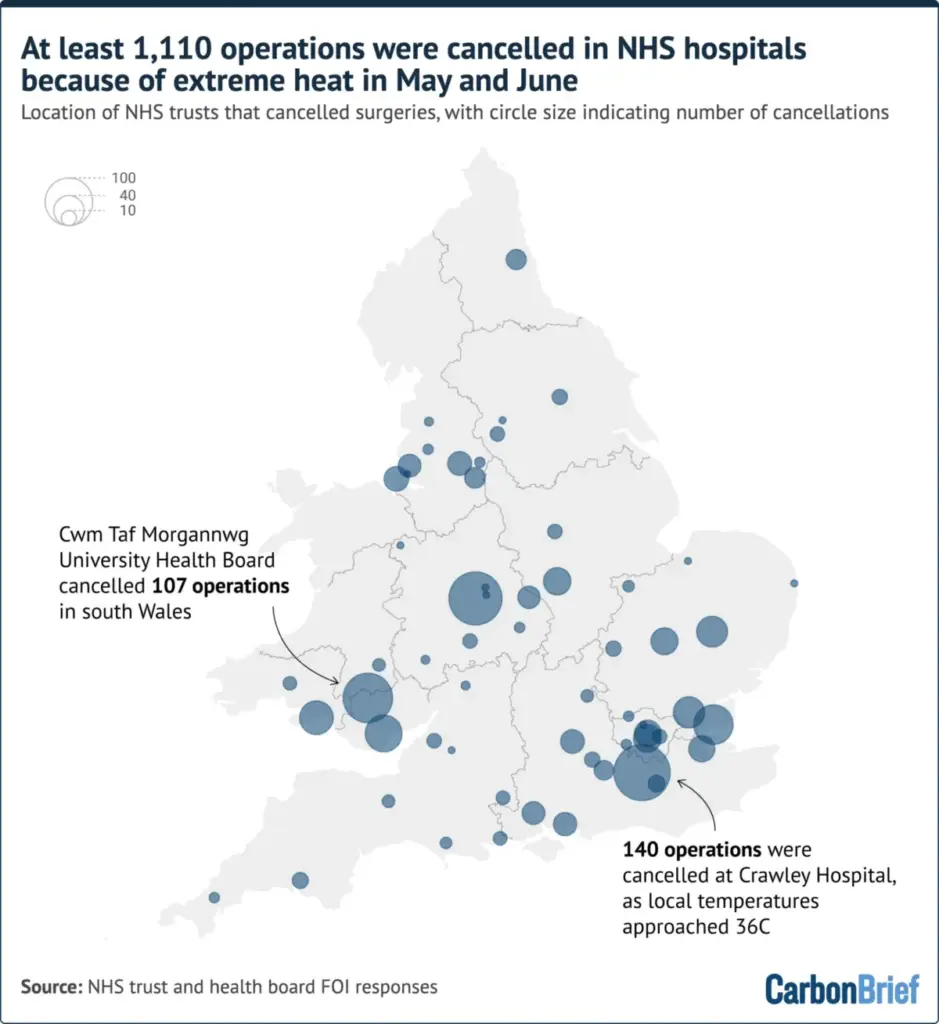
Cancellations were heavily concentrated in southern and central regions of England and Wales, where ambient temperatures reached record highs.
+--------------------------------------------------+------------------------------+
| NHS Trust / Region                               | Impact & Key Metrics         |
+--------------------------------------------------+------------------------------+
| Surrey and Sussex Healthcare NHS Trust           | 140 cancellations            |
| (Crawley Hospital)                               | (Temps reached nearly 36°C)  |
+--------------------------------------------------+------------------------------+
| Cwm Taf Morgannwg University Health Board        | 107 cancellations            |
| (South Wales)                                    |                              |
+--------------------------------------------------+------------------------------+
| South Essex, West Midlands (Dudley), London      | Widespread elective pauses & |
|                                                  | mid-procedure abandonments   |
+--------------------------------------------------+------------------------------+
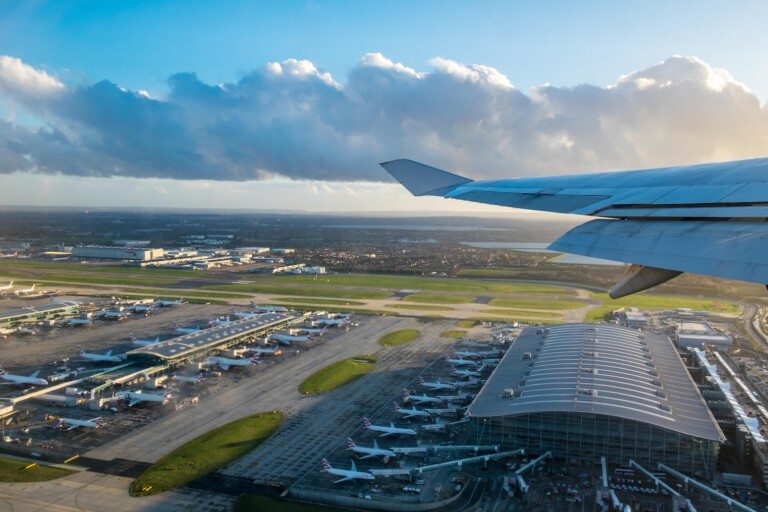
Surrey and Sussex Healthcare NHS Trust: Recorded the single highest cluster, with 140 cancelled operations within the day-surgery unit at Crawley Hospital. Local outdoor temperatures near London Gatwick Airport soared to 35.7°C during the June wave.
Cwm Taf Morgannwg University Health Board (South Wales): Logged 107 heat-induced cancellations as clinical facilities struggled to regulate internal temperatures.
Urban Hotspots: Additional concentrations occurred across South Essex, Dudley in the West Midlands, and multiple London trusts, aligning with areas affected by the urban heat island effect.
Categorization of Cancelled Procedures
Detailed data provided for 596 of the cancellations reveals that extreme heat impacted nearly every major surgical specialty. While the vast majority were scheduled elective cases, time-sensitive procedures and emergency operations were also disrupted.
Breakdown of Specific Cancelled Surgeries (Sample of 596 Detailed Logged Cases)

Orthopaedic (Hips/Knees) : [========================================] 167
Ophthalmic (Eye)         : [=========================] 102
Gynaecological/Urological: [=====================] 88
General Elective         : [==================] 74
Cardiac / Vascular       : [==] 8
Skin Cancer Removal      : [==] 7
Emergency Operations     : [=] 10
Mid-Procedure Abandonment: [=] 18
Orthopaedic Surgeries (167 cases): Knee and hip replacements suffered the highest cancellation volume. These procedures carry heightened risks regarding sterile boundaries and specialized thermal requirements for surgical materials.
Ophthalmic & General Elective Care (102 eye cases): High-volume elective procedures were frequently suspended wholesale to prevent intraoperative infection risks and staff heat collapse.
Oncology & Cardiology: At least seven skin cancer excisions and eight open-heart/vascular surgeries were postponed, delaying vital care for patients with high-risk conditions.
Emergency & Mid-Procedure Interruptions: Crucially, at least 10 emergency operations—classified as immediately necessary to save life or limb—were cancelled due to overheating operating rooms. Furthermore, 18 surgical teams were forced to abandon procedures mid-operation when theatre environmental controls failed entirely.
Supporting Context & Technical Metrics
The Physiology and Engineering of an Operating Theatre
An operating theatre is an environmentally isolated clinical space dependent on continuous HVAC (Heating, Ventilation, and Air Conditioning) engineering. Maintaining strict thermal and atmospheric control is essential for clinical safety for several key reasons:
Operating theatres use positive-pressure laminar airflow systems. These systems deliver filtered, bacteria-free air over the surgical field while pushing contaminated air outward toward non-sterile corridors.
When ambient outdoor temperatures exceed design thresholds (typically 30°C to 35°C for older chiller units), cooling coils freeze, compressors trip, or thermal safety cut-offs trigger. System failures collapse positive pressure boundaries, allowing airborne pathogens, skin flora, and external dust to settle on exposed tissue and surgical instruments.
2. Humidity Control and Condensation
Relative humidity in an operating theatre must be maintained between 40% and 60%. When external heat domes bring elevated humidity, compromised HVAC units fail to dehumidify incoming air. Excess moisture condenses on stainless steel surgical trays, sterile drapes, and imaging equipment, creating direct pathways for bacterial transmission into surgical wounds.
3. Thermal Degradation of Materials and Pharmaceuticals
Surgical consumables are calibrated for narrow temperature windows:
Polymethylmethacrylate (Bone Cement): Frequently used in hip and knee arthroplasty, bone cement cures through an exothermic reaction. If ambient room temperatures exceed 22°C, the viscosity changes rapidly, causing the cement to set too quickly. This prevents proper fixation of the implant to the bone and can lead to early joint failure.
Pharmaceutical Integrity: Critical anaesthetic agents, neuromuscular blockers, and emergency resuscitation drugs lose stability or degrade when exposed to prolonged ambient temperatures above 25°C.
4. Human Thermal Strain and PPE Requirements
Surgeons, scrub nurses, and anaesthetists wear heavy, non-breathable protective apparel. In orthopaedic, vascular, and fluoroscopic procedures, clinicians must wear lead aprons weighing up to 7 kg to shield against radiation, layered beneath fluid-repellent gowns, masks, and eye protection.
In operating rooms exceeding 26°C, physiological strain increases rapidly. Heat-induced fatigue, sweat contamination of sterile barriers, reduced manual dexterity, and impaired cognitive focus compromise surgical efficiency, prompting surgical teams to pause or cancel elective lists.
Official Statements & Expert Analysis
Medical leaders, clinical directors, and surgical researchers emphasize that the operational breakdown caused by heatwaves poses a growing structural risk to the NHS.
Clinical Perspectives
Dr. Ed Robinson, an NHS anaesthetist, highlighted the technical vulnerabilities of operating environments:
"An operating theatre is a very tightly engineered clinical environment. There are quite complicated ventilation systems, which dilute airborne contaminants, remove fumes from different medications and anaesthetic gases. We have generalised airflow systems that make the air in theatre flow outwards to adjacent areas, so pathogens and fumes get carried away from the patient… When it gets to a certain heat, those systems can fail.
Staff are usually wearing PPE. If it’s orthopaedics, they will be wearing ‘leads’ a lot of the time… If the ventilation system is not working, you’re going to overheat and that’s going to affect your ability to concentrate and perform a safe operation. You just wouldn’t start under those conditions."
Tim Lane, President of the Royal College of Surgeons of England (RCS England) and a practicing urological surgeon, noted the physical strain placed on clinicians and the degradation of sterile conditions:
"Extreme heat can increase risks and make it harder to deliver care under the conditions clinicians would consider ideal. If air in operating theatres is too humid, excess moisture can condense on surgical implements and transmit infections… NHS staff work incredibly hard to adapt, often reorganising services and finding practical solutions to keep care running, but resilience alone cannot compensate indefinitely for outdated infrastructure or sustainability."
Impact on Waiting Lists and Patient Care
Dr. Dmitri Nepogodiev, a public health researcher focusing on surgery at the University of Birmingham, stressed the human cost of delayed procedures:
"Behind all of these statistics are real people who have probably already been waiting a long time. There isn’t a single magic solution because it’s a kind of complex, multifactorial challenge—so it also underlines the importance of broader preparedness."
Richard Egan, an endocrine surgeon and national clinical director within NHS Wales, addressed the compounding effect on national waiting lists:
"That’s a significant impact on waiting lists. For every week that patients are waiting on a waiting list, their condition could get worse and deteriorate."
Government Stance
In response to mounting summer pressures across acute care networks, Health and Social Care Secretary Yvette Cooper outlined the government’s operational pivot:
"[The NHS] has to make sure we are preparing for summer pressures now in the same way we prepare for winter."
To address these vulnerabilities, the Department of Health and Social Care announced £32 million in targeted capital allocations—drawn from a wider £1.5 billion infrastructure capital fund—to improve hospital resilience against extreme heat. The funds are designated for upgrading chillers, replacing outdated ventilation plants, and retrofitting high-risk hospital wards and theatre blocks with modern cooling technology.
Future Outlook & Systemic Imperatives
The Infrastructure Deficit
The NHS faces a major challenge in adapting its physical estate to extreme weather events. Decades of deferred capital maintenance have left many trusts relying on aging infrastructure. Recent analysis by healthcare thinktanks, including The King’s Fund, highlights an increasing backlog of maintenance needed to keep facilities safe and operational.
Key Policy Targets for NHS Infrastructure Adaptation
├── CCC Directive: Safe indoor temperatures across all health estates by 2035
├── NAP3 Framework: Mandates extreme-heat resilience in new hospital construction
└── DHSC Funding: £32m allocated specifically for clinical cooling/ventilation upgrades
Age of NHS Estate: Many acute hospitals operate in structures built prior to the establishment of modern building thermal performance standards, featuring large single-glazed windows, poor insulation, and flat roofs that trap heat.
Climate Change Committee (CCC) Mandates: The UK government’s independent climate advisory body recommended that all healthcare infrastructure achieve climate-resilient cooling performance by 2035 to ensure patient safety.
National Adaptation Programme (NAP3): The third iteration of the UK’s National Adaptation Programme mandates that NHS England incorporate extreme-weather resilience into all future hospital design specifications, retrofits, and capital procurement strategies.
Systemic Challenges to Care Delivery
Extreme heat creates compounding pressures across the healthcare system:
Surging Acute Demand: Heatwaves systematically drive up emergency admissions for acute kidney injury, severe cardiovascular distress, and acute respiratory illnesses, filling hospital beds that would otherwise receive elective surgical recovery patients.
Workforce and Supply Disruptions: Extreme heat disrupts public transport networks, including heat-related rail speed restrictions and cancellations, impairing hospital staffing levels and disrupting supply chains for surgical materials.
Data Standardisation Needs: Carbon Brief’s investigation revealed widespread variations in how health trusts track and log heat-related incidents. Establishing a standardized, mandatory reporting framework for environmental disruptions across all NHS trusts will be vital to accurately map infrastructure vulnerabilities and direct capital investment where it is needed most.
Conclusion
The cancellation of over 1,000 surgical procedures during the May and June heatwaves underscores that extreme weather is no longer just an environmental concern, but an immediate operational challenge for the NHS. Without continued investment in modern infrastructure, climate-resilient engineering, and standardized environmental monitoring, warming summer weather will continue to disrupt surgical care, exacerbating national waiting lists and placing additional strain on clinicians and patients alike.