As the global imperative to transition toward low-carbon infrastructure intensifies, governments, corporations, and international financial institutions frequently dominate conversations regarding green energy funding. Mega-projects, utility-scale wind farms, and massive grid overhauls usually command billions of dollars in institutional capital. However, a quiet revolution is taking root at the grassroots level across Canada, proving that the solutions to our most daunting climate challenges may be far more local than we think.
Across the country, a growing wave of clean-energy cooperatives, community bond campaigns, and citizen-led initiatives are rewriting the playbook for green financing. From solar arrays powering rural communities to urban EV-charging networks and net-zero housing developments, everyday citizens are pooling their resources to finance the low-carbon transition. This model of decentralized, democratic energy ownership not only democratizes access to green investments but also fosters profound local stewardship and climate resilience.
While navigating the financial and regulatory waters of clean energy is rarely straightforward—as evidenced by the fluctuating fortunes of some pioneering co-ops—the cumulative impact of these community-led projects reveals a powerful truth: when citizens are given the tools to invest in their own backyards, the clean energy transition accelerates from the ground up.
Detailed Chronology of Canadian Community Power
The movement toward citizen-owned renewable energy in Canada did not happen overnight. It evolved through decades of regulatory advocacy, cooperative organizing, and pioneering pilot projects that tested the limits of public participation in infrastructure.
The Early Pioneers: Breaking Ground in Ontario (Early 2000s)
The modern era of Canadian community-owned renewables arguably began in the country’s most populous province. In 2002, a groundbreaking partnership materialized in Toronto. WindShare, a pioneering cooperative, joined forces with Toronto Hydro to co-own a commercial wind turbine. This marked the very first time everyday Canadian residents could directly own a stake in a clean energy generation project.
Building on this momentum, the cooperative model began expanding into other renewable sectors. SolarShare emerged as Canada’s leading renewable-energy cooperative, launching projects designed to bring solar generation into local communities. Among its hallmark achievements is Wintergreen, a strategic solar array situated just outside Kingston, Ontario, capable of cleanly powering roughly 100 homes.
Diversification and Scaling (2010s)
As public appetite for local environmental impact grew, the scope of community financing broadened beyond traditional wind and solar.
OREC (Ontario, 2010): Founded to deepen local participation in the province’s burgeoning wind sector, OREC secured partial ownership of two major wind turbines along the shores of Lake Huron. These turbines collectively churn out approximately 3.3 million kWh annually—enough electricity to power upwards of 400 homes year after year.
ZooShare (Mid-2010s): Demonstrating the versatility of community bonds, ZooShare tackled the nexus of waste management and renewable power. By pooling financial backing from roughly 800 cooperative members who purchased community bonds, the initiative constructed a facility that converts organic animal waste and food waste into baseload electricity for Ontario’s main power grid. (Note: Reflecting the volatile economic realities of early-stage green infrastructure, ZooShare temporarily suspended interest payments in 2023 following a member vote, committing instead to repay bonds incrementally as cash flow permits).
Faithfully Green Fund: Recognizing that climate action transcends secular boundaries, this innovative fund leveraged community bonds to finance green building retrofits. By operating on a revolving loan basis, it has enabled temples, churches, and mosques to upgrade their infrastructure for maximum energy efficiency.
Modern Horizons: Coast-to-Coast Expansion (2020s–Present)
In recent years, community-led clean energy models have broken out of their Ontario heartland, spreading rapidly across Western Canada and the Maritimes while addressing modern infrastructure needs like electric vehicle (EV) adoption and sustainable housing.
Wascana (Regina, Saskatchewan): Addressing a major equity gap in the solar market—the exclusion of renters and apartment-dwellers who cannot install rooftop panels—Wascana organized the installation of 400 solar panels collectively owned by roughly 100 local members.
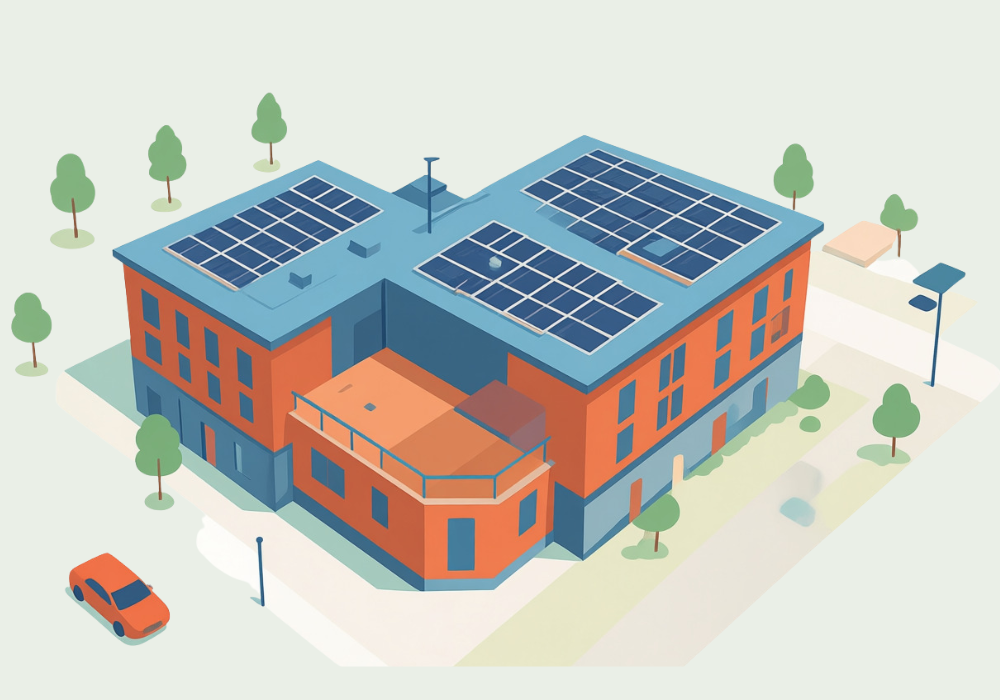
Propolis (Kamloops, British Columbia): Moving beyond pure power generation into sustainable urban planning, Propolis successfully raised $1 million through community bonds from approximately 100 investors. This capital was deployed to construct a 53-unit affordable, net-zero apartment building, proving that community finance can simultaneously tackle housing affordability and climate change.
EcoCharge (Quebec and New Brunswick): As the transportation sector electrifies, EcoCharge introduced the first community bond campaign of its kind dedicated to electric vehicle infrastructure. Today, its members collectively own approximately 100 EV-charging stations distributed across Quebec and New Brunswick, ensuring that clean transit corridors are built by the communities they serve.
Supporting Context & Metrics: The Mechanics of Community Bonds
To understand why community-led financing is gaining traction, one must examine the financial mechanics that make these projects viable. At the heart of many successful clean energy cooperatives is the community bond.
Community bonds are a form of fixed-income retail investment that allows everyday citizens to lend money to a specific, mission-driven organization or project. Unlike stocks traded on volatile public exchanges, community bonds offer investors a fixed rate of return over a set period, paired with the intangible yet powerful dividend of localized environmental and social impact.
Key Metrics at a Glance:
The Power of 100: Many foundational projects—such as Propolis in B.C., Wascana in Saskatchewan, and EcoCharge across the east—have demonstrated that mobilizing roughly 100 dedicated local investors is often the tipping point required to secure initial capital for mid-scale community infrastructure.
Megawatt-Hour Milestones: Projects like OREC’s Lake Huron turbines prove that decentralized assets can deliver substantial energy yields—generating 3.3 million kWh annually from just two turbines.
Urban Inclusivity: Initiatives like Wascana’s 400-panel urban installation solve the "renter dilemma," opening up clean energy participation to populations historically locked out of the solar boom due to property ownership constraints.
Financial Resilience and Risk: While the ZooShare restructuring—halting interest payments in 2023 to prioritize principal repayment as cash permits—illustrates the financial vulnerabilities inherent in early-stage green enterprises, it also highlights the democratic resilience of cooperatives. Bondholders, functioning as co-op members, actively participate in charting the project’s financial future rather than facing abrupt corporate liquidations.
Official Statements and Expert Perspectives
The shift toward localized, democratic energy systems has drawn praise from urban planners, financial analysts, and environmental advocates alike.
Dr. Aris Morfopoulos, a sustainable urban development researcher, notes the psychological and economic shift catalyzed by these initiatives:
"When a resident in Regina or Kamloops owns a fractional share of a solar panel or a net-zero housing development, they stop viewing climate change as an abstract global crisis. It transforms into a tangible community asset that they have a personal stake in protecting, maintaining, and expanding."
Financial strategists working within the cooperative sector emphasize the untapped potential of retail capital. Jane MacMillan, a Toronto-based cooperative finance advisor, points out that traditional banking systems often view innovative green projects as high-risk anomalies:
"Institutional lenders love scale, which leaves innovative, mid-sized community projects out in the cold. Community bonds bypass traditional gatekeepers by unlocking the dormant capital sitting in the savings accounts of citizens who desperately want their money to work for a livable future."
Furthermore, legal and governance experts highlight the protective nature of cooperative structures. Even when projects encounter financial headwinds—such as regulatory delays, supply chain bottlenecks, or shifting feed-in tariffs—the cooperative framework ensures transparent communication between project managers and the everyday people whose savings built the infrastructure.
Future Outlook: The Road Ahead for Grassroots Green Energy
As Canada charts its course toward its 2030 and 2050 net-zero targets, the role of grassroots financing is poised to evolve significantly. While utility-scale projects will remain essential for massive grid decarbonization, community-owned energy models offer distinct advantages that large-scale infrastructure cannot replicate: hyper-local energy security, high public buy-in, expedited social license, and wealth generation that stays directly within the community.
Challenges on the Horizon
Despite their immense promise, community energy initiatives face persistent headwinds:
Regulatory Friction: Many provincial regulatory frameworks are still designed around centralized, monopolistic utilities, making it difficult for small-scale co-ops to interconnect with the grid or sell power on fair terms.
Access to Capital Markets: Unlike massive multinational energy corporations, grassroots co-ops often lack dedicated investor relations teams, relying heavily on grassroots marketing and community trust to raise capital.
Market Volatility: As seen with biomass and alternative-fuel projects, fluctuations in feedstock costs or unpredicted operational hurdles can strain early-stage balance sheets, requiring robust financial buffering and member communication.
Opportunities for Growth
To unlock the full potential of community power, experts recommend several strategic shifts moving forward:
Government-Backed Loan Guarantees: If federal and provincial governments wish to accelerate local climate action, providing risk-mitigating loan guarantees for community bonds could lower borrowing costs and attract risk-averse retail investors.
Standardized Regulatory Frameworks: Simplifying the legal paperwork required to issue community bonds across provincial borders would drastically reduce administrative overhead for volunteer-led cooperatives.
Integration with Municipal Climate Action Plans: Cities aiming to achieve net-zero emissions can actively partner with citizen cooperatives to finance public EV charging networks, municipal building retrofits, and decentralized solar grids.
Ultimately, the transition to a low-carbon future does not have to be an exclusive undertaking driven solely by distant corporate boardrooms and government ministries. From the wind-swept shores of Lake Huron to the net-zero apartments of Kamloops, Canadians are proving that the energy transition can be built from the ground up—one community bond, one cooperative solar array, and one invested citizen at a time.