

Executive Overview
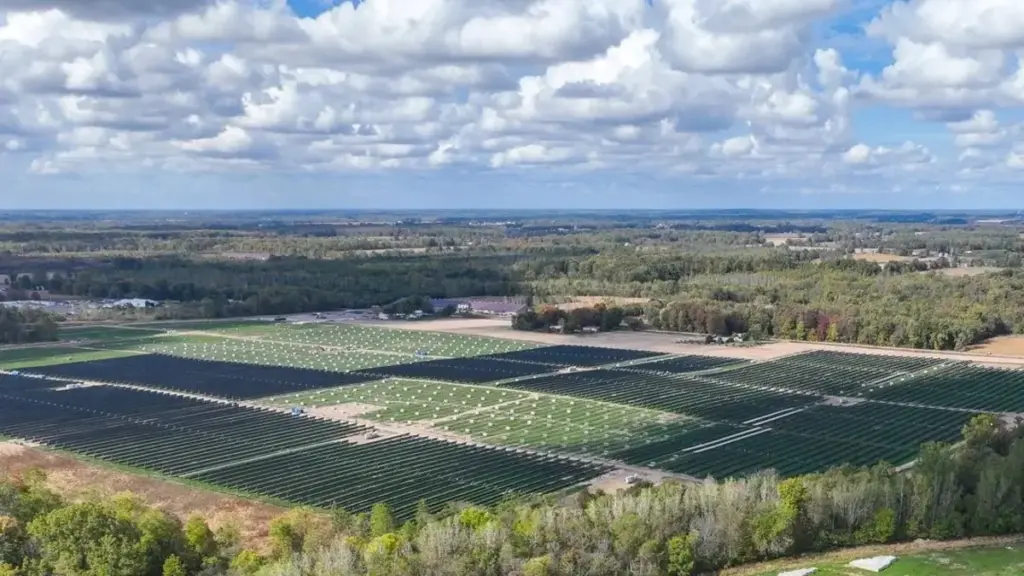
In a milestone development for American corporate sustainability and renewable energy integration, Detroit-based utility provider DTE Energy has officially completed construction on the Cold Creek Solar Park. Situated near Coldwater, Michigan, this sprawling $194 million photovoltaic facility boasts a generation capacity of 100 megawatts (MW). The project was entirely funded by the Ford Motor Company through its strategic enrollment in DTE’s voluntary renewable energy program, known as CleanVision MIGreenPower.
The completion of the Cold Creek installation marks a critical turning point in Ford’s regional decarbonization strategy. As the first operational facility delivered out of several planned utility-scale projects tied to a massive agreement between the automaker and the utility, Cold Creek will generate enough clean, emissions-free electricity to power the equivalent of 23,000 to 25,000 Michigan households annually.
However, this achievement arrives alongside a notable adjustment to Ford’s timeline. While the foundational framework of the partnership initially targeted a 2025 completion date for the automaker’s ambitious state-level green manufacturing goals, the latest disclosures from DTE Energy indicate that Ford has shifted its target window to the end of 2027. By this revised deadline, the automaker aims to assemble every vehicle manufactured in its home state of Michigan using the equivalent of 100% carbon-free electricity.
This comprehensive report examines the structural mechanics of the Cold Creek Solar Park, the history and evolution of the Ford-DTE partnership, the broader socioeconomic implications for local host communities, and the macro-level trajectory of Ford’s global crusade toward complete carbon neutrality by mid-century.
Detailed Chronology: From Blueprint to Operational Reality
The journey toward the realization of the Cold Creek Solar Park spans several years of calculated institutional commitments, regulatory navigation, and engineering execution.
The Genesis: The 2022 Landmark Agreement
The roots of the Cold Creek project trace back to August 2022, when Ford Motor Company and DTE Energy announced what was, at the time, the largest renewable energy purchase ever finalized from a U.S. utility. Under the terms of the landmark pact, Ford agreed to procure up to 650 MW of clean energy through DTE’s MIGreenPower program.
The scope of the 2022 agreement was designed to fundamentally reshape how Ford powers its industrial footprint in its home state. By leveraging customer-funded renewable energy tariffs, Ford committed to underwriting the construction of new utility-scale wind and solar installations across Michigan. At the inception of the deal, leadership from both companies set an aggressive target: Ford’s entire Michigan manufacturing footprint would transition to 100% carbon-free electricity by 2025.
Breaking Ground: April 2025
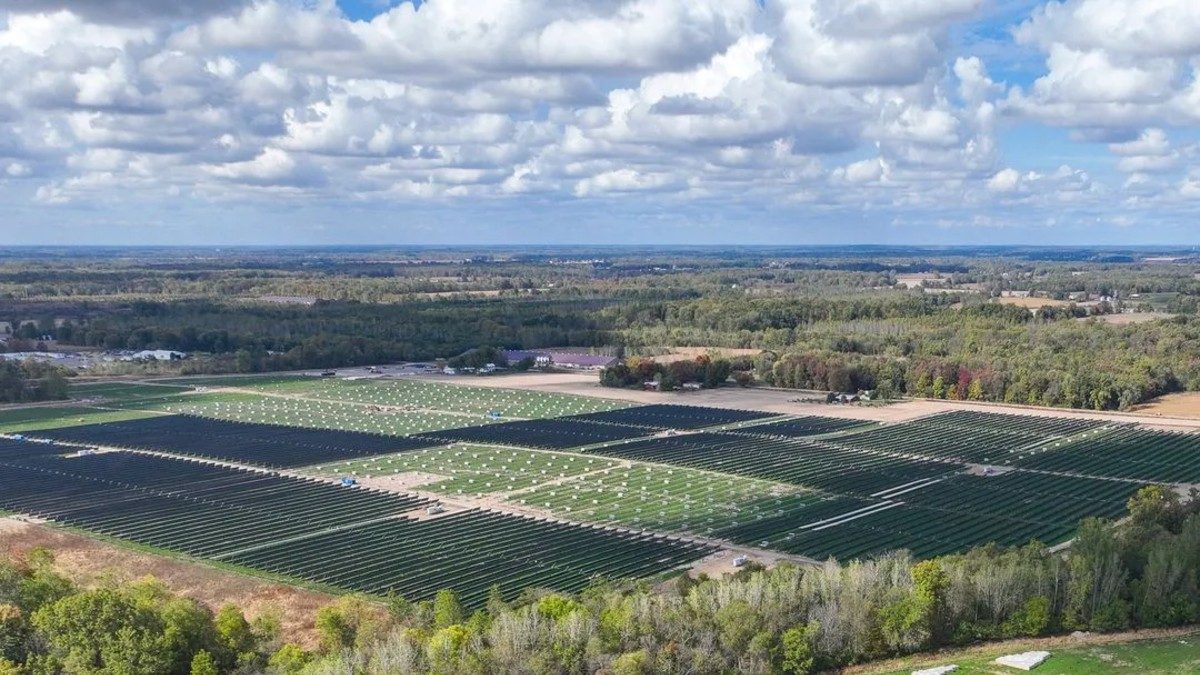
Following years of site acquisition, environmental impact assessments, engineering designs, and grid-interconnection studies, heavy machinery finally arrived at the Cold Creek site near Coldwater, Michigan, in April 2025. Construction commenced under the oversight of specialized contractors, transforming acres of rural Michigan land into a high-efficiency solar harvesting facility.
Over the subsequent year and a half, the project transformed from a mosaic of civil engineering groundwork into a vast landscape of photovoltaic modules, mounting structures, and advanced inverter stations. Despite supply chain hurdles, labor dynamics, and the inherent complexities of tying a 100 MW plant into the regional transmission organization (RTO) grid, construction stayed on a remarkably steady course.
Commissioning and Completion
By late 2026, construction crews put the finishing touches on the Cold Creek Solar Park. With physical assembly concluded, the project entered its final phase of rigorous grid-synchronization testing, safety inspections, and regulatory commissioning. Today, the facility stands fully operational, channeling millions of kilowatt-hours of clean solar energy directly into the local grid infrastructure, where it is allocated to offset the immense electricity demand of Ford’s Michigan-based production lines.
Supporting Context & Metrics: The Anatomy of Cold Creek
To truly understand the scale of the Cold Creek Solar Park, one must examine the specific metrics that define its output, financial backing, and technological footprint.
Capacity and Power Generation
- Nameplate Capacity: 100 Megawatts (MW)
- Capital Investment: $194 Million
- Household Equivalent Output: Power equivalent to 23,000 to 25,000 average Michigan households per year.
- Geographic Footprint: Located near Coldwater, Michigan, taking advantage of the region’s topographical layout and solar irradiance profiles.
The Mechanism of MIGreenPower
The financial engine driving Cold Creek is DTE Energy’s CleanVision MIGreenPower initiative. This voluntary green tariff program is designed to allow residential, commercial, and industrial customers to attribute a portion—or up to 100%—of their electricity consumption to wind and solar assets within DTE’s portfolio.
For large industrial entities like Ford, MIGreenPower functions as a corporate procurement vehicle. Rather than building and operating private off-grid renewable infrastructure, Ford partners with a major regulated utility that handles the development, land acquisition, permitting, grid integration, and ongoing maintenance of utility-scale assets. In exchange, Ford provides the long-term financial backing—effectively acting as the anchor off-taker—that makes the multi-million-dollar capital expenditure viable for the utility.
The Timeline Shift: Analyzing the 2025-to-2027 Pivot
A critical detail accompanying the completion of Cold Creek is the subtle recalibration of Ford’s milestone deadline. When the 650 MW partnership was initially unveiled in August 2022, executives publicly declared that Ford would source 100% carbon-free electricity for all its Michigan manufacturing plants by 2025.
However, DTE’s latest disclosures place that revised deadline at the end of 2027. Neither DTE Energy nor Ford Motor Company has offered a comprehensive, official explanation for the two-year shift. Industry analysts point to a confluence of potential factors:
- Supply Chain Bottlenecks: Global supply chains for high-voltage transformers, solar inverters, and specialized tracking hardware have experienced persistent lead-time inflation.
- Interconnection Queue Delays: Regional transmission organizations (RTOs) across the United States have faced unprecedented backlogs in processing interconnection studies for new generation assets.
- Phased Buildouts: Because Cold Creek represents only the first wave of the 650 MW total commitment, subsequent utility-scale wind and solar farms required to bridge the gap to 650 MW may have faced staggered development timelines, necessitating a rolling adjustment to the final corporate compliance date.
Economic and Community Impact
While the primary driver behind the Cold Creek Solar Park is corporate sustainability, the physical deployment of a $194 million clean energy asset delivers tangible socioeconomic ripple effects throughout the host community and the wider Michigan economy.
Job Creation and Workforce Dynamics
Large-scale infrastructure projects of this magnitude serve as localized economic stimuli. When DTE initially outlined the broader framework of the Ford renewable energy agreement in 2022, utility projections estimated that the collective multi-project buildout would generate approximately:
- 250 temporary construction jobs spanning civil engineering, electrical wiring, heavy equipment operation, and project management.
- 10 permanent, high-skilled operational and maintenance positions dedicated to asset monitoring, inverter servicing, and panel upkeep.
While these aggregate figures applied to the broader 650 MW initiative rather than Cold Creek in isolation, the Cold Creek buildout itself represented a massive influx of specialized labor into the Coldwater region, supporting local trades, hospitality businesses, and supply networks during the construction lifecycle.
Municipal Tax Revenues and Civic Infrastructure
Beyond direct employment, utility-scale solar installations transform underutilized land into high-yield commercial tax parcels. Local municipalities and county governments hosting facilities like Cold Creek stand to benefit from consistent, long-term property tax revenues.
In rural and semi-rural American communities, these tax streams can represent a transformative fiscal injection. County and township governments frequently allocate these revenues toward critical public infrastructure, including:
- Roadway paving, bridge maintenance, and structural upgrades.
- Funding enhancements for local public school districts and educational facilities.
- Upgrading operational capabilities for first responders, including volunteer fire departments, emergency medical services, and local law enforcement agencies.
- Modernizing public libraries and community centers.
Future Outlook: The Road to 2035 and Beyond
The completion of the Cold Creek Solar Park is not an isolated finish line; rather, it serves as a foundational stepping stone in a much larger, multi-decade corporate decarbonization strategy.

Ford’s Global Sustainability Roadmap
Ford’s investment in Michigan’s renewable grid is part of a tiered, hierarchical climate strategy that spans local operations, North American manufacturing, and global supply chains:
- Michigan Manufacturing (End of 2027): Every vehicle built within the state of Michigan will be assembled using the equivalent of 100% carbon-free electricity, driven primarily by projects like Cold Creek and the remaining allocation of the 650 MW DTE MIGreenPower agreement.
- Global Manufacturing (2035): Ford has committed to transitioning all of its global manufacturing facilities to 100% carbon-free electricity by 2035. This will require replicating similar utility partnerships across North America, Europe, and international markets where Ford maintains a production footprint.
- Total Enterprise Carbon Neutrality (No Later Than 2050): The ultimate horizon for the automaker is achieving absolute carbon neutrality across its entire global enterprise. This encompasses not only assembly plants and corporate offices, but also the lifecycle emissions of its vehicle fleets, upstream supply chain partners, logistics networks, and raw material sourcing.
The Evolving Utility-Corporate Partnership Model
Cold Creek also highlights a growing trend in the American energy landscape: the symbiotic relationship between massive industrial consumers and regulated electric utilities. As corporations face mounting pressure from investors, consumers, and regulatory bodies to eliminate Scope 1 and Scope 2 greenhouse gas emissions, utilities are finding that green tariffs like MIGreenPower are powerful tools for economic development.
By allowing corporate giants to underwrite the capital costs of new renewable generation, utilities can expand their clean energy portfolios without imposing financial burdens on residential ratepayers. This collaborative model accelerates the retirement of aging fossil-fuel assets while injecting capital directly into local rural economies.
Conclusion
As the sun shines down on the newly operational arrays of the Cold Creek Solar Park, it illuminates a changing reality for America’s industrial heartland. The transition of iconic manufacturing facilities—such as those belonging to Ford—toward zero-emission power demonstrates that heavy industry and environmental stewardship are no longer mutually exclusive.
With Cold Creek now feeding clean electrons into the grid, Ford is one step closer to fulfilling its Michigan green energy ambitions, setting a precedent that will shape the trajectory of industrial decarbonization for decades to come.



