

Executive Overview
The transition toward a decarbonized energy grid has reached a critical inflection point in Massachusetts. Major New England utilities Eversource and National Grid have officially announced the integration of residential Vehicle-to-Grid (V2G) charging into ConnectedSolutions, their flagship virtual power plant (VPP) programs.
This strategic expansion transforms everyday electric vehicles (EVs) from passive electrical loads into active grid-stabilizing assets. By enabling qualifying residential EV owners to push stored battery energy back into the local power grid during periods of peak demand, the state aims to mitigate grid strain, displace expensive and polluting fossil-fuel peaker plants, and lower overall energy costs for ratepayers.
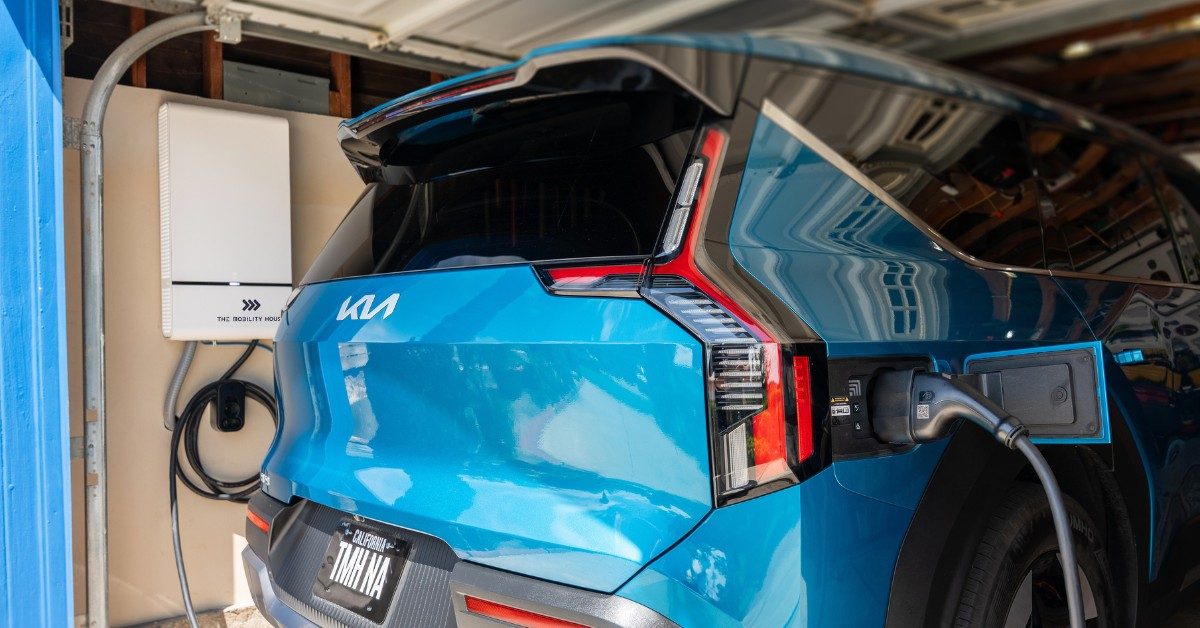
Behind the scenes, specialized clean-tech infrastructure providers—including EnergyHub, Sunrun, and The Mobility House—are supplying the sophisticated smart-charging and grid-integration technology required to coordinate these distributed power nodes. With an initial roster of approved bidirectional-capable electric vehicles now confirmed, and financial incentives reaching up to $2,750 per residential participant over the summer season, the program signals a massive leap forward for decentralized energy management in the United States.
Detailed Chronology & Program Evolution
The Evolution of ConnectedSolutions
Launched years ago to curb peak energy consumption, Massachusetts’ ConnectedSolutions program has traditionally relied on stationary home energy storage batteries, commercial and industrial demand-response assets, and smart thermostats to balance electrical loads. While these technologies have successfully shaved peak demand during scorching summer heatwaves and freezing winter nights, utility operators recognized a massive, untapped reservoir of mobile energy sitting idle in driveways across the Commonwealth.
With more than 150,000 EVs currently registered on Massachusetts roads—and that number scaling rapidly—state utilities began exploring how automotive battery packs could double as grid-support infrastructure. Following successful pilot tests utilizing light- and medium-duty municipal and commercial fleets, most notably electric school buses, utility operators turned their sights toward the residential sector.
From Concept to Implementation: The V2G Rollout
The announcement that Eversource and National Grid would incorporate residential V2G technology marked a major milestone for North American power markets. Initially, utility announcements left open several vital operational questions, specifically regarding which automotive models and bidirectional hardware systems would qualify, the exact enrollment timelines, and the precise compensation structure for participating drivers.
However, subsequent updates from program administrators have cleared the air, establishing a framework for performance-based compensation and rolling out an initial list of certified vehicles. This development transforms V2G from a theoretical concept into a practical, revenue-generating reality for forward-thinking EV owners in Massachusetts.
Supporting Context & Metrics: The Mechanics of Residential V2G
How Vehicle-to-Grid Technology Operates
At its core, V2G technology leverages bidirectional charging systems that allow electricity to flow in two directions: from the grid into the vehicle’s battery (G2V) during off-peak hours when energy is cheap and abundant, and from the vehicle back into the home or grid (V2G) during high-demand intervals.
When a heatwave strikes or industrial demand surges, local grid operators face immediate reliability threats. Rather than firing up carbon-intensive peaker plants, operators can digitally aggregate thousands of enrolled residential EVs via cloud-based platforms managed by firms like EnergyHub, Sunrun, and The Mobility House. These systems instantly draw tiny fractions of power from each vehicle’s massive lithium-ion battery pack. Because the draw is distributed across thousands of vehicles, individual car owners experience negligible battery degradation, while the collective grid receives a massive, multi-megawatt injection of stabilization power.
Financial Incentives and Economic Impacts
The economic value proposition for consumers is anchored by performance-based incentives designed to reward active grid participation.
According to program guidelines provided by utility stakeholders:
- National Grid ConnectedSolutions Structure: Participants can earn up to $275 per average kilowatt (kW) of performance over the designated summer season.
- Estimated Payouts: Depending on the capacity of the household’s bidirectional charger and overall system performance, residential participants can reasonably anticipate earning between $1,375 and $2,750 per season.
Beyond direct cash incentives for participating drivers, the broader economic implications are substantial. By shaving peak loads, utilities can defer costly investments in transmission and distribution upgrades. This downward pressure on capital expenditures ultimately benefits all ratepayers, preventing systemic electricity rate hikes.

Certified Hardware and Initial Vehicle Roster
To ensure safety, grid synchronization, and equipment longevity, participation is currently restricted to verified hardware and vehicle combinations. The initial list of eligible V2G-capable vehicles approved for the program includes:
- Ford F-150 Lightning (noted for pioneering bidirectional home backup capabilities)
- Nissan LEAF (a long-standing pioneer of CHAdeMO-based bidirectional tech)
- Kia EV9 (bringing modern 800V architecture to the VPP ecosystem)
- Polestar 3 (representing high-performance European luxury integration)
- Volvo EX90 (showcasing advanced safety and energy management integration)
Note: Exact compensation rates and software integrations vary depending on the chosen technology provider, home charger specifications, and household battery capacity.
Official Statements and Industry Perspectives
The convergence of the automotive and energy sectors has generated significant enthusiasm among clean energy executives and utility leaders alike.
Chip Silverman, Sunrun’s Director of Grid Services, emphasized the transformative potential of aggregating automotive batteries during a recent industry briefing:
"We are excited to bring our dispatching expertise to Massachusetts and help expand our vehicle-to-grid technology to more customers. Vehicle batteries play a critical role in stabilizing the grid, providing backup power to homes, and lowering energy costs for everyone."
Industry analysts point out that Massachusetts is uniquely positioned to lead this transition. With aggressive state-level clean energy mandates, a high density of EV adoption, and proactive utility frameworks, the Commonwealth serves as an ideal testbed for nationwide replication.

Furthermore, parallel initiatives—such as Eversource’s discussions with regional school districts regarding V2G integration via the ConnectedSolutions+ program—demonstrate that bidirectional charging will soon saturate both commercial fleet depots and residential neighborhoods alike.
Future Outlook: Challenges and Opportunities Ahead
Overcoming Adoption Barriers
While the technology has proven its technical viability—most notably demonstrated by pioneering residential V2G microgrids running on Ford F-150 Lightning trucks—significant hurdles remain on the path to mass adoption.
The primary challenge is consumer friction. For residential V2G to achieve widespread penetration, utilities and technology providers must ensure that enrollment processes are seamless, software interfaces are intuitive, and hardware installation costs for bidirectional chargers are subsidized or offset by attractive rebates. Range anxiety remains a psychological barrier for some EV owners, who worry that sharing battery power with the grid might leave them stranded with a depleted battery. Educating consumers on intelligent software controls—which allow drivers to set strict state-of-charge minimums (e.g., ensuring the vehicle never drops below 80% capacity unless explicitly overridden)—will be paramount to building trust.
The Road Ahead for Virtual Power Plants
As the electric vehicle market matures, the integration of V2G into programs like ConnectedSolutions marks the beginning of a profound paradigm shift in energy economics. Decentralized virtual power plants are rapidly replacing centralized fossil-fuel monopolies, creating a cleaner, more resilient, and democratic energy grid.
For Massachusetts EV owners, the garage is no longer just a parking space; it is becoming a micro-power plant capable of keeping the lights on, stabilizing regional energy markets, and turning everyday commutes into a revenue-generating asset for a sustainable future.



