The global transition toward a sustainable, electrified economy faces a profound, often overlooked bottleneck: the supply chain for rare earth elements. As automakers race to scale production of electric vehicles (EVs), renewable energy developers build out massive wind turbine farms, and the technology sector surges under the demands of artificial intelligence and advanced robotics, the appetite for permanent magnets has reached unprecedented levels. Historically, meeting this demand has meant relying heavily on virgin mining operations and a heavily monopolized geopolitical supply chain centered primarily in China.
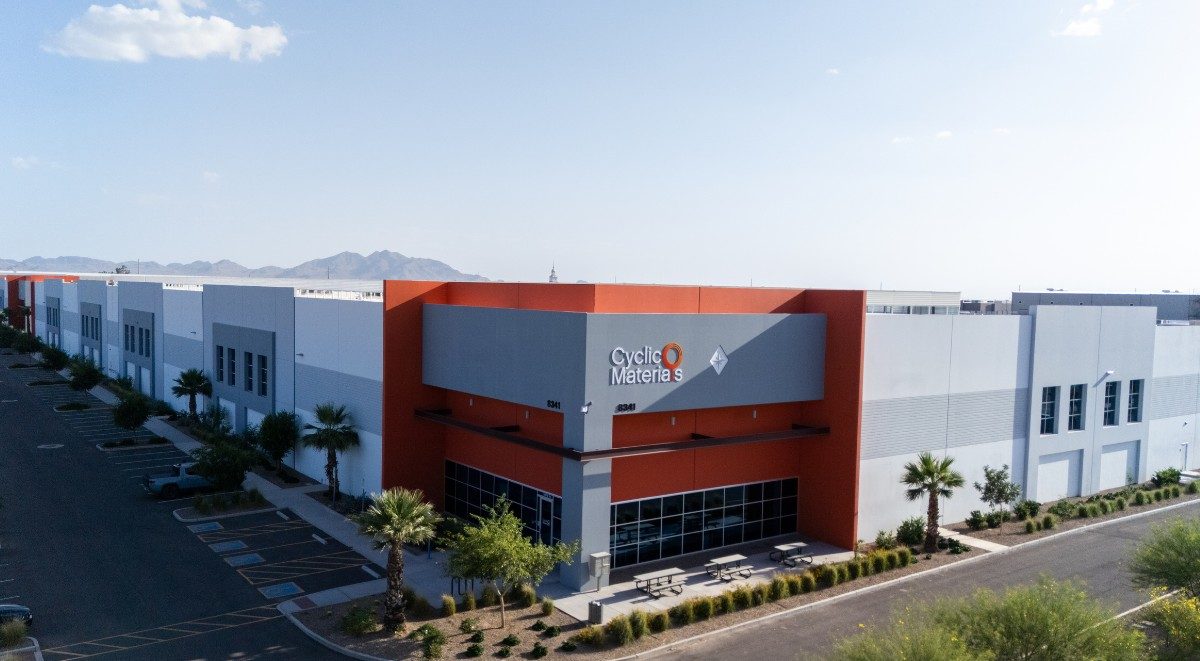
Today, a paradigm shift is underway in the American Southwest. Cyclic Materials has officially opened its flagship, commercial-scale rare earth magnet recycling facility in Mesa, Arizona. Representing a critical milestone for domestic critical mineral infrastructure, the new plant is capable of processing up to 25,000 metric tons of magnet-bearing, end-of-life products annually. Utilizing the company’s proprietary MagCycle technology, the facility mechanically separates permanent magnets from discarded electronics and industrial equipment, ultimately extracting valuable rare earth elements alongside critical industrial metals like copper, aluminum, and steel.
By turning electronic waste and decommissioned machinery into a localized, secondary supply of critical minerals, Cyclic Materials is forging a vital domestic bridge. This facility does not merely recycle scrap; it provides a strategic buffer against global supply chain volatility, trade embargoes, and geopolitical pressures. With initial commercial shipments slated to leave the Mesa plant later this month, the facility underscores a broader industrial evolution: the race to secure America’s green tech independence through urban mining and advanced metallurgy.
Detailed Chronology: From Concept to Commercial Reality
The realization of the Mesa recycling facility represents a remarkably fast-paced execution in an industrial sector notoriously bogged down by red tape, protracted environmental reviews, and lengthy construction timelines.
The Initial Announcement (Spring 2025): Cyclic Materials first publicly unveiled its blueprint for the Mesa, Arizona facility, identifying the Phoenix metropolitan area as an ideal logistics hub to service the burgeoning southwestern technology and manufacturing corridor. The announcement set an aggressive timeline for development, reflecting the urgent, escalating demand for localized rare earth processing capabilities.
Securing the Feedstock Pipeline (July 2026): Just months before the plant’s operational launch, Cyclic Materials established a foundational feedstock supply agreement by partnering with ERI, one of the nation’s largest electronics recyclers. This strategic alliance solved one of the recycling industry’s toughest hurdles: guaranteeing a steady, high-volume stream of end-of-life electronic waste and magnet-bearing hardware to feed the upcoming facility.
Rapid Construction and Commissioning (Late Summer 2026): True to its projected timeline, Cyclic Materials completed the construction and technical commissioning of the Mesa facility a mere 17 months after the initial project announcement. Engineering teams moved swiftly to install the proprietary MagCycle machinery, designed to handle heavy industrial throughput while maintaining high extraction purity.
Early Deliveries and Processing (September 2026): Even before cutting the ribbon for full commercial operations, the Mesa plant received an influx of raw material. Cyclic Materials confirmed that more than 7,000 metric tons of magnet-bearing industrial and electronic waste had already been delivered to the site, with processing lines immediately roaring to life.
Commercial Launch and First Shipments (Current Milestone): With the plant fully operational, Cyclic Materials is preparing to dispatch its first commercial shipments of rare earth magnet concentrate—marketed under the trade name Mag-Xtract—to domestic manufacturers later this month. This milestone transitions the company from a developmental technology firm into a revenue-generating commercial pillar of the US critical mineral supply chain.
Supporting Context & Metrics: The Scale of the Rare Earth Challenge
To understand the profound significance of Cyclic Materials’ Mesa facility, one must examine the staggering macroeconomic metrics governing the rare earth market.
The Tripling Demand Curve
According to industry projections, global demand for rare earth elements is expected to skyrocket, projected to triple by the year 2035. This exponential growth is not fueled by a single industry, but rather by a convergence of high-growth sectors:
Automotive: EV traction motors rely heavily on neodymium-iron-boron (NdFeB) permanent magnets to deliver high torque and efficiency in a compact footprint.
Renewable Energy: Direct-drive wind turbine generators require massive quantities of heavy and light rare earth elements to operate reliably under extreme weather conditions over decades.
Digital Infrastructure & AI: The rapid expansion of data centers, high-performance computing hardware, and artificial intelligence infrastructure demands precision robotics, advanced cooling systems, and specialized actuators containing permanent magnets.
Defense & Aerospace: Guidance systems, radar installations, fighter jet actuators, and missile defense technologies depend utterly on an unhindered supply of secure, high-grade rare earth materials.
The Geopolitics of Monopolization
Despite this surging demand, the global supply chain for rare earth elements remains intensely vulnerable. China currently dominates nearly every phase of the rare earth value chain—from primary mining and extraction to complex chemical refining and the manufacturing of finished permanent magnets. This heavy concentration creates an Achilles’ heel for Western manufacturing. Trade restrictions, export quotas, or sudden geopolitical flare-ups can instantly cut off foreign manufacturers, halting assembly lines for vehicles, wind turbines, and defense systems alike.
The Role of Urban Mining and MagCycle Technology
Cyclic Materials addresses this vulnerability through a scientific approach known as urban mining. Rather than relying exclusively on environmentally destructive, energy-intensive primary mining operations, the company recovers high-value materials from existing, discarded infrastructure.
The proprietary MagCycle technology deployed at the Mesa plant utilizes advanced mechanical separation processes to isolate permanent magnets from complex assemblies without the need for toxic, hazardous chemical digestion at the initial stage. The facility breaks down the input material into distinct, highly marketable output streams:
Mag-Xtract: A specialized rare earth magnet concentrate that serves as the primary feedstock for downstream refiners.
Industrial Metals: High-purity recovery streams of copper, aluminum, and steel, which are immediately redirected back into domestic manufacturing loops.
By handling up to 25,000 metric tons of material annually, a single facility of this scale makes a measurable dent in the US deficit of domestic critical minerals, proving that circular economy principles can scale to meet heavy industrial demands.
Official Statements and Industry Perspective
The inauguration of the Mesa plant has drawn praise from industry leaders and environmental strategists alike, who view the development as a watershed moment for American industrial policy.
"This facility delivers new capacity for the US to keep resource-rich products here and build a domestic rare earth supply," said Ahmad Ghahreman, CEO and founder of Cyclic Materials. "Cyclic is quickly closing gaps in the domestic supply chain as we expedite our rare earth and critical mineral infrastructure development in the US."
Ghahreman’s remarks highlight the strategic urgency driving the company’s expansion. For decades, the United States has exported millions of tons of valuable scrap metal and electronic waste overseas, effectively shipping away its own future resource security. Facilities like the one in Mesa reverse this flow, anchoring valuable materials domestically where they can be continuously refined and reused.
Industry analysts note that Cyclic Materials’ business model addresses a dual challenge: solving the mounting global electronic waste crisis while simultaneously securing the raw materials required for the clean energy transition. By partnering with major waste handlers like ERI, Cyclic has built a robust supply chain ecosystem that connects discarded consumer electronics directly to the factories building tomorrow’s electric vehicles and renewable energy grids.
Future Outlook: The Road to 2028 and Beyond
While the launch of the Mesa, Arizona facility marks a massive operational victory for Cyclic Materials, the company’s long-term roadmap points toward an even more integrated domestic supply chain.
The successful 17-month turnaround from announcement to operation in Mesa has established a blueprint for rapid deployment that Cyclic plans to replicate across North America. Looking ahead, the company has already broken ground on its next major initiative: an expansive recycling campus in South Carolina.
Scheduled to open its doors in 2028, the South Carolina facility represents the next evolutionary step for Cyclic Materials. Unlike the Mesa plant—which focuses primarily on mechanical separation and the production of the Mag-Xtract concentrate—the upcoming South Carolina campus is designed to combine magnet recovery and advanced rare earth refining at a single, centralized site. By bringing both stages under one roof, the company aims to drastically reduce transportation emissions, lower processing costs, and deliver fully refined rare earth oxides directly to magnet manufacturers and end-users in the eastern United States.
As these facilities scale over the remainder of the decade, the narrative surrounding critical minerals is beginning to change. The vulnerability of relying on distant, monopolized supply chains is being systematically replaced by a resilient, domestic circular economy. With Mesa processing its first batches of magnet-bearing waste today—and commercial shipments heading out to US customers before the month is through—Cyclic Materials is proving that the minerals needed to power the electrified century are already here, hidden within the discarded technology of our recent past.