Executive Overview
For over two decades, the United States Environmental Protection Agency (EPA) functioned as an essential, if imperfect, clearinghouse of public health intelligence. Among its most critical offerings was the translation of complex environmental metrics into comprehensible indicators of human jeopardy—specifically, calculations detailing how industrial air pollution translated into localized cancer risks. For millions of Americans living in the shadow of chemical plants, medical sterilization facilities, and refineries, this data served as a vital shield. It allowed residents, local journalists, public health advocates, and municipal planners to gauge the invisible dangers hanging in the air they breathed.
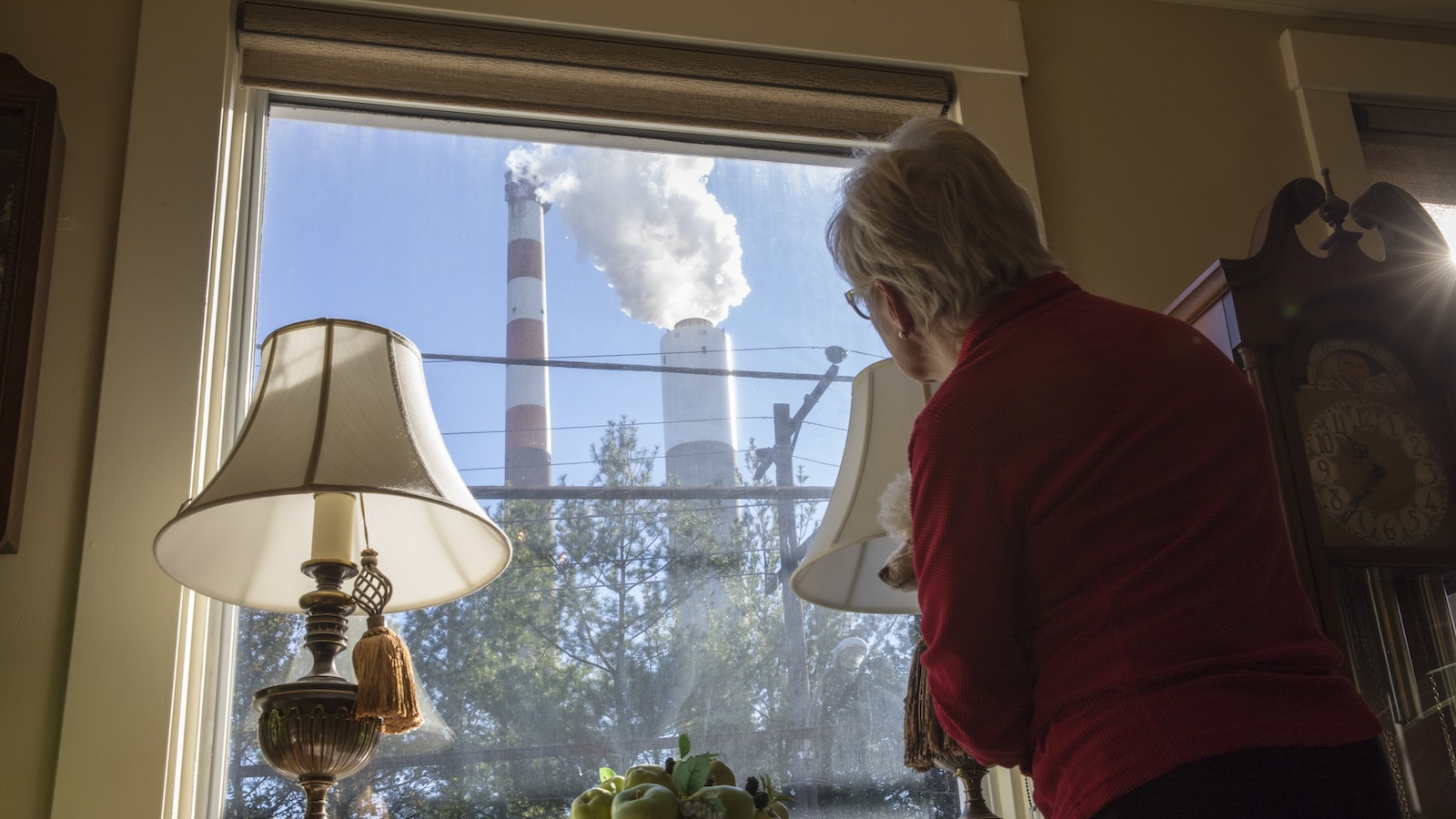
Today, that infrastructure is quietly eroding. In its latest nationwide air pollution data updates, the EPA has omitted the vital cancer risk estimates that historically accompanied raw toxic emissions figures. Simultaneously, the agency has frozen or removed searchable national maps that once allowed ordinary citizens to look up cancer risk by ZIP code or census block.
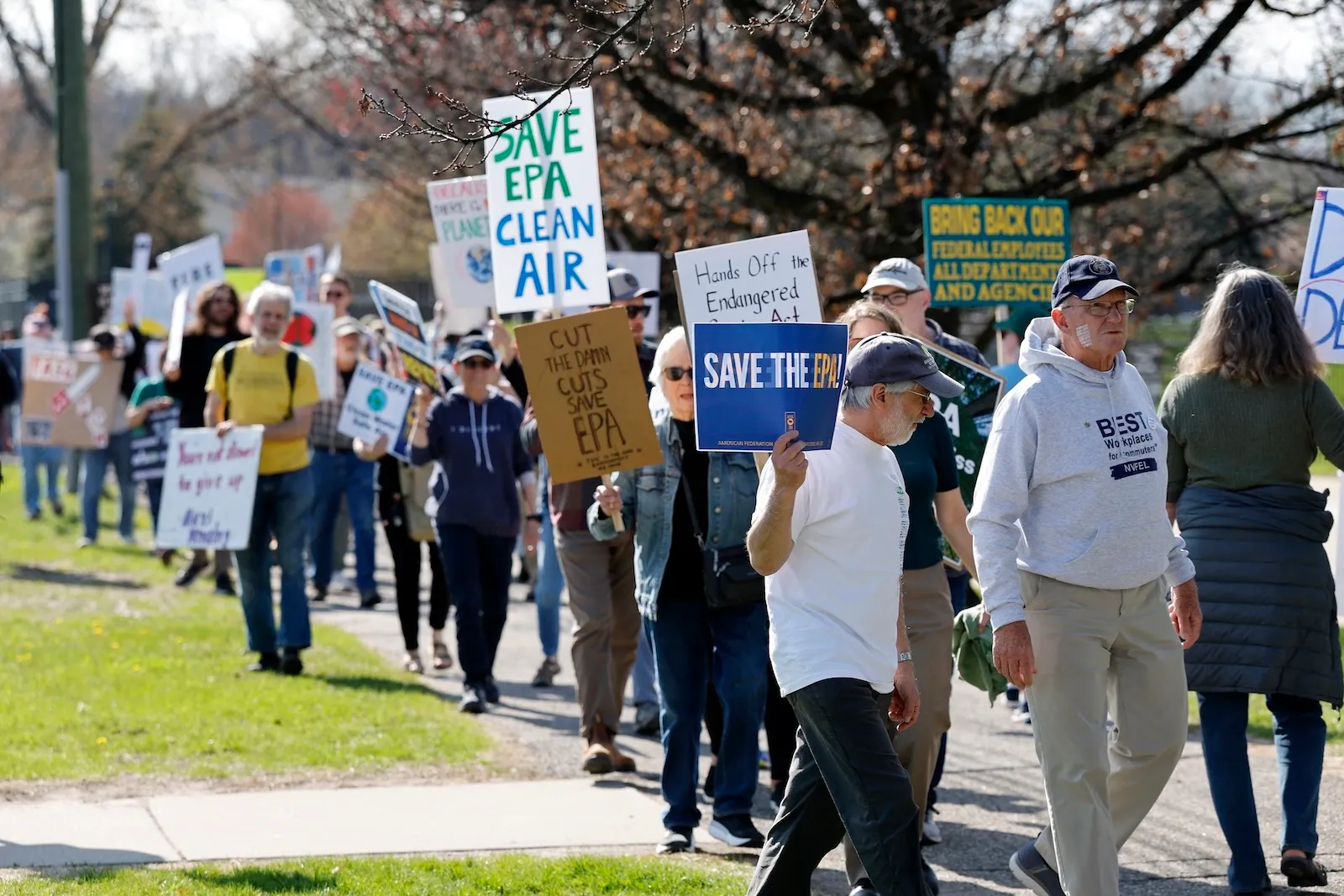
This vanishing act is not happening in a vacuum. Under the current political administration, nearly 2,000 datasets and webpages concerning climate change, environmental justice, and public health have been modified, shelved, or completely expunged. Flagship tools like the EJScreen environmental justice mapping system have been shuttered, and agency websites detailing specific carcinogens have been systematically scrubbed of health risk warnings to instead emphasize industrial utility.
Public health advocates, data scientists, and community organizers warn that withholding these risk assessments shifts an impossible burden onto everyday citizens. Stripped of interpretive health metrics, communities are left to sift through raw, highly technical pollution data that requires specialized expertise to decode. In effect, the erasure of federal risk assessments represents a profound retreat from transparency—one that prioritizes industrial convenience over human survival.
Detailed Chronology: The Disappearance of Public Health Metrics
The systematic dismantling of public-facing environmental data has unfolded through a combination of administrative purges, budget cuts, and subtle procedural shifts. To understand the gravity of the current information blackout, it is necessary to examine how the system was built and how it was systematically dismantled.
The Rise and Fall of the Air Toxics Screening Assessment
Since 2002, the EPA published localized cancer risk metrics periodically through programs like the Air Toxics Screening Assessment (AirToxScreen). This initiative detailed the concentrations of dozens of hazardous air pollutants down to the census block level. Recognizing the rapid pace of industrial expansion and closure, the agency transitioned to annual updates in 2022 to provide communities with the most accurate, up-to-date indicators possible.
Had the updates adhered to their traditional schedule, the EPA would have released metrics covering 2022 emissions. Instead, the most recent update arrived a full year late, covering only 2021 data—and it was published quietly on a public-facing webpage only after persistent inquiry from external experts. More critically, the updated release omitted the long-standing cancer risk calculations that contextualized the raw numbers.
The Purge of Federal Environmental Webpages
The suppression of cancer data is part of a broader, aggressive campaign targeting environmental and scientific transparency. According to tracking data compiled by the Environmental Data & Governance Initiative (EDGI), the administration has modified or removed nearly 2,000 federal webpages and datasets.
- The Stifling of EJScreen: Last year, the EPA suspended EJScreen, its flagship mapping tool designed to overlay industrial pollution hotspots with demographic data. The tool had previously served as the primary mechanism for identifying which vulnerable neighborhoods bore the heaviest cumulative pollution burdens.
- The Elimination of Hazardous Substance Inventories: The agency discontinued a widely used public tool that allowed residents to search regional inventories of facilities handling large volumes of extremely hazardous substances by ZIP code.
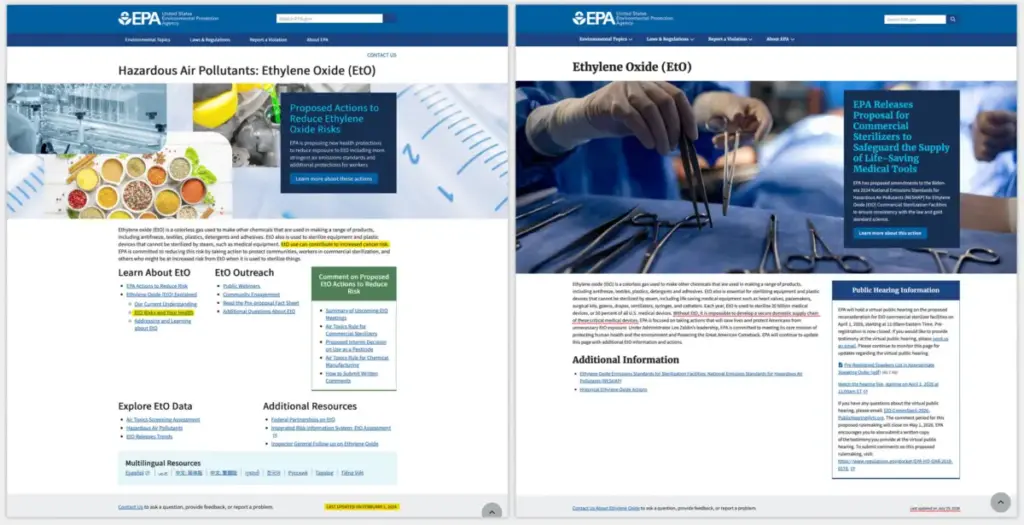
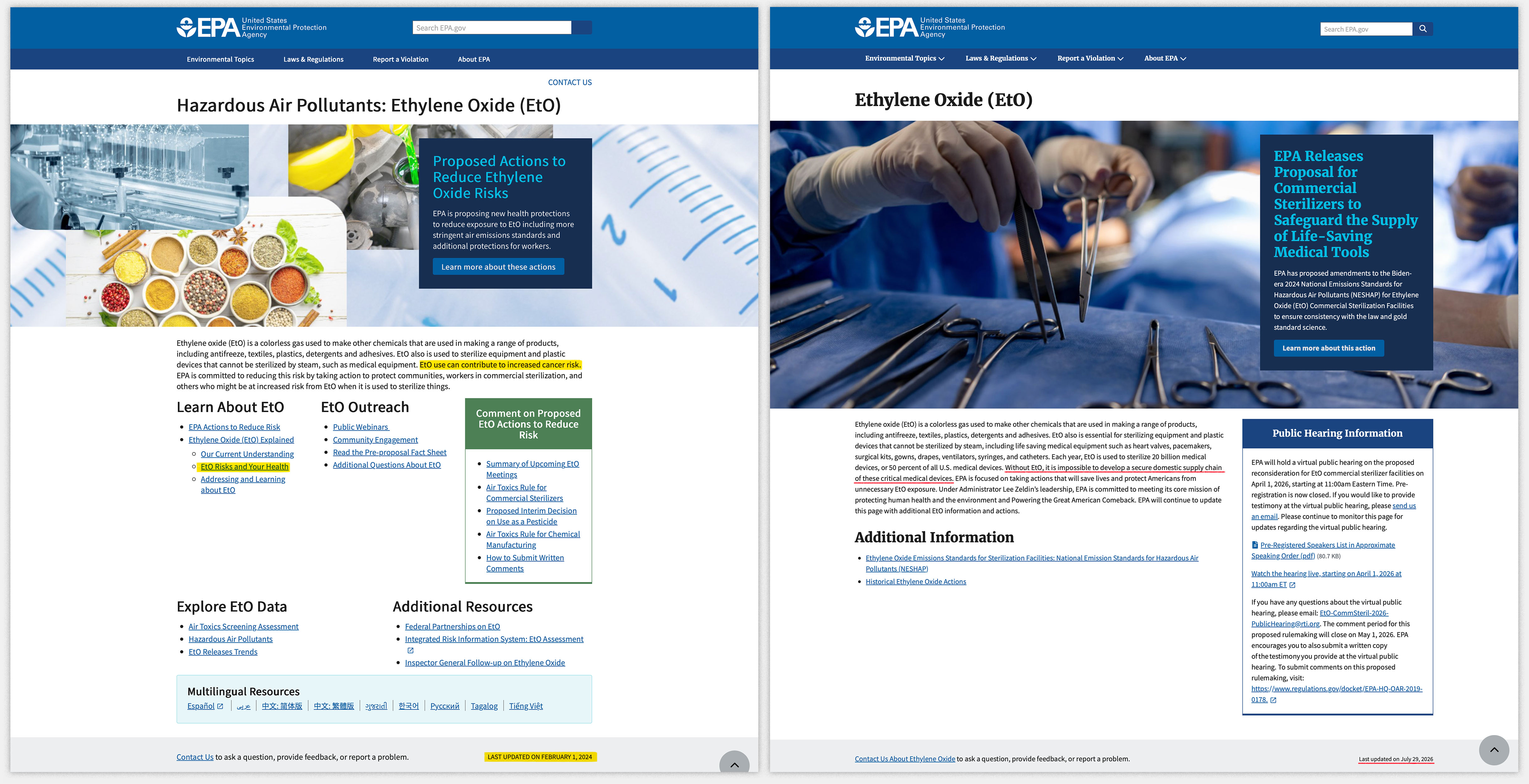
- The Rewriting of Chemical Profiles: Content on EPA webpages dedicated to specific carcinogens has been radically altered. For instance, official agency descriptions of ethylene oxide—a potent chemical used in medical sterilization—have been stripped of prominent warnings regarding elevated cancer risks, pivoting instead to highlight the compound’s industrial indispensability.
The human toll of these administrative changes was immediate. Tai Lung, a senior advisor for federal data policy at the Federation of American Scientists (FAS) and the former lead of the EPA’s EJScreen project, was placed on administrative leave alongside 170 colleagues during a sweeping purge of diversity, equity, and environmental justice personnel. It was only after Lung reached out to agency contacts that the delayed 2021 emissions modeling platform was surfaced to the public this past summer—albeit stripped of its interpretive health context.
Supporting Context & Metrics: The Human Cost of Omission
To evaluate the impact of the EPA’s data retrenchment, one must examine the baseline public health crisis facing the United States. The nation maintains some of the highest cancer incidence rates in the world, with nearly 40 percent of all Americans receiving a cancer diagnosis over the course of their lifetimes, resulting in more than 2 million new cases annually.
Industrial Hotspots and Frontline Communities
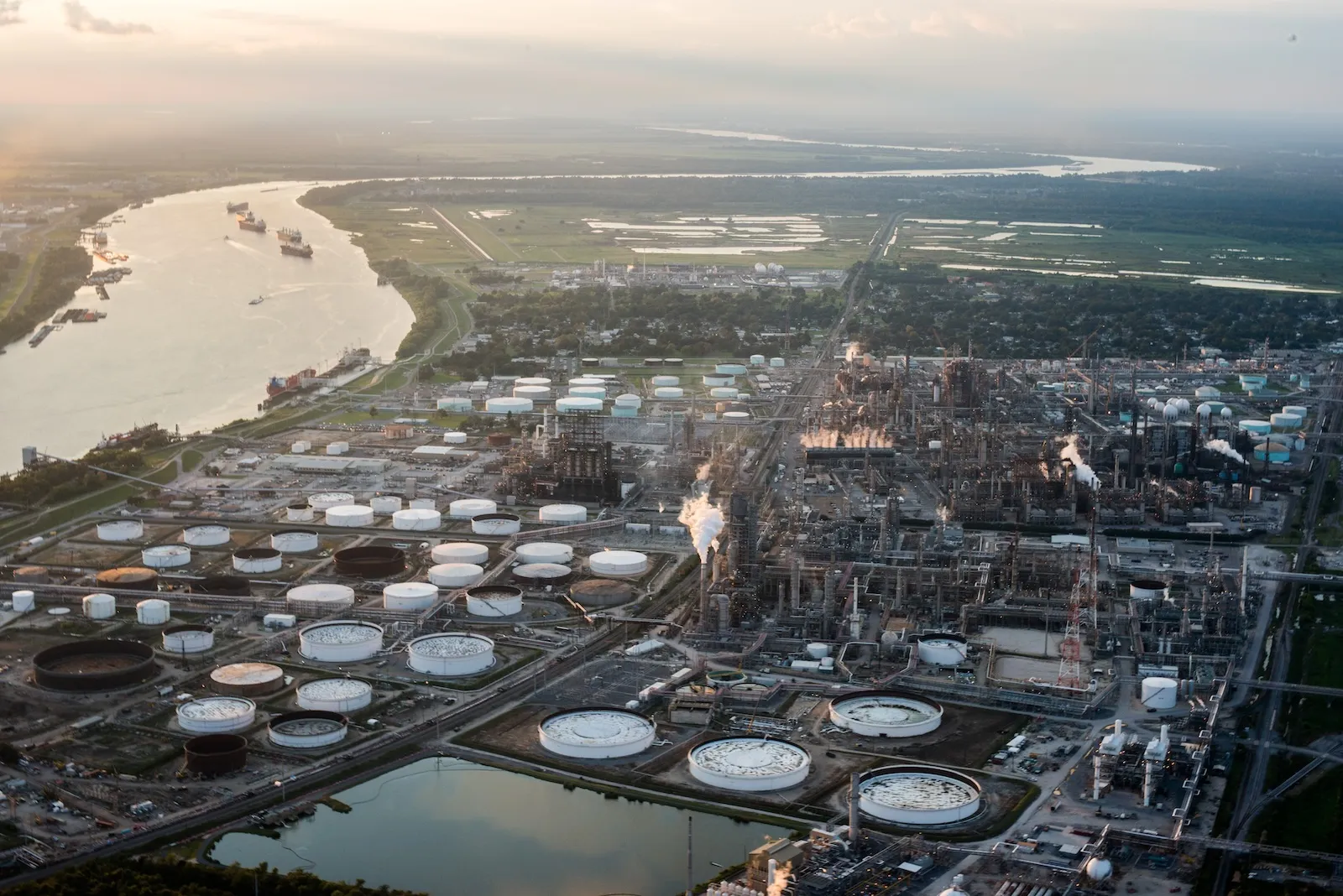
Proximity to heavy industrial operations significantly elevates the baseline risk of developing malignancies. Areas like Louisiana’s infamous 85-mile stretch of petrochemical facilities along the Mississippi River—known globally as "Cancer Alley"—the fence-line neighborhoods surrounding the Houston Ship Channel, and the industrial southeast side of Chicago represent persistent public health emergencies.
In these communities, industrial facilities emit complex chemical cocktails containing known carcinogens such as benzene, formaldehyde, and ethylene oxide.
- The Ethylene Oxide Crisis: In 2023, the Union of Concerned Scientists (UCS) published a landmark mapping project led by researcher Darya Minovi. The maps revealed that more than 14 million Americans lived within a five-mile radius of facilities emitting ethylene oxide. Crucially, the project identified 23 specific commercial sterilization plants emitting the carcinogen at levels definitively driving elevated regional cancer risks. This data proved instrumental in compelling federal regulators to draft tighter emissions limits. Now, with the underlying risk data pulled offline, replicating or updating such life-saving analyses has become exponentially more difficult.
- The Shift to Raw Data: By releasing raw pollution metrics without corresponding cancer risk estimates, the EPA has effectively rendered the data opaque to the average citizen. As Tai Lung bluntly noted: "So now we’re just sharing this raw data, which really means nothing to anybody."
Regulatory Frameworks and Acceptable Risk
Cancer risk assessments have historically formed the absolute core of the EPA’s statutory mandate. Under standard regulatory frameworks, the agency establishes "acceptable thresholds" for industrial pollution exposure. Generally, the EPA operates under a benchmark of allowing no more than one additional cancer case per 10,000 individuals exposed over a lifetime—though agency policy acknowledges an ideal target of one in a million.
When industrial applicants seek operational permits or when the agency weighs nationwide rules, these risk thresholds dictate whether a project moves forward. By withholding the calculations that measure whether a neighborhood crosses these safety lines, the EPA is effectively flying blind while blinding the public in the process.
Official Statements and Institutional Defense
As mounting pressure from scientists, journalists, and non-governmental organizations builds, federal officials have offered guarded responses defending the agency’s trajectory while dodging specific inquiries regarding the missing health metrics.
Carolyn Holran, an official EPA spokesperson, maintained in a statement to reporters that the agency remains committed to transparency within bounds:

"EPA is committed to fulfilling our core mission of protecting human health and the environment and ensuring clean air for all Americans, while following gold standard science. The agency will continue posting the annual nationwide air toxics emissions and concentrations data when it becomes available."
However, Holran declined to address direct questions concerning why the cancer risk calculations were omitted from the latest release, nor would she clarify whether the agency continues to compute these risk assessments internally.
External data policy experts argue that the administration’s actions violate both the spirit and letter of federal oversight law. Denice Ross, director of the Data Policy Institute at the FAS and former U.S. chief data scientist during the Biden administration, categorizes the cuts into two distinct administrative patterns:
- Ideological Scrubbing: The deliberate removal of information, datasets, and programs that conflict with administration priorities—particularly those touching on climate science, social justice, and public health disparities.
- Systemic Attrition: The severe degradation of institutional capacity through budget cuts, hiring freezes, and workforce purges, which introduces bureaucratic gridlock and forces routine data maintenance projects to languish.
Ironically, many of these rollbacks run counter to existing statutory mandates. In 2019, during his first term in office, President Donald Trump signed the OPEN Government Data Act, a bipartisan statute designed to enshrine requirements making government data broadly accessible and useful to the public. Furthermore, federal administrative procedures generally require agencies to provide formal public notice before substantially modifying or terminating major information repositories like the Air Toxics Assessment. Instead, as Ross observed, these degradations are occurring quietly behind closed doors: "And if you don’t know where to look, you won’t find it."
Future Outlook: Navigating the Information Vacuum
The systematic withholding of federal health risk data forces civil society to adapt rapidly, though advocates warn that makeshift solutions cannot fully replace institutional authority.
Grassroots Preservation and Citizen Science
In response to federal data purges, tech-minded coalitions and advocacy groups have begun launching mirrored versions of discontinued tools. Independent developers and organizations have recreated unauthorized, open-source versions of platforms like EJScreen (such as community-hosted azure deployments).
While these efforts demonstrate remarkable resilience, they suffer from inherent limitations. Unofficial portals remain entirely dependent on upstream updates to federal data feeds. More importantly, they lack the legal weight, regulatory authority, and exhaustive validation processes of official government assessments. When a local community group confronts a corporate polluter or a state environmental agency, an unofficial map carries far less persuasive power than an EPA-certified risk evaluation.
The Mounting Burden on Frontline Communities
Without accessible risk assessments, the emotional and technical burden of fighting industrial pollution falls squarely on the shoulders of the most vulnerable. Elizabeth Bechard, a public health manager at Moms Clean Air Force, emphasizes that translating raw emissions inventories into actionable community defense is not a simple DIY project.
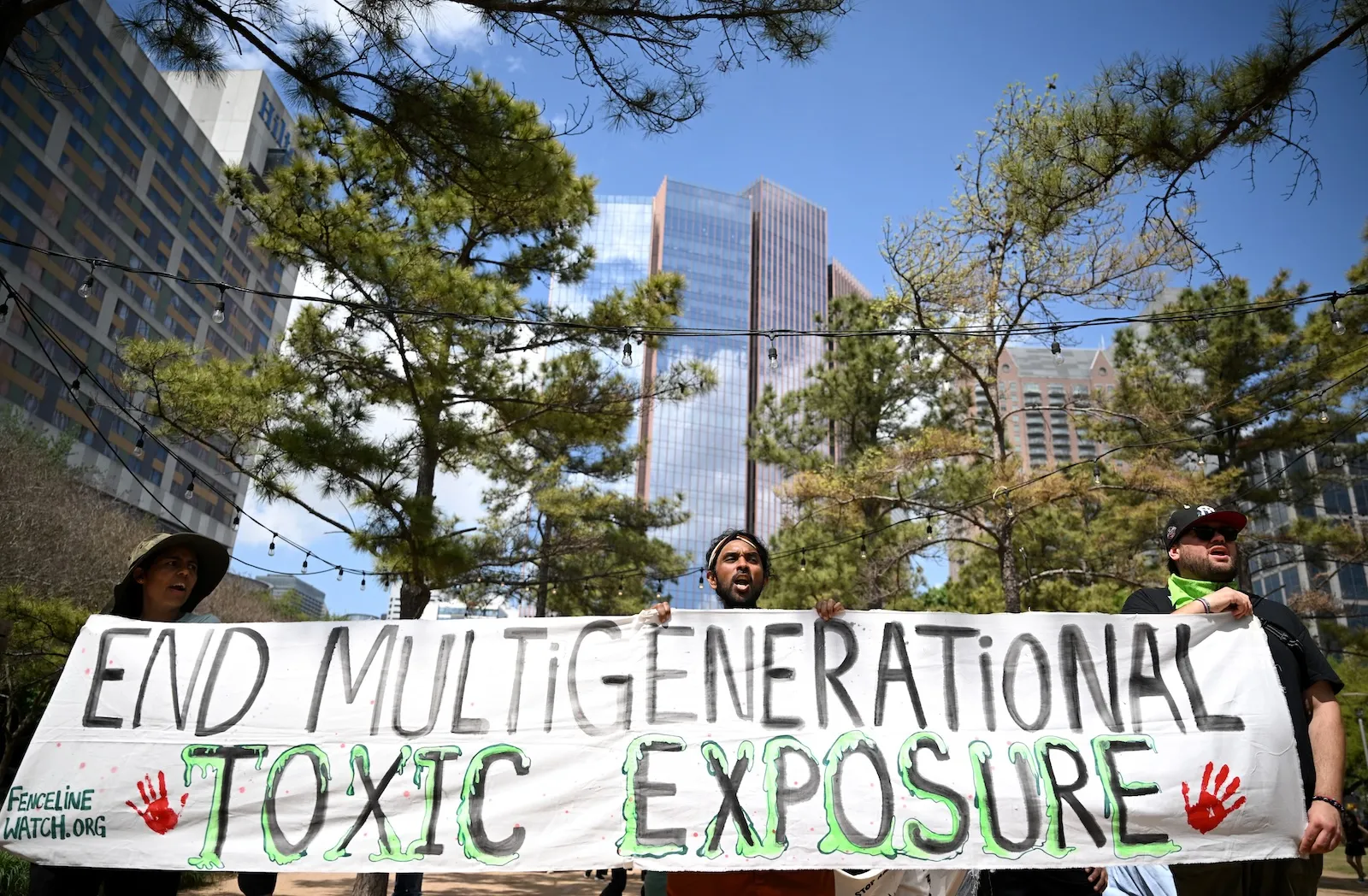
"The public deserves to have that information about that risk so that they can be equipped to push back," Bechard said. "We’re trying to protect people. It’s not just a math equation."
As data access grows increasingly restricted, environmental justice advocates fear a return to an era where corporate polluters operate with virtual impunity, shielded from public scrutiny by layers of complex government paperwork. Without clear, authoritative metrics demonstrating how industrial emissions translate into human disease, communities living on the fence-line of American industry are left to wonder not if their air is making them sick, but how long they will be forced to fight in the dark to prove it.