Executive Overview
When the mind wanders to the dense, mist-shrouded rainforests of Southeast and East Asia, images of towering dipterocarps or ancient, weeping conifers typically dominate the ecological imagination. Yet, a landmark conservation report released by The Morton Arboretum reveals that this biodiverse region harbors a botanical secret: it is the global epicenter for threatened oak species.
Out of roughly 430 recognized oak (Quercus) species worldwide, an astonishing 172 are native to Southeast and East Asia. However, a sweeping new conservation gap analysis paints a grim picture of their survival. Researchers examined 54 threatened or data-deficient oak species across a vast geographic canvas—including Vietnam, Laos, Thailand, Cambodia, Myanmar, Brunei, Malaysia, Singapore, Indonesia, the Philippines, Timor-Leste, South Korea, Japan, and Taiwan. The findings are nothing short of an ecological alarm bell: 46 of the 54 surveyed species face "very high" or "high" human pressure across more than 50% of their native ranges.
Driven by relentless agricultural expansion, rampant logging, urban sprawl, and a creeping climate crisis, these keystone forest trees are disappearing before science can fully understand them. Compounding the crisis is a stark absence of legal protections and a severe shortage of "insurance policies" in botanical gardens. As researchers race against time to map remaining populations, international conservationists are calling for an immediate, coordinated overhaul of regional forest management and ex-situ conservation strategies to pull Asia’s hidden oak heritage back from the brink of extinction.
Detailed Chronology & Scope of the Crisis
The realization of this quiet crisis has unfolded gradually over the past decade, culminating in the comprehensive baseline assessment recently published by The Morton Arboretum. While Western oak species—particularly those in North America—have historically benefited from rigorous conservation monitoring and widespread representation in arboreta and botanical gardens, Asian oaks have languished in a blind spot of global biodiversity initiatives.

Mapping the Geographic Hotspots
To capture the scale of the crisis, researchers targeted 14 countries and territories across East and Southeast Asia, zeroing in on micro-regions of exceptional endemism.
- Vietnam – The Epicenter: Vietnam stands out as the beating heart of Southeast Asia’s oak biodiversity. The country hosts 33 distinct oak species, an incredible 15 of which are found nowhere else on Earth (endemic).
- The Annamite Mountain Range: Spanning the borders of Vietnam, Laos, and Cambodia, the rugged Annamite range was identified as the crucible of Asian oak evolution. Remarkably, three out of the four primary oak biodiversity hotspots designated in the report are nestled within these mountains.
- Doi Inthanon National Park, Thailand: Serving as the fourth major biodiversity hotspot, this protected Thai landscape shelters unique highland oak assemblages that are increasingly vulnerable to shifting climatic envelopes and localized human encroachment.
The Escalating Pressures of the Anthropocene
The threats facing these ecosystems are systemic, relentless, and deeply intertwined with regional economic development. According to the report, the aggressive expansion of industrial agriculture—notably wood and pulp plantations—poses an existential threat to two-thirds of the analyzed species. Furthermore, cash-crop booms driven by rubber and oil palm conversions continue to devour the primary lowland and mid-elevation forests where these oaks thrive.
Compounding land-use changes are chronic pressures: small, fragmented population sizes, ongoing infrastructure and urban development projects, and the accelerating footprint of climate change. For many species, such as the critically endangered Quercus baniensis of Vietnam, these cumulative pressures operate in an informational vacuum. Scientists simply do not know how much longer these fragmented populations can withstand industrial intrusion before collapsing entirely.
Supporting Context, Metrics, and Structural Vulnerabilities
To truly grasp the magnitude of the Asian oak crisis, one must examine the hard metrics surrounding protected area coverage and botanical ex-situ collections. The numbers reveal systemic vulnerabilities that leave these trees dangerously exposed to total extinction.

The Protection Gap: Paper Parks and Vulnerable Ranges
A protected area should serve as a sanctuary against the ravages of industrial development. However, the report’s spatial analysis uncovered a devastating reality: none of the 54 surveyed species have more than 40% of their native range overlapping with established protected areas.
Even more alarming:
- 10 species have less than 10% of their native range covered by any form of protected status.
- Many populations exist in isolated forest patches on unprotected private lands, state concessions, or contested border regions.
- Where protected areas do exist, enforcement is frequently undermined by illegal logging, lack of funding, and weak local governance.
The Missing Insurance Policy: Ex Situ Deficits
In conservation biology, ex situ collections—living trees housed in botanical gardens, arboreta, and specialized seed banks—act as a critical ark against extinction. If a wild population is wiped out by disease, fire, or bulldozers, individuals preserved in collections provide genetic stock for future reintroduction.
Here, the disparity between Western and Asian oak conservation is staggering:

- The U.S. Benchmark: A 2017 conservation gap analysis of 91 native U.S. oak species found that nearly all of them were represented in ex situ collections, with only a single species (Quercus tardifolia) missing at the time.
- The Asian Reality: The new report reveals that only 14 of the 54 surveyed Asian species are currently maintained in ex-situ collections.
- The Critically Endangered Blindspot: Among the 16 critically endangered oak species identified in the region, only one—Quercus camusiae, housed in a Chinese botanic garden—has an ex-situ insurance policy. Forty threatened Asian species currently have no representation in botanical collections whatsoever.
"Southeast Asia having 40 species that aren’t in collections is a really significant gap in their conservation," notes Kate Good, research manager at The Morton Arboretum and lead author of the study.
| Conservation Metric | Southeast & East Asia | United States (Historical Baseline) |
|---|---|---|
| Total Assessed Species (Subset) | 54 species | 91 species |
| Species in Ex Situ Collections | 14 out of 54 (~26%) | 90 out of 91 (~99%) |
| Max Protected Area Range Coverage | Under 40% across all species | Significantly higher integration |
| Primary Drivers of Decline | Pulp plantations, rubber, oil palm, logging | Urbanization, disease, climate change |
Official Statements and Expert Perspectives
The release of the report has galvanized regional and international conservation networks, prompting urgent calls for collaborative action between researchers, local communities, and governmental authorities.
"While it may not be the region that first comes to mind when we think of oaks, it’s a really important region for oak biodiversity and as a result, oak conservation. One of the goals of this report was to really raise the alarm about the urgent need for oak conservation in Asia."
— Kate Good, Research Manager, The Morton Arboretum
Local implementation partners emphasize that protecting these trees requires a multi-pronged approach that blends top-down legal protections with grassroots community stewardship. Lam Van Hoang, the Vietnam Country Director for Fauna & Flora International (FFI), who was not directly involved in the study, underscored the vital need for integrated forest management:

"Vietnam is an important country for the conservation of Asian oaks, but the new report shows how vulnerable many of these species are. The findings reinforce the need to combine effective protection of remaining natural forests with targeted surveys, restoration, and propagation, so that these unique components of Vietnam’s forest biodiversity are not lost before we fully understand them."
Hoang argues that while expanding formal protected areas is paramount, conservationists must also look beyond park boundaries. "For populations outside protected areas, conservation should also be incorporated into wider forest and landscape planning, working with forest owners, local communities, and authorities to retain important trees and habitat patches," he noted.
Furthermore, experts stress that any expansion of ex-situ collections must be executed with scientific rigor. As Hoang cautioned, living collections must be strategic: prioritizing the most severely threatened species while meticulously documenting wild provenances and maintaining robust genetic diversity to avoid inbreeding depression in future restoration plantings.
Future Outlook: A Race to Collect, Propagate, and Protect
Despite the sobering data, the authors of the report emphasize that the study is not merely a post-mortem for dying ecosystems, but a call to action. The findings provide a clear roadmap for researchers, donors, and environmental ministries across Asia to redirect resources where they are most urgently needed.

Immediate Priorities on the Horizon
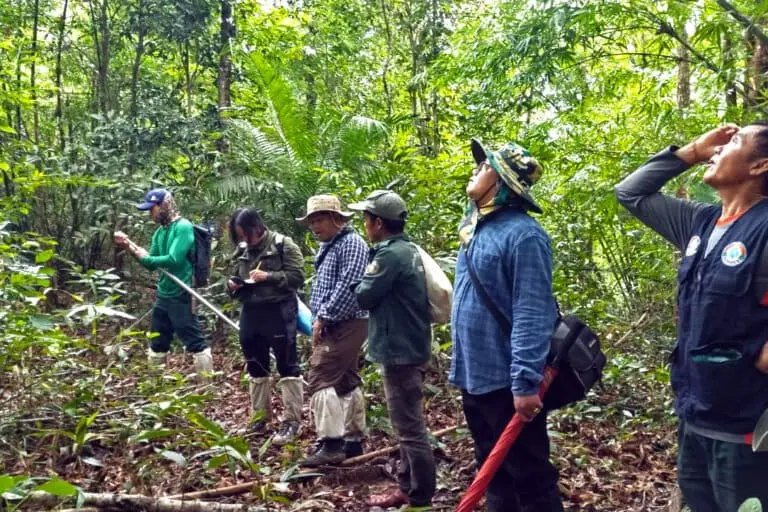
- Targeted Field Expeditions: Researchers plan to launch intensive botanical surveys across Vietnam, Laos, and other high-diversity zones to locate elusive, data-deficient populations in the wild, accurately mapping their current distribution and assessing immediate threats.
- Acorn Collection and Propagation: Field teams will prioritize the collection of acorns from critically endangered species. These will be propagated in regional nurseries and distributed to botanical gardens and arboreta to establish the missing ex-situ ark populations.
- Landscape-Level Integration: Conservation groups are urging governments to weave oak conservation targets into national forestry master plans, ensuring that logging concessions and infrastructure corridors avoid critical oak habitats.
- Closing Knowledge Gaps: With climate change currently documented as a direct threat to only six surveyed species, scientists acknowledge a massive knowledge gap. Future research will model how shifting precipitation and temperature patterns across Asia’s mountainous terrain will impact oak survival over the coming decades.
"We’re hopeful that this report can drive some of that conservation," Kate Good concluded, teasing upcoming field initiatives by her organization and its international partners. As botanical teams prepare to return to the rugged slopes of the Annamite range and the highland parks of Thailand, the global conservation community waits with bated breath—hoping that these silent, majestic giants can be saved before their acorns fall for the very last time.