

Executive Overview
The North American biogas and renewable natural gas (RNG) sector is undergoing a profound structural evolution. While the industry has historically relied on the monumental push from waste-management giants converting landfill gas into pipeline-quality fuel, recent industry data highlights a more diversified foundation. According to a landmark report released by the American Biogas Council (ABC), wastewater treatment plants (WWTPs) continue to anchor the nation’s anaerobic digestion infrastructure, commanding nearly half of all operating facilities.
Concurrently, private sector innovators are pushing the envelope far beyond municipal boundaries. From a massive $200 million swine waste project in North Carolina spearheaded by Montauk Renewables, to expanding landfill gas infrastructure projects managed by Waga Energy and Opal Fuels, the industry is entering an era of multi-faceted maturation. As waste companies approach the completion of their initial, high-profile landfill-gas-to-RNG development phases, stakeholders across the board are actively pivoting toward advanced end-uses, technological optimization, and optimized co-digestion strategies.
This comprehensive briefing explores the state of the biogas sector, breaking down the latest wastewater metrics, major project developments across agricultural and landfill sectors, and prevailing economic snapshots within the carbon and renewable fuel credit markets.
Detailed Chronology: September Industry Developments
The month of September 2026 proved to be an exceptionally dynamic period for project completions, regulatory renewals, and strategic partnerships across the biogas spectrum.
Mid-September: Montauk Renewables Inaugurates Major Swine Waste Facility
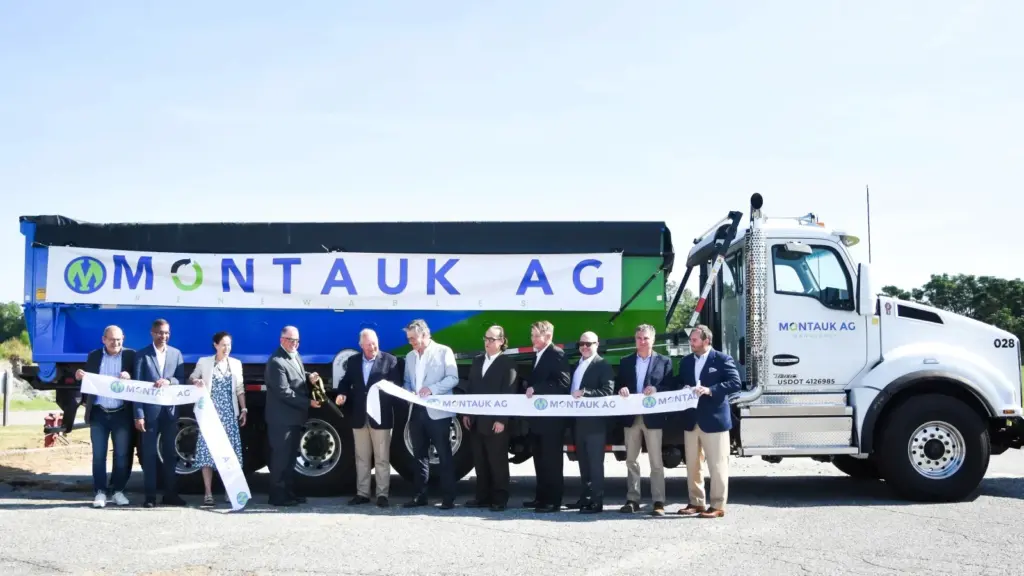
On September 15, executives from Montauk Renewables gathered alongside local officials in Turkey, North Carolina, to celebrate the official opening of a state-of-the-art anaerobic digestion facility. Representing a substantial $200 million capital investment by Montauk, the facility is engineered to harvest biogas derived from agricultural manure to generate commercial electricity.
According to statements released by Montauk Renewables CEO Sean McClain and the company’s regulatory filings, the project operates on long-term supply agreements secured with more than 80 distinct farming locations. To ensure fiscal predictability, the facility is backed by a 10-year power purchase agreement, alongside an auxiliary agreement with Duke Energy to purchase roughly one-third of the renewable energy certificates (RECs) produced on-site. At peak operational capacity, the Turkey facility is projected to yield up to 41 megawatt-hours of electric power annually, complemented by the production of approximately 870 tons of high-grade organic fertilizer alternatives. This milestone complements Montauk’s broader financial momentum, which saw second-quarter revenues climb 19.7% year-over-year to hit $54 million, supported by a 3% increase in quarterly RNG production.
Mid-September: Waga Energy Secures LRS Partnership at Eco-Hill Landfill
Demonstrating the accelerating footprint of international RNG developers in the North American market, French RNG developer Waga Energy made headlines on September 15. Backed by private equity, the firm announced that Lakeshore Recycling Systems (LRS) selected Waga to design, construct, own, and operate a utility-grade RNG facility at the Eco-Hill Landfill. Located in Atkinson, Illinois, the Eco-Hill site is LRS’s sole landfill operation and serves as a vital waste-management hub for the greater Chicago metropolitan area.
The planned facility is slated to process gas with an initial capacity of 3,000 standard cubic feet per minute, translating to an expected output of up to 610,000 million British thermal units (mmBtus) of RNG annually. Under the structural agreement, LRS will secure a designated share of the downstream revenues generated from the commercial sale of the on-site RNG. Construction is currently underway, with commercial operations projected to commence in 2028.
Early September: Casella and Waga Launch Third Collaborative RNG Project
Building upon an established multi-site partnership, Waga Energy and Casella Waste Systems jointly announced the commercial rollout of their third joint landfill gas-to-RNG project on September 3. Situated at Casella’s McKean Landfill in Mount Jewett, Pennsylvania, the facility represents another leap forward in regional green energy integration.
The McKean facility is engineered to process 2,000 standard cubic feet per minute of raw landfill gas, with anticipated output reaching up to 407,000 mmBtus of RNG annually once full operational velocity is achieved. Production ramping is currently underway. The overarching partnership between Casella and Waga governs three distinct landfill assets, with Waga assuming 100% of the capital expenditure for construction while retaining ownership and operational control over a 20-year lifespan. Revenue generated from the monetization of the RNG is split according to pre-negotiated partnership terms.
Mid-September: Opal Fuels Re-ups San Diego Miramar Landfill Agreement
In the municipal and transportation fuel sectors, Opal Fuels posted significant strategic updates throughout mid-September. On September 16, the firm announced a formal five-year agreement renewal with the City of San Diego to continue operating its long-standing landfill-gas-to-energy project at the Miramar Landfill. Operating continuously since 1998, the Miramar installation captures methane emissions to generate approximately 400,000 megawatt-hours of electricity annually.
This municipal milestone followed an August development in which Opal finalized capacity upgrades at its compressed natural gas (CNG) fueling station in Goshen, California. Following comprehensive renovations, the Goshen station expanded its capacity by 1.7 million gasoline gallon equivalents (GGE) per year, incorporating a steady supply of RNG. Opal acquired the site in 2025, deploying $52.7 million across its broader project portfolio during the first half of 2026. Financial reporting indicates steady operational progress, with Opal posting a 4% year-over-year revenue increase in the second quarter.
Supporting Context & Metrics: The Wastewater Baseline
While agricultural and landfill projects frequently dominate media headlines due to their massive capital scale, municipal wastewater treatment plants remain the undeniable backbone of the North American biogas industry.
According to the American Biogas Council’s comprehensive 2026 Wastewater Report, WWTPs were the earliest pioneers of anaerobic digestion technology and maintain their market dominance by operating 47% of all installed anaerobic digesters in the United States.
U.S. Anaerobic Digester Distribution (American Biogas Council)
--------------------------------------------------------------
[████████████████████] Wastewater Treatment Plants (47%)
[████████████████    ] Agricultural, Landfill, & Industrial (53%)
The ABC report highlights that 29 new wastewater treatment facilities have come online nationwide since 2020, bringing the total tally of operational WWTP digesters to 1,213. Despite this impressive figure, immense untapped potential remains across the municipal sector. Industry analysts generally categorize any wastewater facility with an average daily flow rate of at least 1 million gallons per day as a prime candidate for anaerobic digestion. However, the ABC report notes that only about 24% of such qualifying facilities currently operate active digesters. If the remaining 76% of eligible municipal plants were to implement anaerobic digestion, the sector’s output would expand exponentially.
Furthermore, the operational scope of wastewater digesters is undergoing a fundamental paradigm shift. Historically deployed strictly for internal solids reduction and low-level thermal energy generation, modern WWTP digesters are increasingly configured for multi-output revenue models. Since 2018, a rapidly growing segment of these facilities has integrated advanced gas-upgrading infrastructure to produce pipeline-quality RNG, installed combined heat and power (CHP) systems, or introduced co-digestion protocols—simultaneously processing municipal sewage sludge alongside high-strength organic industrial waste.
Currently, wastewater digesters capture more than 100 billion cubic feet of biogas annually. Yet, industry experts emphasize that with widespread market adoption and strategic retrofits, facilities could capture an additional 70 billion cubic feet per year.
Environmental Credit Pricing and Regulatory Benchmarks
Market valuations for renewable attributes continue to dictate project economics across the biogas landscape. The following pricing snapshot, derived from the EcoEngineers Carbon Market Snapshot as of October 7, 2026, details prevailing credit values:
- D3 RIN Prices (Biomass-Based Diesel/RNG): $2.294 (experiencing a slight contraction from $2.380 in 2025).
- D5 RIN Prices (Advanced Biofuels): $2.085 (demonstrating resilience, up from $2.060 in 2025).
- Oregon Clean Fuels Program: $81 per metric ton of carbon dioxide equivalent.
- California Low Carbon Fuel Standard (LCFS): $88 per metric ton of carbon dioxide equivalent.
These regulatory mechanisms remain vital safety nets and revenue multipliers for developers navigating capital-intensive facility builds.
Official Statements and Industry Perspectives
The transition from basic methane flare reduction to sophisticated energy-market integration has prompted key industry leaders to re-evaluate their strategic outlooks.
Patrick Serfass, Executive Director of the American Biogas Council, emphasized the dual imperative of expansion and efficiency in a formal statement accompanying the release of the 2026 wastewater report:
"Our survey shows there are opportunities to do more — by expanding anaerobic digestion where it makes sense and getting more value from the digesters already in place."
Serfass’s perspective underscores a broader strategic pivot within the biogas sector. As low-hanging fruit—such as easy-to-reach municipal and large landfill sites—reaches saturation, developers are increasingly tasked with optimizing existing infrastructure, securing long-term offtake agreements with corporate entities like Duke Energy, and navigating complex regional environmental markets.
Similarly, corporate leadership within major RNG developers points toward a maturation phase defined by long-term financial stability. Sean McClain, CEO of Montauk Renewables, highlighted the importance of vertically integrated agricultural partnerships, noting that multi-farm aggregation models are essential for securing the consistent feedstock volumes required to justify nine-figure capital expenditures. By locking in decade-long power purchase agreements and organic fertilizer distribution streams, developers are successfully insulating themselves against short-term commodity price volatility in traditional energy markets.
Future Outlook: The Next Horizon for Biogas
As the North American biogas industry moves past the mid-point of the decade, the macroeconomic environment is forcing strategic adjustments. Major commercial waste-management firms are rapidly approaching the completion of their initial, highly publicized landfill-gas-to-RNG commitments made during the late-2010s and early 2020s.
Consequently, the industry is entering a sophisticated consolidation and diversification phase. Moving forward, the growth trajectory of biogas will likely depend on three critical pillars:
- Unlocking Untapped Municipal Potential: With nearly three-quarters of qualifying wastewater treatment plants lacking anaerobic digestion facilities, municipal partnerships represent the single largest volume opportunity for domestic biogas expansion. As cities face mounting pressure to hit aggressive municipal carbon-reduction targets, public-private partnerships (PPPs) will likely become the preferred vehicle for financing WWTP digester retrofits.
- Agricultural Consolidation: Projects like Montauk Renewables’ North Carolina swine facility demonstrate that agricultural biogas is viable at scale, provided developers can successfully aggregate waste across dozens of independent farming operations. Overcoming logistical hurdles in rural transport and grid interconnection will dictate whether agricultural RNG can rival landfill gas in total market share.
- Advanced End-Use Diversification: As D3 RIN values adjust and regional low-carbon fuel standards fluctuate, producers are diversifying their revenue streams. Rather than relying solely on pipeline injection for vehicle fuel, facilities are increasingly evaluating local microgrid power generation, direct-to-industry thermal energy supply, and the production of high-value organic soil amendments.
Ultimately, the biogas sector has graduated from a niche waste-management utility into a sophisticated component of the North American energy grid. By bridging municipal sanitation, agricultural waste management, and corporate decarbonization goals, anaerobic digestion and RNG development are poised to remain central pillars of the clean energy transition for decades to come.



