Executive Overview
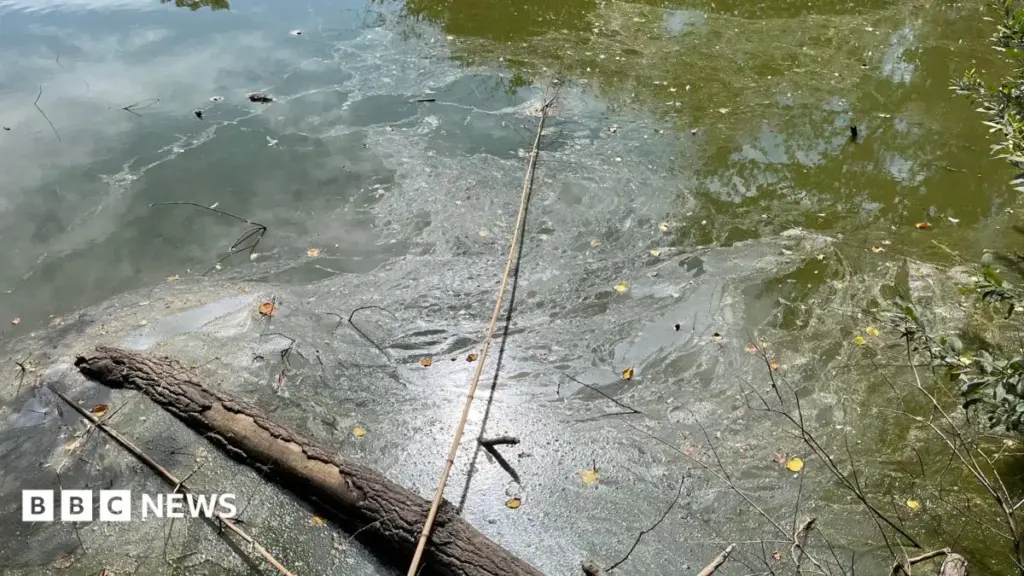
Saumarez Park, cherished as Guernsey’s premier and most historic public recreational space, finds itself at the center of an escalating environmental and administrative crisis. Once a vibrant hub of community life, family strolls, and diverse wildlife habitats, the park’s central duck pond has deteriorated into a stagnant, silt-choked basin. Following an extended period of severe dry weather, the water body is now facing existential challenges that simple, grassroots maintenance can no longer remedy.
According to senior environmental officials, low-cost community interventions—such as volunteer-led cleanups, public appeals against feeding the ducks, or basic top-up refilling—are entirely insufficient to reverse the extensive ecological damage. Compounding these natural stressors is a severe institutional crisis: tightening fiscal constraints and continuous real-term budget cuts imposed by the States of Guernsey. With a significant funding reduction scheduled for 2026, the park’s management faces an impossible balancing act between preserving natural heritage and maintaining essential public services.
A comprehensive professional assessment commissioned by local environmental authorities estimates that the full-scale restoration of the pond will exceed £100,000. This complex engineering undertaking requires dredging vast accumulations of organic silt, overhauling the surrounding subterranean drainage networks, and installing advanced mechanical aeration devices to restore oxygen levels and prevent future stagnation. However, allocating such a substantial sum from an already depleted municipal budget would inevitably force painful compromises across other vital public services.
This report provides a rigorous investigative examination of the multifaceted pressures facing Saumarez Park. It explores the intricate chronology of the pond’s decline, details the broader economic and ecological metrics at play, scrutinizes official statements from government leadership, and assesses the long-term outlook for one of Guernsey’s most cherished natural assets.
Detailed Chronology: The Decline of a Public Sanctuary
The Golden Era and Early Management
To understand the gravity of the current crisis, one must trace the history of Saumarez Park. Set within the parish of Castel, the park was originally the private estate of the De Saumarez family before being gifted to the public. For decades, the duck pond served as its ecological and aesthetic centerpiece. Maintained through steady, reliable municipal funding, the pond historically benefited from regular dredging schedules, balanced wildlife management, and prompt responses to seasonal weather fluctuations.
For generations, feeding the ducks at Saumarez Park was a quintessential Guernsey tradition. However, this human interaction, while culturally significant, quietly sowed the seeds of modern ecological distress. Over decades, excess bread and grain introduced massive quantities of non-native organic nutrients into the shallow water column. Combined with natural leaf litter and urban runoff, this organic material slowly settled at the bottom of the pond, forming a thick, anaerobic layer of silt.
The Turning Point: Extended Droughts and Climate Pressures
The vulnerability of the pond was laid bare during recent years marked by unprecedented meteorological extremes. Extended dry periods, characterized by below-average rainfall and soaring summer temperatures, caused water levels to plummet dramatically. As the volume of water diminished, the concentration of accumulated organic waste intensified.
During these dry spells, local authorities attempted quick fixes, including periodic top-up fillings and public awareness campaigns urging visitors to refrain from feeding the wildlife. While these measures offered temporary aesthetic relief, they failed to address the root causes of the degradation. Without adequate depth, natural flushing, or mechanical circulation, the pond transformed from a healthy aquatic ecosystem into a shallow, tepid puddle highly susceptible to algae blooms, oxygen depletion, and foul odors.
The Realization of Structural Failure
By the close of the most recent dry season, environmental directors and park supervisors realized that cosmetic interventions were no longer viable. The ecosystem had crossed a critical tipping point. The accumulation of silt had reduced the pond’s water storage capacity to a fraction of its historical volume, leaving it unable to buffer against climatic shocks. Furthermore, the surrounding drainage infrastructure—designed decades ago for vastly different environmental conditions—was found to be failing, exacerbating the cycle of stagnation and pollution.
When local civil engineering firms were brought in to survey the site, their findings confirmed the worst fears of park management. The issues were no longer surface-level; they required a complete structural overhaul of the aquatic basin and its supporting hydrological systems.
Supporting Context & Metrics: The Anatomy of a Municipal Crisis
Financial Strain and Real-Term Budget Cuts
The crisis at Saumarez Park cannot be viewed in isolation from the broader fiscal landscape of the Bailiwick of Guernsey. Like many public administrations across the British Isles and Western Europe, the States of Guernsey are grappling with acute budgetary pressures driven by inflation, rising public sector wages, and escalating demands for health and social care.
In recent years, these macro-level fiscal constraints have manifested as stealth cuts and real-term reductions in funding for non-statutory services, including parks, open spaces, and environmental management. Parks and recreation departments have seen their operational budgets squeezed year after year.
The environment director has explicitly warned that the budgetary outlook for the coming years is stark, highlighted by a planned "significant reduction" in funding set for 2026. This looming financial contraction has created an environment of triage within the department, where long-term capital investments—such as pond restorations—are routinely deferred in favor of day-to-day statutory obligations like waste management, road maintenance, and public safety.
The £100,000 Engineering Challenge
The financial hurdle facing Saumarez Park is quantified by a detailed preliminary estimate provided by a prominent local civil engineering and environmental contracting firm. The firm’s assessment breaks down the required capital expenditure into three primary technical phases, pushing the total cost above the £100,000 threshold:
-
Mass Silt Dredging (£45,000 – £50,000 estimated allocation):
Decades of organic accumulation have left thousands of cubic meters of noxious, nutrient-rich silt at the pond’s bed. Removing this material requires specialized amphibious dredging equipment to avoid destabilizing the banks, followed by environmentally secure dewatering and off-site disposal to prevent harmful runoff into surrounding water tables. -
Drainage Infrastructure Overhaul (£30,000 – £35,000 estimated allocation):
The subterranean pipes, inlets, and outflow channels that regulate water flow into and out of the pond are severely compromised. Modernizing this infrastructure is essential to ensure that future rainwater is effectively managed, preventing both flash-flooding during heavy autumn downpours and catastrophic drying during summer droughts. -
Aeration and Water Quality Technology (£20,000 – £25,000 estimated allocation):
To prevent future stagnation, the installation of sub-surface aeration devices—potentially powered by renewable solar energy sources located on nearby park structures—is deemed mandatory. These devices will continuously circulate oxygen through the water column, preventing the anaerobic conditions that kill fish and aquatic plant life while suppressing foul odors and algae blooms.
The Fallacy of Grassroots Fixes
A recurring point of discussion among community stakeholders has been whether the local community can step in to save the park through volunteerism and behavioral changes. While municipal authorities deeply appreciate the public’s emotional attachment to Saumarez Park, officials have been keen to correct common misconceptions regarding the scale of the problem.
- Volunteer Cleanups: While community volunteers are invaluable for picking up litter, planting flowerbeds, and clearing surface debris, they lack the heavy machinery, safety training, and environmental permits required to dredge tons of biological waste from a stagnant pond.
- Feeding Bans: Asking people not to feed the ducks is a crucial preventative measure that reduces future nutrient loading, but it possesses zero restorative capacity. It cannot remove the legacy silt that already blankets the bottom of the basin.
- Simple Refilling: Pumping fresh water into an un-dredged, un-aerated pond with compromised drainage is akin to pouring clean water into a dirty bucket. The underlying organic sludge immediately corrupts the new water, accelerating biological decay.
Official Statements and Administrative Dilemmas
The Environment Director’s Perspective
In a candid assessment released to the public and media, the island’s environment director outlined the harsh realities governing the administration of Guernsey’s green spaces.
"Simply refilling the pond, encouraging volunteers to help or asking people not to feed the ducks wouldn’t be sufficient to significantly improve the current issues with the pond following the long dry period we experienced," the director stated, cutting through calls for quick, inexpensive remedies.
Addressing the elephant in the room—institutional underfunding—the director laid bare the consequences of ongoing fiscal austerity. He noted that "ongoing pressure on States’ budgets" has directly sparked real-term cuts to the operational and capital budgets earmarked for Saumarez Park over recent years. This trend, he warned, is set to culminate in a "significant reduction" in 2026, severely limiting the department’s capacity to initiate discretionary projects.
Elaborating on the prohibitive cost of professional intervention, the director added: "A local firm has indicated that the restoration of the pond would cost over £100,000, which would include dredging a large amount of silt, improving the surrounding drainage and installing devices to improve aeration, but instigating this would impact on the other services which we deliver."
The Zero-Sum Game of Public Administration
This statement encapsulates the quintessential dilemma of modern municipal governance: the zero-sum game of resource allocation. In an environment of shrinking revenues and capped borrowing, every pound spent on restoring the Saumarez Park duck pond is a pound stripped away from another vital public service.
Administrators are forced to weigh the aesthetic and ecological value of a park feature against core community needs. If the States of Guernsey were to fund the £100,000 project today, it could mean scaling back funding for elderly care initiatives, delaying critical infrastructure repairs in schools, or cutting back on public transport subsidies. For public servants bound by strict fiduciary responsibilities, making such a trade-off requires immense political will and public consensus.
Future Outlook: What Lies Ahead for Saumarez Park?
Scenarios for the Pond’s Immediate Future
As Guernsey looks toward 2026 and beyond, the trajectory of Saumarez Park remains uncertain. Several distinct scenarios are currently being debated by policymakers, environmentalists, and community advocates:
Scenario A: Managed Decline and Naturalization
If States budgets continue to contract and no external funding sources materialize, the park management may be forced to adopt a policy of managed decline. This could involve draining the pond permanently and converting the dry basin into a wildflower meadow or a reed bed system. While such a move would eliminate the aesthetic charm of traditional duck pond, it would create a low-maintenance, biodiverse habitat that thrives naturally without requiring expensive mechanical intervention. However, public backlash to the permanent removal of the pond would likely be fierce.
Scenario B: Philanthropic Intervention and Public-Private Partnerships
Given the severe constraints on public funds, the most viable path forward may lie outside traditional government treasuries. Public-private partnerships, philanthropic donations from affluent local residents or trusts, and targeted corporate social responsibility (CSR) initiatives could bridge the funding gap. If a consortium of private donors could underwrite the £100,000 restoration cost, the States of Guernsey could authorize the engineering work without compromising other public services.
Scenario C: Phased Capital Investment
A third possibility involves spreading the restoration costs across multiple fiscal years through a phased capital works program. Under this model, the initial phase—focused exclusively on silt dredging and immediate safety measures—could be executed during the next financial cycle, while drainage overhauls and aeration technology installations are deferred until subsequent budgets permit. While more expensive in the long run due to mobilization costs, this approach softens the immediate blow to public finances.
The Broader Lesson for Island Infrastructure
Beyond the immediate fate of the ducks and muddy waters, the crisis at Saumarez Park serves as a bellwether for public infrastructure management across Guernsey. As climate change accelerates weather volatility—bringing longer droughts punctuated by intense downpours—traditional municipal assets designed in the 19th and 20th centuries are facing unprecedented stress.
Policymakers are being forced to confront the reality that heritage preservation cannot rely on business-as-usual funding models. Without strategic adaptation, innovative financing mechanisms, and an honest public conversation about the true cost of maintaining community amenities, iconic landscapes like Saumarez Park risk falling victim to a slow process of administrative neglect.
Conclusion
The predicament at Saumarez Park is far more than a localized environmental issue; it is a profound test of Guernsey’s civic priorities. It exposes the friction between public nostalgia for cherished traditions and the cold, unyielding arithmetic of government budgets. While volunteers stand ready with good intentions and local firms stand poised with engineering solutions, the ultimate resolution hinges on political leadership, creative financial engineering, and community resilience. Whether Saumarez Park’s historic duck pond will be restored to its former glory or forced to evolve into a new ecological paradigm remains one of the most pressing questions facing the island’s stewards today.
Follow BBC Guernsey on X, external and Facebook, external and Instagram, external. Send your story ideas to [email protected], external.