

Executive Overview
As global energy markets face persistent volatility—exacerbated by geopolitical friction such as the conflict involving the U.S., Israel, and Iran—governments worldwide are increasingly pressured to shield consumers from soaring costs. In response, numerous nations have turned to a familiar yet increasingly scrutinized financial mechanism: consumer fossil fuel subsidies.
However, in a high-profile editorial published in the journal Science, U.S.-based energy policy experts Paasha Mahdavi and Michael Ross have issued a stark warning. They categorize the creation of consumer-facing fossil fuel subsidies as "the worst energy policy in the world."
While these measures are typically marketed by politicians as essential relief for working-class citizens struggling with inflation and high energy prices, policy analysts and economists argue they are a dangerous illusion. Rather than offering sustainable economic protection, blanket fuel subsidies drain national treasuries, accelerate local air pollution, stifle green technology innovation, and create an entrenched political trap that governments find exceptionally difficult to escape.
This comprehensive analysis explores the mechanisms driving governments toward fossil fuel subsidies, the structural failures that make them nearly impossible to repeal, alternative demand-reduction strategies, and the global roadmap toward a clean energy transition.
Detailed Chronology & Political Mechanics: How Governments Fall into the Subsidy Trap
The cycle of fossil fuel subsidization typically begins during periods of acute geopolitical stress or sudden market shocks. When conflicts erupt in critical energy-producing regions, crude oil and refined petroleum products spike globally. Confronted with immediate public outcry and the specter of runaway inflation, leaders face immense pressure to intervene.
The Anatomy of a Subsidy Implementation
When market prices surge, governments frequently step in to artificially depress the costs of gasoline, diesel, and home heating fuels. To bridge the widening financial gap between what suppliers demand and what consumers pay, administrations utilize various fiscal instruments:
- Direct Price Caps: Mandating maximum retail prices at the pump, forcing state-owned or private refiners to absorb the loss (later reimbursed by the state).
- Fuel Tax Cuts: Slicing or temporarily suspending excise and value-added taxes on transportation fuels.
- Direct Fiscal Transfers: Subsidizing state energy companies directly from the national treasury to keep consumer prices stable.
To finance these massive gaps, governments must pull levers elsewhere. This often means reallocating funds away from critical public infrastructure, health care, and education, increasing national debt through heavy borrowing, or introducing compensating taxes.
The Political Economy of Price Visibility
Why do governments continue to implement policies that economists universally decry? The answer lies in the unique psychological and political visibility of gasoline.
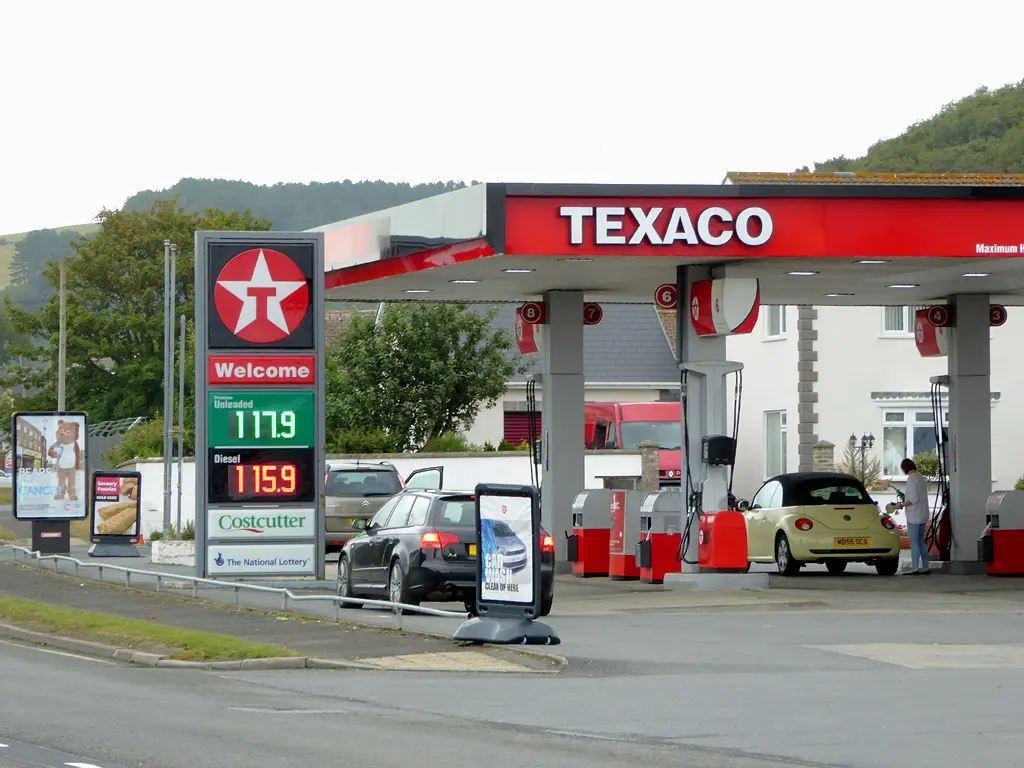
Unlike electricity bills, which arrive monthly, or the fluctuating price of groceries, gasoline prices confront motorists on brightly lit, public signboards every single day of the week. Driving is deeply woven into the daily routines of the working and middle classes, making gas prices an acute barometer of economic health in the minds of voters. Politicians live in fear of the political fallout associated with surging pump prices, viewing subsidies as a defensive shield against electoral defeat.
The Quicksand of Reform
Once implemented, fossil fuel subsidies act like economic quicksand. The authors of the Science editorial analyzed historical data regarding subsidy reforms and uncovered a dismal track record.
Between 2016 and 2023, across the 21 largest subsidizing nations globally, approximately 130 attempts were made to reform or eliminate fuel subsidies. The results were staggering:
- 70% of reform attempts collapsed within a single year due to public protests, strikes, and political instability.
- More than 90% were completely abandoned within three years.
Dr. Michael Ross, a professor at the University of California, Los Angeles (UCLA), noted in correspondence that successful, scalable models for fuel subsidy reform are exceedingly rare. "They’re few and far between," Ross remarked. He pointed to Mexico as one of the few historical exceptions, noting that the country successfully phased out its fuel subsidies around 2017—but only after navigating a long, highly convoluted, and politically perilous process.
Supporting Context & Metrics: The Hidden Costs of Keeping Fuel Artificially Cheap
The appeal of fossil fuel subsidies is based on a fundamental misconception: that artificially lowering the price of a finite, polluting commodity helps society. In reality, the collateral damage spans environmental, fiscal, and macroeconomic domains.
1. Fiscal Drain and Budgetary Displacement
Subsidies are exceptionally expensive. By locking governments into open-ended financial commitments, they cannibalize public budgets. Money spent propping up the internal combustion engine is money diverted from long-term investments that could modernize a country’s economy, such as public transit networks, healthcare systems, and climate adaptation strategies.
2. Amplified Air Pollution and Public Health Crises
By incentivizing the continued consumption of fossil fuels, subsidies directly contribute to worsening air quality. In major urban centers across the developing and developed world alike, vehicular emissions are a primary driver of particulate matter ($PM_2.5$) and nitrogen oxides ($NO_x$), leading to millions of premature deaths annually from respiratory and cardiovascular illnesses. Subsidization essentially rewards citizens for polluting the air they breathe.
3. The Renewable Energy Investment Chokehold
Economic theory dictates that consumers and corporations pivot toward alternatives when a resource becomes scarce or expensive. Subsidies short-circuit this natural market correction. By keeping oil artificially cheap, governments dull the economic incentive for consumers to purchase electric vehicles (EVs), improve home insulation, or invest in solar and wind power. Consequently, private capital investment in the clean energy transition is severely undermined.

4. Regressive Distribution of Wealth
A common justification for blanket fuel subsidies is that they protect the vulnerable. However, extensive empirical data from international financial institutions proves the exact opposite: blanket fuel subsidies are profoundly regressive.
Jonas Kuehl, an energy researcher at the International Institute for Sustainable Development (IISD) who was not involved in the Science editorial, highlighted this glaring inequality.
"Blanket fuel subsidies — such as price caps, fuel tax cuts, and fixed pump prices — are among the least effective ways for governments to spend public money," Kuehl stated. "They disproportionately benefit businesses and people who consume the most fuel, rarely the poorest households, while weakening incentives to conserve energy or switch to cleaner energy alternatives."
Wealthy individuals, who own larger vehicles, drive longer distances, and consume more energy-intensive goods and services, reap the lion’s share of the financial benefits generated by price caps. Meanwhile, impoverished households—many of whom do not even own a personal automobile—receive negligible benefits while suffering the broader macroeconomic fallout, such as higher inflation and degraded public services.
Official Statements & Expert Perspectives
The academic and policy community is increasingly unified in its condemnation of unmanaged consumer subsidies, though nuances remain regarding how to protect the most vulnerable populations during times of crisis.
The Academic View: Mahdavi and Ross
In their Science editorial, Dr. Paasha Mahdavi (associate professor at the University of California, Santa Barbara) and Dr. Michael Ross laid bare the systemic failures of these policies. They argue that policymakers must fundamentally reorient their approach. Rather than managing the symptom (high prices at the pump), governments must attack the root cause: structural dependence on fossil fuels.
Ross emphasized that while some nations are making monumental strides toward decarbonization, the global transition remains uneven. He pointed to trailblazing nations like Ethiopia, Norway, and Uruguay, which have aggressively implemented policies to break their reliance on oil. However, Ross cautioned that systemic transformation takes time and sustained political courage—commodities that are often in short supply during election cycles.
The Practitioner View: Jonas Kuehl on Targeted Relief
Acknowledging that sudden, sharp spikes in energy prices can inflict genuine human suffering, energy experts like Jonas Kuehl argue that safety nets are necessary, but they must be carefully redesigned.
"While protecting people from sudden price rises is often essential, open-ended fuel subsidies are a bad energy policy," Kuehl noted. He conceded that time-limited, highly targeted fuel subsidies directed specifically at low-income households or essential public transport services can sometimes be justifiable as emergency welfare measures. However, these must be treated as temporary income-support mechanisms rather than market-distorting price controls.
Future Outlook: Building Beyond the Pump
As global climate targets loom and geopolitical instability threatens ongoing energy shocks, how can governments break their addiction to fossil fuel subsidies without provoking widespread social unrest?
Experts point to a twin-track approach: phasing out universal price mechanisms while proactively managing energy demand through structural alternatives.
Transitioning to Demand-Side Alternatives
Forward-thinking governments are already testing innovative policies that reduce overall energy consumption without resorting to blunt price caps at the gas station. Kuehl highlighted two prominent international examples:
- Work-From-Home Mandates: In response to urban congestion and high fuel costs, governments like Indonesia have experimented with flexible work policies, such as establishing official work-from-home Fridays for civil servants, instantly cutting commuting-related fuel consumption.
- Public Transit Incentives: Nations and municipalities are rolling out aggressive public transit reforms. For instance, the Netherlands introduced monthly off-peak rail passes designed to pull commuters out of cars and into electrified public rail networks.
Direct Cash Transfers Over Price Controls
When price shocks threaten impoverished communities, economists overwhelmingly recommend direct, unconditional cash transfers to low-income households rather than manipulating commodity prices. Direct transfers allow citizens to decide how to allocate aid—whether toward food, rent, or energy bills—without distorting market signals or incentivizing the overconsumption of hydrocarbons.
The Path Forward
The message from the scientific and economic community is unmistakable. The era of cheap, easily accessible fossil fuels is drawing to a close, and attempting to artificially preserve that era through consumer subsidies is a fiscal and environmental dead end.
For governments navigating the turbulent waters of modern energy markets, the path forward requires immense political fortitude. Leaders must transition away from regressive, budget-busting price caps and instead invest aggressively in public transit, renewable electrification, and targeted social safety nets. Only by reducing systemic demand for oil can nations protect their economies from future shocks and build a sustainable, resilient energy future.



