

Executive Overview
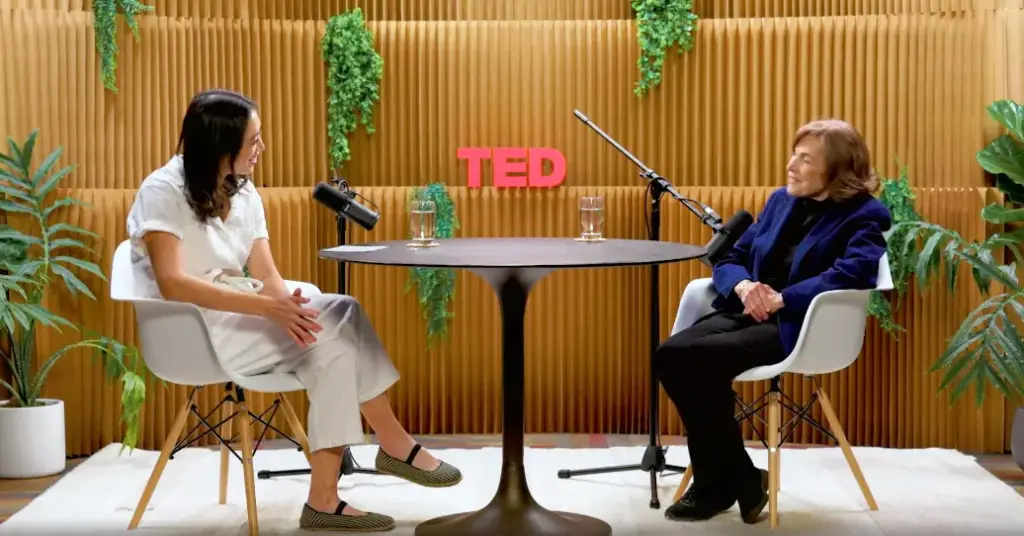
Following her riveting and visionary presentation at TED2026, legendary oceanographer, marine biologist, and Mission Blue founder Dr. Sylvia A. Earle sat down with Elise Hu, host of the acclaimed TED Talks Daily podcast, for an extensive and deeply reflective conversation. This special post-talk interview bridges the gap between Dr. Earle’s pioneering descents into the crushing darkness of the deep sea and the urgent planetary imperative to secure marine biodiversity before it is altered permanently by human activity.
For decades, Dr. Earle—affectionately dubbed "Her Deepness" by the scientific community—has championed the notion that the ocean is not merely an inexhaustible resource or a convenient sink for global waste, but rather the beating heart of the Earth. In this wide-ranging discussion, Earle and Hu explore the breathtaking wonder of the deep sea, the harrowing realities of modern marine degradation, and the transformative power of direct observation. At the core of Earle’s message is a deceptively simple yet radical hypothesis: if every human being could experience the profound magic, intricate beauty, and silent majesty of the deep ocean firsthand, our collective apathy would instantly dissolve into a fierce, unwavering determination to protect it.
This journalistic report examines the multifaceted themes of their dialogue, tracing Dr. Earle’s journey from her groundbreaking historical dives to her contemporary global conservation crusades through Mission Blue. By situating her insights within the broader context of twenty-first-century climate science, marine policy, and oceanic metrics, this article highlights why the fate of human civilization remains inextricably linked to the health of the high seas.
Detailed Chronology: From Pioneer Dives to Global Advocacy
To understand the weight of Dr. Sylvia A. Earle’s words at TED2026 and her subsequent conversation with Elise Hu, one must trace the extraordinary timeline of a life dedicated to breaking barriers and plumbing the ocean’s deepest abysses.
The Formative Years and Breaking Subaquatic Ceilings
Dr. Earle’s relationship with the ocean began not in elite academic laboratories, but along the shoreline, driven by an insatiable childhood curiosity about the natural world. By the time she earned her Ph.D. from Duke University in 1966, women in marine science faced systemic exclusion from research vessels and deep-sea submersibles. Undeterred, Earle forged a path through sheer tenacity and scientific brilliance.
In 1970, she achieved international renown as the leader of the pioneering Tektite II project, spending two weeks living in an underwater habitat fifty feet beneath the surface of the Caribbean Sea alongside an all-female crew of aquanauts. This milestone shattered prevailing gender norms in marine exploration and proved that sustained human habitation beneath the waves was not only possible, but profoundly educational.
Solo descents and the Midnight Zone
Throughout the 1970s and 1980s, Earle continued to push the boundaries of human endurance and engineering. In 1979, she stepped into a Jim suit—an atmospheric diving suit resembling a metallic exoskeleton—and descended untethered to a staggering depth of 1,250 feet (381 meters) off the coast of Oahu, Hawaii. Stepping out onto the dark seafloor without a tether to a submersible, she set a solo deep-diving record that remains unmatched to this day.
Reflecting on these experiences during her conversation with Elise Hu, Earle emphasizes that witnessing the twilight and midnight zones firsthand fundamentally altered her perception of Earth. Far from being a barren, cold wasteland, the deep ocean revealed itself to be a vibrant, bioluminescent theater teeming with life, complex ecosystems, and evolutionary marvels that science had barely begun to catalog.
The Birth of Mission Blue and Hope Spots
As commercial fishing, deep-sea mining threats, and industrial pollution began to ravage marine environments on an unprecedented scale, Dr. Earle recognized that scientific documentation alone was insufficient to stem the tide of destruction. In 2009—bolstered by the prize money and global platform of her TED Prize—she founded Mission Blue (the Sylvia Earle Alliance).
Mission Blue was designed to ignite public support for a global network of marine protected areas, which Earle terms "Hope Spots." These are special areas of the ocean that are scientifically identified as critical to the health of the marine ecosystem. Over the past fifteen years, Mission Blue has successfully catalyzed international coalitions, governments, and local communities to designate over 150 Hope Spots worldwide, transforming abstract ocean conservation into targeted, actionable local stewardship.
Supporting Context & Metrics: The State of the Deep Ocean in the 2020s
Dr. Earle’s urgent appeals during her TED2026 appearance and her discussion with Elise Hu are anchored in sobering empirical data. While humanity has mapped the surfaces of the Moon and Mars with high-resolution precision, the deep ocean remains largely unexplored, with an estimated 80 percent of the global seabed still unmapped, unobserved, and unprotected.
The Ocean as Earth’s Climate Buffer
To contextualize why the deep sea matters to everyday human survival, consider the following metrics regarding the global marine ecosystem:
- Carbon Sequestration: The ocean has absorbed more than 90 percent of the excess heat generated by anthropogenic climate change and roughly 25 to 30 percent of all human-generated carbon dioxide emissions since the industrial revolution.
- Oxygen Production: Contrary to popular belief, marine phytoplankton generate over 50 percent of the oxygen in Earth’s atmosphere—meaning every second breath taken by a human being originates from the sea.
- Biodiversity Realities: The deep sea hosts the largest habitat on Earth, encompassing extreme environments such as hydrothermal vents, abyssal plains, and seamounts that support entirely chemosynthetic food webs independent of sunlight.
Threats on the Horizon: Overfishing and Deep-Seabed Mining
Despite its vital role in regulating the planetary climate, the deep sea faces unprecedented industrial threats. Industrial bottom trawling scrapes the seafloor millions of times a year, destroying fragile deep-water coral gardens that took thousands of years to grow and releasing centuries-old sequestered carbon back into the water column.
Concurrently, corporate entities and governments are increasingly eyeing the abyssal plains for deep-seabed mining. Rich deposits of polymetallic nodules—laden with nickel, cobalt, copper, and rare earth elements essential for green technology transition batteries—sit thousands of meters below the surface. Marine scientists, echoing Dr. Earle’s warnings, caution that dredging these pristine habitats will cause irreversible damage to fragile benthic ecosystems, create toxic sediment plumes, and disrupt migratory pathways of deep-diving cetaceans before humanity even understands the species living there.
Official Statements and Dialogue Insights: Earle and Hu on the Magic of the Deep
In their post-talk conversation on TED Talks Daily, Elise Hu guided Dr. Earle through a dialogue that blended philosophical wonder with pragmatic environmental urgency. Below are synthesized excerpts and thematic breakdowns of their exchange.
The Transformative Power of Direct Experience
Addressing the core premise of her TED2026 talk, Dr. Earle explained to Hu why education alone often fails to motivate policy change, whereas direct sensory experience succeeds.
"When you look down into the abyss, when you see a creature whose very existence defies your understanding of how life can persist under crushing pressure and freezing temperatures, you realize how arrogant humanity has been," Earle noted during the interview. "We treat the ocean as a garbage dump and a warehouse of infinite commodities. But when you experience the magic—when you see the bioluminescence flash like stars in a midnight sky—you fall in love. And humans will fight tooth and nail to protect what they love."
Redefining Human Survival
Hu pressed Earle on the direct correlation between deep-sea health and land-locked human populations who may never see the ocean. Earle’s response was unambiguous: the ocean is our life support system.
- "People talk about ‘saving the ocean’ as if it’s some kind of charitable environmental hobby," Earle remarked. "It is not. It is about saving ourselves. Every drop of water on Earth, every breath we take, every climate system that allows agriculture and human habitation to exist—it is all governed by the sea. If the ocean dies, we die. It really is that simple."*
A Call for Intergenerational Urgency
Earle also reflected on the shifting attitudes of younger generations. She expressed immense optimism regarding youth-led climate and marine movements across the globe, noting that today’s youth possess a holistic understanding of planetary systems that previous industrial generations lacked. However, she warned that time is running out. The decisions made within this decade will determine whether the ocean enters a state of irreversible collapse or rebounds through aggressive conservation initiatives.
Future Outlook: The Road Ahead for Marine Conservation
As the global community digests the insights delivered at TED2026 and amplified through platforms like TED Talks Daily, the trajectory of ocean conservation must shift from passive concern to aggressive, legally binding intervention.
Achieving the 30×30 Target
A major pillar of future outlooks in marine policy is the international commitment to protect at least 30 percent of the global ocean by 2030 (the "30×30" initiative). While various nations have formally endorsed this target under frameworks such as the United Nations High Seas Treaty, the real challenge lies in enforcement and effective management.
Mission Blue’s strategy of designating and empowering Hope Spots serves as a blueprint for this endeavor. By working from the bottom up—engaging local fishers, indigenous communities, scientists, and regional governments—Hope Spots demonstrate that marine protection can yield economic and ecological dividends, fostering sustainable fisheries and ecotourism rather than economic hardship.
Technological Innovation and Exploration
Looking forward, the convergence of advanced robotics, autonomous underwater vehicles (AUVs), environmental DNA (eDNA) sampling, and satellite monitoring is revolutionizing how scientists study the deep ocean without causing physical harm. These technologies enable researchers to map biodiversity hotspots with unprecedented speed and accuracy, providing policymakers with the empirical backing required to enact strict moratoriums on destructive industrial practices like deep-sea mining.
The Ultimate Paradigm Shift
Ultimately, Dr. Sylvia A. Earle’s enduring legacy—reinforced by her TED2026 appearance and her conversation with Elise Hu—is a call for a fundamental cultural paradigm shift. Humanity must transition from viewing the natural world as an adversary to be conquered or an asset to be exploited, toward recognizing humanity as an interdependent strand within Earth’s intricate web of life.
As Dr. Earle eloquently reminds the world: No ocean, no life. No blue, no green. The magic of the deep sea is not merely a subject for academic fascination or cinematic wonder; it is the ultimate guarantor of the human future. Whether global leaders and ordinary citizens heed this warning before the abyss falls silent will define the ultimate legacy of our species.



