

Executive Overview
Between 2022 and 2025, a perfect storm of macroeconomic disruptions, supply chain vulnerabilities, and ecological crises transformed the quiet hobby of backyard poultry keeping into a nationwide phenomenon. Driven by the devastating spread of Highly Pathogenic Avian Influenza (HPAI) across commercial henhouses, retail egg prices skyrocketed, peaking at an unprecedented average of $6.22 per dozen in March 2025. In response, millions of American households sought self-reliance, turning their backyards into micro-farms. By early 2025, the American Pet Products Association (APPA) estimated that roughly 11 million U.S. households were keeping chickens—nearly double the 5.8 million recorded in 2018.
By mid-2026, however, the economic foundation of this backyard boom collapsed. As commercial flocks stabilized and supply caught up with demand, retail egg prices plummeted to an average of $2.14 per dozen in June 2026—a 35.2% drop compared to the previous year.
This dramatic price correction has fundamentally flipped the financial calculus for backyard keepers. The economic incentive that built the boom has vanished, leaving hobbyists to confront a sobering ledger of hidden costs, complex municipal regulations, and escalating biosecurity threats. Most notably, the spread of H5N1 "Bird Flu" has claimed the lives of two U.S. backyard flock owners since 2024, while a virulent, multi-state Salmonella outbreak linked to backyard poultry has sickened more than 800 people in the first half of 2026 alone.
This investigative report examines the rise and fall of the backyard chicken bubble, the hard economics of micro-scale poultry husbandry in 2026, and the mounting public health challenges facing modern homesteaders.
Detailed Chronology (2022–2026)
The trajectory of the backyard poultry market over the last four years offers a textbook study in supply-shock economics and consumer behavioral shifts.
[2022-2023: HPAI Outbreaks Begin] ──> [March 2025: Egg Prices Peak at $6.22] ──> [Late 2025: Backyard Flocks Peak at 11M] ──> [June 2026: Prices Collapse to $2.14]2022–2023: The Onset of the Crisis
The crisis began in February 2022 with the detection of H5N1 HPAI in commercial U.S. flocks. According to the USDA’s Economic Research Service (ERS), retail egg prices surged by 32.2% in 2022. While the rate of increase slowed temporarily to 1.4% in 2023 as commercial producers implemented emergency biosecurity measures, the virus remained endemic in migratory wild bird populations, setting the stage for subsequent waves of infection.
2024: The Second Wave and the Run on Hatcheries
In 2024, HPAI mutated and spread with renewed vigor, infecting commercial laying operations, turkeys, ducks, and geese. Retail egg prices climbed another 8.5% over the year. Fearing prolonged shortages and runaway food inflation, consumers began ordering live chicks in record numbers. By the autumn of 2024, commercial hatcheries were reporting unprecedented order backlogs, with delivery dates pushed back by several months.
March 2025: The Peak of the Bubble
By early 2025, the cumulative loss of commercial laying hens exceeded tens of millions. Retail prices for a dozen Grade A eggs peaked at an average of $6.22. Feed stores across the United States reported selling out of chicks weeks before their traditional spring "chick days," and major hatcheries reported order volumes surging by 80% or more. The APPA confirmed that the number of households keeping chickens had reached its historic high of approximately 11 million. ERS data showed a staggering 21.9% increase in retail egg prices for the full calendar year.
2026: The Market Correction
As the first half of 2026 unfolded, the commercial poultry sector achieved a fragile recovery. The USDA logged significantly fewer new HPAI detections in the first quarter of 2026 compared to the same period in 2025. Replacement pullets—young female chickens—were produced in quantities sufficient to cover both routine flock turnover and localized losses.
By May 2026, retail egg prices were 35.2% lower than they had been twelve months prior. In June 2026, the average retail price for a dozen eggs fell to $2.14. The USDA ERS currently forecasts a 30.4% decline in retail egg prices for the full 2026 calendar year, with wholesale prices paid to farmers projected to crash by 82.9%. Consequently, the rush of first-time buyers has evaporated, and hatchery sales have shifted back to seasoned keepers replenishing aging flocks.
Supporting Context & Metrics
The Microeconomics of the Backyard Coop
To understand the shifting financial reality of backyard poultry, one must look closely at the balance sheet. In 2026, the financial comparison is no longer against the cheapest commodity eggs in the grocery store cooler, but rather against premium, specialty alternatives.
According to the USDA’s Weekly Egg Markets Overview for mid-July 2026, the average advertised retail price for conventional caged eggs sat at $1.02 per dozen, while United Egg Producers (UEP)-certified cage-free eggs averaged $2.65 per dozen, with organic and pasture-raised varieties commanding even higher premiums.
The table below illustrates the financial performance of a standard six-hen backyard flock under three different economic scenarios:
| Financial Metric | Conventional Pricing (June 2026 Average) | Specialty Pricing (Cage-Free Feature) | Peak Crisis Pricing (March 2025 Peak) |
|---|---|---|---|
| Average Price per Dozen | $2.14 | $2.65 | $6.22 |
| Annual Flock Output (90–125 Dozen) | $190 – $270 | $240 – $330 | $560 – $780 |
| Annual Operating Costs (Feed, Bedding, Supplies) | $250 – $600 | $250 – $600 | $250 – $600 |
| Net Annual Operating Margin | ($410) to $20 | ($360) to $80 | ($40) to $530 |
| Initial Capital Expenditure (Coop, Run, Fencing, Birds) | $500 – $2,000 | $500 – $2,000 | $500 – $2,000 |
Source: Production ranges derived from University of Minnesota Extension guidance; retail egg prices sourced from the U.S. Bureau of Labor Statistics (BLS) and USDA Agricultural Marketing Service.
This ledger reveals that at 2026 prices, a small backyard flock’s annual egg production barely covers its operational feed and bedding costs, even under optimal laying conditions. The initial capital expenditure—ranging from $500 for basic DIY setups to upwards of $2,000 for predator-proof, pre-fabricated coops—is virtually impossible to recoup when commercial eggs cost $2.14 per dozen.
Furthermore, these calculations do not account for hidden costs that veteran keepers frequently encounter:
- Predator Mitigation: Upgrading coop hardware after losses to raccoons, hawks, or foxes.
- Veterinary Expenses: Specialized avian medical care, which is scarce and expensive.
- Flock Maintenance during Non-Productive Years: Hens peak in production during their first two years (averaging 180 to 250 eggs annually) but can live for five to ten years, consuming feed long after their laying rate tapers off.
The Environmental Ledger: Debunking the Carbon Myth
For years, backyard poultry keeping was promoted as a highly sustainable lifestyle choice, with some early estimates suggesting that backyard eggs carried roughly one-third the carbon footprint of commercial operations. However, modern life-cycle assessments (LCAs) have forced a retraction of this claim.
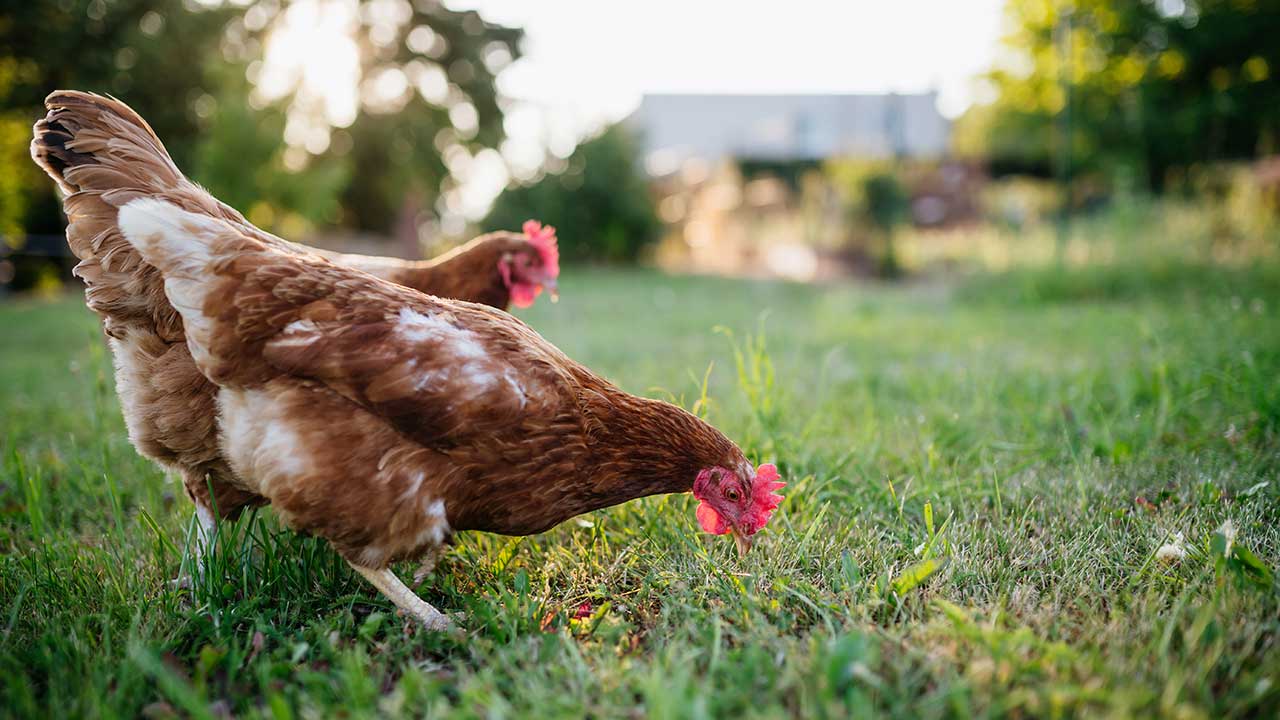
Agricultural scientists point out that feed production is the single largest contributor to an egg’s carbon footprint, accounting for the vast majority of emissions in life-cycle analyses. Commercial egg operations achieve extreme feed-efficiency ratios through climate-controlled housing, precise nutritional formulations, and genetic selection, with commercial layers averaging 300 eggs per year in 2025.
In contrast, backyard flocks typically consume commercially manufactured feed purchased in small quantities, but they lay fewer eggs per pound of feed consumed due to environmental exposure, seasonal light changes, and genetic variation. Because backyard hens require more feed inputs per individual egg produced, their carbon footprint per egg is frequently higher than that of industrial operations.
According to global food-system meta-analyses, commercial egg production generates approximately 4.7 kilograms of CO2-equivalent per kilogram of product, while poultry meat generates 9.9 kilograms. Because these baseline figures are already lower than those of red meat (which ranges from 60 to 99 kilograms of CO2-equivalent), the potential carbon savings of transitioning to a backyard system are marginal at best.
However, backyard flocks do offer localized environmental benefits:
- Waste Diversion: Hens can consume kitchen scraps, diverting organic waste from landfills where it would otherwise decompose and produce methane.
- Soil Regeneration: Properly managed chicken manure is a rich source of nitrogen, phosphorus, and potassium, serving as an excellent localized fertilizer.
- Natural Pest Management: Foraging chickens suppress populations of ticks, grubs, and destructive garden insects, reducing the household’s reliance on synthetic chemical pesticides.
Municipal Codes and Zoning Realities
Before investing in poultry husbandry, prospective keepers must navigate a complex patchwork of municipal ordinances and homeowners association (HOA) covenants. Common regulatory frameworks include:
- Flock Size Restrictions: Most urban and suburban municipalities impose caps, typically limiting households to between four and eight hens.
- Rooster Prohibitions: To mitigate noise pollution, roosters are banned in the vast majority of residential zones.
- Property Setbacks: Ordinances routinely dictate that coops must be set back 10 to 25 feet from property lines, and often 40 to 50 feet from neighboring dwellings.
- Permitting and Fees: Many cities require annual registration fees, site inspections, and formal permits.
- Commercial Restrictions: The sale of backyard eggs or the on-site slaughter of birds is strictly prohibited in most residential districts.
Official Statements & Public Health Realities
The rapid expansion of backyard flocks has brought significant public health challenges to the forefront, drawing warnings from the Centers for Disease Control and Prevention (CDC) and the USDA.
The H5N1 Avian Influenza Threat
H5N1 HPAI is primarily spread by wild migratory waterfowl, which shed the virus in their saliva, nasal secretions, and feces. It is highly contagious and nearly 100% fatal to domestic poultry. Humans can contract the virus through direct, unprotected contact with infected birds, their excretions, or contaminated environments.
Since March 2024, the CDC has confirmed 71 human cases of Influenza A(H5) within the United States. While the vast majority of these infections occurred among industrial dairy and poultry workers, three cases were identified in backyard flock owners. Tragically, two of those three cases resulted in fatalities: one in Louisiana in early 2025, and another in Washington in November 2025.
The CDC maintains that the risk of H5N1 to the general public remains low. However, for individuals who actively handle sick or dying backyard poultry without personal protective equipment (PPE), the risk is substantially elevated.
In May 2026, the CDC published the results of a comprehensive survey of 638 backyard flock owners across 48 states in its Morbidity and Mortality Weekly Report (MMWR). The findings revealed a dangerous disconnect between general awareness and practical biosecurity measures:
- High General Awareness: 94% of respondents were aware of avian influenza.
- Poor Biosecurity Practices: Only 31% of surveyed keepers wore dedicated footwear when entering their coops, and fewer than 15% routinely used gloves or masks when handling sick birds or cleaning coops.
- Reluctance to Report: Nearly 45% of respondents stated they would hesitate to report sudden flock mortality to state or federal veterinarians, citing fears of forced depopulation (culling) of their remaining healthy birds.
The Salmonella Epidemic
While bird flu dominates national headlines, Salmonella infections represent a far more widespread and persistent threat to backyard keepers. As of July 27, 2026, the CDC is actively investigating eight distinct multi-state outbreaks of Salmonella tied directly to contact with backyard poultry.
The metrics of the 2026 outbreak are severe:
- Infections: 814 confirmed cases across 44 states and one U.S. territory.
- Hospitalizations: 201 individuals hospitalized.
- Fatalities: One confirmed death in Washington state.
- Vulnerable Populations: Children under the age of five account for 25% of all confirmed cases.
Epidemiological investigations have traced these outbreaks back to commercial hatcheries. Among infected patients who owned poultry, 84% had purchased their birds since January 1, 2026, primarily from local agricultural retail stores. Testing matched the outbreak strains to seven distinct hatcheries, and investigators recovered the same Salmonella strains from the cardboard shipping boxes used to transport chicks to retail outlets.
Alarmingly, genomic sequencing indicates that several of these strains carry resistance genes to critical front-line antibiotics, including ampicillin, ceftriaxone, and ciprofloxacin, complicating treatment protocols for severe infections.
Future Outlook
As the summer of 2026 progresses, the backyard poultry landscape is undergoing a structural correction. The era of the "panic-bought chicken" has ended. The stabilization of commercial egg production and the subsequent price collapse have stripped away the illusion that backyard coops serve as a viable hedge against grocery store inflation.
Instead, backyard poultry husbandry is transitioning back to what it was prior to the 2022 supply shock: a highly specialized, deliberate hobby chosen for lifestyle, educational, or artisanal reasons rather than economic necessity.
For the estimated 11 million households currently managing flocks, the focus must shift from productivity to rigorous biosecurity. As wild bird migration patterns shift in the coming autumn, the threat of H5N1 remains a persistent danger. Public health agencies emphasize that the future viability of small-scale poultry keeping depends entirely on the willingness of individual keepers to adopt professional-grade biosecurity protocols, recognize the limits of backyard economics, and prioritize human health over the novelty of the hobby.
Actionable Guidance for Flock Owners
Before You Buy Birds
- Audit Local Laws: Verify municipal zoning codes, HOA covenants, and setback requirements.
- Design for Biosecurity: Construct a fully enclosed coop with a solid roof to prevent wild bird droppings from contaminating feed and water. Use hardware cloth rather than standard chicken wire to deter predators.
- Identify Avian Medical Care: Ensure there is a licensed veterinarian in your region who treats poultry before purchasing chicks.
Daily Management Protocols
- Enforce Dedicated Footwear: Never wear the shoes used in your coop inside your home. Designate "coop-only" boots and leave them at the run entrance.
- Practice Hand Hygiene: Wash hands thoroughly with soap and water immediately after touching poultry, eggs, or coop equipment. Keep hand sanitizer near the coop.
- Protect the Household: Never bring chickens, chicks, or coop equipment (such as feeders or waterers) inside human living spaces. Do not wash poultry equipment in kitchen sinks.
- Avoid Physical Contact: Do not kiss, snuggle, or hold poultry near your face, as healthy-looking birds can shed pathogens like Salmonella dynamically.
How to Mitigate Your Environmental Footprint
- Source Feed Responsibly: Purchase feed from regional mills that utilize sustainably sourced grains.
- Utilize Deep-Litter Composting: Manage coop bedding using the deep-litter method to encourage aerobic decomposition, creating high-quality, biologically stable compost for your garden.
- Practice Rotational Grazing: If space permits, use mobile tractors to rotate birds across your yard, preventing soil erosion, nitrogen overloading, and parasite buildup.



