Executive Overview
Ask a modern artificial intelligence chatbot a straightforward question, and the computational transaction consumes roughly the same amount of electricity as running a household microwave for a single second. For years, this trivial energy footprint was the default mental model for consumers and policymakers alike.
However, the rapid paradigm shift from passive, single-turn chatbots to autonomous AI agents—systems designed to plan their own workflows, browse the web, execute code, and self-correct over hours-long cycles—has shattered this illusion. A single multi-step task handed to an AI agent can consume as much energy as running a personal laptop continuously for nearly six hours.
[Simple Query] ──> Uses electricity equivalent to: 1 Second of a Microwave
[Agentic Task] ──> Uses electricity equivalent to: 6 Hours of a Laptop
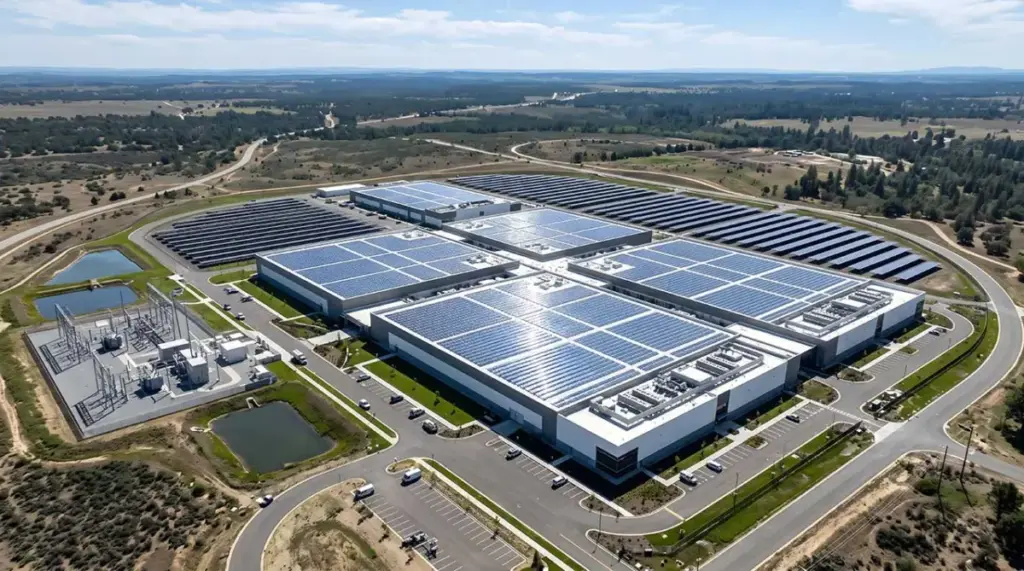
This massive divergence in energy consumption introduces a critical environmental and economic inflection point. Beyond the immediate strain on power grids, the AI boom is driving a highly localized crisis. The true cost of artificial intelligence is no longer confined to corporate balance sheets; it is spilling over into municipal water systems, consumer utility bills, and local tax structures. Across the United States, a quiet but fierce resistance is mounting. Communities are realizing that the digital cloud is anchored by heavy, resource-intensive physical infrastructure—and local citizens are increasingly being asked to foot the bill.
Detailed Chronology: The Evolution of the AI Carbon Debate
The scientific and public understanding of AI’s environmental impact has shifted rapidly over a short period. This timeline traces the evolution of emissions research and the subsequent socio-political backlash.
   Feb 2024                  Nov 2025                  Early 2026               July 2026
  ┌─────────┐               ┌─────────┐               ┌──────────┐             ┌─────────┐
  │ Nature  │  ───────────>  │ Woo     │  ───────────>  │ KAIST    │  ─────────> │ NY State│
  │ Study   │               │ Rebuttal│               │ Agentic  │             │ Morato- │
  │ Published│               │ Published│               │ Study    │             │ rium    │
  └─────────┘               └─────────┘               └──────────┘             └─────────┘
February 2024: The Optimistic Baseline
Researchers at three major universities published a comparative analysis in the peer-reviewed journal Scientific Reports. Their findings suggested that an AI model generating a single page of text emitted between 130 and 1,500 times less carbon dioxide than a human writer producing the same page.
The math behind this assertion was straightforward:
- AI Page Generation: Approximately 2 grams of $CO_2$ (including amortized training emissions).
- Human Page Generation: Approximately 1,400 grams of $CO_2$.
However, the methodology immediately drew sharp criticism from the scientific community. To calculate the human footprint, researchers took the average American’s annual carbon footprint (~15 tons of $CO_2$) and divided it by the hours in a year to arrive at an hourly rate of 1.7 kilograms. They then charged the human writer for the 48 minutes spent writing.
Critics pointed out a fundamental logical fallacy: humans emit carbon regardless of whether they are writing. A writer does not cease to exist, heat her home, or drive her car once an AI takes over her job. When calculating the marginal carbon difference, the only factor that actually changes is the electricity consumed by the writer’s laptop—roughly 2 kilograms of $CO_2$ over a multi-day project, rather than the 36 kilograms implied by the study’s baseline.
November 2025: The Integration of Work Quality
To address these methodological flaws, researcher Nolan Woo published a direct rebuttal in Scientific Reports. Woo argued that the initial study ignored a fundamental variable: accuracy.
Woo designed a test using programming challenges from a national high school computing competition, which featured automated pass-or-fail grading. He tested four distinct AI models, feeding errors back into the systems and allowing them to self-correct up to 100 times.
The study demonstrated that emissions were not driven primarily by a model’s nominal parameter size, but rather by the number of iterative attempts required to achieve a correct answer. Crucially, Woo noted that across four years of contest problems, the AI models of that era failed to solve the majority of tasks, highlighting that low-emissions claims were often built on incomplete or incorrect work.
Early 2026: The Rise of the Autonomous Agent
By early 2026, the widespread deployment of "agentic" workflows fundamentally altered the energy equation. AI was no longer operating on a single-query, single-response basis.
A research team at KAIST, South Korea’s premier engineering institution, published a study measuring the "hidden energy" of these autonomous agents. Using a production-grade model, they found that a single agentic task consumed an average of 348 watt-hours of electricity—136 times more energy than the same model used to resolve a single prompt.
The KAIST team identified two primary drivers of this surge:
- Prolonged Execution Times: Agentic tasks ran up to 154 times longer than simple queries.
- Hardware Inefficiency: Because agents must wait for external web searches, API calls, or sub-processes to complete, the graphical processing units (GPUs) sat idle for more than 50% of the execution window while continuing to draw baseline power.
July 2026: The Legislative Backlash
As the physical realities of these energy metrics manifested locally, governments began to intervene. In July 2026, New York became the first state in the nation to pass a temporary moratorium on new large-scale data center construction, citing immediate threats to state carbon-reduction mandates and grid stability.
Supporting Context & Metrics: Breaking Down the Costs
To understand the systemic impact of the AI transition, we must examine the specific vectors of consumption: carbon break-even thresholds, systemic resource rebounds, water footprints, and retail electricity price spikes.
The Carbon Break-Even Threshold
Evaluating whether an AI agent is "cleaner" than a human researcher requires analyzing where the data center hosting the AI draws its power.
Consider a comprehensive research project requiring 20 hours of human labor (reading 40 sources and producing a 5,000-word report). The marginal physical emissions of the human worker (laptop, monitor, and amortized manufacturing emissions) total roughly 2 kilograms of $CO_2$.
The table below illustrates how many autonomous AI agent requests can run before exceeding that 2-kilogram human threshold, depending on the grid mix of the hosting data center:
| Data Center Grid Profile | Agent Requests to Reach 2 kg $CO_2$ Limit |
|---|---|
| Ultra-Clean Grid (Dedicated Power Purchase Agreements for Solar/Wind) | ~46 requests |
| Average U.S. Grid Mix | ~15 requests |
| High-Coal/Gas Grid (Where many major data centers are actually built) | ~11 requests |
This data highlights a critical challenge: data centers are disproportionately constructed in regions with dirtier-than-average grids. A June 2026 study revealed that the electricity powering major U.S. AI data hubs runs 48% dirtier than the national average, primarily due to a reliance on legacy fossil-fuel plants to guarantee uninterrupted, 24/7 baseload power.
Jevons’ Paradox and the Labor Illusion
Proponents of AI integration often assume that automated efficiency gains directly translate to resource conservation. Historical economic data suggests the opposite. This phenomenon is known as Jevons’ Paradox:
┌──────────────────────────────┐
│  AI Makes Computing Cheaper  │
└──────────────────────────────┘
               │
               ▼
┌──────────────────────────────┐
│  Demand for AI Skyrockets    │
└──────────────────────────────┘
               │
               ▼
┌──────────────────────────────┐
│ Total Resource Consumption   │
│          Increases           │
└──────────────────────────────┘
When technology makes a resource more efficient, the cost of using that resource drops. This cost reduction increases demand, ultimately raising total resource consumption.
Data from a National Bureau of Economic Research (NBER) working paper indicates that employees with high exposure to workplace AI did not work fewer hours; instead, they logged an average of 3.5 additional hours per week. Industry surveys show that only 25% of workers use AI-driven time savings to shorten their workdays. The remaining 75% use the technology to run more iterations, generate more reports, and execute more tasks, multiplying the net energy demand on the grid.
The Dual Water Footprint: Cooling vs. Generation
Public discussions regarding data center water usage typically focus on the water used on-site for cooling. However, this represents only a fraction of the total footprint.
  ┌──────────────────────────┐
  │ On-Site Cooling Water    │  ■■ 17.4 Billion Gallons (2023)
  └──────────────────────────┘
  ┌──────────────────────────┐
  │ Off-Site Generation Water│  ■■■■■■■■■■■■■■■■■■■■■■■■ 211 Billion Gallons (2023)
└──────────────────────────┘- On-Site Cooling Footprint: In 2023, U.S. data centers consumed approximately 17.4 billion gallons of water directly for evaporative cooling, according to the Lawrence Berkeley National Laboratory. Analysts project this figure could quadruple by 2028.
- Off-Site Generation Footprint: Thermoelectric power plants require massive volumes of water for steam generation and cooling. The electricity consumed by U.S. data centers in 2023 required an estimated 211 billion gallons of water at the source generation plants—roughly 12 times the volume consumed on-site.
Consequently, while a data center operator can transition to dry, closed-loop air-cooling systems and claim "near-zero" local water usage, their overall water footprint remains largely unchanged. The water burden is simply shifted upstream to the regional power plant.
The Financial Strain on Consumer Power Bills
The rapid expansion of data centers is also directly impacting residential utility bills. This financial shift is driven by the capacity auction mechanics of regional transmission organizations, such as PJM Interconnection, which manages the power grid for 65 million people across 13 states and Washington, D.C.
PJM’s annual capacity auction secures commitments from power generators to ensure grid reliability during peak demand periods. The clearing prices for these auctions have recently spiked:
  2024-2025 Capacity Price:  $29 / Unit
  2026-2027 Capacity Price:  $329 / Unit  (▲ 1,034% Increase)
An independent market monitor determined that data center demand was responsible for 63% of this price surge, resulting in an additional $9.3 billion collected from ratepayers.
The Natural Resources Defense Council (NRDC) projects that the average household in the PJM territory will pay approximately $70 more per month by 2028 solely to subsidize these grid upgrades. Evidence of this trend is already appearing nationwide:
- Washington, D.C. (Pepco): Residential customers saw an average surcharge of $21 per month added to their bills.
- Ohio: Average residential electricity rates rose by 9% over a 12-month period.
- Pennsylvania: Average residential electricity rates rose by 14% over the same period.
Official Statements and Stakeholder Perspectives
The rapid growth of AI infrastructure has created deep divisions among industry advocates, local communities, and municipal officials.
The Industry and Developer Perspective
Silicon Valley venture capital firms and data center developers argue that the long-term economic benefits of AI infrastructure outweigh the temporary strains on local grids.
A comprehensive study by Virginia’s Joint Legislative Audit and Review Commission (JLARC) found that data centers support approximately 74,000 jobs and generate $9.1 billion annually for the state’s economy. However, the report also included a key caveat: the vast majority of these jobs are created during the temporary construction phase, rather than during ongoing operations.
To protect their interests, industry groups have launched aggressive advocacy campaigns:
- Leading the Future: A pro-AI political action committee launched with $140 million in funding, including $50 million contributions from a prominent venture capital firm and OpenAI’s president, specifically targeting candidates who support data center expansion.
- The Infrastructure Argument: Developers contend that adding large, high-load customers allows utilities to spread the fixed costs of grid maintenance across a broader base, which could theoretically lower rates for residential customers over time. However, utility consumer advocates note that this benefit depends heavily on whether state regulators require data centers to pay for their own dedicated substation and transmission upgrades.
The Grassroots Resistance
On the other side of the issue is a growing coalition of local opposition groups. Data Center Watch, an organization tracking local resistance, reported that at least 75 major data center projects representing $130 billion in capital investment were blocked or delayed in the first quarter of 2026 alone.
  Active Opposition Groups (U.S.):
  2025: ~400 groups
  2026: 833 groups across 49 states (▲ 108% Increase)
Additionally, state legislators introduced over 300 bills related to data center regulation in the first six weeks of 2026.
This opposition is notable for its bipartisan nature, uniting constituencies that rarely align on environmental policy:
- Conservative Officials: Focus on protecting agricultural land, preventing state tax write-offs, and avoiding grid instability.
- Progressive Officials: Focus on local water rights, carbon emissions, and environmental justice.
Local Case Studies: Two Paths of Resistance
The tension between developers and local communities is playing out in municipal planning offices across the country. The following two cases illustrate the varying outcomes of these battles.
  ┌────────────────────────┐         ┌────────────────────────┐
  │  Tucson, AZ (Winner)   │         │  Saline, MI (Settled)  │
  ├────────────────────────┤         ├────────────────────────┤
  │ • Hidden project       │         │ • Farmland rezoning    │
  │ • Public backlash      │         │ • Developer lawsuit    │
  │ • Council rejection    │         │ • Quick settlement     │
  └────────────────────────┘         └────────────────────────┘
Tucson, Arizona: The Jurisdictional Loophole
In 2023, Amazon initiated "Project Blue," a proposed 290-acre, 10-building data center campus in Pima County, Arizona. To prevent public opposition, the developer negotiated a non-disclosure agreement with county officials, shielding the project’s scale and water requirements from public scrutiny.
In June 2025, county supervisors approved the initial land sale. However, once details of the project’s massive water requirements leaked, local residents organized a swift response. More than 1,000 citizens attended a subsequent public hearing, prompting the Tucson City Council to vote unanimously in August 2025 to deny the project municipal water hookups and refuse annexation.
However, the developer bypassed this decision by purchasing the land under a different corporate name just outside city limits, where the municipal council lacked jurisdiction. While the grassroots campaign successfully blocked the project from using city resources, it highlighted the limitations of municipal authority when developers can simply move across county lines.
Saline Township, Michigan: The Threat of Litigation
In September 2025, the planning commission of Saline Township, Michigan—a farming community of 2,900 residents—voted against rezoning 575 acres of agricultural land for a proposed $16 billion data center linked to OpenAI and Oracle.
Two days after the vote, the developer filed a federal lawsuit against the township. The suit argued that because Saline Township lacked any land specifically zoned for heavy industrial use, its zoning code was exclusionary and unlawfully prohibited a legitimate business activity.
Faced with the prospect of a prolonged, multimillion-dollar legal battle that would easily bankrupt the town’s modest treasury, the township board settled within weeks. Construction began in November 2025.
While residents negotiated $14 million in community benefits (including funding for agricultural preservation and local fire services), the outcome demonstrated how larger developers can use the threat of litigation to override local planning decisions.
Future Outlook: Efficiency, Segregation, and Consumer Choices
As the environmental and economic costs of AI infrastructure become clearer, the industry is moving toward structural changes to manage this growth.
  ┌─────────────────────────────────────────────────────────┐
  │                   The Path Forward                      │
  ├─────────────────────────────────────────────────────────┤
  │ 1. Efficiency Gains: IEA reports rapid task-level       │
  │    efficiency improvements.                             │
  │                                                         │
  │ 2. Grid Segregation: Separate rate classes to isolate   │
  │    industrial data center costs from consumers.         │
  │                                                         │
  │ 3. Consumer Action: Selective use of agentic tools and  │
  │    deployment of localized, open-source models.         │
  └─────────────────────────────────────────────────────────┘
Technological Efficiency vs. Absolute Demand
The International Energy Agency (IEA) noted in a report that "measured per individual task, the energy efficiency of AI is improving at a rate unprecedented in energy history." Hardware manufacturers are rapidly improving performance-per-watt metrics, and software developers are optimizing agentic frameworks to reduce idle GPU time.
However, these efficiency gains must outpace absolute demand. If the cost of running AI agents falls by 90%, but demand for those agents increases by 1,000%, total energy and water consumption will continue to rise.
Grid Segregation and Regulatory Policy
To protect residential consumers from rising utility costs, several states are experimenting with structural rate separation:
- Virginia: Established a dedicated industrial rate category specifically for high-density data centers, ensuring that grid upgrade costs are billed directly to the developers rather than spread across residential ratepayers.
- Ohio: Approved a regulatory framework requiring data centers to sign 12-year non-severable power contracts with minimum billing thresholds, ensuring utilities do not build expensive new power plants only for the data centers to migrate if market conditions change.
What Consumers Can Do
While the most consequential environmental decisions are made at the infrastructure and policy levels, individual developers and users can still take steps to minimize their computational footprint:
- Be Intentional with Agentic Workflows: Reserve multi-step, autonomous AI agents for complex tasks that genuinely require iterative problem-solving. For simple informational queries, opt for standard search engines or single-turn prompts.
- Optimize Prompts and Implement Human-in-the-Loop Safeguards: Write clear, precise instructions to minimize the need for the model to self-correct or run repeatedly. Adding manual approval steps before an agent initiates a web search or runs code can prevent runaway execution loops.
- Run Local, Specialized Models: For basic text editing, formatting, or code generation, consider running smaller, open-source models locally on your own hardware. This processes the workload on your device’s existing power cycle, bypassing the need for a distant, resource-intensive data center.
- Engage in Local Planning Decisions: Participate in municipal zoning meetings, attend utility commission hearings, and support policies that require data centers to secure dedicated, off-grid renewable energy sources before breaking ground.
Ultimately, the environmental impact of artificial intelligence is not determined by the code itself, but by the physical infrastructure that powers it. Ensuring that AI remains a sustainable tool requires transparency about these resource costs, fair utility regulations, and active community participation in deciding where—and how—these digital hubs are built.