

Executive Overview
In a sweeping regulatory rollback that marks the latest salvo in America’s two-decade-long climate policy whiplash, the U.S. Environmental Protection Agency (EPA) has announced plans to dismantle all federal carbon emission regulations for the electricity sector. The move effectively greenlights utilities to emit greenhouse gases without federal constraint.
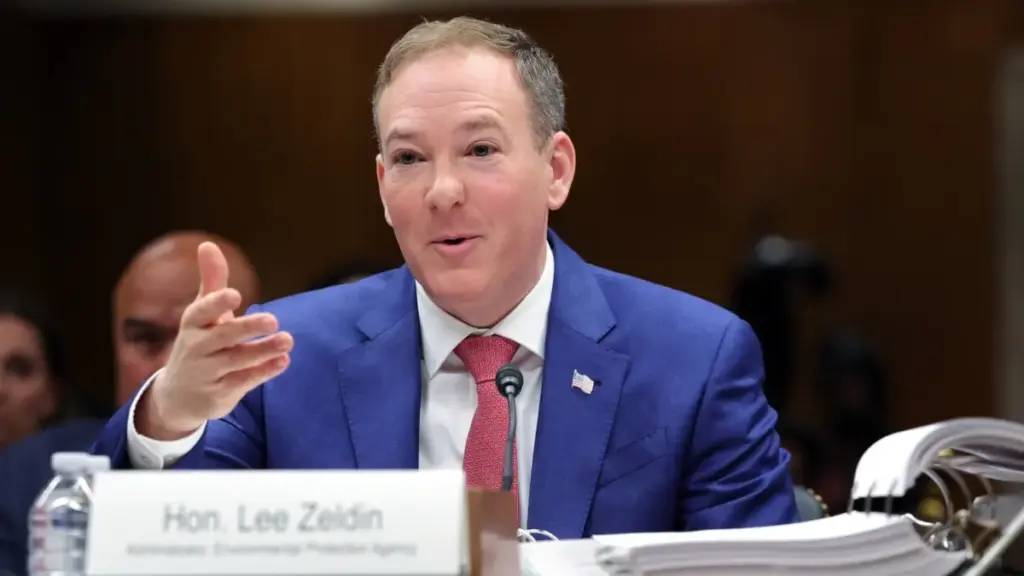
Announced by EPA Administrator Lee Zeldin at an international energy summit in Texas, the agency’s decision targets the Biden administration’s 20th-century-defining 2024 power plant rule. That regulation had offered electric utilities a flexible dual-pathway: shutter aging coal-fired infrastructure by the 2030s or retrofit plants with emerging carbon capture and sequestration (CCS) technology. By wiping the slate clean, the current administration has signaled a wholesale embrace of fossil-fuel uncoupling from federal environmental mandates, utilizing the same legal justifications it deployed earlier this year when questioning the foundational scientific consensus on vehicular greenhouse gas emissions.
The stakes could hardly be higher. Coal remains the most carbon-intensive and environmentally degrading of the world’s primary energy sources. Accounting for nearly half of cumulative global carbon emissions since the dawn of the industrial era—matching oil and natural gas combined despite producing substantially less aggregate energy—coal is universally recognized by climate scientists as the single most critical friction point in efforts to arrest global temperature escalation.
Yet, the regulatory U-turn arrives at a volatile historical crossroads. Even as federal oversight swings wildly between successive political administrations, market forces and technological revolutions are colliding in unexpected ways. The explosive rise of energy-hungry artificial intelligence data centers has stoked an unprecedented surge in electricity demand, throwing a temporary, carbon-heavy lifeline to aging coal assets that might otherwise have met a quiet, market-driven demise.
Detailed Chronology: Two Decades of Regulatory Whiplash
To understand the profound disruption represented by the EPA’s latest announcement, one must trace the winding, contentious history of federal attempts to regulate the American power grid over the last twenty years.
The Obama Era and the Birth of the Clean Power Plan
Following legislative roadblocks that derailed attempts to institute a national carbon tax under President Barack Obama, the administration pivoted to executive action. The result was the ambitious "Clean Power Plan," drafted by the EPA to mandate that electric utilities significantly curb carbon emissions by transitioning away from coal-fired generation.
However, the plan faced immediate, fierce resistance from a coalition of fossil-fuel-reliant states and industry trade groups. Before the rule could be fully realized, the Supreme Court issued a historic stay, halting its implementation. The legal battles laid bare the structural limitations of executive authority over interstate commerce and power generation.
The Trump First-Term Repeal and Judicial Guardrails
Upon taking office, President Donald Trump systematically dismantled Obama-era climate policies, formally repealing the Clean Power Plan. The administration substituted it with the weaker Affordable Clean Energy (ACE) rule, which placed minimal pressure on utilities to decarbonize.
Subsequent legal challenges culminated in a landmark Supreme Court ruling (West Virginia v. EPA), which severely restricted the federal government’s ability to unilaterally force power generators to shift away from fossil fuels or adopt system-wide generation shifts. The Court held that sweeping economic and political decisions require explicit congressional authorization, effectively tying the hands of future regulators attempting broad-brush climate policy.
The Biden Administration’s Workaround
Hemmed in by the Supreme Court’s jurisprudence, the Biden administration crafted a sophisticated regulatory workaround in 2024. Rather than issuing a direct mandate forcing utilities to shutter coal plants, the EPA established performance standards predicated on technological feasibility.
Utilities were given a choice: commit to retiring coal-fired steam generating units within a defined timeline in the 2030s, or install advanced carbon capture and storage (CCS) systems capable of capturing nearly 90% of smokestack emissions. By tethering the regulation to plant-level technological standards rather than macro-grid generation shifts, the Biden EPA sought to bulletproof the rule against judicial intervention.
The Current Repeal: Dismantling the 2024 Standard
Now, the Trump administration has moved swiftly to undo the Biden-era framework. The EPA’s announcement on Monday to revoke all federal carbon standards for the electricity sector effectively nullifies the choice between retirement and carbon capture. Relying on arguments of scientific uncertainty regarding climate change and emphasizing potential consumer savings on monthly utility bills, the agency has removed the regulatory architecture designed to systematically phase out coal.
Supporting Context & Metrics: The Shifting Economics of Coal, Fracking, and AI
Despite the turbulent history of federal rulemaking, the actual trajectory of American coal has been governed less by executive decrees and more by profound structural and technological shifts in the energy markets.
The Shale Fracking Revolution
Over the past two decades, coal’s dominance of the American power grid has eroded dramatically—not primarily because of EPA mandates, but because of the domestic shale fracking boom. The explosion of hydraulic fracturing flooded domestic markets with cheap natural gas. Because natural gas burns cleaner than coal—releasing significantly less carbon dioxide per unit of energy—utilities found a powerful economic incentive to retire or repower their legacy coal fleets with natural gas combined-cycle turbines.
This market-driven transition caused total power sector carbon emissions in the United States to plummet by nearly 50%. As Kenneth Gillingham, a professor of environmental economics at Yale University and former economic adviser who helped draft the Obama-era Clean Power Plan, notes, regulatory targets typically function best when they reinforce existing market trajectories:
"The reason to have a target is that it sends a clear signal to decision-makers in companies," Gillingham explains. "If you’re on the fence between choosing two things, you might as well choose the one that’s in line with the target. That’s been undermined. There has to be some teeth behind it."
The Public Health Toll
While the Biden-era rule was primarily framed as a climate mitigation tool, its secondary benefits with respect to human health were profound. Coal combustion releases an array of lethal co-pollutants, including sulfur dioxide, nitrogen oxides, particulate matter, and mercury.
According to EPA impact assessments, the 2024 rule would have averted an estimated $370 billion in cumulative health damages and climate-related costs by accelerating the retirement curve. The agency projected that by 2035, the standard would have prevented hundreds of thousands of asthma attacks, significantly reduced emergency room admissions, and saved over 1,200 lives annually from premature mortality associated with toxic air pollution. The complete repeal of these standards removes a critical institutional bulwark protecting vulnerable fence-line communities.
The AI Boom and Data Center Resurgence
Complicating the long-term decline of coal is an unexpected economic variable: the artificial intelligence and cloud computing boom. The exponential growth of energy-intensive data centers has triggered a dramatic, unpredicted resurgence in nationwide electricity demand.
Utilities that had planned orderly retirements for coal plants are now scrambling to keep the lights on. Wholesale electricity markets in regions like the Midwest and the Mid-Atlantic have seen prices spike, making it highly lucrative for operators to keep older coal units online.
A prominent case study is Southern Company, a major utility servicing Georgia, Mississippi, and surrounding states. Under baseline projections, Southern intended to shutter its major Mississippi coal-burning facility by 2028. However, the projected power demands of incoming data centers forced the utility to update its Integrated Resource Planning (IRP), extending the facility’s operational life well into the 2030s.
Previous attempts by Southern Company to integrate carbon capture technology—notably the troubled Kemper County energy facility—suffered catastrophic engineering failures and cost overruns, leading to the technology’s abandonment at scale. Environmental groups have fiercely criticized the pivot back to coal, arguing that AI load growth projections are often inflated and subvert net-zero corporate commitments. Nevertheless, the current federal administration is fully aligned with giving utilities maximum leeway to exploit fossil fuels to meet tech-sector power needs.
Official Statements and Political Rhetoric
The ideological fault lines over coal generation were laid bare at an international energy summit in Texas, where EPA Administrator Lee Zeldin framed the rollback as a liberation of American enterprise.
"For over 15 years, the Obama and Biden administrations implemented a war on coal to destroy reliable and affordable energy," Zeldin declared before industry leaders. "We are working to go even further so that American energy can be fully unleashed. Realizing the full potential of American energy means more jobs, lower prices, and a more prosperous America."
Proponents of the repeal argue that federal climate regulations represent federal overreach that artificially suppresses grid reliability, particularly during extreme weather events when baseload generation is at a premium.
Conversely, environmental advocates and economic analysts argue that prioritizing short-term thermal generation ignores the structural reality of aging infrastructure. Critics point out that federal subsidies under mechanisms like the Inflation Reduction Act (IRA)—which heavily incentivize utility-scale solar, wind, and battery storage—have proven far more potent drivers of clean energy adoption than shifting EPA regulations.
Future Outlook: A Declining, Not Dying, Fuel Source
As the dust settles on the EPA’s latest rulemaking, industry analysts and policy experts are casting their gaze toward the horizon. What does the complete removal of federal carbon limits mean for the future of the American power grid?
The next presidential administration to inherit the White House with a mandate for climate action will face a paradox strikingly similar to the one Obama confronted: How do you accelerate the phaseout of an energy source that is in structural decline, yet stubbornly refusing to die?
Professor Gillingham suggests that while the current regulatory rollback and the data center electricity surge provide a temporary cushion for coal, they may ultimately amount to a rear-guard action against inevitable economic realities. America’s coal fleet is aging rapidly; maintaining decades-old steam turbines requires capital-intensive repairs that many utilities may find economically indefensible when weighed against the falling costs of renewable alternatives and battery storage.
"We have more electricity demand than we did before, which is, on the margins, going to make it easier for a coal plant to stay on," Gillingham acknowledges. "কিন্তু the trend is pretty clear, and you can only fight markets so much."
Ultimately, while the Trump administration’s sweeping repeal has successfully blunted federal climate ambitions in the near term, the fundamental physics and economics of the power sector continue to evolve. Whether through regulatory mandates, state-level renewable portfolio standards, or the inexorable maturation of green technology, the American energy transition is battered and delayed, but its underlying trajectory remains a subject of intense, ongoing transition.



