

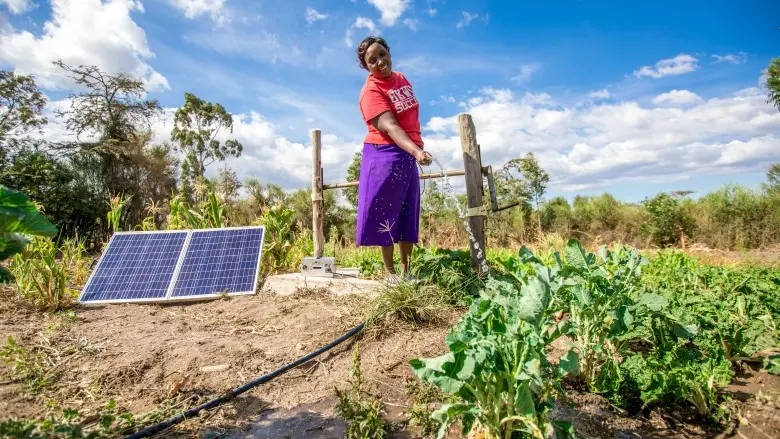
Executive Overview
Despite hundreds of millions of dollars in international donor grants, technical assistance packages, and philanthropic capital funneled into African agricultural enterprises, the integration of clean energy into food production remains severely constrained. Across sub-Saharan Africa, innovative initiatives designed to power farms, cold chains, and processing facilities with renewable energy continue to hit a structural wall. Once initial grant cycles end, most enterprises remain trapped in early-stage pilot phases, unable to secure the commercial investment, market integration, and specialized technical capacity needed to achieve commercial viability.
This diagnosis was delivered by a high-level alliance of international energy, agriculture, and water organizations at the Africa Food Systems Forum in Kigali, Rwanda. Presenting a joint Call to Action, the Agri-Energy Coalition underscored a core operational failure: despite operating in the same rural ecosystems, the energy, agriculture, water, and nutrition sectors continue to function in isolated silos.
Without joint program design, dedicated de-risking mechanisms, and patient growth capital, renewable energy technologies—such as solar-powered irrigation, off-grid cold storage, and electric agro-processing—will remain localized novelties rather than systemic drivers of African agricultural transformation.
       +-------------------------------------------------------+
       |   THE AGRI-ENERGY SCALING BOTTLENECK IN SUB-SAHARAN AFRICA |
       +-------------------------------------------------------+
                                   |
         +-------------------------+-------------------------+
         |                                                   |
         v                                                   v
+-----------------------------+                     +-----------------------------+
|    INPUTS & PILOT STAGE     |                     |    GROWTH & SCALE STAGE      |
+-----------------------------+                     +-----------------------------+
| • Millions in Philanthropic |                     | • Commercial Equity & Debt  |
|   Grants                    |    VALLEY OF        | • Last-Mile Maintenance     |
| • Technical Assistance      |     DEATH           |   Networks                  |
| • Proof-of-Concept Solar    |  =============>     | • Inter-Ministerial Policy  |
|   Irrigation & Cold Rooms   |                     | • Integrated Agri-Energy    |
| • Isolated Subsidies        |                     |   Markets                   |
+-----------------------------+                     +-----------------------------+
         |                                                   |
         +-------------------------> <-----------------------+
                                     |
                                     v
                  +-----------------------------------+
                  |  CORE BARRIER: STRUCTURAL SILOS  |
                  | Energy, Ag, Water & Food Actors   |
                  |  Rarely Design Programs Together  |
                  +-----------------------------------+
Detailed Chronology: The Evolution of Africa’s Agri-Energy Bottleneck
The struggle to scale renewable energy across African food systems reflects a decade-long shift in donor priorities, market experiments, and institutional disconnects.
+-----------------------------------------------------------------------------------+
| CHRONOLOGY OF AFRICAN AGRI-ENERGY DEVELOPMENTS                                    |
+-----------------------------------------------------------------------------------+
| 2010–2015 | THE EARLY PROOF-OF-CONCEPT ERA                                        |
|           | • Introduction of portable off-grid solar kits and micro-hydro projects. |
|           | • Donor-led programs (e.g., Powering Agriculture) focus on initial tech  |
|           |   feasibility, ignoring long-term commercial capital models.          |
+-----------+-----------------------------------------------------------------------+
| 2016–2021 | THE PILOT BOOM AND THE "VALLEY OF DEATH"                              |
|           | • Proliferation of solar irrigation systems (SPIS) and solar cold-rooms. |
|           | • Grants proliferate, but early enterprises hit a capital wall when    |
|           |   attempting to transition from grant funding to commercial debt.      |
+-----------+-----------------------------------------------------------------------+
| 2022–2023 | CROSS-SECTORAL RECOGNITION OF SILOS                                   |
|           | • Post-harvest loss data reveals up to 50% perishable loss in SSA.    |
|           | • Energy providers and agricultural lenders realize uncoordinated     |
|           |   interventions fail to build sustainable rural supply chains.        |
+-----------+-----------------------------------------------------------------------+
| SEPTEMBER | THE KIGALI SUMMIT CALL TO ACTION                                      |
| 2024      | • Agri-Energy Coalition convenes at Africa Food Systems Forum.        |
|           | • Formal declaration that siloed solution design blocks private       |
|           |   capital deployment across African food systems.                     |
+-----------------------------------------------------------------------------------+
The Early Proof-of-Concept Era (2010–2015)
During the early 2010s, international donor interventions focused heavily on proving that renewable technology could function in rural African settings. Early programs, such as the multi-donor Powering Agriculture: An Energy Grand Challenge for Development, financed pilots for small-scale solar irrigation pumps, mini-grid connections for rural mills, and solar-powered milk cooling centers. While these programs successfully demonstrated technical feasibility, they were largely designed as standalone technology interventions, disconnected from local financial markets, agricultural extensions, and food value chains.
The Pilot Boom and the "Valley of Death" (2016–2021)
Between 2016 and 2021, falling photovoltaic (PV) costs and the rise of Pay-As-You-Go (PAYGO) business models sparked an explosion of agri-energy start-ups across East and West Africa. Venture builders and impact investors funded hundreds of localized trials.
However, as these enterprises exhausted initial seed grants and attempt to scale, they encountered the "valley of death." Commercial banks viewed off-grid agricultural assets as high-risk, while local microfinance institutions lacked the long-term liquidity required to offer affordable end-user financing to smallholder farmers. When donor funding cycles ended, business growth flattened.
The Kigali Summit and Joint Action (Present)
At the Africa Food Systems Forum in Kigali, Rwanda, international development institutions, energy industry groups, and agricultural research networks addressed these recurring failures directly.
The Agri-Energy Coalition issued a Call to Action pointing out that despite decades of overlapping development targets, energy, water, and agricultural actors continue to design policies and deploy investments in total isolation from one another.
Supporting Context & Metrics: The Scale of the Barrier
The gap between Africa’s agricultural potential and its current energy deployment highlights a major structural imbalance. Sub-Saharan Africa accounts for the world’s highest rates of post-harvest food loss alongside the lowest rates of modern rural energy access.
| Metric / Indicator | Sub-Saharan Africa Value | Regional Impact on Agri-Food Value Chains |
|---|---|---|
| Post-Harvest Loss Rate (Perishables) | 30% – 50% | Massive income losses for smallholders; elevated food insecurity due to lack of cold chain infrastructure. |
| Arable Land Under Modern Irrigation | < 3% | Extreme vulnerability to climate shocks and unpredictable rainfall patterns. |
| Global Renewable Investment Share | < 2% | Severe undercapitalization of rural off-grid power grids and productive use appliances. |
| Commercial Bank Lending to Ag Sector | 3% – 5% | Exorbitant interest rates (often 20%–30%+) prevent SMEs from buying capital-intensive clean energy equipment. |
| Grid Power Reliability in Rural Areas | 30% – 50% Uptime | Forces food processors to rely on expensive, polluting diesel generators, cutting into margins. |
The "Productive Use of Energy" (PUE) Gap
Renewable energy for agriculture is categorized under Productive Use of Energy (PUE)—appliances and systems that generate income or add value to agricultural products. While basic solar home systems (lighting, phone charging) achieved high market penetration over the last decade, PUE technologies require far higher capital expenditures and technical support.
       CAPITAL INTENSITY & SCALING COMPLEXITY OF RENEWABLE ASSETS

  High  ^
        |                                       [Solar Cold Rooms]
        |                                       [E-Agro Processing]
        |
        |                       [Solar Irrigation (SPIS)]
  CAPEX |
        |
        |   [Solar Home Systems]
  Low   +------------------------------------------------------------>
Low OPERATIONAL COMPLEXITY High- Solar-Powered Irrigation Systems (SPIS): High upfront costs mean smallholder farmers cannot purchase units outright. Without micro-loans tailored to crop harvest cycles, adoption rates remain low.
- Solar Cold Storage: Cold rooms require continuous operational maintenance, a clear market destination for preserved produce, and steady farmer usage fees. Isolated grants build the units, but fail to integrate them into established logistics networks.
- Electric Agro-Processing (Milling, Shelling, Oil Pressing): Replacing rural diesel mills with off-grid electric alternatives requires reliable local micro-grids or heavy battery banks, both of which struggle with long pay-back periods and currency depreciation risks.
Sectoral Fragmentation
The primary barrier to scaling these technologies is structural fragmentation. Agriculture ministries design productivity initiatives focused on seeds and fertilizers without consulting energy ministries. Conversely, energy authorities build rural electrification plans around national grids and residential connections, completely overlooking the localized power needs of rural agri-processing hubs.
+-----------------------------------------------------------------------------------+
|               THE STRUCTURAL SILO PROBLEM IN RURAL DEVELOPMENT                   |
+-----------------------------------------------------------------------------------+
|  ENERGY MINISTRIES                 |  AGRICULTURE MINISTRIES                      |
|  • Focus: Grid capacity & megawatt |  • Focus: Fertilizer subsidies, seed access, |
|    generation targets.             |    crop yields.                              |
|  • Omission: Ignores decentralized |  • Omission: Fails to integrate energy requirements|
|    rural ag-processing needs.      |    for post-harvest processing & irrigation.  |
+------------------------------------+----------------------------------------------+
|  FINANCIAL INSTITUTIONS            |  WATER & ENVIRONMENT AGENCIES                |
|  • Focus: Short-term yields, high  |  • Focus: Resource conservation, watershed   |
|    collateral requirements.        |    management.                               |
|  • Omission: Lacks risk models for |  • Omission: Rarely coordinates with energy  |
|    long-term PUE equipment loans.  |    providers on sustainable pumping policies. |
+-----------------------------------------------------------------------------------+
Official Statements & Institutional Insights
The Call to Action issued at the Africa Food Systems Forum in Kigali highlighted the persistent disconnect between energy development and agricultural transformation.
The Agri-Energy Coalition Declaration
In its official statement presented to delegates, development institutions, and ministers gathered in Rwanda, the Agri-Energy Coalition stated:
"Energy, agriculture, water and nutrition actors rarely design solutions together. Despite millions of dollars in grants and technical help for African businesses to power farming and other food production activities with renewable energy, most efforts remain stuck at the early stages because they struggle to find the investors, markets and expertise they need to grow."
The coalition emphasized that while grant capital excels at driving technological innovation, it cannot replace missing financial infrastructure or reform siloed regulatory policies.
+-----------------------------------------------------------------------------------+
| KEY TAKEAWAYS FROM THE AGRI-ENERGY COALITION'S CALL TO ACTION                      |
+-----------------------------------------------------------------------------------+
| 1. CROSS-SECTORAL DISCONNECT                                                      |
|    Agri-food, water, and energy sectors must abandon siloed planning in favor     |
|    of co-designed investment programs and integrated policy frameworks.            |
|                                                                                   |
| 2. CAPITAL MISALIGNMENT                                                           |
|    Early-stage philanthropic grants are failing to mobilize follow-on commercial  |
|    equity and commercial debt, leaving enterprises stuck in permanent pilot mode. |
|                                                                                   |
| 3. TECHNICAL & MARKET ISOLATION                                                   |
|    Technologies deployed without last-mile repair networks, user training, and   |
|    secured off-take markets inevitably fail post-grant exit.                       |
+-----------------------------------------------------------------------------------+
Institutional Perspectives
On Capital Access and the "Missing Middle"
Industry associations representing off-grid solar providers, such as GOGLA, note that clean energy agri-tech companies fall into a "missing middle." They are too large for traditional microfinance loans, yet too small and asset-light to secure capital from commercial risk-averse banks that demand heavy real estate collateral.
On Structural Policy Disconnects
Agricultural researchers from organizations like the International Water Management Institute (IWMI) and the Food and Agriculture Organization (FAO) emphasize that introducing clean energy equipment without managing rural water resources leads to bad outcomes. Unregulated solar pumps can cause rapid groundwater depletion if deployed without hydrological assessments and integrated water-management policies.
On Enterprise Sustainability
Agribusiness founders across the continent point out that technical assistance programs often treat business training as a fix for wider structural issues. An enterprise cannot scale if local financial markets charge 25% interest rates, import tariffs on clean-tech components remain high, and smallholder customers lack access to credit to purchase their services.
Future Outlook: Bridging the Valley of Death
To move clean-energy food production beyond small-scale pilots, international development institutions, African governments, and private investors must fundamentally restructure how agri-energy programs are funded and executed.
+-----------------------------------------------------------------------------------+
| STRATEGIC ROADMAP FOR SCALING CLEAN ENERGY IN AFRICAN FOOD SYSTEMS                |
+-----------------------------------------------------------------------------------+
| STRATEGY                   | KEY MECHANISM & TARGET OUTCOME                       |
+----------------------------+------------------------------------------------------+
| Blended Finance          | • Deploy First-Loss Guarantee Facilities.            |
| Facilities                 | • Shift from short-term grants to concessional debt  |
|                            |   denominated in local currencies.                   |
+----------------------------+------------------------------------------------------+
| Cross-Sectoral Policy      | • Form Joint Inter-Ministerial Task Forces           |
| Interventions              |   (Energy + Ag + Water + Finance).                    |
|                            | • Zero-rate tariffs on productive-use renewables.    |
+----------------------------+------------------------------------------------------+
| Aggregation & Market       | • Anchor solar installations around agricultural      |
| Hub Models                 |   cooperatives and rural agro-processing hubs.       |
|                            | • Combine irrigation, cold storage, and milling.     |
+----------------------------+------------------------------------------------------+
| Last-Mile Capacity &       | • Train local technical networks for long-term       |
| Maintenance Systems        |   maintenance and repair services.                   |
|                            | • Embed PAYGO financial models inside farm-input     |
|                            |   distribution networks.                             |
+-----------------------------------------------------------------------------------+
1. Transitioning from Grants to Blended Finance
Donors and Development Finance Institutions (DFIs) must pivot away from funding short-term grants and shift toward establishing blended finance structures. By utilizing first-loss guarantees, local-currency hedging facilities, and liquidity support for commercial banks, public finance can absorb initial risks. This will encourage private commercial capital to lend to agri-energy enterprises at reasonable interest rates.
2. Establishing Cross-Sectoral Governance
Governments across the continent must break down administrative silos by establishing national Agri-Energy Task Forces. Energy, agriculture, water, and finance ministries must align their budgets and strategic plans to ensure that rural electrification plans prioritize high-potential agricultural corridors, cold storage hubs, and irrigation zones.
3. Aggregating Smallholder Demand
To make clean energy technology economically viable, projects must aggregate demand across smallholder farmer groups and rural agricultural enterprises. Clustering solar irrigation systems, shared cold storage infrastructure, and centralized electric agro-processing centers creates steady, predictable energy demand. This predictable usage makes clean-tech installations far more attractive to private investors and off-grid project developers.
4. Localizing Technical Capacity and Last-Mile Services
Long-term sustainability relies on building out localized supply chains and technical capacity. Training local technicians, establishing spare-parts distribution networks, and embedding equipment financing directly into existing agricultural value chains ensures that systems remain operational long after initial project developers exit the region.
Without a complete overhaul of how clean energy and agricultural development are planned, funded, and managed, African food systems will remain reliant on costly fossil fuels or vulnerable to climate shocks. Moving past the pilot stage requires matching technological innovation with systemic, cross-sectoral market strategies.



