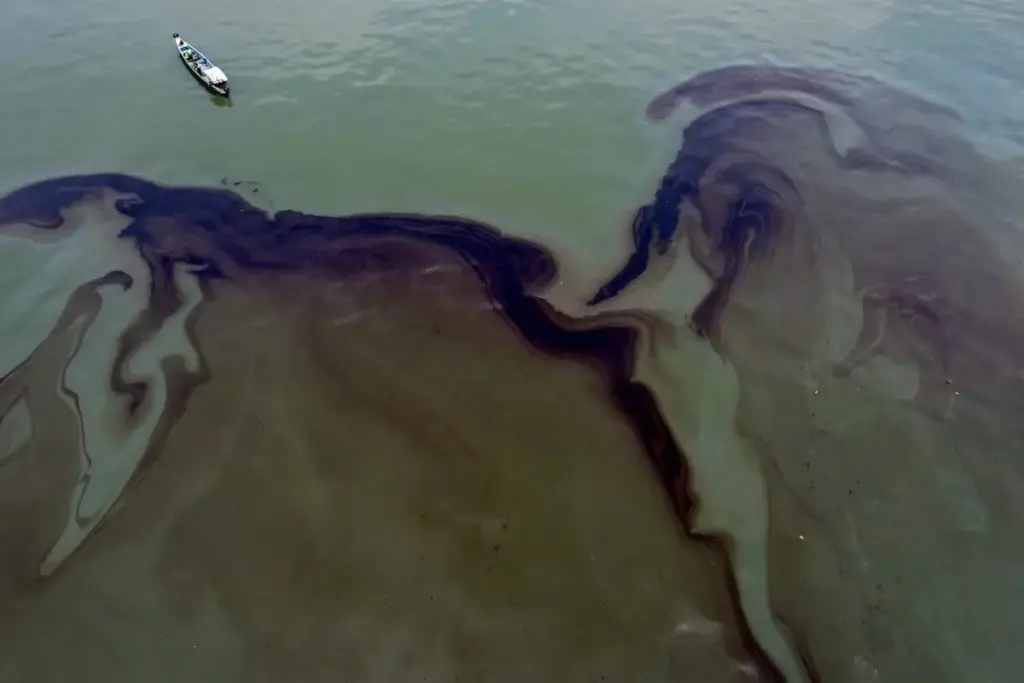
Every single year, an area of the Earth’s oceans roughly the size of Mongolia—spanning an astonishing 1.6 million square kilometers, or approximately 618,000 square miles—is choked by persistent oil slicks originating from commercial shipping vessels and offshore petroleum extraction platforms. This staggering figure, derived from a groundbreaking multi-year report published by the U.S.-based environmental nonprofit SkyTruth, shatters long-held assumptions about the cleanliness of the open seas. By harmonizing advanced satellite radar imagery, machine learning algorithms, and real-time global vessel-tracking data, researchers have managed to peer into the remote blue expanses where maritime lawlessness has historically gone unpunished.
For decades, the vastness of the world’s oceans offered industrial polluters an effective cloak of invisibility. Out of sight and far beyond the horizon of coastal monitors, ship operators and offshore rig managers could flush hazardous waste directly into marine ecosystems with virtual impunity. However, the convergence of high-resolution Earth-observation satellites and sophisticated artificial intelligence has effectively drawn back the curtain on this secretive maritime underworld.
The findings of the SkyTruth analysis reveal a pervasive, systemic crisis of illegal discharges. Commercial vessels—predominantly large cargo carriers and massive oil tankers—are directly responsible for a staggering 81% of the total recorded oil slick surface area worldwide. Meanwhile, fixed marine infrastructure, including offshore drilling and production platforms, accounts for the remaining 18%.
As environmental regulators, international bodies, and the shipping industry grapple with these revelations, one reality has become glaringly clear: the era of unchecked ocean dumping is facing an unprecedented reckoning. Yet, despite technological leaps in satellite surveillance, holding repeat offenders accountable remains a formidable geopolitical, logistical, and legal challenge.
Detailed Chronology: Tracking the Invisible Plumes (2023–2025)
To comprehend the true scale of contemporary marine pollution, it is necessary to examine how researchers pierced the veil of the open ocean. Between 2023 and 2025, SkyTruth embarked on an ambitious global tracking initiative. Utilizing a combination of synthetic aperture radar (SAR)—which can "see" through clouds and darkness to detect changes in surface roughness caused by oil films—and optical satellite constellations, the nonprofit’s analysts trained machine learning models to automatically flag anomalies that matched the spectral and spatial signatures of crude oil and refined petroleum products.
The Shift from Anecdote to Empirical Mapping
Historically, documenting marine oil pollution relied heavily on opportunistic sightings by aircraft, coastal patrols, or reports from whistleblowers and local fishermen. These methods were inherently flawed, biased toward coastal zones, and structurally incapable of capturing the sprawling, transient nature of high-seas dumping.
By systematically sweeping oceanic basins using automated pipelines, the 2023–2025 study established a continuous baseline. The algorithms processed millions of square kilometers of maritime territory, cross-referencing suspected slicks with Automatic Identification System (AIS) transponder data. This allowed researchers to link specific pollution plumes back to the precise vessels or platforms moving through the area at the exact moment of discharge.
Hotspots of Contamination: The Strait of Malacca and Southeast Asia
Geographically, the SkyTruth report identified sharp disparities in where these slicks manifest. Indonesian waters emerged as the most heavily impacted jurisdiction globally, with an astonishing 823 verified slicks cataloged during the study period. Neighboring Malaysia followed closely behind with 214 verified incidents.
A primary driver of this regional concentration is geography and traffic density. Indonesia and Malaysia flank the Strait of Malacca—one of the world’s most vital and congested maritime chokepoints. Connecting the Indian Ocean to the Pacific Ocean, the strait funnels a massive percentage of the globe’s containerized trade and petroleum shipments daily.
According to John Amos, CEO and founder of SkyTruth, the sheer volume of large cargo ships and oil tankers transiting these regional waters acts as a magnetic pull for illicit operational discharges. As thousands of vessels navigate these congested corridors under intense pressure to maintain tight schedules, the temptation to purge dirty bilge water or wash out cargo holds under the cover of darkness or regional oversight gaps proves overwhelming for some operators.
Unmasking the Repeat Offenders
Pinpointing a slick from space is only half the battle; tying that slick to a responsible corporate entity requires deep forensic investigation. Out of scores of flagged vessels, SkyTruth managed to isolate 20 primary repeat offenders whose tracks correlated repeatedly with persistent pollution events. However, due to complex corporate registries, shell companies, and flags of convenience, ownership records could only be definitively verified for 9 of those 20 vessels.
Among those positively identified, two ships were linked to Indonesia’s PT Waruna Nusa Sentana, and another two were traced back to Sea Transport Services Nigeria Ltd. When investigative journalists reached out to both corporate entities for comment prior to publication, neither company responded, underscoring the profound accountability vacuum that plagues the global shipping sector.
Supporting Context & Metrics: The Anatomy of Marine Dumping
To understand why ships routinely dump oil into pristine marine environments, one must examine the operational realities of modern merchant shipping. The pollution cataloged by SkyTruth is rarely the result of catastrophic single-point accidents—such as the dramatic, headline-grabbing tanker ruptures of the past. Instead, it represents the cumulative, insidious toll of routine, day-to-day operational maintenance.
Bilge Waste and Tanker Washing: The "Nasty Oily Gunk"
The vast majority of vessel-derived oil slicks stem from two primary sources: bilge water accumulation and cargo hold cleansing.
Bilge Water: As mechanical ships operate on the high seas, water naturally leaks into the lowest compartment of the hull—the bilge. This water mixes with lubricating oils, hydraulic fluids, fuel residues, and grease, creating a toxic, sludgy emulsion.
Cargo Hold Washing: Oil tankers, after offloading crude oil at destination ports, often need to clean their massive cargo tanks before taking on a new batch of cargo or switching fuel types. This process generates massive quantities of oily wash-water that must be safely managed.
In the blunt words of SkyTruth CEO John Amos:
"It’s nasty oily dirty gunk that you just want to get rid of. And the easiest thing to do with it is just pump it out into the ocean while you’re at sea."
The Economics of Compliance vs. Evasion
Under international maritime law, specifically the MARPOL treaty (International Convention for the Prevention of Pollution from Ships) adopted in 1933 and subsequently updated, dumping untreated oil waste is strictly forbidden. Under current MARPOL standards, vessels are legally permitted to discharge bilge water only if it passes through oil-water separator equipment and contains no more than 15 parts of oil per million (ppm) parts of water, and this must occur while the ship is en route and outside of special protected areas.
However, compliance carries a heavy financial penalty. Proper disposal requires a ship to retain its oily waste onboard until it reaches a port equipped with specialized reception facilities capable of treating hazardous industrial slurries.
This is where economic incentives drive illicit behavior. For a large container ship or a Very Large Crude Carrier (VLCC), operating costs are astronomical. A single day at sea can cost a vessel owner tens of thousands of dollars in charter fees, crew wages, and fuel consumption. Detouring to a compliant port—or waiting in a queue for waste offloading—creates devastating delays.
Amos emphasizes the stark financial calculus facing ship operators:
"You can either do that [pay for proper port disposal and suffer delays], or you can just wait until you get out in the ocean where you think nobody’s looking, and then discharge it directly overboard."
Given that the global fleet numbers in the tens of thousands, and regulatory oversight on the open ocean has historically been near-zero, economic self-interest has frequently eclipsed environmental stewardship.
Official Statements and Regulatory Perspectives
The release of SkyTruth’s empirical data has amplified pressure on international maritime regulators, environmental watchdogs, and industry leaders to re-evaluate enforcement mechanisms.
The Limits of Current International Treaties
The International Maritime Organization (IMO), which oversees the implementation of the MARPOL treaty, has long relied on flag-state enforcement—meaning the country under whose registry a ship sails is primarily responsible for investigating and punishing violations. Critics argue this system creates a race to the bottom, as shipowners frequently register their vessels in nations with lax enforcement and minimal regulatory oversight (so-called "flags of convenience").
While port-state control inspections have improved in major harbors, they occur episodically and are ill-equipped to police what happens in the middle of the Indian Ocean or the South China Sea. Environmental advocates point out that existing legal frameworks are toothless without continuous, transparent monitoring systems.
The Corporate Silence and Demand for Transparency
The inability of investigators to trace ownership for more than half of the top 20 repeat-offender vessels highlights the opaque corporate structures utilized by modern shipping conglomerates. Layered shell companies, offshore accounts, and anonymous beneficial ownership obscure accountability, allowing negligent operators to shield themselves from legal liabilities and public shaming.
When companies like PT Waruna Nusa Sentana in Indonesia and Sea Transport Services Nigeria Ltd. failed to respond to inquiries regarding vessels linked directly to multiple oil slicks, it reinforced the perception that maritime industries operate within an insular culture largely insulated from public scrutiny. Environmental groups are now calling for mandatory, real-time integration of satellite surveillance data into port-state inspections, ensuring that vessels flagged by AI models for suspicious behavior are automatically met with rigorous audits upon arrival at their next port of call.
Future Outlook: A New Era of Ocean Accountability
As the scientific and technological community looks beyond 2025, the landscape of marine conservation is undergoing a profound paradigm shift. The veil of operational secrecy that has long protected polluters on the high seas is evaporating, thanks entirely to the democratization of space-based observation technologies.
The Power of Open-Data Surveillance
Projects pioneered by organizations like SkyTruth demonstrate that high-tech environmental monitoring is no longer the exclusive domain of well-funded military intelligence agencies. By leveraging open-source satellite data, cloud computing, and machine learning, civil society organizations can generate robust, peer-reviewed datasets that hold corporations and nation-states accountable.
This transparency is already reshaping the operational calculus for maritime transport. Ship operators who once operated with absolute confidence that their illegal mid-ocean purges would go unnoticed now realize that space-based digital footprints are permanent and pervasive.
Pathways to Reform
To turn the tide against marine oil pollution, industry experts and environmental policymakers agree that a multi-pronged approach is urgently required:
Mandatory Port Reception Facilities: International maritime bodies must subsidize and mandate the establishment of fast, affordable, and efficient oily-waste reception facilities at all major global ports, removing the financial and logistical disincentives that currently drive illegal ocean dumping.
Integration of Satellite Intelligence: Maritime authorities and coast guards must institutionalize satellite-based slick detection into their daily monitoring protocols, using automated alerts to intercept repeat offenders before they can scrub their decks or alter their logs.
Piercing the Corporate Veil: Strengthening beneficial ownership registries will prevent shadowy maritime operators from hiding behind shell companies, ensuring that heavy financial penalties and blacklisting apply directly to the ultimate decision-makers.
The 1.6 million square kilometers of polluted ocean documented by SkyTruth is a sobering reminder of the hidden ecological costs of globalized trade. Yet, it also serves as a beacon of hope. By shining an unyielding digital light into the darkest corners of the global ocean, humanity has equipped itself with the tools needed to protect marine ecosystems from those who treat the sea as an industrial sewer. The days of invisible pollution are coming to an end; the challenge now lies in ensuring that exposure translates into enduring legal and operational change.