

Executive Overview
In what marks one of the most drastic corporate realignments in automotive history, Volkswagen’s supervisory board has unanimously approved its sweeping Future Plan 2030. Faced with relentless margin pressure, shifting consumer demand, and a surging wave of agile, low-cost Chinese electric vehicle (EV) competitors, Europe’s largest automaker is radically downsizing.
The strategy calls for cutting an additional 50,000 jobs globally, which, when combined with previously announced reductions across the VW Group—including Audi, Porsche, and software division Cariad—brings the company’s total planned workforce reduction to a staggering 100,000 positions. This amounts to roughly 15% of the automotive giant’s 650,000-strong global workforce.
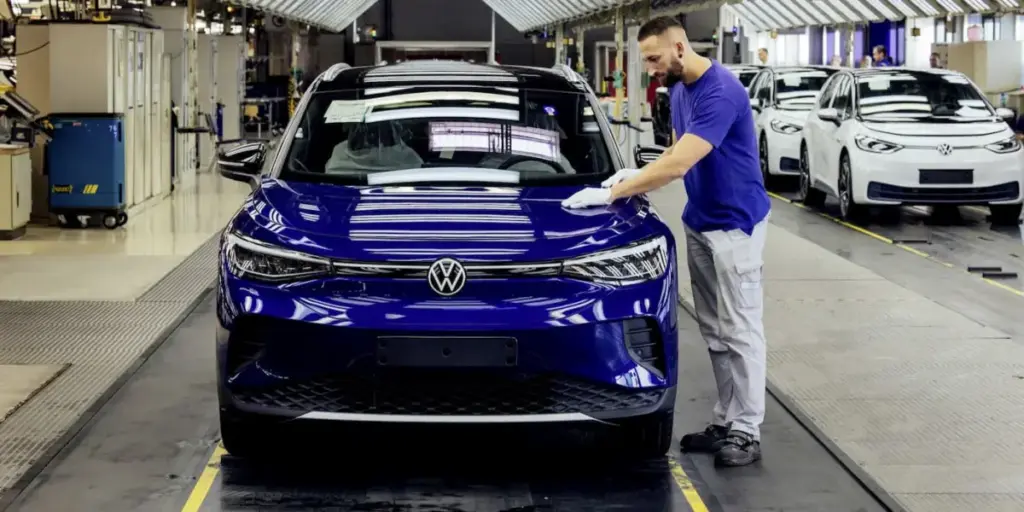
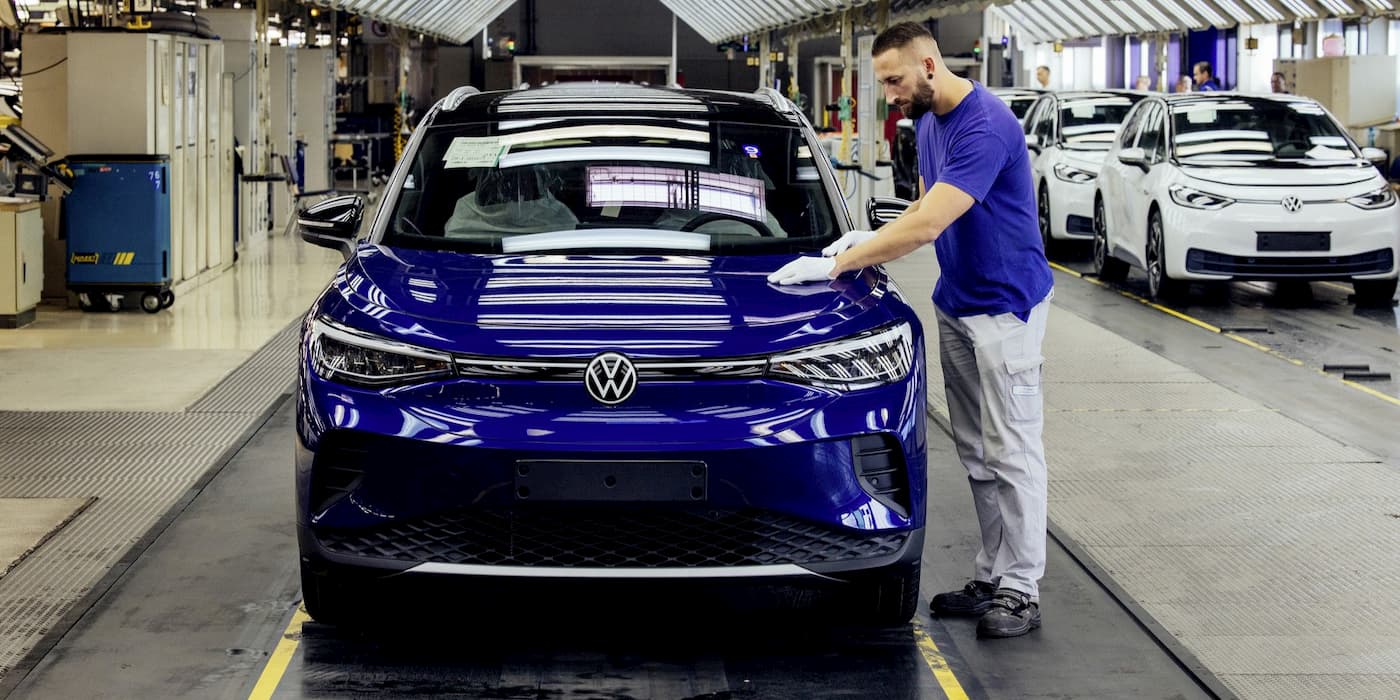
Compounding the human toll, Volkswagen has signaled that vehicle production at four critical German manufacturing plants—Emden, Zwickau, Hanover, and Audi’s Neckarsulm facility—faces an uncertain future. As their current vehicle allocations wind down between 2031 and 2034, the automaker admits it currently has no replacement vehicles lined up, putting a massive chunk of its European EV production footprint in jeopardy.
This comprehensive restructuring is not merely a localized cost-cutting exercise; it is an existential pivot. To survive the transition into the next decade, Volkswagen is slashing its global model lineup by 50%, dramatically reducing trim and option complexities, and streamlining its technical architectures. With a targeted capital expenditure and R&D budget of €135 billion ($157 billion) through 2031, the company is betting its future on operational discipline, a streamlined product portfolio, and a leaner organizational structure aimed at securing a 9% operating margin by the end of the decade.
Detailed Chronology: The Anatomy of a Crisis
The path to Volkswagen’s Future Plan 2030 has been paved by years of mounting economic headwinds, strategic missteps in software development, and a sluggish adaptation to the speed of modern EV development.
The Gathering Storm (2021–2023)
For decades, Volkswagen commanded a position of immense industrial strength in Europe, anchored by traditional manufacturing prowess and vast economies of scale. However, the post-pandemic automotive landscape revealed deep vulnerabilities. As software-defined vehicles became the industry standard, VW’s software subsidiary, Cariad, stumbled through repeated delays and architectural overhauls, stalling critical vehicle launches like the Porsche Macan EV and Audi Q6 e-tron.
Concurrently, a new breed of competitors emerged from China. Backed by mature, vertically integrated EV supply chains and state support, Chinese manufacturers began producing technologically advanced electric vehicles at price points that legacy European automakers struggled to match. By late 2023, management warnings began to surface: Volkswagen’s traditional plants were simply too expensive and too slow to remain competitive.
The Turning Point and Initial Cutbacks (2024–2025)
As domestic European EV adoption rates plateaued following the phase-out of various government subsidies, utilization rates at VW’s factories began to slip. The company initially announced plans to eliminate roughly 50,000 jobs across its core brands. Labor representatives, led by powerful chief employee representative Daniela Cavallo, pushed back fiercely, setting up a high-stakes chess match between management desperate to slash overhead and workers fighting to protect decades of job security pacts.
The Unanimous Approval of Future Plan 2030 (Current Developments)
The standoff reached a dramatic climax on Thursday when Volkswagen’s supervisory board unanimously greenlit the Future Plan 2030. Rather than defusing tensions by backing away from structural changes, the board doubled down. The plan escalated the target job reductions by another 50,000 roles and cast a dark shadow over four domestic plants. Rather than fighting a rearguard action against inevitable market forces, labor leadership opted to collaborate on a managed decline of traditional operations to secure the company’s long-term viability, marking a profound psychological shift in Wolfsburg.
Supporting Context & Metrics: The Numbers Behind the Overhaul
To understand why Volkswagen felt compelled to execute such a severe operational reset, one must examine the raw metrics governing its European manufacturing network and financial targets.

Excess Capacity and the Plant Conundrum
Volkswagen has openly acknowledged a sobering reality: its European manufacturing facilities currently possess the capacity to build more than 500,000 vehicles a year beyond what actual consumers are buying. In a capital-intensive industry where high plant utilization is mandatory to achieve profitability, this structural overcapacity is a financial hemorrhage.
The four German plants caught in the crosshairs represent the vanguard of the company’s historical transition, yet they now face an impending production vacuum:
- Zwickau: Historically significant as VW’s first major factory to completely phase out internal combustion engines (ICE) to build pure electric vehicles on the MEB platform.
- Emden: A critical hub currently responsible for manufacturing the high-volume ID.4 crossover and the sleek ID.7 sedan.
- Hanover: The spiritual home of Volkswagen Commercial Vehicles, now tasked with producing the iconic retro-futuristic ID. Buzz and ID. Buzz Cargo.
- Neckarsulm (Audi): A multifaceted site handling the high-performance Audi e-tron GT alongside select internal combustion and plug-in hybrid models.
As existing vehicle allocations expire at staggered intervals between 2031 and 2034, Volkswagen states it cannot currently guarantee "competitive future production" for these sites. While management insists these are not immediate closure notices—alternative industrial uses are being explored—the writing is largely on the wall for vehicle assembly at these locations unless a dramatic surge in demand materializes.
Financial and Structural Targets by 2030/2035
To restore its financial health and fund future software and battery developments, Volkswagen has outlined strict parametric goals:
- Workforce Reduction: Approximately 100,000 total job cuts (15% of the global workforce), spanning production lines, administrative offices, and management tiers.
- Model Lineup Rationalization: A 50% reduction in global vehicle models by 2035.
- Option Complexity: A staggering 75% reduction in equipment choices, standalone options, and variant configurations to streamline manufacturing lines.
- Portfolio Shrinkage: Non-core business units, subsidiaries, and external investments will be trimmed by roughly one-third through sales, spin-offs, or liquidations.
- Capital Allocation: €135 billion ($157 billion) earmarked for R&D and capital expenditures between 2027 and 2031.
- Financial Objectives: Annual global sales targeting 9 million vehicles, coupled with a robust 9% operating margin by 2030—projecting an annual operating profit of approximately €31 billion ($36 billion).
Official Statements and Stakeholder Perspectives
The friction between economic survival and social responsibility has defined the public discourse surrounding Volkswagen’s radical turnaround.

Management frames the Future Plan 2030 as an inescapable medicine required to cure systemic inefficiencies. Executives have repeatedly pointed to the relentless pricing pressure exerted by Chinese EV manufacturers, shifting geopolitical trade landscapes, and the accelerating pace of digital automotive architectures as non-negotiable catalysts for change. Without aggressive consolidation, leadership argues, the entire corporate enterprise risks sliding into irrelevance.
On the labor front, the response has been a masterclass in pragmatic bargaining. Daniela Cavallo, Volkswagen’s chief employee representative, who initially vowed to block any factory closure proposals, ultimately threw her weight behind the plan—albeit with distinct stipulations designed to protect the workforce from absorbing the entirety of management’s historical miscalculations.
"The Future Plan is a necessity to lead our Group successfully into the next decade — without placing the burden of that transformation solely on employees," Cavallo stated following the board’s approval. "In doing so, Volkswagen once again affirms that job security and economic viability carry equal weight as shared corporate goals."
This delicate truce underscores the unique corporate governance structure of German industry, where labor unions hold substantial sway via supervisory board representation. Rather than precipitating an all-out industrial strike, leadership and employee representatives have bought into a structured roadmap, with Volkswagen committing to formulate a comprehensive new production strategy for all European plants by the end of June 2027.
Future Outlook: Navigating the Road to 2030
As Volkswagen embarks on this monumental transformation, the road ahead is fraught with execution risks. Simplifying platforms, reducing model portfolios, and shedding half a million units of excess European capacity will require clinical precision and unwavering political and social management.

The primary challenge lies in threading a very narrow needle: cutting costs aggressively enough to compete with low-cost Asian rivals while continuing to invest heavily in next-generation solid-state batteries, advanced driver-assistance systems (ADAS), and centralized electronic architectures. If VW swings the ax too indiscriminately, it risks hollowing out the engineering talent and institutional knowledge required to build world-class vehicles. Conversely, failing to act decisively would leave the company vulnerable to a slow, terminal erosion of its market share.
For the four German plants—Zwickau, Emden, Hanover, and Neckarsulm—the clock is ticking. The next few years will determine whether alternative industrial applications, such as stationary energy storage manufacturing, component recycling, or specialized contract assembly, can be successfully pivoted into these facilities to save thousands of regional jobs.
Ultimately, Volkswagen’s Future Plan 2030 serves as a cautionary tale and a bellwether for the entire legacy automotive sector. The era of sprawling model portfolios, bloated manufacturing footprints, and leisurely development cycles is officially over. Whether Volkswagen can successfully reinvent itself as a lean, profitable, and technologically competitive titan of the electric age will set the standard for how traditional industrial behemoths weather the storms of the twenty-first century.



