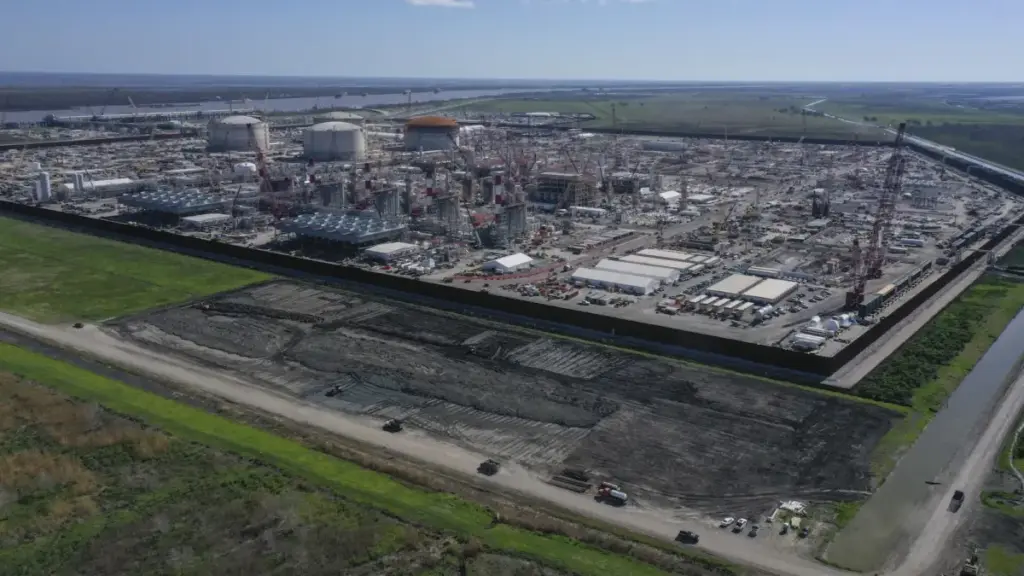
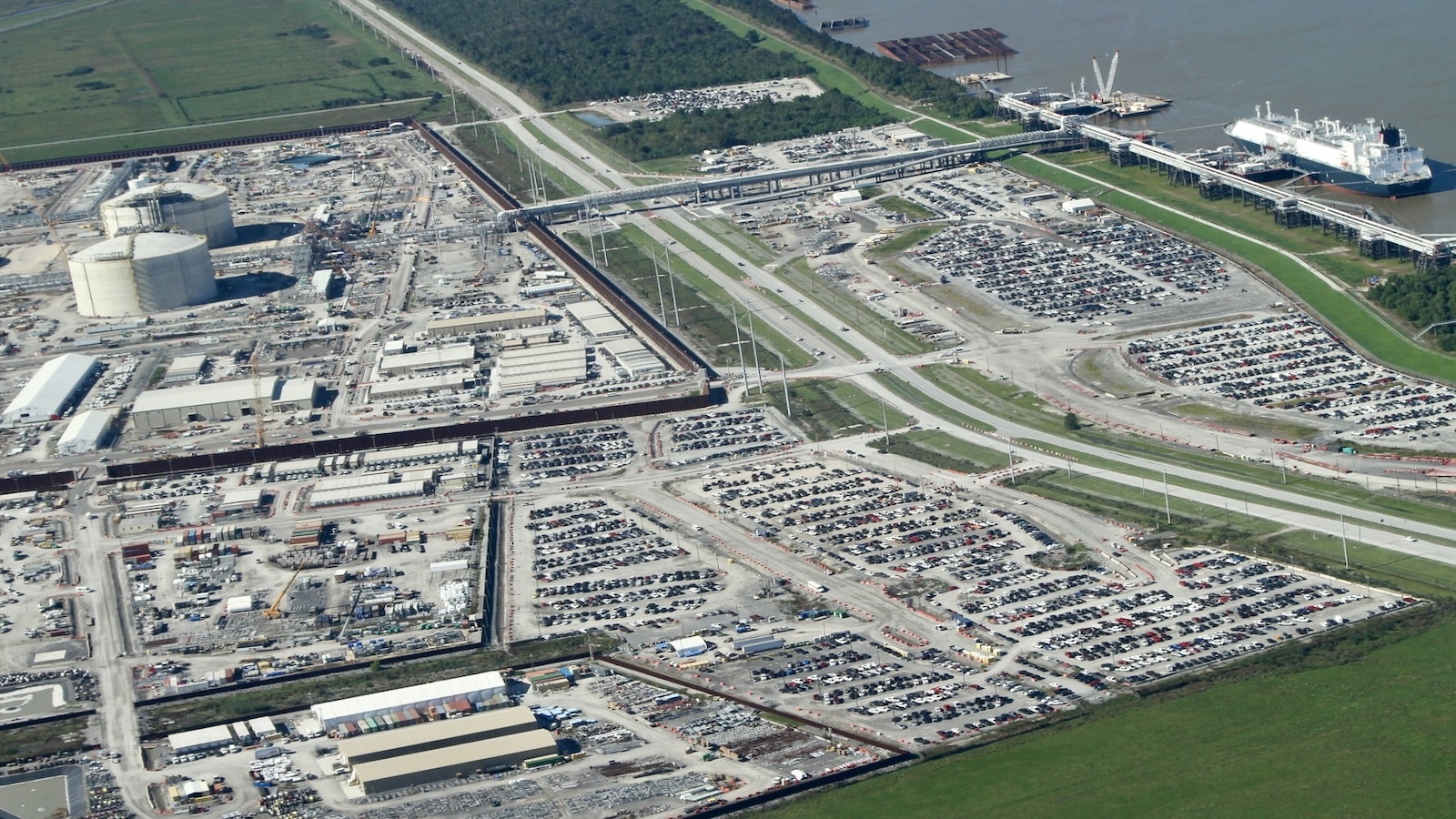
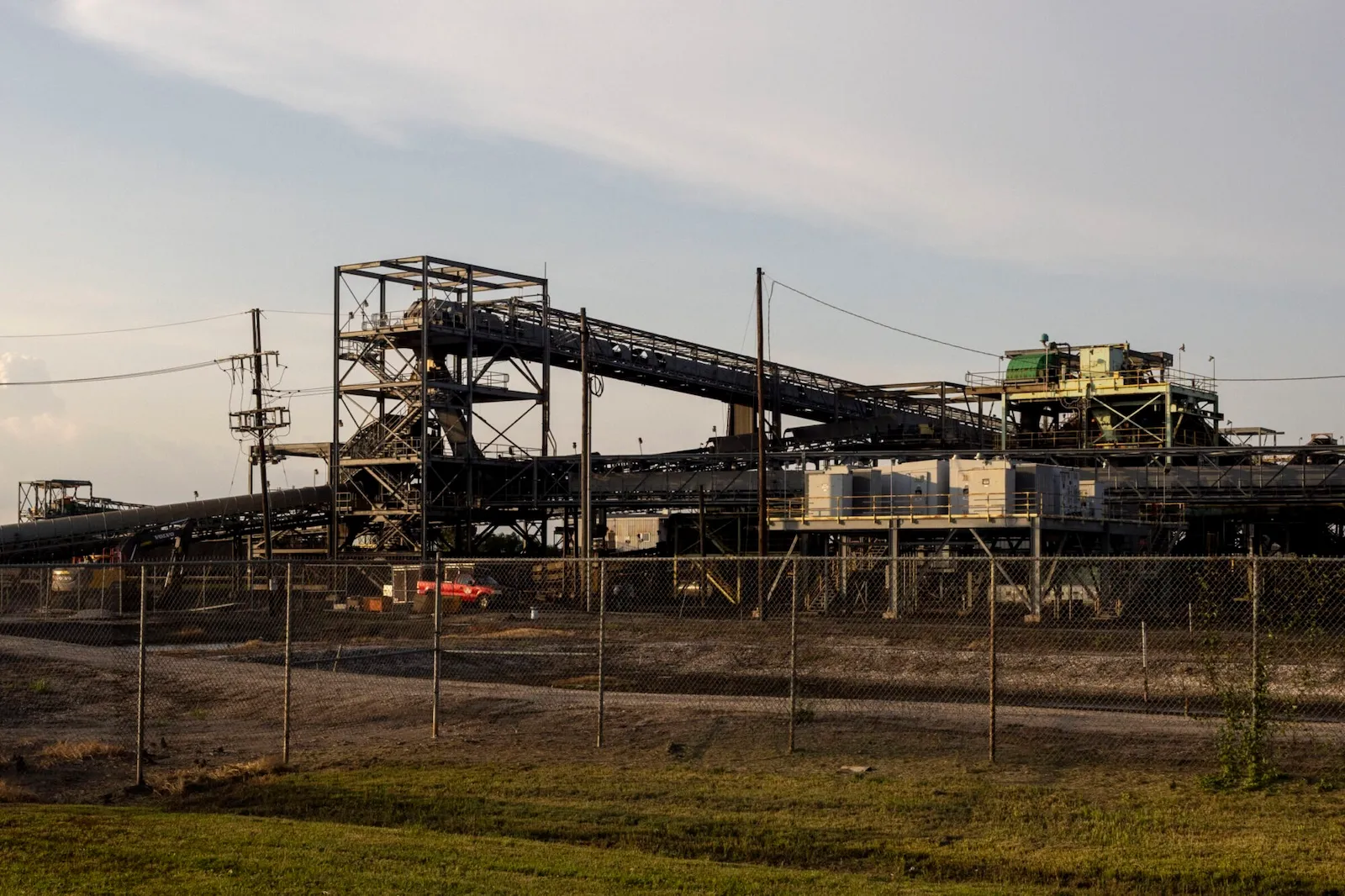
Less than two years after officially opening its gates along the lower Mississippi River, the Plaquemines Liquefied Natural Gas (LNG) terminal is poised for a massive, multibillion-dollar expansion. Propelled by the Trump administration’s newly enacted "national energy emergency" permitting process, the project is bypassing the traditional, rigorous regulatory reviews designed to protect fragile ecosystems.
Earlier this summer, the U.S. Army Corps of Engineers granted Plaquemines LNG fast-tracked permitting under the emergency framework. This decisive regulatory shortcut slashed the standard public comment period from 30 days down to a mere 10. Once finalized, the approval will allow Virginia-based owner Venture Global to more than double the facility’s footprint—growing its operations from roughly 590 acres to a sprawling 1,220 acres.
According to Venture Global, this brownfield expansion will solidify the terminal’s status as the largest LNG export facility in North America. Yet, this industrial giant comes at a steep ecological price. Environmental advocates, coastal scientists, and local communities warn that the expedited timeline drastically minimizes scrutiny over massive dredging operations, in-water construction, and the systematic filling of marshlands. In a region already losing ground to the Gulf of Mexico at an alarming rate, the project threatens to permanently alter hundreds of acres of vital wetlands and river bottoms in central Plaquemines Parish, located just 25 miles south of New Orleans.
Detailed Chronology & Regulatory Timeline
The rapid ascent of Plaquemines LNG—and its impending expansion—reflects a seismic shift in federal energy policy and environmental oversight.
The Path to Operations
The Cow Pasture Transformation: Just a few years ago, the site of the Plaquemines terminal in Port Sulphur, Louisiana, was largely undeveloped marshland and pasture. Construction broke ground following federal approvals, and the terminal transitioned rapidly into an industrial powerhouse. By early 2024, aerial views captured a sprawling complex taking shape along the Mississippi River.
Commercial Launch: The terminal officially commenced operations in late 2024, quickly scaling up to become one of the premier export hubs in the United States, shipping hundreds of billions of cubic feet of natural gas overseas.
The National Energy Emergency Declaration: In the wake of shifting federal leadership, President Donald Trump declared a national energy emergency, framing it as an imperative to secure a "reliable, diversified, and affordable supply of energy" for the U.S. military and domestic economy. Under this directive, the U.S. Army Corps of Engineers was instructed to identify and fast-track projects that could bypass routine environmental assessments mandated by the Clean Water Act and other foundational statutes. By early 2025, the Corps cataloged more than 600 pipelines, power plants, and LNG terminals eligible for expedited processing.
The March 2025 Expansion Announcement: Capitalizing on the emergency framework, Venture Global officially announced a major brownfield expansion for Plaquemines LNG.
Summer 2025 Fast-Tracking: The Army Corps granted fast-tracked permitting status to the Plaquemines expansion. By shortening public notice and review cycles to 10 days, federal regulators cleared the path for a nearly $18-billion buildout designed to supercharge the facility’s output.
Supporting Context & Metrics
To fully understand the gravity of the Plaquemines LNG expansion, one must examine the intersection of Louisiana’s vanishing coastline, the booming global market for liquefied natural gas, and the staggering emissions profile of the industrial facility itself.
A Coastline on the Brink
Plaquemines Parish is ground zero for America’s coastal land-loss crisis. Over the past six decades, the parish has shed more than 250 square miles of land due to a combination of human-induced subsidence, rising sea levels, severe erosion, and historical flood-control levees that starve the delta of sediment.
The numbers are catastrophic:
The 50-Year Outlook: Louisiana’s Coastal Protection and Restoration Authority projects that another 300 square miles—representing roughly half of the parish’s remaining land mass—could disappear over the next 50 years.
Statewide Devastation: Since the early 1900s, nearly 2,000 square miles of coastal Louisiana have vanished beneath the waves, an area roughly equivalent to the entire state of Delaware.
Direct Project Impact: Federal estimates from the Army Corps indicate that Venture Global’s $18-billion expansion will directly damage or destroy up to 470 acres of sensitive wetlands and river bottoms in central Plaquemines Parish.
The Global LNG Boom & Domestic Contradiction
The United States has rapidly ascended to become the world’s leading exporter of liquefied natural gas, a status accelerated by geopolitical shifts and soaring overseas demand for alternatives to Russian pipeline gas and coal. Across the nation, more than 30 LNG export terminals are currently operational, under construction, or proposed. In Louisiana alone, Plaquemines is the newest addition alongside established giants like Sabine Pass, Cameron LNG, and Calcasieu Pass LNG (another Venture Global facility).
However, energy analysts and environmental watchdogs point to a glaring contradiction in the administration’s justification for the emergency order. While the emergency declaration cites the need to secure the "nation’s inadequate energy supply" and lower domestic energy costs, the vast majority of Plaquemines LNG’s output is shipped overseas.
According to the U.S. Energy Information Administration (EIA), Plaquemines LNG exported 833 billion cubic feet of gas last year.
The lion’s share of this super-chilled fuel went to Europe, with Germany alone receiving 19 percent of the total export volume.
Industrial Scale and Staggering Emissions
Plaquemines LNG is not merely an export hub; it is a gargantuan industrial footprint. The facility boasts 1.3 miles of river frontage, three deep-water ship berths, two dedicated gas-fired power plants, and nearly 30 miles of internal natural gas pipeline.
With this massive scale comes a heavy environmental toll:
Greenhouse Gas Inventory: Company environmental filings and regulatory records show that Plaquemines LNG is permitted to release roughly 8.1 million tons of carbon dioxide and other greenhouse gases annually.
The Vehicle Equivalency: According to the U.S. Environmental Protection Agency’s (EPA) equivalency calculators, 8.1 million tons of annual emissions is equivalent to putting approximately 1.7 million new gas-powered passenger vehicles on the road every year.
Statewide Ranking: Within Louisiana’s heavily industrialized chemical and energy corridors, Plaquemines LNG ranks among the highest single-source emitters. The only industrial facility in the state with a larger carbon footprint is an ammonia plant owned by CF Industries, which reported about 10.4 million tons of greenhouse gases in the EPA’s latest available inventory data.
Post-Expansion Projections: The expansion will increase production capacity from approximately 1.4 trillion cubic feet of gas per year to around 2.3 trillion. While federal filings suggest the expanded facility could produce upwards of 9 million tons of greenhouse gases annually, Venture Global has maintained that it plans to deploy carbon capture and sequestration (CCS) technology to route a portion of its emissions deep underground. Critics, however, remain deeply skeptical of CCS efficacy and deployment timelines.
Official Statements & Diverse Perspectives
The debate over Plaquemines LNG exposes a deep ideological and economic divide between federal and state officials who champion industrial growth and environmental advocates who warn of ecological bankruptcy.
Proponents: Economic Growth and Modern Efficiency
Supporters of the expansion emphasize the extraordinary speed of development and the economic vitality it brings to the Gulf Coast. During an industrial tour of the Port Sulphur facility and its expansion zones, U.S. House Majority Leader Steve Scalise (R-La.) praised the transformation of the landscape.
"This was a cow pasture four or five years ago," Scalise told reporters during an April site visit. "Now it’s the most modern, the most efficient, the largest LNG export facility in the world."
Proponents argue that projects of this scale generate thousands of construction and permanent high-paying jobs, pump critical tax revenues into local parish governments, and cement American geopolitical leverage by supplying energy allies abroad.
Critics: Compounding the Coastal Crisis
Conversely, environmental organizations and research analysts argue that fast-tracking carbon-heavy infrastructure in a sinking delta is dangerously counterproductive.
Matt Rota, senior policy director with the New Orleans-based environmental advocacy group Healthy Gulf, did not mince words regarding the land-use implications:
"Louisiana is already dealing with a coastal crisis. Destroying 400 more acres in Plaquemines Parish is ridiculous. I don’t know how many acres they have left, but it’s not that much."
Rota underscored the feedback loop of fossil fuel extraction and climate-driven sea-level rise:
"Burning more natural gas means we lose Plaquemines Parish even faster."
Griffin Bird, a research analyst with the Environmental Integrity Project, echoed these concerns regarding domestic energy security claims:
"It’s hard to see how expanding an LNG export terminal is going to help domestic energy independence and reliability."
Future Outlook
As the U.S. Army Corps of Engineers moves swiftly toward final authorization of the Plaquemines LNG expansion, the legal and environmental battle lines are hardening.
The expedited permitting process—pioneered under the national emergency declaration—serves as a stress test for federal environmental safeguards. If successful, the framework established for Plaquemines could pave the way for hundreds of other fossil fuel projects nationwide to bypass traditional public scrutiny.
For Plaquemines Parish, the stakes could not be higher. Caught in a precarious geographic squeeze between the rising Gulf of Mexico and the expanding industrial footprint of the global energy trade, local residents and ecosystems face an uncertain tomorrow. Whether carbon capture technology can meaningfully mitigate the facility’s massive emissions footprint remains to be seen, but one reality is absolute: as the terminal prepares to become North America’s largest LNG export hub, the margin for error along Louisiana’s eroding coast has officially vanished.