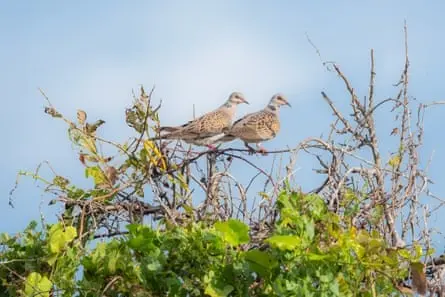
The skies of our planet are growing quieter. According to the landmark State of the World’s Birds report, released by BirdLife International at a high-stakes summit in Nairobi, Kenya, an alarming one in nine migratory bird species now faces the grim reality of extinction. Furthermore, nearly half—45%—of all migratory species, from familiar backyard visitors like cuckoos and turtle doves to polar travelers like the Arctic tern, are experiencing ongoing population declines.
These avian travelers, which bridge continents and ecosystems through epic annual journeys, are acting as environmental canaries in a global coal mine. Their systematic disappearance points directly to escalating pressures on the natural systems that sustain not only birdlife, but human civilization itself. Driven overwhelmingly by human activities—ranging from the intensification of agriculture and widespread pollution to unsustainable hunting, invasive species, and global heating—the crisis has reached a critical tipping point.
Yet, amid the sobering data lies a powerful counter-narrative: targeted conservation works. Where international cooperation and localized habitat restoration have been properly funded and implemented, species are pulling back from the brink. Signaling a historic turning point, the Nairobi Global Flyways summit has catalyzed a massive financial commitment. Major development banks and conservation coalitions have pledged billions of dollars to protect vital migration routes, proving that while the threats are global, the solutions are increasingly within our grasp.
Detailed Chronology: From the Brink of Extinction to Nairobi’s Landmark Pact
To understand the scale of the current avian crisis, one must trace the compounding ecological pressures that have accumulated over the past century and a half, culminating in this week’s watershed moment in East Africa.
The Last 150 Years: A Slow-Motion Catastrophe
For generations, the vast cyclical movements of billions of birds across flyways—the superhighways of the sky—were taken as a boundless given of the natural world. However, scientific assessments tracking avian demographics over the last 150 years reveal a devastating trend. Worldwide, seven distinct migratory bird species have been officially confirmed or strongly suspected to have vanished forever.
The crisis hit a devastating milestone last year with the official declaration of extinction for the slender-billed curlew. This marked the very first global bird extinction in mainland Eurasia and Africa in recent centuries, serving as a stark warning that even once-abundant migratory specialists are utterly vulnerable to the pressures of a rapidly altering planet.
The Escalation of Threats: Modern Pressures on Ancient Routes
As human infrastructure expanded exponentially through the 20th and 21st centuries, migratory routes became perilous gauntlets. Shorebirds and seabirds, which rely heavily on fragile coastal wetlands and marine habitats, have fared particularly badly. These ecosystems are on the frontline of coastal development, industrial pollution, and sea-level rise.
Simultaneously, inland migrants encounter a landscape dominated by intensive farming, where the loss of hedgerows, monoculture expansion, and heavy pesticide use have systematically stripped away the insects and seeds these birds depend on. Compounding this is the staggering scale of direct persecution. Ornithological monitoring reveals that between 13.1 million and 42.7 million migratory birds are illegally killed or trapped every year across Europe, the Mediterranean, the Caucasus, and the Arabian Peninsula. Many of these victims are delicate songbirds ensnared in mist nets or caught on adhesive "lime sticks" for commercial or recreational human consumption.
The Nairobi Global Flyways Summit: A Turning Point
Recognizing that piecemeal, single-country conservation efforts are insufficient for animals that cross dozens of international borders annually, global leaders, scientists, NGOs, and financial institutions gathered in Nairobi, Kenya, for the Global Flyways summit.
The centerpiece of this gathering was the signing of the Nairobi Flyways Declaration, a sweeping pact designed to synchronize conservation efforts along entire migratory routes. Crucially, the declaration transitioned from mere rhetoric to financial reality through the integration of flyway protection into the lending frameworks of major international development banks. This institutional shift unlocked an unprecedented $6 billion (£4.4 billion) in initial funding earmarked explicitly for habitat preservation, restoration, and sustainable management across the globe’s primary avian superhighways.
Supporting Context & Metrics: The Anatomy of an Avian Decline
The data compiled in the latest State of the World’s Birds report provides a granular look at where and why migratory populations are collapsing, while also highlighting the remarkable resilience of ecosystems when given a chance to heal.
The State of Key Biodiversity Areas
Migratory birds require a chain of healthy habitats—breeding grounds, wintering sites, and pit-stops along the way. If even one link in this chain is broken, the entire population can collapse. According to scientific monitoring conducted over the past decade across 1,099 Key Biodiversity Areas (KBAs) critical for migratory birds:
58% are currently assessed to be in poor or very poor condition.
Marine and coastal ecosystems show the highest rates of degradation, driven by overfishing, coastal reclamation, and port expansion.
Terrestrial staging grounds face severe degradation due to land-use changes, deforestation, and urbanization.
Invasive Species and Ecological Disruption
On isolated islands where millions of seabirds gather to breed away from terrestrial predators, the accidental or intentional introduction of invasive species has proved catastrophic. Non-native mammals such as rats, feral cats, rabbits, and even introduced competitor birds like the weka have historically decimated nesting colonies.
However, targeted eradication programs demonstrate how quickly nature can rebound. On Australia’s Macquarie Island, the systematic removal of invasive rabbits, cats, and rodents has triggered a stunning ecological resurgence. Populations of migratory seabirds—including the blue petrel, grey petrel, white-headed petrel, and the Antarctic prion—have bounced back significantly.
Reversing the Tide: Global Success Stories
The report underscores that coordinated intervention yields measurable, inspiring results:
China’s Coastal Restoration: To combat coastal mudflat loss, China initiated an ambitious nationwide program to remove smooth cordgrass (Spartina alterniflora), a North American plant introduced in 1979 to stabilize mudflats for industrial development. In just its first year, the program successfully restored 37,553 hectares (92,756 acres)—representing half of the country’s total invasive cordgrass coverage—reopening vital, food-rich intertidal mudflats to migrating shorebirds.
Wallasea Island, United Kingdom: Threatened by coastal erosion, an agricultural site in Essex was transformed through a pioneering managed realignment project. By breaching sea walls and restoring tidal wetlands, the Wallasea Island project has attracted peak numbers exceeding 32,000 waterbirds, including a staggering 11,270 red knots utilizing the newly formed mudflats and saltmarshes.
Official Statements and Financial Commitments
The Nairobi summit marked a rare alignment of ecological science, governmental policy, and international finance, characterized by passionate calls to action from global leaders and conservation executives.
Princess Takamado of Japan, Honorary President of BirdLife International, emphasized the transboundary nature of the crisis:
"Migratory birds do not recognise borders. They connect Asia to Africa, the Arctic to the tropics. The Nairobi Flyways Declaration acknowledges this reality—that it needs international cooperation and coordination to keep migratory birds safe. I am excited and proud to see that the scientific community, conservation organisations and the financial sector are uniting to make this happen. We stand at an important turning point. We have been waiting for this moment for a long time."
Echoing this sentiment, Martin Harper, Chief Executive of BirdLife International, stressed that the momentum must translate into broad societal mobilization:
"Development banks are rising to the challenge. The BirdLife Partnership is prepared to act. We now need others to step up to reverse the declines and save the wonder of migration."
Financial Breakdown of the New Conservation Architecture
The financial backing announced at the summit is structured across multiple regional development banks, ensuring long-term institutional support:
Asian Development Bank: Pledged to mobilize $3 billion over the coming decade to protect at least 50 priority wetlands along the East Asian-Australasian flyway. This funding simultaneously supports nearly 200 million people who rely directly on these healthy wetland ecosystems for water security and livelihoods.
Development Bank of Latin America and the Caribbean: Committing $3 billion to $5 billion through 2050 to safeguard more than 30 critical landscapes and seascapes across the region.
The World Bank and BirdLife Coalition: Several additional billions have been pledged jointly to secure flyway integrity across Africa, Europe, and Asia, regions collectively supporting more than 2 billion migratory birds.
Future Outlook: The Road Ahead for Global Flyway Conservation
As the dust settles on the Nairobi summit, the conservation community faces a monumental implementation challenge. The commitments made by development banks and governments provide the financial scaffolding, but translating these funds into on-the-ground ecological recovery will require rigorous, multi-jurisdictional oversight.
Stuart Butchart, Chief Scientist at BirdLife International, encapsulated the dual nature of the challenge:
"Migratory birds are sentinels, and their declines reveal growing pressure on the natural systems that sustain us. But the science is equally clear: conservation works, with coordinated action preventing extinctions and helping populations recover. The solutions exist: what is needed now is their implementation at flyway scale."
Key Priorities for the Next Decade:
Flyway-Scale Governance: Shifting conservation policies from isolated national parks to holistic, transnational agreements that cover entire migration routes.
Combating Illegal Killing: Increasing law enforcement and community education in critical bottleneck regions across the Mediterranean, the Caucasus, and the Middle East to shut down illegal poaching networks.
Climate-Resilient Habitats: Ensuring that protected wetlands and staging sites are resilient to shifting weather patterns and rising sea levels driven by global heating.
Local Community Integration: Ensuring that indigenous peoples and local communities living along flyways are empowered as stewards of these natural assets, ensuring long-term sustainability.
Ultimately, the survival of migratory birds serves as a profound test of humanity’s capacity for global cooperation. If governments, financial institutions, and civil society can maintain the momentum generated in Nairobi, the ancient, awe-inspiring spectacle of billions of birds writing their journeys across the skies can be preserved for generations to come.