Executive Overview
In the high-stakes arena of American agricultural policy and public health, a collision between federal oversight, judicial fiat, and corporate protectionism has left millions of rural Americans vulnerable to environmental toxins. In early August, the United States Senate decisively voted down a heavily contested amendment to the Farm Bill. Proposed by Senator Cory Booker (D-N.J.), the legislative fix was designed to preserve a critical legal recourse for everyday Americans: the fundamental right of consumers, farmers, and agricultural workers to sue pesticide manufacturers for failing to warn them about the proven, life-altering health risks associated with their products.
The vote, which fell strictly along party lines, arrived in the immediate wake of a seismic Supreme Court decision. That ruling essentially shielded chemical giants from state-level failure-to-warn lawsuits, establishing a sweeping doctrine of federal preemption. According to critics, the high court’s decision—and Congress’s subsequent refusal to pass Booker’s corrective amendment—has handed multinational agrochemical conglomerates a historic windfall: permanent structural immunity from accountability when their toxic chemicals induce catastrophic illnesses such as non-Hodgkin’s lymphoma and various cancers.
As federal lawmakers stall and the judiciary shores up corporate protections, public health advocates and environmental non-profits are mobilizing. Leading the charge, organizations like the Center for Biological Diversity have deployed emergency legal strategies, demanding that the U.S. Environmental Protection Agency (EPA) immediately mandate rigorous cancer warning labels on dozens of widely used agrochemicals.
Yet, as internal EPA data reveals that over a hundred active pesticide ingredients with documented links to cancer remain legally registered for use across American farms without mandatory health disclosures, the chasm between corporate profit margins and human survival grows ever wider. This report explores the anatomy of the recent Supreme Court ruling, the legislative defeat of the Farm Bill amendment, the grassroots pushback from environmental defenders, and what this brewing crisis means for the future of rural public health in the United States.
Detailed Chronology: From Courtrooms to Capitol Hill
To fully understand the gravity of the legislative defeat in August, one must trace the legal breadcrumbs that led to Capitol Hill, beginning with a high-profile courtroom battle in Missouri.
The Spark: The Fall of Durnell v. Monsanto
For over two decades, John Durnell applied Roundup—a glyphosate-based herbicide manufactured by agricultural titan Monsanto (subsequently acquired by German pharmaceutical and life sciences giant Bayer)—to agricultural lands. Over time, the routine application of the widely used weed-killer culminated in a devastating medical diagnosis: non-Hodgkin’s lymphoma, a serious and often fatal cancer of the lymphatic system.
Durnell did what countless other victims of corporate negligence have done: he sought restitution through the civil court system. A Missouri state jury agreed with his claims that Monsanto had failed to adequately warn consumers of the carcinogenic risks tied to glyphosate exposure. The Missouri Court of Appeals ultimately upheld a $1 million judgment in Durnell’s favor, affirming that state-level courts possess the authority to penalize companies for neglecting consumer safety warnings.

However, Bayer and its legal team appealed the decision all the way to the United States Supreme Court. In June, the nation’s highest court issued a landmark ruling that systematically dismantled the Missouri appellate court’s judgment.
The Supreme Court’s rationale rested on the principle of federal preemption. The ruling asserted that the Federal Insecticide, Fungicide, and Rodenticide Act (FIFRA)—the federal statute governing the registration, distribution, and use of pesticides in the U.S.—implicitly prohibits states from imposing labeling or packaging requirements that are "in addition to or different from" those mandated under federal law. Because the EPA, under federal guidelines, had not explicitly required a cancer warning label on Roundup at the time, the Supreme Court ruled that state-level failure-to-warn lawsuits were legally preempted.
The consequences of this decision were immediate and far-reaching. By stripping states of their authority to enforce stricter warning labels, the Supreme Court effectively erected a protective legal shield around agrochemical companies, rendering them immune from civil liability in states where local laws previously allowed victims to sue for withheld health warnings.
Senator Booker’s Amendment and the Senate Showdown
Recognizing the catastrophic implications of the Supreme Court’s preemption ruling for ordinary citizens, Senator Cory Booker introduced an emergency amendment to the upcoming Farm Bill. The statutory fix was remarkably straightforward: it sought to clarify federal law to ensure that compliance with EPA pesticide registration standards does not preempt or bar state-level failure-to-warn claims.
Proponents argued that the amendment would restore a cornerstone of consumer protection and civil justice, giving cancer victims their day in court against multi-billion-dollar corporations. Senator Booker pull-no-punches in his assessment of the judicial ruling, stating publicly that the Supreme Court’s decision handed giant chemical corporations a "free pass when their toxic products make people sick" and granted them "permanent immunity from lawsuits about their failure to warn people about the known health risks of their products."
Despite the high stakes for public health, the legislative effort was short-lived. In early August, the Senate voted down Booker’s amendment along strict party lines. The defeat underscored the deep partisan divide over agricultural regulation, with conservative lawmakers largely aligning with agribusiness interests to block what they viewed as an expansion of trial lawyer litigation and an undue burden on agricultural supply chains.
Supporting Context & Metrics: The Human and Chemical Toll
While corporate lobbyists and lawmakers debate the nuances of federal preemption, the human cost of unregulated or under-warned chemical exposure continues to mount, disproportionately impacting specific segments of the American population.
The Rural Divide and High Cancer Rates
Pesticide applicators, family farmers, farmworkers, and individuals residing in rural agricultural communities bear the brunt of chemical exposure. According to data cited in recent environmental petitions and public health studies, these populations experience significantly higher cancer rates compared to the general American populace.
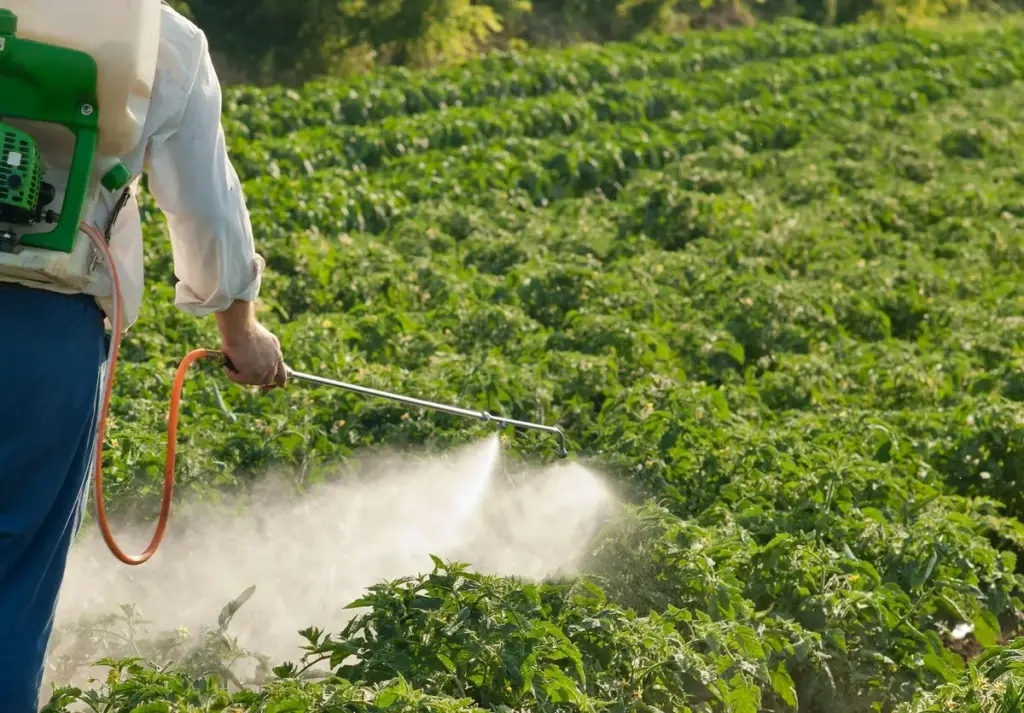
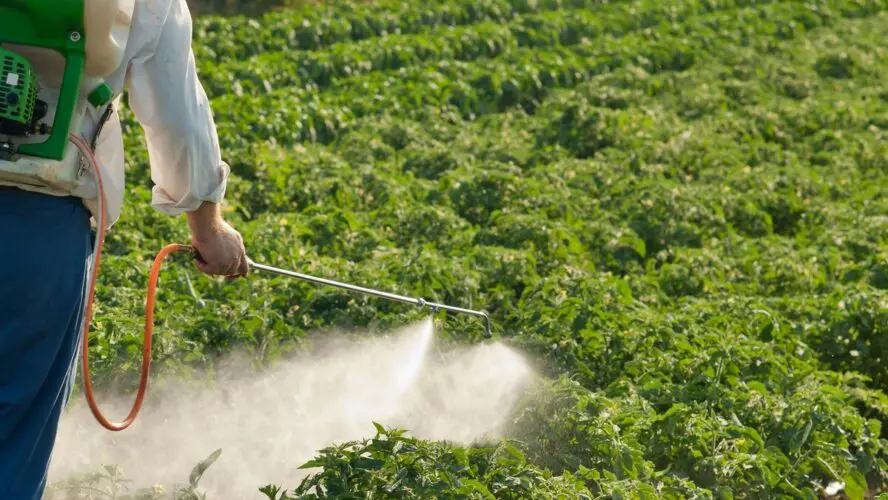
Unlike urban or suburban consumers who may encounter trace pesticide residues on food products, rural residents live in the direct path of drift zones, where aerial and ground spraying releases millions of pounds of synthetic chemicals into the air, water, and soil annually. For these workers and families, the lack of transparent, aggressive labeling translates directly to an absence of informed consent. Without explicit warnings on product containers, applicators may forgo advanced personal protective equipment (PPE), and rural families may underestimate the risks of well-water contamination and soil exposure.
The EPA’s Hidden Ledger: 199 Chemical Hazards
Perhaps the most startling revelation driving the current wave of non-profit activism is the sheer volume of toxic chemicals currently permitted in American agriculture that possess documented ties to oncological diseases.
According to institutional findings cited by environmental health watchdogs, an internal EPA review previously identified 199 pesticide active ingredients with proven, scientifically documented links to cancer. Yet, of those 199 hazardous substances, 124 remain actively registered for commercial use across the United States today.
Most alarmingly, these active ingredients are deployed across American fields and orchards without any statutory requirement compelling manufacturers to disclose their carcinogenic properties directly to the public or the workers handling them. Among these are:
- Mancozeb: A widely utilized fungicide that toxicological studies have linked to an elevated risk of ovarian cancer among exposed populations.
- Carbaryl: An organophosphate insecticide whose chemical exposure pathways have been correlated with heightened risks of both stomach and esophageal cancers.
These metrics paint a damning picture of a regulatory apparatus that possesses exhaustive scientific proof of toxicity yet fails to translate that knowledge into actionable public warnings.
Official Statements and Institutional Responses
The legislative failure in Congress and the intransigence of federal regulatory bodies have drawn sharp rebukes from environmental scientists and advocates, while federal agencies maintain a measured, bureaucratic posture.

The Environmental Defense: Demanding Accountability
Frustrated by Congressional inaction and the Supreme Court’s shielding of corporate polluters, environmental non-profits have pivoted from legislative lobbying to aggressive administrative pressure. In July, the Center for Biological Diversity filed an emergency petition demanding that the EPA use its existing administrative authority to mandate cancer warning labels on pesticide packaging, specifically targeting high-risk compounds like mancozeb and carbaryl.
Nathan Donley, environmental health science director at the Center for Biological Diversity, did not mince words when discussing the agency’s historic reluctance to act. In a scathing public statement, Donley emphasized the simplicity and urgency of the non-profit’s demands:
"It’s more important than ever for the EPA to finally start requiring pesticide companies to put cancer warnings on products the agency itself has linked to cancer. We’re asking for something ridiculously easy. Just warn the public of the serious health risks the EPA already knows about. In other words, do your job."
The petition highlights a profound institutional irony: the EPA’s own scientific evaluations have flagged these active ingredients as carcinogenic, yet bureaucratic inertia and political pressure have prevented the agency from enforcing basic disclosure measures that could save lives.
The Federal Response: A Bureaucratic Acknowledgement
Faced with mounting pressure from legal scholars, non-profit watchdogs, and public health advocates, the EPA press office issued a characteristically brief and non-committal response to the emergency petition:
"As with all petitions, EPA will evaluate the incoming petition."
This boilerplate response offers little comfort to rural communities and agricultural workers fighting aggressive cancers. While federal evaluators deliberate, the legal framework governing pesticide manufacturer liability remains crippled by the Supreme Court’s preemption ruling, leaving administrative petitions as one of the few remaining avenues for reform.

Future Outlook: Where Do Consumers and Workers Go From Here?
As the dust settles on the defeated Farm Bill amendment and the legal landscape shifts firmly in favor of agrochemical manufacturers, the path forward for public health advocates, farmers, and consumers involves a multi-pronged strategy of legal resistance, state-level maneuvering, and consumer awareness.
1. The Administrative Battleground
With Congress deadlocked and the judiciary hostile to state-level failure-to-warn lawsuits, the burden of reform falls heavily on administrative agencies. The success of emergency petitions filed by the Center for Biological Diversity and allied environmental organizations will serve as a critical litmus test for whether the EPA can be compelled to act independently of corporate lobbying. If the EPA denies or stalls the petition, further litigation in federal district courts challenging the agency’s failure to protect public health is virtually guaranteed.
2. State-Level Legislative Innovation
While federal preemption under FIFRA severely limits states’ abilities to enforce distinct labeling laws, legal scholars and state legislators are actively exploring alternative avenues. Some states are investigating whether transparency laws regarding workplace safety, occupational health disclosures, and right-to-know regulations can bypass preemption hurdles. By framing chemical disclosures around occupational safety rather than product labeling, states may carve out legal pathways to protect agricultural workers even in the post-Supreme Court era.
3. The Rise of Organic and Regenerative Agriculture
For consumers, the systemic failure to regulate and label cancer-linked pesticides reinforces the growing imperative of the organic marketplace. As federal oversight wanes and chemical corporations secure unprecedented legal immunities, consumer purchasing power remains one of the most effective tools for signaling market rejection of toxic agrochemicals. Choosing certified organic produce directly reduces dietary exposure to synthetic pesticides like mancozeb, carbaryl, and glyphosate, while supporting farming systems that prioritize ecological and human health over corporate profit margins.
Conclusion
The defeat of Senator Booker’s Farm Bill amendment is not merely a localized legislative loss; it is a symptom of a systemic regulatory failure that prioritizes the legal insulation of multi-billion-dollar chemical corporations over the fundamental right of human beings to know when they are handling cancer-causing toxins. Until federal regulators summon the political courage to mandate clear, transparent health warnings—or until the judicial pendulum swings back toward corporate accountability—the burden of survival will continue to rest squarely on the shoulders of the farmers, farmworkers, and rural communities standing on the front lines of America’s agricultural chemical crisis.