Executive Overview
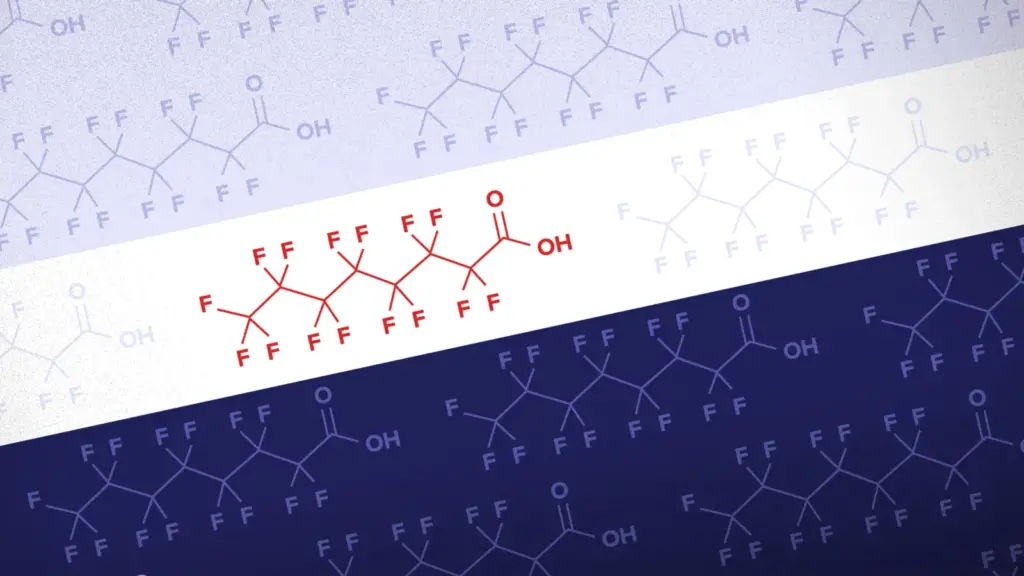
In a decisive legal victory for federal environmental regulators, a federal court has firmly upheld the U.S. Environmental Protection Agency’s (EPA) controversial designation of two pervasive "forever chemicals"—perfluorooctanoic acid (PFOA) and perfluorooctanesulfonic acid (PFOS)—as hazardous substances under the Comprehensive Environmental Response, Compensation, and Liability Act (CERCLA), commonly known as Superfund.
The ruling, which brings closure to a high-stakes legal challenge brought by a coalition of powerful industry groups led by the National Waste & Recycling Association (NWRA) and the U.S. Chamber of Commerce, validates the EPA’s scientific rationale, public comment procedures, and economic impact assessments. However, it leaves municipal solid waste landfills, recycling facilities, and water treatment plants grappling with profound legal and financial uncertainties.
Despite the transition in presidential administrations—originating under the Biden administration and vigorously defended by the incoming Trump administration—the core policy has survived judicial scrutiny intact. For the waste and recycling sectors, the decision reinforces the reality of being categorized as "passive receivers." Because waste operators have no operational control over the manufacturing or input of PFAS into consumer and industrial goods, they now find themselves on the front lines of potential Superfund liability for managing materials generated throughout the broader economy.
With judicial avenues effectively exhausted, the focus has shifted dramatically to Capitol Hill. Industry advocates, environmental experts, and trade associations agree that the court’s refusal to overturn the rule places immense, immediate pressure on Congress to enact legislative exemptions shielding passive waste handlers from third-party litigation and disproportionate cleanup costs.
Detailed Chronology of the Legal Battle
The legal showdown over the CERCLA hazardous substance designation represents one of the most significant environmental policy conflicts of the decade. The timeline of events leading up to this definitive judicial ruling highlights the deep divisions between federal regulators and foundational sectors of the American economy.
The Rulemaking and Initial Pushback
The journey toward the designation began years prior as mounting scientific evidence highlighted the toxicological persistence of PFOA and PFOS. Originally introduced in the mid-20th century, these per- and polyfluoroalkyl substances were widely utilized in non-stick cookware, stain-resistant fabrics, firefighting foams, and industrial applications. Because they do not break down naturally in the environment, they accumulated in soil, water systems, and human bloodstreams.
When the EPA formally initiated the rulemaking process to classify PFOA and PFOS under CERCLA, it triggered immediate alarm across the industrial landscape. Trade groups argued that the designation would instantly transform ordinary municipal landfills and wastewater treatment plants into potential Superfund sites. Despite intense lobbying, the EPA finalized the designation, aiming to hold primary polluters accountable and provide federal authorities with robust tools to compel cleanups.
The 20th-Century Lawsuit
In 2024, a formidable coalition—including the NWRA, the U.S. Chamber of Commerce, the American Chemistry Council, the American Fuel & Petrochemical Manufacturers, the Associated General Contractors of America, the Recycled Materials Association, and the American Forest & Paper Association—filed a joint lawsuit challenging the rule.
The petitioners laid out a threefold legal argument:
- Inadequate Notice and Comment: They claimed the EPA failed to provide sufficient time and opportunity for stakeholders to adequately review and comment on the complex technical aspects of the proposed rule.
- Flawed Cost-Benefit Analysis: They argued that the agency severely miscalculated the economic impacts of the designation, underestimating cleanup costs at National Priorities List (Superfund) sites, ignoring federal site expenses, and completely failing to account for the rule’s crushing impact on small businesses.
- Unreasonable Scientific Explanation: They contested the justifications provided by the agency for classifying the compounds as hazardous under the statutory criteria of CERCLA.
The Judicial Ruling
In the landmark decision released on Tuesday, federal judges decisively rejected every argument put forward by the petitioners.
Addressing the procedural challenge regarding public participation, the court dismissed the notion that the industry was caught off guard. The judges noted that the petitioners’ members are "seasoned participants in the highly regulated area of chemical substances’ commercial uses" and were afforded ample, legally compliant notice and comment opportunities.
On the scientific front, the court praised the meticulous detail provided by the EPA. The judges pointed out that the agency dedicated extensive sections of the rulemaking text to documenting the severe health and developmental risks associated with PFOA and PFOS. These included decreased infant birth weight, fetal vulnerabilities during pregnancy, cardiovascular complications such as elevated cholesterol levels in adolescents, increased liver enzymes disrupting proper liver function, and immunosuppression across both adult and pediatric populations.
Regarding the economic and cost-benefit arguments, the court sided with the federal government. It determined that the EPA’s cleanup cost estimates were reasonable, while dismissing an alternative cost model presented by the U.S. Chamber of Commerce as relying on outdated data and subjective industry discussions rather than empirical proof.
Crucially, because the designation had never been suspended during the pendency of the litigation, Tuesday’s ruling did not alter the wording or immediate enforcement mechanisms of the CERCLA rule. The designation remains fully active and enforceable.
Supporting Context & Metrics: The Dilemma of the "Passive Receiver"
To understand why the waste and recycling industries view the CERCLA designation as an existential threat, one must examine the operational realities of modern waste management infrastructure.
The Passive Receiver Dynamic
Landfills and recycling plants do not manufacture, design, or intentionally add PFAS to consumer products. Instead, they act as the ultimate repositories for an economy saturated with synthetic chemicals. Every time a consumer discards a waterproof jacket, a pizza box lined with grease-resistant paper, or electronic waste, those items eventually make their way into municipal solid waste streams.
Waste management associations like the NWRA argue that classifying these facilities under CERCLA turns the foundational "polluter pays" principle on its head. Instead of targeting the chemical manufacturers who profited from producing PFOA and PFOS, the statutory framework of Superfund allows regulators—and potentially private plaintiffs—to target any entity that ever owned, operated, or transported waste containing the hazardous substances.
Industry analysts point out several severe operational risks:
- Preemptive Rejection of Materials: Fearing catastrophic liability, local governments and private landfill operators may be forced to turn away essential commercial and municipal waste streams, leading to localized waste management crises.
- Exorbitant Processing and Sorting Expenses: Facilities might feel compelled to install multi-million-dollar sorting, containment, and leachate treatment technologies to monitor and mitigate PFAS inflows.
- Litigation Overload: Landowners, local municipalities, and waste operators face the prospect of diverting millions of dollars into protracted legal defense funds rather than investing in actual environmental cleanup and infrastructure improvement.
Contradictory Federal Postures and Enforcement Discretion
A major point of contention throughout the debate has been the disconnect between written statutory liability and enforcement intent.
Under the Biden administration, the EPA issued an enforcement discretion policy stating that while PFOA and PFOS are designated hazardous substances, the agency does not intend to pursue enforcement actions under CERCLA against certain passive contributors, such as municipal landfills, local water utilities, and compost facilities.
However, legal experts have repeatedly warned that administrative enforcement discretion policies are temporary and easily altered by changing political tides or future agency leadership. Furthermore, such federal discretion provides zero legal immunity against third-party lawsuits. Private citizens, neighboring landowners, and corporations can still initiate independent lawsuits under CERCLA provisions, regardless of whether the EPA chooses to target a specific landfill.
Taryn McKnight, Vice President of Product at environmental testing firm Eurofins, underscored this exact vulnerability. "The EPA doesn’t have the authority to protect passive receivers from third-party claims," McKnight explained. "Only Congress has that authority, and Congress has been debating for years whether to provide waivers to passive receivers."
Official Statements and Industry Reactions
The court’s decision elicited sharp, polarized responses from industry stakeholders, legal defense centers, and environmental advocates.
The Waste Industry Perspective
Michael E. Hoffman, President and CEO of the NWRA, expressed deep disappointment in an emailed statement, echoing the industry’s ongoing anxieties.
"While we support efforts to address PFAS contamination and protect public health and the environment, we remain concerned that this designation may create significant legal and financial uncertainty for passive receivers, including municipal solid waste landfills and other waste and recycling facilities that did not manufacture these chemicals but are responsible for managing materials generated throughout the economy."
Hoffman reiterated that the association will press forward with legislative remedies, advocating for policy frameworks that ensure chemical manufacturers bear the primary financial burden of contamination while safeguarding critical community infrastructure.
The U.S. Chamber’s Critique
Daryl Joseffer, President of the U.S. Chamber Litigation Center, minced no words in criticizing both the EPA’s methodology and the court’s endorsement of the rule.
"EPA’s failure to consider costs and consequences, as required by law, produced a deeply flawed rule that is more likely to spawn unnecessary, costly litigation than to drive expeditious, effective cleanup focused on actual risk," Joseffer wrote. "Local governments, landowners, and businesses will now likely have to divert resources to fighting prolonged litigation battles—resources that could be used for more productive purposes, including cleanup."
Future Outlook: The Battle Shifts to Capitol Hill
With the judicial path closed, the legislative arena is now the primary battleground for the waste management sector.
Industry groups have actively lobbied Congress for a statutory CERCLA exemption for passive receivers since at least 2022. While various lawmakers have introduced targeted exemption bills in previous legislative sessions, none have successfully cleared both chambers and been signed into law.
The Push for FY 2027 NDAA Amendments
The most recent and notable legislative push comes via the U.S. Senate. Sen. Pete Ricketts of Nebraska introduced a targeted amendment to the fiscal year 2027 National Defense Authorization Act (NDAA). The amendment specifically seeks to exempt defined "resource management entities"—including solid waste management facilities and municipal wastewater treatment plants—from CERCLA liability stemming from passive PFAS releases.
Industry analysts believe that Tuesday’s court ruling serves as a major catalyst for this legislative movement.
"With this decision now, with the courts denying the petitioners’ request to review or overturn this ruling, that does put the pressure on Congress to make a decision and potentially provide those waivers," noted Taryn McKnight of Eurofins.
What Lies Ahead for Waste and Recycling Operators
As municipal leaders, private waste haulers, and recycling facility directors digest the court’s verdict, operational adjustments are already underway. Environmental testing and leachate monitoring are becoming standard operating procedures as facilities attempt to baseline their PFAS inputs and outputs.
At the same time, legal teams are advising clients to prepare for aggressive third-party litigation environments. Without statutory protection from Congress, every landfill receiving household waste containing consumer goods infused with forever chemicals carries an unquantifiable liability ledger.
Ultimately, the federal court’s decision solidifies the EPA’s regulatory framework, cementing PFOA and PFOS as hazardous substances under Superfund law. But by doing so, it has heightened the urgency for federal lawmakers to resolve the glaring equity gap between chemical manufacturers who profited from PFAS production and the waste management operators left holding the bag.