Executive Overview
As summer temperatures breach historic thresholds across the Northern Hemisphere, the devastating impacts of extreme heat are no longer distant theoretical projections. From lives lost and schools shuttered to the ironic cancellation of a London Climate Action Week panel on extreme weather due to soaring temperatures, the climate crisis is disrupting daily life in real-time. Yet, beneath the visible human and societal toll lies a less visible, highly vulnerable epicenter: the electrical power grid.
In late June 2026, a brutal early-season heat wave gripped Europe, exposing severe structural vulnerabilities in the continent’s energy infrastructure. Most notably, a major nuclear power facility in southern France was forced to throttle down operations as ambient and river water temperatures climbed past safety thresholds. This incident is far from an isolated event; it is a glaring symptom of a systemic "triple squeeze" facing modern power systems.
Climate change is simultaneously driving up electricity demand through soaring cooling needs while degrading the operational efficiency of power plants and transmission lines. Simultaneously, it is restricting the capacity of thermal and nuclear facilities that rely on natural water bodies for cooling. For decades, European electricity grids were engineered around winter peaks driven by electric heating. As blistering summers become the norm, utilities are confronted with an urgent, high-stakes mandate: adapt transmission systems, rethink seasonal maintenance schedules, and radically expand power supply before the grid breaks under the weight of a warming world.
Detailed Chronology of the June 2026 European Heat Wave
The unfolding energy crisis in Europe is inextricably linked to a rapid succession of atmospheric anomalies that began in mid-May and intensified sharply by late June 2026.
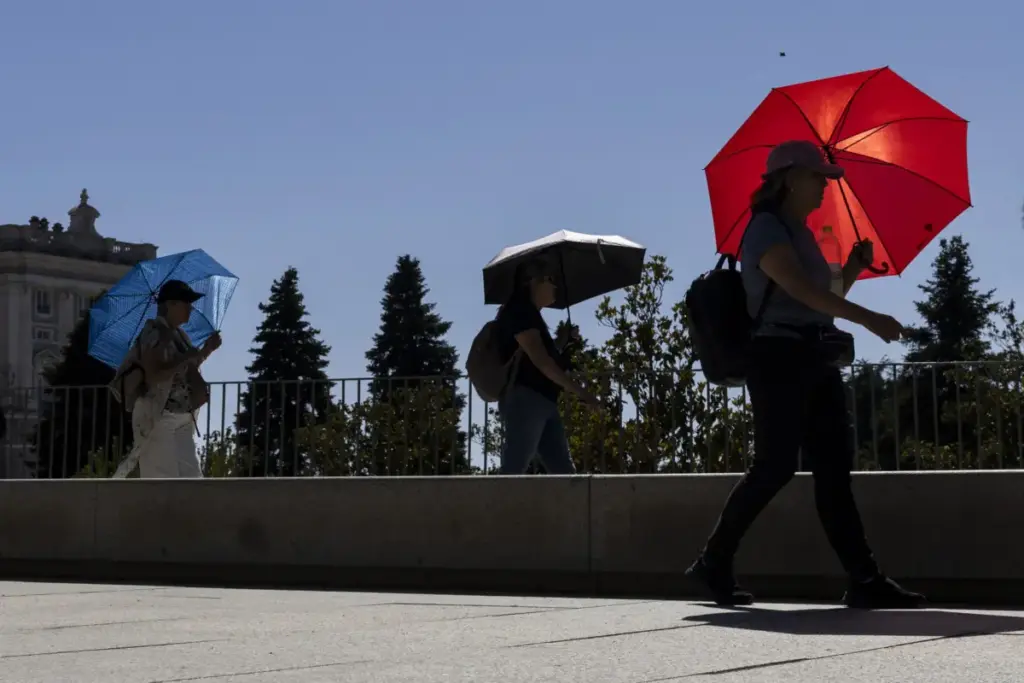
- May 23, 2026: An unseasonal and aggressive early heat wave descended upon southwestern Europe, blanketing Spain and Portugal. In Madrid, pedestrians crowded Plaza de Oriente under sun umbrellas as temperatures surged toward unprecedented May records. Meteorologists noted that this dome of high pressure was setting the stage for an unusually volatile summer.
- June 20–22, 2026: The thermal dome expanded northward across France, Germany, and the United Kingdom. Public health alerts were issued as temperatures surpassed 40°C (104°F) in parts of the Iberian Peninsula and southern France. Governments across England and Wales ordered emergency school closures as classrooms transformed into heat traps.
- June 23, 2026: The crisis intersected with public policy when a high-profile London Climate Action Week event dedicated to discussing the dangers of extreme heat had to be abruptly canceled because the venue lacked adequate climate control to handle the ambient conditions safely. Simultaneously, French utility Électricité de France (EDF) announced critical emergency interventions across its nuclear fleet.
- Late June 2026: The Golfech nuclear power plant near Toulouse became a focal point of the crisis. Unit 2 of the plant was forced into an emergency shutdown due to excessively high temperatures in the Garonne River, which provides the critical cooling water necessary to safely operate the reactor. Complicating matters further, Unit 1 at the same facility was already offline for pre-scheduled seasonal maintenance and refueling, leaving the plant operating at zero capacity during a period of surging regional energy demand.
Supporting Context & Metrics: The Anatomy of the Grid Squeeze
To understand why a heat wave can effortlessly destabilize a continental power grid, one must examine the stark geographical disparities in energy consumption, infrastructure design, and climate adaptation.
The Air-Conditioning Divide: US vs. Europe
Air-conditioning (AC) is frequently cast as an environmental villain due to its high electricity consumption and the hydrofluorocarbons traditionally used in its operation. However, as wet-bulb temperatures rise, AC is rapidly transitioning from a luxury amenity to a life-saving public health infrastructure.
- United States: Approximately 90% of American homes are equipped with air-conditioning. Consequently, US grids traditionally experience their maximum load demands and highest blackout risks during the sweltering summer months.
- Europe: Historically, air-conditioning has been vastly less common across Europe, with an overall penetration rate of roughly 20% in residential homes. However, these averages mask significant regional variations:
- United Kingdom: ~5% AC penetration.
- Germany: ~3% AC penetration.
- Southern Europe (Spain, Italy, Greece): Higher penetration rates, but still lagging far behind American commercial and residential standards.
As successive heat waves normalize brutal summer temperatures across the continent, adoption rates for residential and commercial cooling are skyrocketing. This behavioral adaptation introduces a dangerous feedback loop: as temperatures climb, people install AC units; as AC units proliferate, base and peak electricity demand spikes; and as demand surges, fossil-fuel and nuclear generation assets are pushed to their absolute limits, escalating greenhouse gas emissions unless powered exclusively by renewables.
The Thermal Efficiency and Water Crisis
Power generation—whether coal, natural gas, or nuclear—is fundamentally a thermodynamic process that relies on boiling water to create steam, which then turns turbines. Once the steam passes through the turbine, it must be cooled back down into liquid water via a condenser. This cooling process requires vast quantities of water, typically drawn from adjacent rivers, lakes, or coastal estuaries.
When environmental heat waves warm these natural water bodies:
- Reduced Thermal Efficiency: The temperature differential between the hot steam and the cooling water narrows, directly reducing the thermodynamic efficiency of the power plant. Less electricity is generated for the same amount of fuel burned or nuclear fission achieved.
- Environmental Regulatory Limits: Power plants are bound by strict environmental permits that dictate the maximum temperature at which they can discharge cooling water back into natural waterways. Pumping excessively hot water downstream can trigger catastrophic ecological collapses, killing fish populations and devastating aquatic flora. When river temperatures breach these legal limits, plant operators have no choice but to throttle output or shut down entirely.
Seasonal Mismatches in Maintenance Planning
Grid operators globally rely on predictive modeling to schedule routine maintenance, safety checks, and fuel reloading.
- The US Model: Because American grids peak in the summer, utilities cluster their planned outages during the spring and fall shoulder seasons when electricity demand is lowest.
- The European Model: Historically, European electricity grids peaked during the winter months due to widespread reliance on electric space heating. Consequently, European utilities traditionally scheduled major power plant maintenance and refueling windows during the spring and early summer.
This historical scheduling practice has created a dangerous operational vulnerability. When an intense early-summer heat wave strikes, utilities find themselves caught off guard with multiple generation assets offline for pre-scheduled spring/summer maintenance. The combination of mandatory maintenance outages and heat-induced emergency shutdowns creates an acute supply deficit, forcing grid operators to frantically trade energy across borders—often driving electricity spot prices to exorbitant heights for everyday consumers.
Official Statements and Expert Analysis
Energy economists and policy analysts emphasize that Europe’s current crisis is merely a preview of structural challenges awaiting global energy infrastructure if deep adaptation measures are not implemented immediately.
"The main pressure comes from a triple squeeze: Cooling demand rises sharply, while power plants and grids become less efficient, and some thermal and nuclear plants must cut output because cooling water is too warm or scarce," explains Simone Tagliapietra, a senior fellow at Bruegel, an influential economic and policy think tank based in Brussels.
Tagliapietra’s analysis underscores that traditional grid planning paradigms—which assume a relatively stable, predictable climate baseline—are functionally obsolete. Utilities can no longer rely on historical weather data from the 20th century to forecast 21st-century grid loads.
Furthermore, structural engineers point out that transmission lines themselves are victims of thermal stress. High ambient air temperatures heat up overhead high-voltage power lines, causing them to sag and reducing their current-carrying capacity (ampacity) precisely when consumers demand maximum throughput.
Future Outlook: Beyond 2026 and the Looming Threat of El Niño
If the summer of 2026 serves as a harsh warning flare for energy providers, climatologists and grid planners are already looking ahead with deep apprehension toward the coming years.
Communities across the globe are accelerating local climate adaptation strategies, but utility infrastructure moves at a notoriously glacial pace compared to the rapid escalation of global temperature anomalies. Upgrading high-voltage transmission corridors, redesigning coastal and river-adjacent power plants with closed-loop cooling systems, and integrating decentralized microgrids with localized battery storage require multi-year capital investments and regulatory approvals that often span decades.
Compounding these long-term structural hurdles are short-term climatic cycles. Climate scientists warn that the upcoming transition of meteorological phenomena—including the cyclic return of strong El Niño weather patterns—suggests that subsequent summers could easily eclipse the temperature records set in 2026.
For the power sector, the message is unequivocal: business as usual is no longer an option. Utilities, regulators, and policymakers must treat grid modernization, supply diversification, and climate resilience not as secondary policy goals, but as matters of absolute national security and public safety. Without a comprehensive reinvention of how power is generated, transmitted, and consumed in a warming world, the recurring images of shut-down reactors, sagging transmission lines, and buckling grids will transform from seasonal anomalies into a permanent, debilitating baseline of modern civilization.