

Executive Overview
In an era defined by rapid environmental change and unprecedented biodiversity loss, modern science relies more than ever on the foundations laid centuries ago. Historical texts, field observations, and meticulously illustrated taxonomic descriptions are not mere relics of a bygone era; they are the fundamental benchmarks against which contemporary ecological shifts are measured. Recognizing this vital link between historical record and modern data science, the prestigious Senckenberg Gesellschaft für Naturforschung officially joined the Biodiversity Heritage Library (BHL) in 2026.
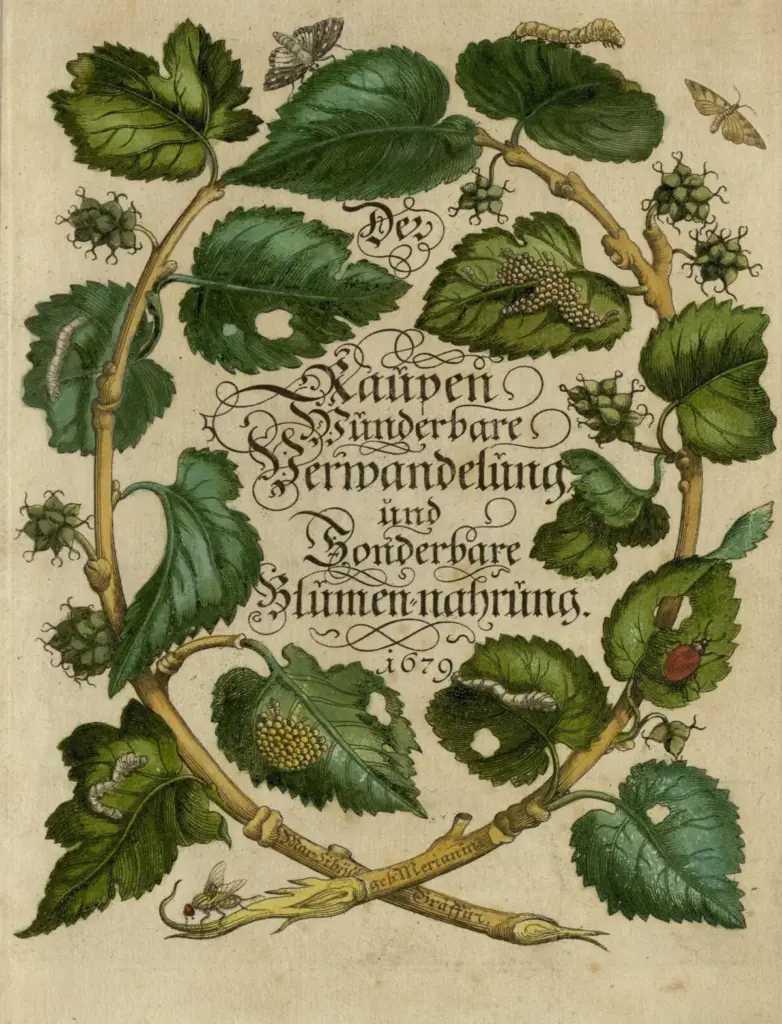
This strategic integration brings a trove of specialized, historically significant literature from Senckenberg’s distributed German research libraries—spanning Dresden, Görlitz, Müncheberg, and Weimar—into a premier global knowledge resource. Among the celebrated crown jewels of this contribution is an original 1679 edition of Maria Sibylla Merian’s landmark entomological study, Der Raupen wunderbare Verwandelung, und sonderbare Blumennahrung (The Wonderful Metamorphosis and Special Nourishment of Caterpillars).
By plugging centuries-old library collections into an international, open-access digital grid, this partnership transcends simple digitization. It transforms static pages of text and copperplate engravings into dynamic, interconnected data nodes. As natural history research increasingly embraces artificial intelligence, text-mining, semantic enrichment, and global data-sharing infrastructures, initiatives like the Senckenberg-BHL collaboration ensure that foundational biodiversity literature can be queried, analyzed, and synthesized alongside modern specimen data. This article explores the chronological evolution of this partnership, the historical and structural weight of Senckenberg’s libraries, and how transforming legacy literature into structured data is shaping the future of global conservation and taxonomy.
Detailed Chronology: From Hand-Painted Plates to Global Knowledge Graphs
To understand the magnitude of integrating historical literature into modern networks, one must trace the continuum of biodiversity documentation across nearly three and a half centuries.
1679: The Dawn of Comprehensive Metamorphosis Studies
The historical anchor of this modern digital integration dates back to 1679, when naturalist and scientific illustrator Maria Sibylla Merian published Der Raupen wunderbare Verwandelung. Breaking away from the purely theoretical or fanciful descriptions of her contemporaries, Merian combined rigorous, firsthand field observation with stunning, anatomically precise illustrations. Crucially, she documented insects not in isolation, but alongside their specific host plants, capturing entire ecological interactions. Nearly 350 years later, an original edition of this text—preserved within the Library of the Senckenberg German Entomological Institute (SDEI) in Müncheberg under call number B 877:1—stands as an irreplaceable baseline for species descriptions and classifications.

The 20th Century: The Rise of Decentralized Archives
Over the ensuing centuries, natural history research institutionalized these practices. In Germany, the Senckenberg Gesellschaft für Naturforschung grew into one of the nation’s largest and most comprehensive natural history research institutions. To support its expansive fieldwork and taxonomic ambitions, Senckenberg established a decentralized network of specialized research libraries across eastern and central Germany. These repositories accumulated massive corpuses of literature covering specialized niches: zoology, entomology, botany, geology, and paleontology. Chief among these was the Müncheberg institute’s library, which evolved into one of the premier entomological research libraries in all of Europe. However, for decades, these invaluable physical volumes remained siloed within their respective regional walls.
2009–2026: The Evolution of the Biodiversity Heritage Library
In 2009, modern biodiversity informatics entered a new paradigm with the maturation of the Biodiversity Heritage Library. Designed as a pioneering digitization initiative, BHL set out to aggregate the world’s scattered natural history literature into a single, open-access digital portal. Over the next decade and a half, BHL evolved from a simple repository of scanned historical texts into an essential cornerstone of the global biodiversity knowledge ecosystem.
Simultaneously, biodiversity scientists and informaticians—including figures working across the Consortium of European Taxonomic Facilities (CETAF)—began recognizing that digital literature could no longer remain an isolated reading resource. It needed to be actively linked to taxonomic name databases, museum specimens, and genetic sequences.
2026: Senckenberg Joins BHL
The formal integration of Senckenberg into the BHL network in 2026 represents a watershed moment in this ongoing evolution. Rather than bulk-digitizing redundant materials, Senckenberg’s contribution was deliberately curated to target specialized gaps in the global record. By injecting its rare, historically developed corpuses into Bhl’s architecture, Senckenberg bridged its institutional history—strongly tied to Frankfurt (Merian’s birthplace) and Müncheberg—with the international web of open science.
Supporting Context & Metrics: The Anatomy of an Open Knowledge Infrastructure
The integration of Senckenberg’s holdings into BHL highlights several critical metrics regarding how modern biodiversity science operates at scale.

Decentralized Powerhouses of Information
Senckenberg’s library landscape is intentionally distributed, reflecting the complex historical development of natural history institutions across Germany:
- Müncheberg (Senckenberg German Entomological Institute): Houses one of Europe’s most exhaustive collections of entomological literature, serving as a primary global resource for insect taxonomy.
- Dresden, Görlitz, and Weimar Sites: Encompass deep historical collections specializing in botany, zoology, geology, and paleontology, preserving regional and international scientific literature dating back centuries.
Bridging the Gap in Integrative Taxonomy
Taxonomy—the science of naming, describing, and classifying species—is inherently historical. Under the rules of the International Code of Zoological Nomenclature (ICZN) and botanical equivalents, the valid description of a species often hinges on literature published hundreds of years ago. Without seamless digital access to these foundational texts, taxonomists face severe bottlenecks.
By making legacy literature searchable and accessible via BHL, researchers avoid redundant archival travels and accelerate the validation of newly discovered or endangered taxa. Furthermore, modern integrative taxonomy demands that morphological descriptions from historical papers be cross-referenced with modern genomic data and high-resolution specimen imaging.
Transforming Text into Structured Data
The true paradigm shift of the 2026 Senckenberg-BHL collaboration lies in the transition from passive reading to active computation. Historical publications are increasingly being processed through:
- Text Mining and Natural Language Processing (NLP): Extracting hidden species occurrences, geographic distributions, and ecological traits from unstructured historical paragraphs.
- Semantic Enrichment: Linking literature directly to taxonomic name servers (such as the Global Biodiversity Information Facility or Index Fungorum).
- AI-Generated Knowledge Graphs: Modern research workflows—such as those utilizing visual data from historic plates (e.g., Georg Wolfgang Franz Panzer’s Deutschlands Insecten) combined with advanced language models—allow scientists to map out complex relational networks linking specimens, host plants, literature citations, and environmental metadata.
Official Statements
The partnership underscores a shared vision among leadership at Senckenberg and the broader European taxonomic community regarding the future of open science.

Dr. Lutz Kunzmann, Member of the Board of Directors at Senckenberg, emphasized the institutional significance of the move:
"Our libraries contain numerous specialized and historically developed collections of great relevance to international research. Their digitization and integration into BHL anchor them within a global research infrastructure and increase their visibility. At the same time, membership provides an important impulse for the strategic development of Senckenberg in the areas of digitization, networking, and international collaboration."
Reflecting on the long-term evolution of these infrastructures, Dr. Jana Hoffmann—Vice President of the Consortium of European Taxonomic Facilities (CETAF), head of the Entomology Information Center at Senckenberg Müncheberg, and co-editor-in-chief of Contributions to Entomology—noted the profound shift in how literature is utilized:
"What once existed primarily as individual publications increasingly becomes part of a broader, interconnected knowledge environment. Whether supporting integrative taxonomy, biodiversity knowledge systems, or emerging biodiversity and geobiodiversity data infrastructures, literature continues to provide the evidence base on which this work depends. The real transformation begins when literature is no longer only read, but can also be connected, queried, and analyzed alongside collections, taxonomic names, and other biodiversity data."
Future Outlook: Empowering Tomorrow’s Technologies and Conservation Strategies
As the global scientific community grapples with the accelerating crisis of biodiversity loss, the demand for synthesized, multi-disciplinary, and historical data has never been more acute. Environmental researchers studying shifting insect populations, habitat degradation, or climate-driven morphological changes cannot rely on modern snapshots alone; they require long-term environmental baselines.

The integration of Senckenberg’s specialized holdings into the Biodiversity Heritage Library points toward a highly interconnected future. By feeding curated, scientifically validated, and citable historical texts into the data pipeline, this collaboration establishes a robust foundation for emerging artificial intelligence applications. Machine-assisted analyses, semantic web applications, and automated text-mining tools rely heavily on clean, authoritative legacy literature to train algorithms and verify biological claims.
Ultimately, the Senckenberg Gesellschaft für Naturforschung’s entry into BHL is far more than an administrative milestone or a technical digitization project. It is a profound philosophical and practical commitment to the cumulative nature of human knowledge. By ensuring that works ranging from Maria Sibylla Merian’s 1679 masterpiece to specialized twentieth-century entomological monographs are permanently discoverable, linked, and reusable, institutions like Senckenberg are safeguarding the past to illuminate the ecological challenges of tomorrow.



