

Executive Overview
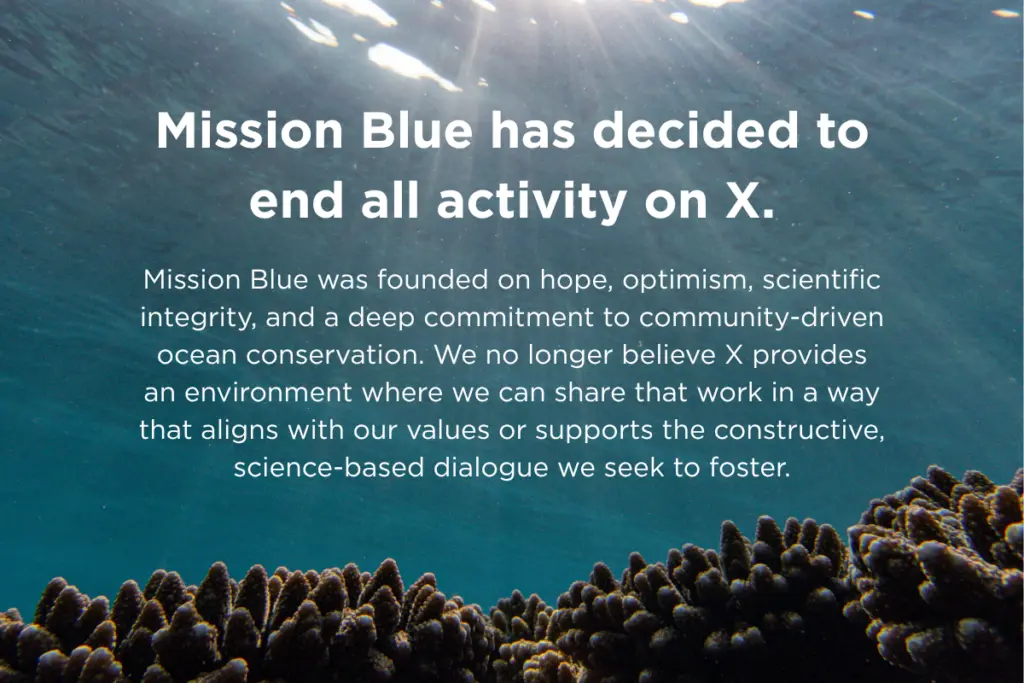
In an era where digital platforms serve as the primary lifeblood for global advocacy, non-profit organizations face an increasingly complex calculus regarding where and how they invest their limited resources. On [Date], Mission Blue—the renowned ocean conservation foundation founded by legendary oceanographer Dr. Sylvia Earle—announced a definitive shift in its digital advocacy strategy. The organization officially ceased active operations on X (formerly Twitter), citing a profound misalignment between the platform’s evolving ecosystem and the constructive, science-backed ethos required to champion global marine protection.
For years, Mission Blue utilized the microblogging platform as a vital conduit to connect with its global network of "Hope Spot" champions, field researchers, and maritime enthusiasts. However, institutional patience has worn thin in the face of systemic shifts within the platform formerly known as Twitter. Citing a measurable surge in digital hostility, unchecked misinformation, and a concerted erosion of constructive environmental discourse, leadership decided that the platform’s current iteration is fundamentally incompatible with a solutions-oriented conservation mission.
While Mission Blue’s legacy archive will remain accessible on X for historical reference, no new content will be published. Instead, the foundation is aggressively redirecting its digital engagement toward Instagram, Facebook, LinkedIn, and YouTube, alongside its direct-to-consumer email newsletter. This migration reflects a broader, highly strategic reckoning within the environmental non-governmental organization (eNGO) sector. As digital town squares become increasingly polarized, organizations dedicated to empirical science and planetary stewardship are re-evaluating whether toxic digital environments undermine their core messaging and community well-being. This report provides an exhaustive examination of Mission Blue’s departure from X, contextualizing the decision within the broader landscape of modern environmental communication, institutional trust, and the shifting paradigms of digital activism.
Detailed Chronology of a Platform Shift
The Early Days: Building a Digital Blue Economy
When Mission Blue first established its presence on Twitter, the platform was widely perceived as a democratizing force for grassroots environmentalism. Founded on a bedrock of hope, optimism, and community-driven marine conservation, the foundation sought out spaces where scientists, policymakers, and ocean advocates could converge in real-time.
In its formative years on the platform, Twitter offered Mission Blue an invaluable mechanism for rapid-response advocacy. During expeditions to remote Hope Spots—special areas of the ocean that are critical to the health of the marine ecosystem—researchers could tweet live updates, share high-resolution imagery of pristine coral reefs, and broadcast immediate threats such as illegal fishing or industrial pollution. It was an era defined by high connectivity and low friction, where the digital architecture seemed genuinely suited for amplifying scientific consensus and mobilizing global public opinion in real-time.
The Inflection Point: The Changing Tide of Discourse
As years progressed, however, structural and cultural transformations within the platform began to erode its utility for science-based organizations. Following ownership changes and subsequent shifts in content moderation policies, verified algorithm structures, and platform culture, Mission Blue’s digital team observed a marked deterioration in the quality of online engagement.
The tipping point was not defined by a single catastrophic event, but rather by a steady, corrosive accumulation of systemic issues. Staff members noted an alarming rise in hostile interactions, coordinated harassment campaigns targeting environmental scientists, and the algorithmic elevation of divisive, inflammatory content. Most critically, the platform became a fertile breeding ground for climate denialism, anti-science rhetoric, and deliberate misinformation designed to obfuscate empirical environmental data. For an organization whose entire modus operandi relies on the public’s trust in marine science and collective, hopeful action, participating in an ecosystem that actively degrades reasoned debate became untenable.
The Decision: Choosing Hope Over Hostility
The formal decision to divest from X followed internal audits of engagement metrics, staff wellbeing, and institutional alignment. Leadership evaluated whether the diminishing returns of reaching a fractured, increasingly toxic audience justified the expenditure of organizational time and emotional capital required to maintain a presence on the platform.
The conclusion was unequivocal. Mission Blue’s core philosophy hinges on the belief that humanity is inextricably connected to a single global ocean, and that uniting people around shared stewardship requires a welcoming, curious, and respectful digital habitat. Recognizing that X could no longer provide this foundation, the executive team authorized the complete suspension of active operations, ensuring that the organization’s digital footprint would henceforth prioritize platforms capable of fostering genuine, constructive community engagement.
Supporting Context & Metrics: The eNGO Exodus from X
The Broader Mass Migration of Non-Profits
Mission Blue’s departure from X is far from an isolated incident; rather, it represents a swelling tide of institutional disillusionment. Over the past twenty-four months, a diverse array of academic institutions, public health organizations, scientific bodies, human rights groups, and environmental foundations have systematically pruned or entirely abandoned their X accounts.
Major conservation organizations, international aid agencies, and academic publishers have increasingly voiced alarm over the platform’s trajectory. The dismantling of legacy verification systems, the reinstatement of previously banned accounts associated with harassment and disinformation, and the reduction of trust-and-safety engineering teams have collectively created a Wild West digital environment. For organizations funded by public donations and dedicated to empirical truth, maintaining a corporate presence on a platform plagued by unverified rumors and bad-faith actors poses significant reputational and operational risks.
The Economics of Engagement: Quality vs. Quantity
From a strategic communications perspective, the calculus of social media management has undergone a profound paradigm shift. Historically, digital strategy was dominated by a fixation on raw metrics: follower counts, impression volumes, and retweet velocities. However, eNGOs are increasingly recognizing the illusion of vanity metrics, particularly when those impressions are generated within a hostile or bot-heavy ecosystem.
+-----------------------------------------------------------------+
|               Evolving eNGO Digital Strategy                    |
+-----------------------------------------------------------------+
|  OLD PARADIGM (Maximizing Reach)                                |
|  - High focus on raw impressions and follower counts            |
|  - Platform-agnostic broadcasting                               |
|  - Tolerating toxicity for the sake of visibility               |
+-----------------------------------------------------------------+
|  NEW PARADIGM (Maximizing Resonance & Safety)                   |
|  - Focus on community health and respectful dialogue            |
|  - Channel-specific content optimization                        |
|  - Prioritizing platforms that protect scientific consensus     |
+-----------------------------------------------------------------+
As detailed in internal communications and institutional posture shifts, Mission Blue evaluated that the quality of engagement on X had degraded to a point where the signal-to-noise ratio was deeply unfavorable. Engaging in protracted arguments with bad-faith actors or attempting to cut through engineered outrage cycles diverts critical resources away from actual conservation work. By redirecting energy toward platforms with healthier community guidelines, Mission Blue is doubling down on high-resonance, low-toxicity engagement models that foster long-term donor loyalty and genuine educational impact.
Official Statements and Institutional Rationale
To fully understand the weight of Mission Blue’s transition, one must examine the foundational principles articulated by its leadership during this strategic pivot.
In its official transition announcement, the organization emphasized its foundational DNA:
"Mission Blue was founded with a spirit of hope, optimism, and dedication to community-driven ocean conservation. When we first started our Twitter account, it offered a great way to connect with our Champions, scientists in the field, and an audience of people who love the ocean."
This retrospective acknowledgment underscores the utility the platform once held. Yet, the foundational ethos of "ocean hope" ultimately clashed with the platform’s current operational reality. The organization elaborated on this direct ideological conflict:
"Over time, however, the environment on X has changed significantly. We have become increasingly concerned about the prevalence of misinformation, hostility, and divisive content on the platform, including content that undermines science and constructive dialogue around environmental issues. We do not believe this environment is aligned with the kind of informed, respectful, and solutions-oriented community Mission Blue seeks to foster."
Perhaps the most poignant summary of the organization’s ethical stance was articulated in its commitment to digital integrity:
"We are all connected to the same ocean. Through our digital strategy, we seek to build a curious, welcoming online community. We cannot, in good faith, continue to use the X platform."
By framing the decision not merely as a technical or logistical pivot, but as a moral imperative rooted in institutional integrity, Mission Blue has established a clear benchmark for how environmental organizations must navigate the ethical dilemmas of the modern digital public square.
Future Outlook: Charting a Course Across Alternative Digital Horizons
The New Digital Armada: Instagram, Facebook, LinkedIn, and YouTube
As Mission Blue lowers its flag on X, the organization is forcefully hoisting sails across a diversified fleet of alternative digital platforms. Each chosen channel has been specifically selected to fulfill a distinct strategic function within the foundation’s broader communication matrix:
- Instagram: Serving as the visual powerhouse for Mission Blue’s digital strategy, Instagram remains the premier medium for showcasing the breathtaking beauty of marine Hope Spots. Through high-impact photography, Reels, and interactive Stories, the platform enables the foundation to viscerally connect urban populations with remote marine ecosystems, driving emotional resonance and immediate mobilization.
- Facebook: Acting as the cornerstone for community building, Facebook allows Mission Blue to maintain deep, conversational ties with multi-generational demographics of ocean supporters. It provides a robust framework for hosting long-form discussions, community groups, and grassroots organizing initiatives.
- LinkedIn: Recognizing that effective ocean conservation requires structural, economic, and policy-level transformations, LinkedIn offers an indispensable B2B and professional networking environment. Here, Mission Blue engages directly with corporate partners, policy makers, maritime economists, and academic institutions, framing ocean health as a vital pillar of global sustainable development.
- YouTube: As the definitive hub for long-form visual storytelling, YouTube houses Mission Blue’s documentary shorts, expedition deep-dives, and educational symposia. It allows audiences to immerse themselves completely in the science and human stories driving global marine protection.
- Direct-to-Consumer Subscriptions: In an era of volatile platform algorithms and shifting corporate ownership, Mission Blue is heavily prioritizing its owned media channels—specifically its proprietary email newsletter. By bypassing third-party intermediaries entirely, the foundation ensures a direct, unmitigated line of communication with its most dedicated supporters.
Conclusion: A Precedent for Scientific Advocacy
Mission Blue’s departure from X marks a watershed moment in the intersection of environmental conservation and digital communication. It signals to the tech sector that non-profit organizations and scientific institutions will no longer passively endure toxic digital environments in the name of chasing algorithmic reach.
As the foundation redirects its energy toward spaces that champion hope, empirical truth, and respectful dialogue, it sends an inspiring message to the global conservation community: protecting the ocean requires not only defending vulnerable marine habitats from physical destruction, but also safeguarding the informational ecosystems that mobilize humanity to care for them. By boldly setting a course for healthier digital waters, Mission Blue reaffirms that true leadership sometimes requires walking away from the crowd to find a truer path forward.



