Executive Overview
The American electric vehicle (EV) market is undergoing a fascinating, high-stakes transformation. Conventional economic wisdom suggested that the elimination of federal EV tax credits by the Trump administration in the fall of 2025 would deal a devastating blow to the domestic adoption of battery-powered transportation. Yet, fresh industry data paints a remarkably resilient picture.
According to comprehensive new figures from Kelley Blue Book (KBB), the average transaction price (ATP) for a new electric vehicle slid to $54,532 in May. This marks a notable 4% drop compared to the same period last year and underscores a relentless, 11-month streak of year-over-year price contractions.
Simultaneously, consumer demand has not only stabilized but rebounded strongly. Early market estimates indicate that over 85,000 EVs were driven off dealership lots in May alone. This performance establishes May as the single strongest month for EV sales since federal incentives evaporated at the close of the third quarter of 2025.
Driving this paradoxical boom—where sales climb even as macroeconomic supports vanish—is a combination of aggressive corporate discounting, climbing conventional fuel costs, and structural cost reductions led by market heavyweight Tesla. As the pricing delta between internal combustion engine (ICE) vehicles and electric alternatives narrows to historic lows, the American automotive landscape is proving that pure market dynamics can sustain the EV transition even without direct federal intervention.
Detailed Chronology: Navigating the Post-Subsidy Era
To understand the current health of the EV market, it is essential to trace the dramatic events that have shaped the industry over the past several quarters.

Q3 2025: The Subsidy Cliff
The watershed moment for the modern American EV market arrived at the conclusion of the third quarter of 2025. Following a shift in federal legislative priorities under the Trump administration, the lucrative federal EV tax credits—which offered up to $7,500 in direct consumer savings—were abruptly dismantled. Industry analysts braced for impact, predicting a prolonged freeze in showroom traffic as buyers adjusted to a sudden, unbuffered cost increase.
Q4 2025 – Q1 2026: The Corporate Pivot
Faced with the sudden evaporation of government-backed demand, automakers were forced to pivot rapidly. Rather than holding prices steady and risking bloated inventory, manufacturers chose to absorb the financial burden themselves. Throughout the winter months, automotive groups injected unprecedented levels of capital into consumer incentives. Dealerships flooded the market with leases, cash-back offers, and localized price slashes to prevent sales momentum from completely stalling.
Spring 2026: The Stabilization Phase
By April and into May 2026, the market had settled into a new equilibrium. The continuous downward pressure on manufacturing costs, combined with maturing supply chains and stabilizing lithium and battery-grade material prices, enabled automakers to lower baseline MSRPs. May emerged as a proving ground: the market proved it could stand on its own feet, clearing more than 85,000 units while posting the 11th consecutive month of falling year-over-year average transaction prices.
Supporting Context & Metrics: Breaking Down the Numbers
A granular look at the data reveals the intricate mechanics keeping the EV market afloat in the wake of policy shifts.
The Pricing Landscape
At $54,532, the average transaction price of an EV in May reflects a persistent downward trend. While luxury EVs continue to command higher figures, the mass-market tier has seen aggressive adjustments. Automakers are no longer treating EVs merely as halo products or compliance cars; they are pricing them to aggressively contest market share against legacy gas-powered sedans and SUVs.
The Role of Incentives
Automakers have effectively replaced the federal government as the primary subsidizer of the EV transition. In May, manufacturers spent an average of 14% of a vehicle’s transaction price on incentives—amounting to roughly $7,600 per vehicle.
- To put this in perspective, this figure is nearly double the broader automotive industry average for incentives.
- Crucially, this high level of promotional spending remained virtually unchanged from April, indicating that automakers view these discounts not as temporary stopgaps, but as permanent operational necessities to maintain high production volumes and factory utilization rates.
The Tesla Effect
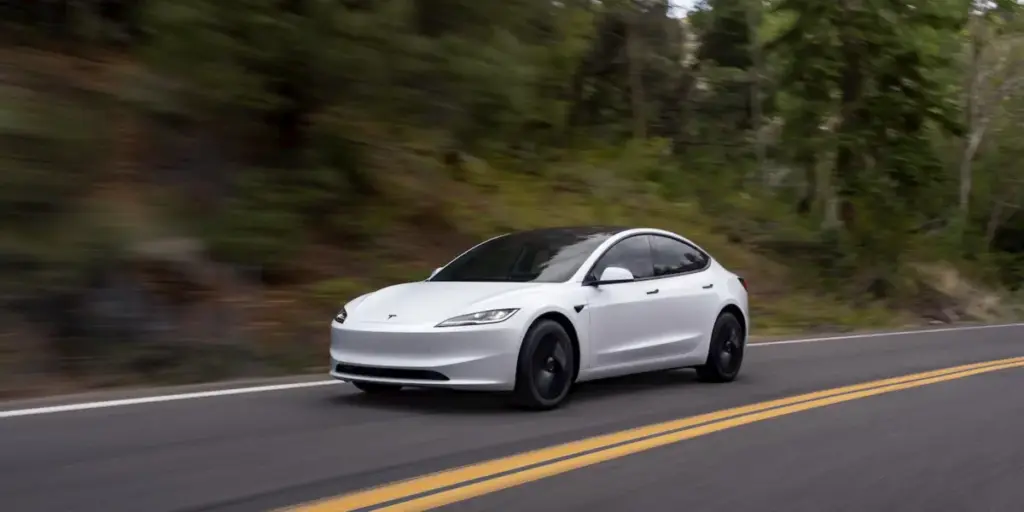
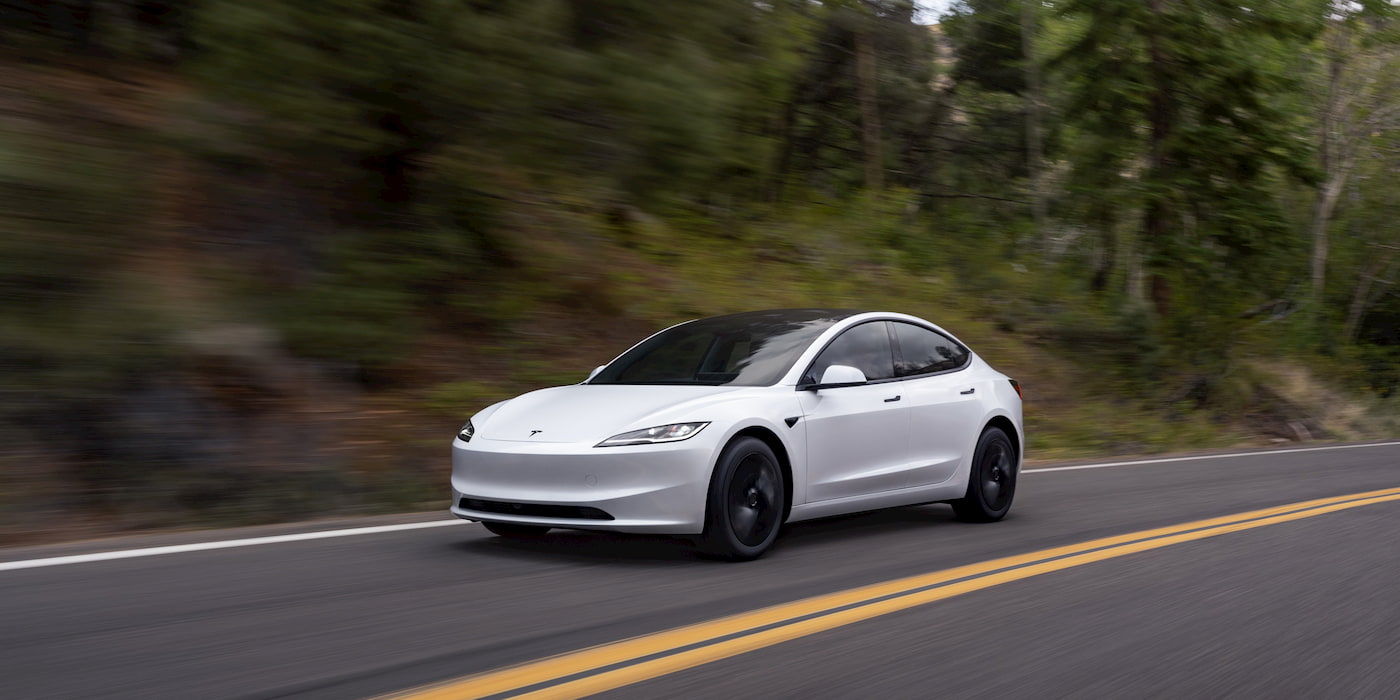
No analysis of the American EV ecosystem is complete without examining Tesla. Accounting for roughly half of all electric vehicle sales in the United States, the Austin-based pioneer continues to act as the primary gravitational force dictating pricing standards.
In May, the average price paid for a Tesla vehicle dropped 1% month-over-month and fell 3.4% compared to the same period in 2025. This downward trajectory is heavily influenced by the composition of Tesla’s sales volume: an overwhelming 96% of Tesla’s May sales were concentrated in its two most accessible offerings:
- The Tesla Model 3: Averaging an accessible transaction price of $49,082.
- The Tesla Model Y: Capturing the high-volume crossover segment with an average transaction price of $51,537.
Because Tesla commands such an outsized market share, every price adjustment or financing incentive introduced by CEO Elon Musk’s team forces legacy competitors—from Ford and General Motors to Hyundai and Kia—to adjust their own pricing matrixes in real-time.
Macroeconomic Tailwinds: Fuel Costs
While internal corporate discounting is doing the heavy lifting, external macroeconomic factors are providing a timely assist. Fluctuating and generally rising gas prices throughout the spring of 2026 have altered consumer calculus at the pump. For daily commuters driving high-mileage routes, the total cost of ownership (TCO) calculation heavily favors electric vehicles, even in the absence of a federal tax credit at the point of purchase.

Official Statements & Industry Perspectives
The resilience of the EV market in a post-subsidy environment has sparked intense debate among industry leaders, financial analysts, and policymakers.
Automotive analysts at Kelley Blue Book noted in their briefing that the market is undergoing a "painful yet necessary maturation process." According to KBB’s senior market researchers, the heavy reliance on manufacturer-funded incentives highlights a transitional phase where automakers are utilizing their own balance sheets to bridge the affordability gap until battery production costs reach absolute parity with internal combustion engines.
Meanwhile, legacy automaker executives have struck a pragmatic tone. In recent investor calls, leadership teams across Detroit and international import brands acknowledged that while the loss of federal tax credits created an initial hurdle, consumer appetite for advanced vehicle tech, superior performance, and lower maintenance costs remains structurally sound.
Wall Street analysts observing the May sales data have similarly adjusted their outlooks. Earlier bearish projections—which forecasted a multi-year stagnation period for American EV adoption following the policy reversal—are being revised. Observers now point out that as battery supply chains localize and manufacturing efficiencies take hold, pure market forces are successfully taking over where public subsidies left off.
Future Outlook: What Lies Ahead for the EV Market?
As the industry looks past the mid-year mark of 2026, the trajectory of the electric vehicle market points toward aggressive competition, technological consolidation, and a hyper-focus on consumer affordability.

1. The Death of the Premium-Only Strategy
The era of launching expensive, low-volume luxury EVs is effectively over. The success of the Tesla Model 3 and Model Y—comprising 96% of Tesla’s dominant sales volume—proves that volume lives in the sub-$50,000 segment. Looking forward, automakers launching new platforms in late 2026 and 2027 are aggressively targeting price points closer to the $30,000 to $40,000 threshold.
2. Sustained Pressure on Profit Margins
The fact that automakers are dedicating 14% of transaction prices to incentives ($7,600 per vehicle) is a double-edged sword. While it successfully drives consumer adoption and clears inventory, it exerts severe pressure on corporate profit margins. Moving forward, surviving the post-subsidy era will require aggressive supply chain cost-cutting, particularly regarding next-generation solid-state and lithium-iron-phosphate (LFP) battery chemistries.
3. Charging Infrastructure as the Ultimate Catalyst
With purchase price gaps rapidly shrinking and fuel costs remaining volatile, the final frontier for widespread EV adoption is consumer confidence in charging infrastructure. As federal and private investments in fast-charging networks continue to roll out across highway corridors and urban centers, range anxiety is steadily dissipating.
Conclusion
The resilience displayed by the American EV market in May 2025/2026 defies the initial doomsday prophecies that followed the repeal of federal tax credits. By relying on aggressive corporate incentives, capitalizing on rising gas prices, and benefiting from structural price cuts spearheaded by market leaders like Tesla, the EV sector has proven that it is no longer a government-dependent novelty. It is a maturing, highly competitive pillar of the modern global automotive industry—proving that when the market is forced to compete on pure value, consumers are still eager to plug in.