Executive Overview
As diplomats, policy experts, and civil society delegates gather in New York for the fifth round of negotiations (INC-5) on the United Nations Framework Convention on International Tax Cooperation—widely known as the Global Tax Treaty—a high-stakes battle lines are drawn over the future of the global economy. Opening today, the talks arrive at a critical inflection point characterized by compounding polycrises: escalating climate catastrophes, runaway nature loss, and a punishing global cost-of-living crunch. Yet, even as the world records its first-ever trillionaire and major oil and gas conglomerates rake in astronomical second-quarter profits, the newly published "zero draft" of the treaty has sparked fierce criticism.
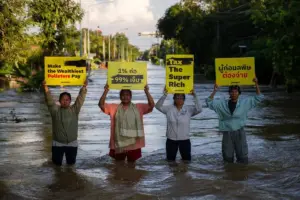
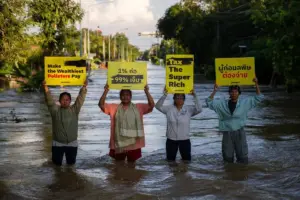
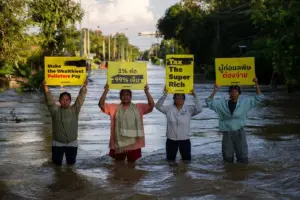
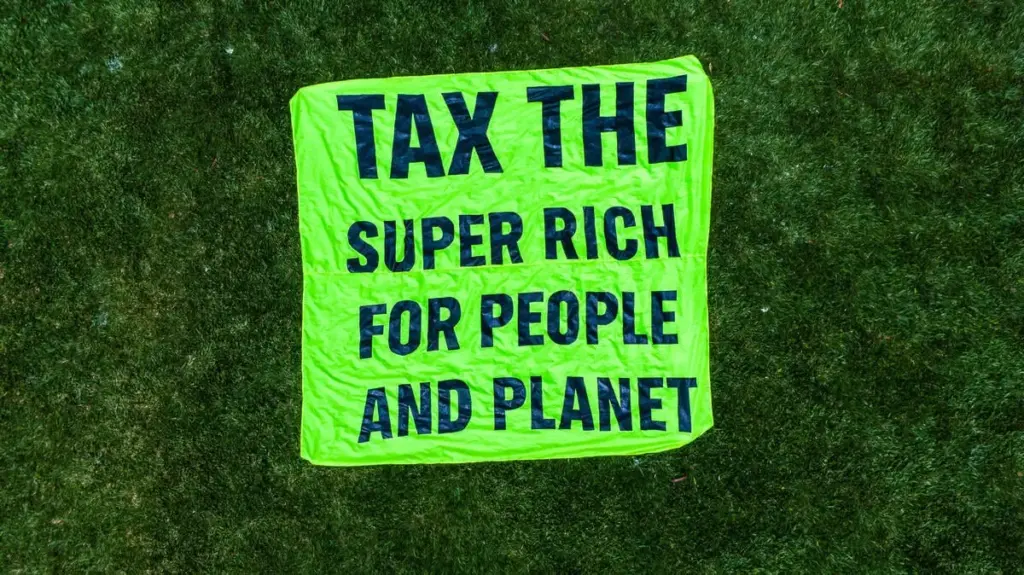
Environmental and economic justice organizations, spearheaded by Greenpeace International, are accusing negotiators of drafting a document that is fundamentally out of touch with reality. The current text leaves gaping loopholes that allow multinational corporate polluters and the super-rich to continue business as usual, shifting the true costs of climate devastation onto vulnerable communities worldwide. Greenpeace is sounding the alarm, demanding that governments dramatically elevate their ambition. The organization argues that the treaty must establish rigorous legal mechanisms—including the foundational "polluter pays" principle and robust taxation of high-net-worth individuals (HNWIs)—to reclaim at least one trillion US dollars annually. These reclaimed funds are desperately needed to finance climate action, protect biodiversity, and fund essential public services during a historically fragile economic era.
Detailed Chronology and the Evolution of INC-5
The Road to New York: From Santa Marta to the UN General Assembly
The path to the fifth round of negotiations in New York has been paved with growing global frustration over deeply entrenched economic inequalities and institutional bias in international tax policymaking. Historically, global tax rules have been shaped largely by exclusive clubs such as the Organisation for Economic Co-operation and Development (OECD), where developing nations often found themselves sidelined. In stark contrast, the UN Framework Convention on International Tax Cooperation represents the first genuinely inclusive forum of its kind, operating on the principle that every country holds an equal vote, with decisions finalized by majority rather than consensus.
The momentum driving INC-5 has accelerated significantly over the past year through a series of landmark international convenings. In April, delegates from 57 nations met in Santa Marta, Colombia, to forge concrete strategies for ending global dependence on coal, oil, and gas. The resulting final synthesis report directly targeted the under-taxation of fossil fuel profits as a primary barrier to achieving a just global energy transition, concluding that progressive tax reforms are non-negotiable.
This sentiment was powerfully reinforced in May, when an overwhelming majority of 141 countries voted at the UN General Assembly in favor of a historic resolution endorsing the International Court of Justice’s (ICJ) advisory opinion on state obligations regarding climate change. This resolution formally cemented the legal linkage between state responsibility, fossil fuel extraction, and climate harm. Yet, despite this mounting international consensus, the newly minted "zero draft" of the Global Tax Treaty has failed to capture the radical urgency demanded by these judicial and political milestones.
Anatomy of the Zero Draft: Where Negotiations Fall Short
Released for the first time in its entirety ahead of the New York talks, the zero draft has disappointed advocates who anticipated a transformative blueprint for global tax justice. Despite substantive policy submissions from 24 countries advocating for a strengthened Sustainable Development article, the current text remains largely symbolic, offering little more than high-level rhetoric already embedded in the original terms of reference.
Crucially, the text provides governments with extensive latitude to maintain the status quo, omitting any enforceable legal obligations that would compel nations to hold wealthy polluters accountable through coordinated national and global tax instruments. Most glaringly, the universally recognized "polluter pays" principle is entirely absent from the current draft.
Furthermore, the provisions targeting high-net-worth individuals (HNWIs) have experienced a noticeable watering down since the preceding round of negotiations in January 2026, effectively reducing the legal obligations of states to clamp down on extreme personal wealth. Compounding these omissions, the zero draft completely sidesteps vital mechanisms such as minimum profit taxation benchmarks for multinational corporations, as well as specialized taxation frameworks governing extractive industries and natural resources. For tax justice advocates, these omissions threaten to turn a potentially historic treaty into an empty exercise in bureaucratic appeasement.
Supporting Context & Metrics: Profits, Crisis, and the Trillion-Dollar Opportunity
The Great Divergence: Record Bonanzas and Planetary Strain
The opening of INC-5 unfolds against a stark socioeconomic backdrop defined by extreme polarization. Recent global economic reports highlight a staggering divergence: even as the world witnessed the coronation of its first-ever trillionaire, primary fossil fuel corporations reported another blockbuster quarter of profits. These record-breaking financial windfalls—bolstered in part by geopolitical conflicts, including ongoing hostilities in the Middle East—stand in sharp contrast to the daily realities faced by ordinary citizens.
While Big Oil executives celebrate soaring second-quarter margins, working-class communities across the globe are absorbing the human and financial toll of unprecedented heatwaves, marine heat anomalies, and escalating weather disasters. The cost-of-living crisis, exacerbated by inflationary shocks and unmitigated resource exploitation, has placed an unbearable burden on public infrastructure and household budgets alike.
The Arithmetic of Ambition: Reclaiming Trillions for the Public Good
According to Greenpeace policy analyses and allied economic institutes, the financial resources required to fund a sustainable, equitable future are readily available; what remains absent is the political framework to capture them. The global economy is swimming in un-taxed corporate windfalls and hidden offshore wealth that could easily be redirected toward public priorities.
By systematically closing aggressive profit-shifting loopholes, dismantling corporate tax havens, and implementing coordinated national and global taxes on corporate polluters and extreme personal fortunes, the international community could unlock monumental volumes of public finance. Greenpeace estimates that a strengthened Global Tax Treaty has the capacity to reclaim at least one trillion US dollars annually.
This capital injection is not merely an accounting exercise; it represents the difference between systemic collapse and resilience. Reclaimed public funds would provide the fiscal space required to underwrite large-scale renewable energy transitions, protect fragile ecosystems from irreversible degradation, and fortify public healthcare, education, and social safety nets in both the Global North and the Global South.
Official Statements and Perspectives from the Frontlines
The debate surrounding the zero draft has mobilized a diverse coalition of international policy experts, regional campaigners, and community leaders directly bearing the brunt of climate devastation.
Nina Stros, Global Senior Policy Expert, Greenpeace International
Articulating the core ultimatum facing delegates in New York, Nina Stros pulled no punches regarding the gravity of the negotiations:
"Governments and delegates still have not grasped what is at stake, but they face a simple choice. Create global tax rules to speed the transition to a fairer, more resilient future by disincentivising investment in environmentally destructive industries, ending tax-dodging, and holding wealthy polluters to account. Or keep shielding polluting corporations and the super-rich while communities pay the price through higher bills and climate devastation. The money is right there. It is about time governments recognised this once-in-a-generation opportunity to make those most responsible for the climate, nature, and inequality crises we are facing pay their share, and reclaim trillions of dollars to invest in our shared future."
Ucizi Ngulube, Tax Justice Campaigner, Greenpeace Africa
Highlighting the systemic injustices embedded within the legacy international financial architecture, Ucizi Ngulube emphasized the perspective of the global majority:
"The global majority championed this United Nations process because the current global tax system is fundamentally unfair, serving a handful of wealthy nations and billionaires at the expense of everyone else. As we head into INC-5, countries must remain ambitious. We don’t need vague promises; we need bold proposals that stop the exploitation and inequality, and hold the ultra-rich polluters accountable for the climate damage they leave behind."
Mayor Melchor Mergal, Municipal Mayor of Salcedo, Eastern Samar, Philippines
Bringing a visceral, human dimension to the negotiating halls of New York, Mayor Melchor Mergal—a survivor of super-typhoon Haiyan and member of the Greenpeace delegation—grounded the abstract negotiations in real-world survival:
"I have seen what the increasingly frequent and devastating storms can do to a community, and I know what it takes to rebuild. The money is needed for stronger homes, schools, and health centres that can safeguard our communities against the next storm. The funds exist. What we are missing is the political will to make those most responsible pay for the damage. A strong treaty would give communities like mine the means to recover and to build real resilience through making polluters pay."
Future Outlook: What Must Happen at INC-5
As negotiations proceed through the week, Greenpeace International and its civil society partners have laid out a clear, non-negotiable roadmap for strengthening the zero draft before the conclusion of INC-5.
- Reinforce Sustainable Development and HNWI Articles: Negotiators must overhaul the current text to align with the robust proposals submitted by progressive member states, independent legal experts, and civil society coalitions, replacing vague language with enforceable legal mandates.
- Embed the Polluter Pays Principle: The treaty must explicitly integrate the polluter pays principle as a foundational legal doctrine, legally tying fossil fuel extraction and environmental degradation to mandatory tax liabilities.
- Target Multinational Extractive Industries: Provisions must be introduced to address minimum profit taxation for multinational conglomerates and establish clear mechanisms for taxing natural resource extraction.
- Secure the Trillion-Dollar Target: The final framework must provide the structural integrity necessary to reclaim at least $1 trillion annually in public revenue, ensuring that funds flow directly into climate adaptation, biodiversity preservation, and a just economic transition.
The eyes of the world are now fixed on New York. Whether delegates possess the political courage to transcend vested corporate interests and deliver a treaty capable of safeguarding human and planetary survival remains the defining question of INC-5. The window to act is narrowing, and the cost of failure will be borne by generations to come.