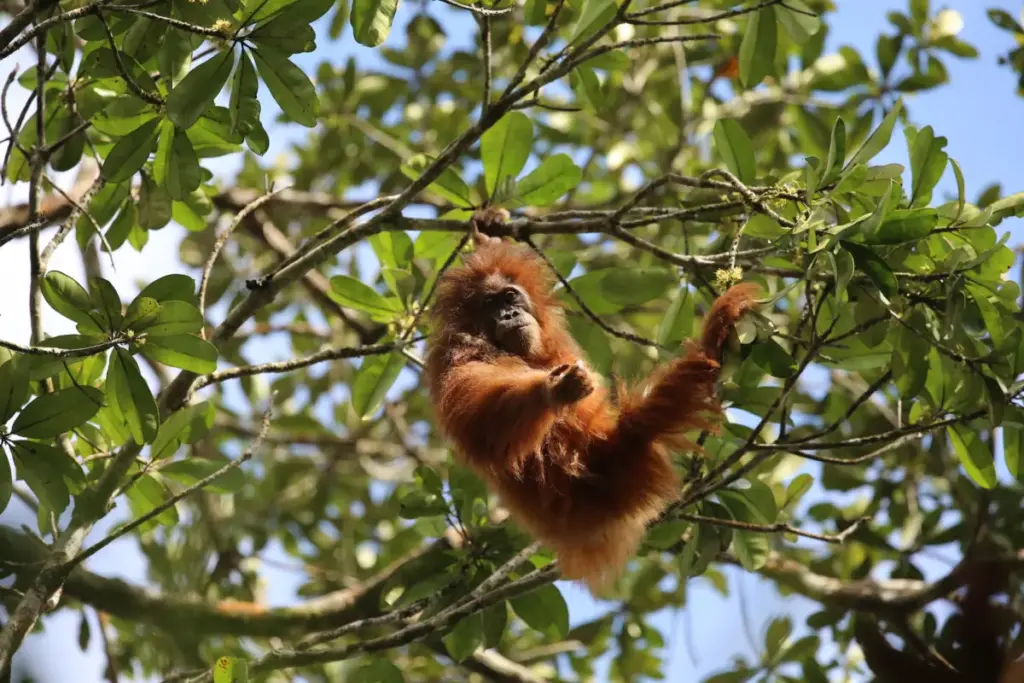
As the world marks World Orangutan Day on August 19, conservationists, researchers, and wildlife advocates are taking stock of a tumultuous and profoundly challenging year for the planet’s three distinct species of Southeast Asian great apes. Long revered for their intelligence, gentle demeanor, and deep genetic ties to humanity, all three species—the Sumatran orangutan (Pongo abelii), the Bornean orangutan (Pongo pygmaeus), and the relatively newly recognized Tapanuli orangutan (Pongo tapanuliensis)—remain classified as critically endangered by the International Union for Conservation of Nature (IUCN).
Despite targeted conservation milestones, dedicated rehabilitation efforts, and the resilience of reintroduced populations, the past year has laid bare the relentless pressures facing these majestic tree-dwelling primates. From devastating climate-fueled natural disasters and aggressive agricultural expansion to industrial megaprojects and illegal wildlife trafficking, orangutans are running out of time and space.
This in-depth review examines the major developments, triumphs, and tragedies that have shaped the conservation landscape for Southeast Asia’s great apes over the past twelve months.
Executive Overview: A Balancing Act of Resilience and Loss
The conservation narrative surrounding orangutans over the past year is characterized by a stark dichotomy: hard-won victories in habitat protection and wildlife rehabilitation pitted against massive systemic threats, catastrophic weather events, and accelerating industrial encroachment.
While the discovery of a new, isolated population of Tapanuli orangutans offered a glimmer of hope, it was almost immediately overshadowed by deadly landslides and ongoing habitat fragmentation. Similarly, while captive-breeding and reintroduction programs continue to celebrate historic milestones—such as rescued mothers giving birth in the wild—population assessments reveal that long-term population decline remains a severe, systemic crisis. On the island of Borneo, unchecked palm oil expansion and a devastating fire season have further squeezed already vulnerable habitats, raising alarm bells across the conservation community.
Understanding the trajectory of orangutan survival requires a closer look at the chronological events of the past year, the underlying metrics driving their decline, and the urgent systemic changes required to secure their future.
Detailed Chronology: A Turbulent Year for Orangutan Conservation
Late 2025: A Whirlwind Period for the Rare Tapanuli Orangutan
The Tapanuli orangutan—officially recognized as a distinct third species in 2017—remains the rarest great ape on Earth. With an estimated wild population hovering precariously around 716 individuals, every new discovery and every loss carries immense ecological weight.
In September 2025, researchers announced a major breakthrough: the confirmation of a previously unknown Tapanuli orangutan population residing within a peat swamp forest in the Lumut Maju village forest of North Sumatra. Prior to this discovery, mainstream scientific consensus held that the species was exclusively confined to the Batang Toru ecosystem, situated approximately 32 kilometers (20 miles) to the east. This newfound pocket of life suggested a broader historical distribution and provided a vital, albeit fragile, new frontier for conservation planning.
However, the euphoria of this discovery was short-lived. Just two months later, in November 2025, Cyclone Senyar struck the region, unleashing torrential rains that triggered tens of thousands of catastrophic landslides across the Batang Toru ecosystem. A subsequent scientific study revealed that these climate-fueled disasters claimed the lives of an estimated 58 Tapanuli orangutans—a staggering blow to a population numbering fewer than 800 individuals.
Compounding these natural disasters are man-made pressures. Small-scale agriculture and unmitigated logging account for roughly 70% of direct forest loss within their range. Meanwhile, large-scale industrial intrusions—including the controversial Batang Toru hydropower plant and the expanding Martabe gold mine—continue to fracture and degrade the remaining fragments of their forest home.
Mid-2026: Triumphs in Rehabilitation Counterbalanced by Grim Population Data
Moving into 2026, conservationists experienced moments of profound inspiration, tempered by sobering data regarding broader population trends.
In July 2026, a rescued Sumatran orangutan named Bulan made headlines globally. Years prior, Bulan had been plucked from the illegal wildlife trade as a victim of trafficking. Following intensive rehabilitation, she was successfully reintroduced into the wild at the Jantho reservation in Aceh, Indonesia’s westernmost province. Seven years after her return to freedom, Bulan gave birth to her first infant in the wild.
This newborn marked the 10th confirmed birth from reintroduced orangutans at the Jantho site, serving as a powerful testament to the viability of rehabilitation programs when paired with stringent habitat protection. However, this uplifting milestone contrasted sharply with the release of a comprehensive 2026 orangutan population assessment, which estimated that the total Sumatran orangutan population plummeted by a devastating 19.5% between 2011 and 2023, despite a modest slowdown in overall forest loss rates.
Early-to-Mid 2026: Bornean Habitats Under Siege from Palm Oil and Fire
Across the Java Sea, Bornean orangutans faced an equally punishing year characterized by agricultural expansion, industrial clearing, and a devastating fire season.
In March 2026, investigative reports revealed that a commercial palm oil company had systematically cleared more than 3,000 hectares (7,400 acres) of primary forest located squarely within a designated UNESCO biosphere reserve—a supposed sanctuary meant to protect vulnerable endemic species.
As the dry season set in, the threat shifted from chainsaws to flames. In May 2026, uncontrolled fires swept through West Kalimantan, consuming more than half of a meticulously managed, 300-hectare (740-acre) orangutan habitat restoration project. Years of painstaking ecological recovery were reduced to ash in a matter of days.
The crisis escalated further in August 2026, when aggressive wildfires scorched the immediate perimeter of a major orangutan rehabilitation center. With regional meteorological agencies forecasting an intensification of drought conditions driven by the El Niño climate cycle, conservationists are bracing for an unprecedented fire season that threatens to push remaining Bornean populations even closer to the brink.
Supporting Context & Metrics: The Biological and Environmental Realities
To fully grasp the gravity of the current conservation crisis, one must examine the unique biological vulnerabilities of orangutans alongside the socioeconomic drivers of their habitat loss.
The Slowest Reproductive Rate in the Animal Kingdom
Orangutans are uniquely ill-equipped to bounce back quickly from population shocks. Female orangutans give birth only once every seven to eight years. This represents the longest inter-birth interval of any mammal on Earth. Coupled with a relatively long maturation period and dependency on their mothers for up to a decade, this biological reality means that even minor adult mortality spikes—such as the 58 Tapanuli individuals lost in the Cyclone Senyar landslides—can permanently impair a species’ ability to sustain itself.
The Looming Threat of Palm Oil and Industrial Encroachment
The rapid transformation of Southeast Asia’s carbon-rich rainforests into monoculture oil palm plantations remains the single largest driver of habitat destruction for both Sumatran and Bornean orangutans. Despite corporate sustainability commitments and zero-deforestation policies, enforcement gaps and speculative land clearing continue to degrade critical wildlife corridors. When forests are fragmented into isolated patches, orangutans face inbreeding depression, starvation, and increased vulnerability to human-wildlife conflict.
Climate Change as a Threat Multiplier
The events of the past year have underscored how deeply climate change exacerbates traditional conservation threats. Unprecedented cyclonic activity in Sumatra and severe, El Niño-induced droughts and fires in Borneo demonstrate that global climate destabilization is actively accelerating local extinction risks. Ecosystems that were once resilient to seasonal shifts are now succumbing to catastrophic weather anomalies.
Official Statements and Expert Perspectives
The intersection of tragedy and triumph over the past year has elicited strong responses from conservation leaders, government officials, and field researchers working on the front lines in Indonesia.
Reflecting on the successful birth of Bulan’s infant at the Jantho reservation, Ujang Wisnu Barata, head of the Aceh provincial conservation agency, emphasized the vital link between rehabilitation and habitat security during an interview with Mongabay contributor Ayat S. Karokaro:
"This birth demonstrates how orangutans, once victims of the wildlife trade, can be given a second chance to live and reproduce in the wild. Successes like this can only continue if their habitat remains protected."
Conservationists across Sumatra and Borneo echo Barata’s sentiment, warning that the billions of dollars invested in anti-trafficking operations and rescue centers will ultimately prove futile if there are no safe, unfragmented forests left to receive rehabilitated animals.
Regarding the massive habitat losses in UNESCO biosphere reserves and the destruction of restoration sites by wildfires, independent ecologists have issued urgent calls for stricter corporate accountability. Environmental watchdogs argue that voluntary corporate pledges are insufficient; governments must enforce heavy legal penalties against agribusiness firms found clearing high-conservation-value forests, particularly within designated protected zones and endangered ape ranges.
Future Outlook: What Lies Ahead for Southeast Asia’s Great Apes?
As the international community reflects on World Orangutan Day, the path forward is clear, albeit daunting. Securing a viable future for Sumatran, Bornean, and Tapanuli orangutans requires a multi-pronged, aggressive strategy:
Strict Habitat Protection and Corridor Restoration: Governments in Indonesia and Malaysia must halt industrial expansion into remaining primary forests, revoke permits granted in protected biosphere reserves, and actively restore degraded corridors to reconnect isolated populations.
Climate-Resilient Conservation Planning: With extreme weather events like cyclones and prolonged droughts becoming the new normal, conservation frameworks must incorporate climate disaster risk reduction, including rapid-response firefighting infrastructure near rehabilitation centers and wildlife reserves.
Law Enforcement and Anti-Trafficking Measures: Continued vigilance against the illegal pet trade and wildlife trafficking is vital. The success of individuals like Bulan proves that rehabilitation works, but prevention remains the most effective tool.
Sustainable Supply Chain Transparency: International markets, particularly in Europe and North America, must enforce stringent due diligence laws that prohibit the importation of commodities linked to deforestation and orangutan habitat destruction.
The orangutans of Sumatra and Borneo are enduring symbols of the biodiversity crisis unfolding across the tropics. Their survival over the coming decades will depend not only on the dedication of field researchers and local communities, but on a global commitment to halting environmental degradation before these iconic cousins of humanity are lost to history forever.