Executive Overview
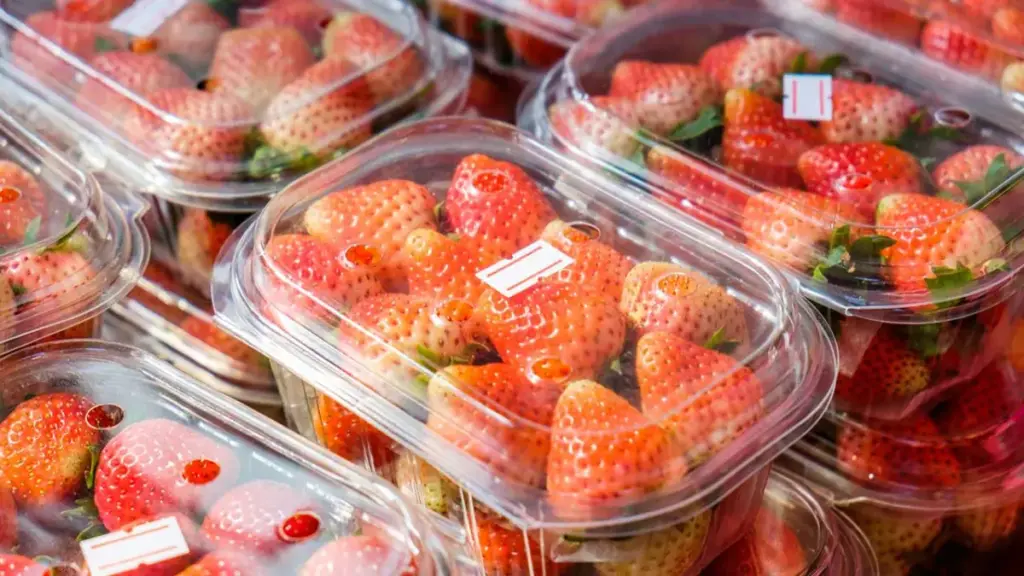
By 2028, consumers walking down the aisles of major supermarkets will notice a quiet but profound transformation. Clamshell containers holding fresh berries are being replaced by ventilated cardboard boxes; takeout salads are served in molded fiber bowls; and microwaveable ready-meals, once universally housed in rigid black plastic, are now presented in clear or white trays.
These aesthetic and material shifts are not merely the result of voluntary corporate benevolence. Instead, they represent the initial wave of compliance with California’s landmark Senate Bill 54 (SB 54)—the Plastic Pollution Prevention and Packaging Producer Responsibility Act. Signed into law in 2022, with its finalized regulations taking effect in May 2026, SB 54 represents the most comprehensive and aggressive Extended Producer Responsibility (EPR) policy in United States history.
┌────────────────────────────────────────────────────────┐
│               SB 54 CORE TARGETS (by 2032)             │
├───────────────────────────┬────────────────────────────┤
│  Plastic Source Reduction │  Recyclability/Compost     │
│           -25%            │           100%             │
│   (by weight & unit count)│  (of all covered packaging)│
└───────────────────────────┴────────────────────────────┘
Because California represents the world’s fifth-largest economy, the logistical reality of maintaining separate inventory streams means that manufacturers are reformulating their packaging nationwide rather than designing California-specific alternatives. Consequently, SB 54 is functioning as a de facto national standard, forcing a sweeping overhaul of the global packaging supply chain.
However, the path to a circular economy is fraught with friction. While state regulators and industry coalitions work to implement these massive structural changes, a coalition of environmental organizations has initiated high-profile litigation. They argue that the state’s finalized regulations contain industry-friendly loopholes that threaten to undermine the transformative intent of the law.
Detailed Chronology
The rollout of SB 54 is designed as a multi-decade regulatory roadmap, giving producers, municipal waste facilities, and retailers time to transition away from legacy plastics. However, the timeline has already become a battleground of administrative deadlines, corporate restructuring, and legal challenges.
                  SB 54 IMPLEMENTATION TIMELINE

  2025        May 2026      Jan 2027      Jan 2028      Jan 2030      Jan 2032
   │             │             │             │             │             │
   ├──[EPS Ban]  ├──[Regs In]  ├──[-10%]     ├──[30% Rec]  ├──[-20%]     ├──[-25%]
   │             │             │             │             │             │
   ▼             ▼             ▼             ▼             ▼             ▼
EPS Food     Permanent     EPR Program   30% Actual    20% Source    25% Source
Ware Banned  Rules Active  Starts;       Recycling     Reduction;    Reduction;
                           Mitigation    Rate Met      40% Rec Rate  65% Rec Rate;
                           Fees Begin                                100% Rec/Comp
Key Regulatory Phases and Milestones
- January 1, 2025: The Expanded Polystyrene (EPS) Ban: Expanded polystyrene food service ware was officially prohibited from sale, distribution, and import in California. This occurred after the plastics industry failed to demonstrate a state-mandated 25% recycling rate for the material—a threshold widely considered impossible for EPS due to economic and logistical constraints.
- May 1, 2026: Finalized Regulations Take Effect: CalRecycle finalized the administrative rules governing SB 54. By June 1, 2026, all covered producers were required to join the state-approved Producer Responsibility Organization (PRO)—the Circular Action Alliance (CAA)—or register with CalRecycle as independent entities.
- January 1, 2027: Full Program Implementation and Mitigation Fees: The EPR program officially commences. Covered single-use plastic packaging must achieve a 10% source reduction below 2023 baselines. Additionally, producers begin paying into a $500 million annual plastic pollution mitigation fund, which will run for ten years to support environmental restoration in communities disproportionately impacted by plastic waste.
- January 1, 2028: The 30% Recycling Threshold: At least 30% of covered single-use plastic packaging and food service ware sold in California must be actively recycled. Crucially, the law requires actual recycling rates, not merely a theoretical designation of "recyclability."
- January 1, 2030: The 40% Recycling and 20% Source Reduction Target: The mandated recycling rate rises to 40%, and source reduction (measured by both weight and plastic unit count) must reach 20%.
- January 1, 2032: The Final Targets: The law’s ultimate goals take full effect: a 25% source reduction of single-use plastics, a 65% actual recycling rate for all remaining plastic packaging, and a mandate that 100% of all covered packaging (plastic and non-plastic) sold in California be fully recyclable or compostable.
The June 2, 2026 Litigation
The implementation timeline faced a major disruption on June 2, 2026, when a coalition of environmental groups—including Oceana, the Natural Resources Defense Council (NRDC), and the Californians Against Waste Foundation—filed a lawsuit in San Francisco Superior Court.
The lawsuit targets CalRecycle, arguing that the finalized May 2026 regulations deviate from the statutory language of SB 54. The plaintiffs allege that regulators introduced unauthorized exclusions for major categories of plastic packaging, allowed producers to claim indefinite exemptions, and failed to guard against controversial chemical and molecular recycling technologies that the law was designed to restrict. This legal challenge introduces a layer of regulatory uncertainty that could alter compliance requirements in the coming years.
Supporting Context & Metrics
To comprehend the scale of SB 54’s intervention, it is necessary to examine the underlying metrics of the global plastic crisis and the specific material science limitations that have historically prevented circularity.
   U.S. Municipal Waste: Plastic Percentage (1960 vs. 2018)

  1960  [0.4%]
  2018  [████████████ 12.2%]
        +--------------------------------------------------+
        0%                                               15%
The Scale of the Packaging Crisis
Data from the U.S. Environmental Protection Agency (EPA) illustrates the rapid rise of plastic waste. In 1960, plastics accounted for a mere 0.4% of total municipal solid waste in the United States. By 2018, that figure had ballooned to 12.2%, representing over 35 million tons of plastic waste annually.
According to data compiled by Greenprint, packaging is the primary driver of this trend, accounting for roughly 36% of all manufactured plastic. Alarmingly, 85% of this single-use packaging ends up directly in landfills, with only a fraction successfully processed back into the economy.
The Target Materials: Why They Must Change
SB 54 targets several specific categories of "problematic" packaging materials, forcing manufacturers to find alternatives due to recycling limitations and chemical toxicity concerns.
┌───────────────────────────┬──────────────────────────────────────────────────┐
│ Material                  │ Primary Technical / Environmental Hurdle         │
├───────────────────────────┼──────────────────────────────────────────────────┤
│ Expanded Polystyrene (EPS)│ Costly to transport; breaks into microplastics;  │
│                           │ contains styrene (suspected carcinogen).         │
├───────────────────────────┼──────────────────────────────────────────────────┤
│ Carbon Black Plastics     │ Absorbs near-infrared (NIR) light, making        │
│                           │ sorting machines unable to detect and route it.  │
├───────────────────────────┼──────────────────────────────────────────────────┤
│ Polyvinyl Chloride (PVC)  │ Contaminates PET recycling streams; contains     │
│                           │ phthalates (linked to endocrine disruption).     │
├───────────────────────────┼──────────────────────────────────────────────────┤
│ Oxo-Degradable Plastics   │ Fragments into persistent microplastics rather    │
│                           │ than undergoing true organic biodegradation.     │
└───────────────────────────┴──────────────────────────────────────────────────┘
1. Expanded Polystyrene (EPS)
Commonly known as foam packaging, EPS is comprised of roughly 95% air. This low density makes it highly inefficient and costly to transport to recycling facilities. Furthermore, EPS easily fragments into tiny beads that contaminate other recyclable materials and escape into marine ecosystems. From a public health perspective, the National Institutes of Health classifies styrene—the primary building block of EPS—as a suspected human carcinogen linked to increased risks of leukemia and lymphoma.
2. Carbon Black and Dark-Colored Plastics
Widely used in microwave trays and takeout containers, black plastic is virtually unrecyclable in modern Materials Recovery Facilities (MRFs). These facilities rely on Near-Infrared (NIR) optical sensors to identify and sort different polymer types.
Because the carbon black pigment absorbs the infrared light, the sensors cannot read the reflected signature. Consequently, these containers are misidentified as waste and routed directly to landfills. Under SB 54, clear or light-colored polyethylene terephthalate (PET) is rapidly replacing black plastic because of its high optical detectability and market value.
3. Polyvinyl Chloride (PVC) Clamshells and Blister Packs
Often used for clear retail packaging, PVC is a major contaminant in the plastic recycling stream. Even a minute quantity of PVC (as low as 0.1%) mixed into a batch of PET can degrade the entire recycling run, turning the resulting plastic brittle and yellow during thermal reprocessing.
Furthermore, PVC requires plasticizers such as phthalates to remain flexible. These additives are known endocrine disruptors associated with chronic health conditions, including reproductive issues and metabolic disorders.
4. Oxo-Degradable Plastics
Marketed as "biodegradable" or "eco-friendly," oxo-degradable plastics are conventional polymers (like polyethylene) mixed with metal salts that accelerate fragmentation under heat or sunlight. Rather than undergoing biological degradation into organic matter, these materials simply fragment into millions of microscopic plastic particles.
SB 54 targets these materials to combat greenwashing, establishing strict requirements that any packaging labeled "compostable" must meet rigorous scientific standards, such as the ASTM D6400 specification.
Official Statements & Stakeholder Perspectives
The implementation of SB 54 has created a complex web of competing interests, with regulators, environmental advocates, and industry representatives offering differing perspectives on the law’s execution.
The Environmental Coalition’s Position
In launching their June 2026 lawsuit, environmental organizations expressed concern that CalRecycle’s finalized rules could weaken the law’s intent. In a joint statement, representatives from Oceana and the NRDC argued:
"The final regulations drafted by CalRecycle contain significant concessions to the plastics industry. By creating broad exemptions and failing to explicitly ban false solutions like chemical recycling, the state risks turning a historic environmental victory into a series of bureaucratic loopholes. We filed this suit to ensure that the letter of the law is fully realized, and that producers are held genuinely accountable for their plastic footprint."
The Industry Response
Conversely, the packaging and consumer goods industries have emphasized the immense logistical and financial challenges of compliance. The Circular Action Alliance (CAA), acting as the state-approved PRO, has maintained that coordination and investment are key to success.
Many major manufacturers are already shifting their portfolios to meet the upcoming standards. For example, packaging manufacturer Faerch has launched a line of crystalline PET (CPET) ready-meal trays containing a minimum of 40% recycled post-consumer content, directly replacing non-recyclable black plastic trays.
Similarly, multinational consumer goods giant Unilever has publicly restructured its packaging strategy around three pillars: No Plastic (exploring reuse and refill systems), Less Plastic (reducing virgin plastic usage by weight), and Better Plastic (transitioning to fully recyclable materials). In a corporate sustainability update, Unilever stated:
"Navigating the patchwork of state-level EPR regulations is one of the most complex operational challenges our industry has faced in decades. Our strategy is to align our entire North American product portfolio with the most stringent standards—primarily California’s SB 54. By standardizing our packaging to meet these criteria, we can streamline our supply chains and accelerate our transition toward a circular business model."
Future Outlook
As California drives the transition toward circularity, the consequences will extend far beyond the state’s borders, reshaping municipal infrastructure, interstate commerce, and consumer behavior.
                      THE CIRCULAR PACKAGING LOOP

       [ 1. Eco-Design ] ────► [ 2. Consumer Purchase ]
               ▲                          │
               │                          ▼
       [ 4. High-Tech MRF ] ◄─── [ 3. EPR Collection ]
         (Optical Sorters)       (Funded by Producers)
Infrastructure Transformation via EPR Fees
One of the most powerful mechanisms of SB 54 is its funding model. The EPR fees collected from producers will generate hundreds of millions of dollars annually. Unlike traditional taxes, these funds are legally earmarked to upgrade waste management infrastructure.
A significant portion of this capital will go directly to municipal Material Recovery Facilities (MRFs) to fund advanced sorting technologies, such as high-speed robotic arms and state-of-the-art optical sorters. Additionally, these funds will expand commercial composting infrastructure, ensuring that compostable bioplastics can be processed under the high-heat, industrial conditions required for proper decomposition.
The Interstate Ripple Effect
In the absence of federal action, other states are moving to pass their own EPR laws, creating a regulatory patchwork that is difficult for national brands to navigate.
┌─────────────────┬───────────────────────────┬────────────────────────────────┐
│ State           │ Legislative Action        │ Key Focus Area                 │
├─────────────────┼───────────────────────────┼────────────────────────────────┤
│ California      │ SB 54 (Passed)            │ 25% source reduction; 65% rec. │
├─────────────────┼───────────────────────────┼────────────────────────────────┤
│ Oregon          │ Recycling Modernization   │ Shared producer funding for    │
│                 │ Act (Passed)              │ municipal system upgrades.     │
├─────────────────┼───────────────────────────┼────────────────────────────────┤
│ New York        │ Proposed EPR Bills        │ Target-driven reduction of     │
│                 │                           │ packaging waste streams.       │
├─────────────────┼───────────────────────────┼────────────────────────────────┤
│ CO, ME, VT, MD  │ Passed EPR Laws           │ Eco-modulated fees to discourage│
│                 │                           │ non-recyclable materials.      │
└─────────────────┴───────────────────────────┴────────────────────────────────┘
This regional momentum is leading toward a standardized "West Coast" packaging market, as Washington, Oregon, and California harmonize their material acceptance lists. For national manufacturers, designing packaging that complies with this unified West Coast standard is the most cost-effective path forward, effectively elevating packaging standards for the entire United States.
Navigating the Retail Space: A Consumer’s Guide
As packaging materials change, consumers must learn to identify truly sustainable options and avoid greenwashing.
             HOW TO IDENTIFY TRULY SUSTAINABLE PACKAGING

       Look For:                           Be Skeptical Of:

       ✔ ASTM D6400 Certification          ✘ Vague "Eco-Friendly" Claims
       ✔ BPI (Compostable) Logo            ✘ "Biodegradable" without proof
✔ How2Recycle Instructions ✘ Paper cups with plastic linings- Look for Certified Compostability: Do not rely on vague marketing terms like "earth-friendly" or "biodegradable." Look for the Biodegradable Products Institute (BPI) logo or an explicit ASTM D6400 certification. These markings guarantee that the material will break down safely in industrial composting facilities without leaving toxic chemical residues or microplastics.
- Verify Recyclability via How2Recycle: Check for the How2Recycle label on packaging. This system provides clear, standardized instructions on whether a component is widely recycled, requires store drop-off (such as plastic films), or must be disposed of in the trash.
- Understand the Limits of Commercial Composting: Consumers should be aware that compostable plastics are designed to degrade only under the controlled conditions of commercial facilities. If a local municipality does not offer a green waste program that accepts food-service bioplastics, these items must be placed in the landfill trash. They will not decompose in a backyard compost pile or in a standard landfill due to a lack of oxygen and heat.
- Embrace Reuse and Refill Systems: The ultimate goal of SB 54 is source reduction. Consumers can support this transition by choosing brands that offer concentrated refill pods (such as hand soaps and cleaning supplies) or by participating in reuse programs that utilize durable, returnable containers.
By shifting the financial and logistical burden of waste management back to the companies that create it, SB 54 is dismantling the incentives that made single-use plastic the default packaging choice for decades. While legal and operational hurdles remain, the law has set in motion a fundamental redesign of the global packaging supply chain, moving closer to a future where packaging waste is designed out of the economy entirely.