Executive Overview
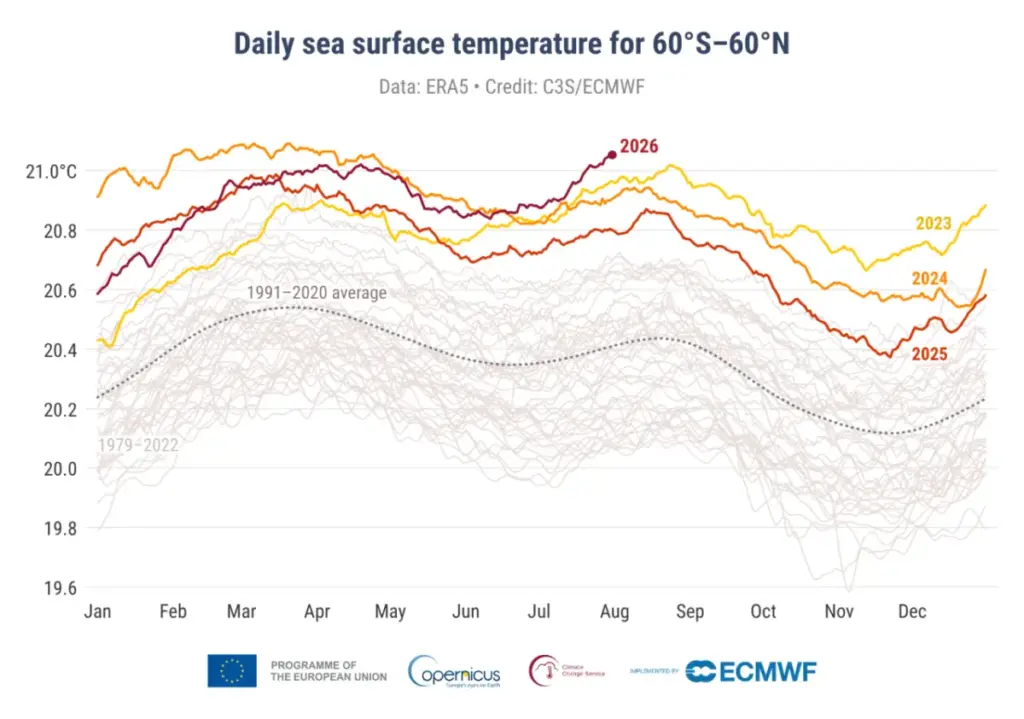
The Earth’s oceans—the primary thermal and chemical buffer safeguarding the planet against runaway climate change—are exhibiting alarming signs of physical degradation. Recent findings published in Nature confirm that unprecedented, record-breaking ocean temperatures are actively weakening the biological and physical mechanisms that make the ocean the world’s largest carbon sink. As sea surface temperatures soar, the ocean’s capacity to absorb anthropogenic carbon dioxide and dissipate atmospheric heat is deteriorating, accelerating the broader climate crisis.
In response to this ecological imperative, a powerful cross-continental coalition of nations has mobilized ahead of the upcoming United Nations Climate Change Conference (COP31). Spearheaded by the African Group of Negotiators (AGN), the European Union, a bloc of Latin American nations, and the Alliance of Small Island States (AOSIS), these countries are demanding a structural paradigm shift. They are campaigning to elevate ocean protection from peripheral, informal side events into binding, negotiated decisions that carry legal and financial weight within the United Nations Framework Convention on Climate Change (UNFCCC) framework.
+-----------------------------------------------------------------------------------+
|                        OCEAN-CLIMATE DIPLOMACY AT A GLANCE                        |
+---------------------------------------------------+-------------------------------+
| Scientific Reality                                | Political Ambition             |
| • Ocean absorbs ~90% of excess planetary heat     | • Coalition of EU, AGN, AOSIS |
| • CO2 absorption efficiency declining fast         |   & Latin America pushing for |
| • Record sea-surface temperatures recorded        |   formal "negotiated decisions" |
+---------------------------------------------------+-------------------------------+
| Strategic Roadblock                               | Proposed Mechanism            |
| • Deepening global climate finance deficit        | • COP31 Co-Presidency         |
| • SDG 14 remains the least-funded SDG             |   (Türkiye & Australia)       |
| • <1% of climate finance targets marine solutions |   launching voluntary roadmap |
+---------------------------------------------------+-------------------------------+
However, this diplomatic ambition faces a stark economic reality. The initiative threatens to be paralyzed by a systemic contraction in global climate finance. As donor nations grapple with fiscal tightening, geopolitical instability, and competing domestic priorities, the financial architecture needed to fund marine conservation, coastal adaptation, and blue carbon restoration is severely underfunded. Without dedicated, scalable capital, even the most ambitious negotiated ocean mandates risk becoming unenforceable symbolic gestures.
Detailed Chronology
The Evolution of the Ocean-Climate Nexus in Multilateral Policy
For decades, the UNFCCC process largely treated marine systems as isolated ecological entities rather than central components of the global climate engine. The legal foundations laid at the Rio Earth Summit in 1992 bifurcated international environmental governance, compartmentalizing climate change under the UNFCCC while pushing ocean health into separate frameworks, such as the UN Convention on the Law of the Sea (UNCLOS) and later the Convention on Biological Diversity (CBD).
CHRONOLOGY OF OCEAN-CLIMATE DIPLOMACY

1992 ── Rio Earth Summit: Climate and ocean governance bifurcated into separate UN tracks.
2019 ── COP25 ("Blue COP"): Mandates the annual Ocean and Climate Change Dialogue.
2021 ── COP26 (Glasgow): Formally embeds ocean dialogues into the UNFCCC subsidiary bodies.
2023 ── COP28 (Dubai): Oceans integrated into Global Stocktake, though lacking binding targets.
2025 ── Türkiye Ministerial (September): 25+ ministers convene to draft a COP31 Ocean Roadmap.
2026 ── COP31 Target: Alliance pushes for fully integrated, negotiated marine decisions.
The institutional momentum shifted at COP25 in 2019, dubbed the "Blue COP" under the Chilean presidency. This summit produced an explicit mandate directing the Chair of the Subsidiary Body for Scientific and Technological Advice (SBSTA) to convene an annual Ocean and Climate Change Dialogue.
- COP26 (Glasgow, 2021): The ocean dialogue was formally institutionalized as an annual fixture, instructing UNFCCC bodies to integrate marine considerations into their ongoing workstreams.
- COP27 (Sharm El-Sheikh, 2022) & COP28 (Dubai, 2023): Negotiators succeeded in incorporating explicit ocean references into the Global Stocktake text. However, marine issues remained confined to non-binding side events and informal reports, lacking the structural power of negotiated agenda items.
- The Present Diplomatic Push: Recognizing the limitations of informal talks, a diverse diplomatic bloc—comprising African states, the EU, AOSIS, and Latin American nations—has initiated a coordinated campaign for COP31. Their goal is to transition ocean policy from voluntary dialogues into formal, negotiated decisions that require state compliance and financial tracking.
- September Ministerial in Türkiye: In preparation for COP31, joint co-presidents Türkiye and Australia have organized a high-level ministerial summit in Türkiye. Bringing together more than 25 environment and climate ministers across the Asia-Pacific, Europe, Africa, and Latin America, this meeting is designed to translate the recommendations of informal ocean dialogues into a structured, voluntary action plan for global climate policy.
Supporting Context & Metrics
The Physics of Sink Degradation
The scientific rationale driving this diplomatic push is grounded in marine biogeochemistry. Oceans cover more than 70% of the Earth’s surface and have historically served as the ultimate buffer against anthropogenic warming, absorbing approximately 90% of the excess heat trapped by greenhouse gas emissions and roughly 25% to 30% of total carbon dioxide emissions.
 ocean Heat & Carbon Absorption Mechanisms
 ┌─────────────────────────────────────────────────────────────────────────┐
 │                       Atmospheric Greenhouse Gases                      │
 └─────────────────────────────────────────────────────────────────────────┘
                                   │  │
             Heat Absorption (~90%)│  │CO2 Sequestration (~25-30%)
                                   ▼  ▼
 ┌─────────────────────────────────────────────────────────────────────────┐
 │                           SURFACE OCEAN WATERS                          │
 │  • Warming reduces gas solubility (CO2 degassing risk)                   │
 │  • Increased ocean stratification blocks deep-water nutrient upwelling  │
 └─────────────────────────────────────────────────────────────────────────┘
                                   │
                         Biological Pump Stalled
                                   ▼
 ┌─────────────────────────────────────────────────────────────────────────┐
 │                            DEEP OCEAN SINKS                             │
 │  • Marine heatwaves disrupt phytoplankton carbon uptake                 │
 │  • Declining capacity accelerates atmospheric CO2 accumulation          │
 └─────────────────────────────────────────────────────────────────────────┘
However, recent studies indicate this vital sink is hitting physical limits:
- Thermal Stratification: As surface waters heat up, they become less dense, creating a stable upper layer that resists mixing with colder, nutrient-rich deeper waters. This stratification stifles the upwelling of nutrients necessary for phytoplankton growth, suppressing the primary biological engine responsible for sequestering atmospheric carbon.
- Solubility Reduction: Basic chemical laws dictate that warmer water holds less dissolved gas. As ocean temperatures hit unprecedented highs, the water’s natural physical capacity to absorb atmospheric $CO_2$ drops, risking a scenario where marine systems transition from net carbon sinks to net carbon sources.
- Severe Ecosystem Degradation: Persistent ocean heatwaves have triggered widespread coral bleaching, collapsed kelp forests, and driven ocean acidification, destabilizing the coastal ecosystems that protect shorelines and sustain blue carbon storage.
The Marine Climate Finance Gap
While the physical need for ocean intervention is accelerating, the allocation of international public and private finance remains severely disproportionate.
  DISTRIBUTION OF GLOBAL CLIMATE FINANCE
  ======================================
  [██████████████████████████████████████████████████] Terrestrial & Energy Systems (99.0%)
[█] Ocean-Focused Mitigation & Adaptation (< 1.0%)- SDG 14 Deficit: Sustainable Development Goal 14 ("Life Below Water") remains the single least-funded of all 17 UN Sustainable Development Goals, receiving less than 1% of total international climate finance flows.
- The Multitrillion-Dollar Shortfall: Developing nations, particularly SIDS and coastal African nations, face an estimated adaptation finance gap exceeding $300 billion annually by 2030. Blue carbon restoration—including mangroves, seagrasses, and salt marshes—receives only a fraction of terrestrial forestry funding, despite storing carbon at rates up to four times faster per hectare than tropical rainforests.
- Fiscal Contraction: The debate over the New Collective Quantified Goal (NCQG) for climate finance reveals severe donor fatigue among traditional developed nations. This resource constraint directly threatens the implementation of formal ocean protection mandates under COP31.
Official Statements
The campaign to elevate ocean policy within the UNFCCC has drawn clear lines between civil society advocates, regional negotiation blocs, and summit organizers.
┌──────────────────────────────────────────────────────────────────────────┐
│                         STAKEHOLDER POSITIONS                            │
├──────────────────────────┬───────────────────────────────────────────────┤
│ Stakeholder Group        │ Primary Policy Objective                      │
├──────────────────────────┼───────────────────────────────────────────────┤
│ AOSIS & AGN              │ Binding decisions, dedicated blue finance,    │
│                          │ Loss & Damage inclusion for coastal states    │
├──────────────────────────┼───────────────────────────────────────────────┤
│ European Union           │ Formalized marine protection targets,         │
│                          │ Integration of blue carbon into NDCs          │
├──────────────────────────┼───────────────────────────────────────────────┤
│ COP31 Co-Presidency      │ Pragmatic, voluntary ocean roadmap;           │
│ (Türkiye & Australia)    │ Consensus-building via multi-year action plan │
├──────────────────────────┼───────────────────────────────────────────────┤
│ Ocean Conservancy        │ Multi-year operational guidance to turn       │
│                          │ informal dialogues into tangible outcomes     │
└──────────────────────────┴───────────────────────────────────────────────┘
Addressing the necessity of moving beyond non-binding dialogues, Whitney Berry, Associate Director of Climate Policy at the non-profit Ocean Conservancy, highlighted the importance of structural continuity:
"Even an informal ‘multi-year’ plan, instead of a negotiated roadmap, could help guide the ocean dialogues series in the UN climate process towards more concrete results. Without a structured trajectory, these critical marine discussions risk remaining static talk shops while ocean health degrades in real time."
In diplomatic interventions submitted to the UNFCCC, representatives from the African Group of Negotiators (AGN) stressed the fundamental link between ocean health, coastal adaptation, and economic survival:
"For coastal and island states across Africa, the ocean is not merely an environmental buffer—it is a life-support system. Leaving ocean protection out of negotiated outcomes starves coastal communities of the binding financial mechanisms required to build resilience against sea-level rise and collapsing fisheries."
Meanwhile, statements from the Alliance of Small Island States (AOSIS) underscored the existential threat facing their members:
"Small island states contribute the least to global emissions yet bear the brunt of marine climate impacts. Formalizing ocean protection within negotiated COP decisions is an urgent necessity to guarantee targeted climate finance flows, not an optional diplomatic gesture."
In response to these calls, the Turkish Co-Presidency outlined a pragmatic strategy aimed at bridging political divides:
"In collaboration with Australia and our international partners, Türkiye is dedicated to creating a concise, actionable ocean roadmap. By convening key ministers across regions this September, our goal is to align international priorities and ensure that the valuable insights generated by UN ocean dialogues are systematically integrated into global climate policy."
Future Outlook
As the diplomatic focus shifts toward the September ministerial meeting in Türkiye and the subsequent convening of COP31, multilateral negotiators face a complex landscape defined by ecological urgency and political fragmentation.
       ROADMAP TO COP31 INTEGRATION

       [ September Ministerial Meeting ]
                       │
                       ▼
       [ Voluntary Ocean Action Plan Drafted ]
                       │
                       ▼
   ┌───────────────────┴───────────────────┐
   ▼                                       ▼
[ Scenario A: Full Integration ]   [ Scenario B: Fragmented Progress ]
 • Formal UN Decision Text         • Voluntary Roadmap Only
 • Dedicated Blue Finance Stream   • Mainstream Finance Excludes Marine
 • Mandatory Blue Carbon in NDCs   • Ocean Kept in Informal Dialogues
Potential Scenarios for COP31
-
Scenario A: Formal Incorporation into Negotiated Decisions
If the coalition led by the EU, AGN, AOSIS, and Latin American states successfully builds consensus, COP31 could establish a formal agenda item for oceans. This would mandate parties to integrate marine mitigation and adaptation measures directly into their Nationally Determined Contributions (NDCs 3.0), binding ocean conservation to official climate finance tracking systems. -
Scenario B: The Voluntary "Multi-Year Action Plan" Compromise
If fiscal constraints and resistance from fossil-fuel-dependent nations prevent formal negotiated decision text, the co-presidency of Australia and Türkiye will likely rely on a voluntary, multi-year action plan. While this would offer structural continuity and guidance for annual ocean dialogues—aligning with the pragmatic path noted by policy experts—it would lack legal force, leaving marine initiatives dependent on discretionary funding. -
Scenario C: Financial Paralysis
Should negotiations over global climate finance architecture falter, ocean protection initiatives risk complete marginalization. Without dedicated funding lines, coastal states may be forced to divert limited domestic resources to emergency climate response, abandoning long-term marine restoration and carbon-sink protection plans.
Strategic Priorities for the Ocean-Climate Nexus
To ensure that ocean protection delivers tangible climate impacts, international policy must align around three critical priorities:
- Expanding Blue Carbon Accounting: Standardizing methodologies to measure and verify carbon sequestration in mangroves, salt marshes, and seagrasses, allowing these ecosystems to be reliably integrated into carbon markets and national greenhouse gas inventories.
- Reallocating Adaptation Finance: Rebalancing global climate finance flows to ensure ocean-based adaptation solutions receive funding proportional to their climate risk mitigation potential.
- Integrating Marine Protected Areas (MPAs): Linking UNFCCC ocean decisions directly with the Kunming-Montreal Global Biodiversity Framework’s goal of protecting 30% of marine ecosystems by 2030, ensuring synchronized climate and biodiversity action.
The upcoming summit in Türkiye will serve as a crucial test of international resolve. Whether world leaders choose to formally embed ocean protection into the legal structure of global climate agreements or relegate it to voluntary frameworks will determine if the world’s largest carbon sink remains a resilient climate shield—or becomes an active contributor to global warming.