Executive Overview
In the summer of 2024, as the Florida Department of Education finalized its review of prospective science textbooks, a quiet transformation was taking place behind closed doors. Across multiple publishers, high-level edits were introduced to instructional materials destined for millions of public school students. Critical metrics detailing annual mortality rates from global warming were rephrased; explicit references to human-caused fossil fuel emissions were struck out; and foundational vocabulary terms like "climate change" and "pollution" were replaced with ambiguous administrative alternatives.
An extensive joint investigation by WUSF and The Hechinger Report has revealed that these alterations were not accidents of standard editing, nor were they strictly mandated to align textbooks with state science benchmarks. Instead, they reflect a targeted push by state education officials to water down, obscure, or outright eliminate content concerning the climate crisis.
This textbook revision cycle is part of a broader, systemic political realignment within Florida’s public education apparatus under the administration of Governor Ron DeSantis. While the state is concurrently undertaking its first revision of science standards in nearly two decades, educators describe a prevailing "culture of caution" characterized by self-censorship and fear of administrative retribution. As a frontline state uniquely vulnerable to sea-level rise, intensifying hurricanes, and record-breaking heat, Florida’s classrooms are increasingly constrained by political anxieties that place the commercial and economic interests of the fossil fuel industry above peer-reviewed scientific consensus.
Detailed Chronology: How the Textbook Edits Unfolded
The process of shaping Florida’s instructional materials follows a rigid bureaucratic rhythm. The Florida Department of Education (FDOE) evaluates and updates its approved textbook lists approximately once every five years. School districts across the state are heavily incentivized—though not legally required—to select titles from this state-approved inventory to maximize their funding allocations.
The 2023–2024 Textbook Adoption Cycle
The cycle for science textbooks began in earnest in 2023, culminating in the summer of 2024 when the FDOE released its lists of approved and rejected titles. Data analyses performed by WUSF and The Hechinger Report revealed an immediate discrepancy: textbooks covering subjects most likely to feature climate content—specifically environmental science, earth science, and marine science—were initially adopted at less than half the rate of texts covering other core science subjects.
Rather than permanently rejecting these vital resources, the state offered publishers an opportunity to revise their content to secure state approval. Public records requests submitted to the FDOE revealed a persistent pattern of negotiations wherein state officials demanded explicit modifications to climate change text.
- July 2024 Correspondence: Public records show a steady stream of communications between FDOE officials and major publishers, including McGraw Hill and Cengage. On July 2, 2024, a McGraw Hill vice president submitted a revised manuscript featuring language shifts for special topics in Michael Huber’s Marine Science textbook.
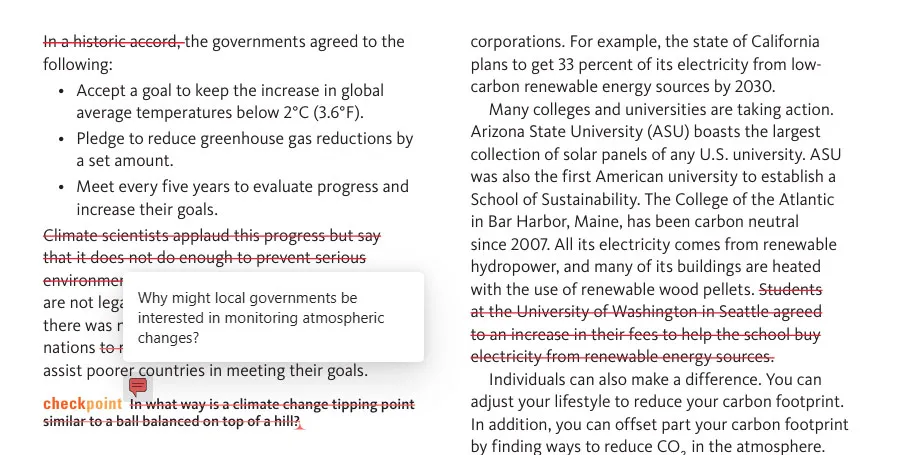
- Targeted Rephrasing: In the original draft, high school marine biology students were scheduled to learn about research indicating that climate change kills at least 150,000 people annually, and that an additional 1 degree Celsius of warming would double that toll. The state-approved version replaced this statistic with a vague alternative: "human health will also be affected by the increase in CO2 and another 1 degree Celsius will further increase the impact."
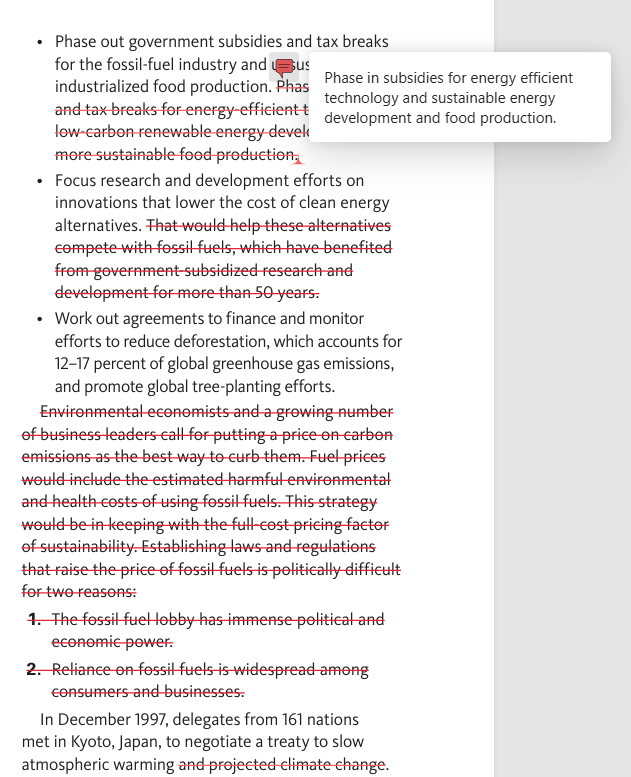
- Lexical Substitutions: In separate sections, McGraw Hill’s marine science book substituted "climate change" with "changes in the environment." Meanwhile, an environmental science text published by Cengage removed the adjective "polluting" from front of "coal burning power plants" and completely excised a reference to University of Washington students voluntarily paying higher fees to source renewable electricity.
Pressures on Prominent Authors
The pressure campaign extended to some of the nation’s most widely read science authors. Ken Miller, a professor emeritus of biology at Brown University whose biology textbook has been a classroom staple for nearly three decades, noted a sharp pivot in state demands during the review process.
Working with co-author Joe Levine on the Florida Miller & Levine Experience Biology textbook published by Savvas Learning Company, Miller was instructed to strike the phrase "caused by human activity" from key passages. Furthermore, the FDOE demanded that the authors provide explicit citations and peer-reviewed sources for standard ecological observations, such as plant species flowering earlier than normal due to rising temperatures.
As Miller noted, these requests for meticulous source attribution were levied exclusively against chapters addressing climate change; no similar demands were made for foundational chapters detailing DNA, RNA, or human digestive systems.

Supporting Context & Metrics: The Science and the Stakes
The deliberate softening of climate science inside Florida classrooms directly contrasts with the empirical reality faced by the state’s geographic and economic landscape.
Scientific Consensus vs. Political Expediency
Climate scientists universally agree that the widespread combustion of fossil fuels for transportation and electricity generation pumps massive quantities of heat-trapping greenhouse gases—primarily carbon dioxide and methane—into the atmosphere. This atmospheric loading has accelerated global temperature increases, disrupting hydrological cycles and destabilizing long-standing weather patterns.
For Florida, a low-lying peninsula bordered by warming waters, this disruption manifests as:
- Intensifying Storm Systems: Warmer ocean temperatures fuel stronger, wetter hurricanes capable of catastrophic storm surges.
- Chronic Flooding: Sea-level rise routinely threatens coastal infrastructure, residential communities, and municipal drainage systems.
- Extreme Heat: Sustained ambient temperatures break historical records, threatening outdoor workers, athletes, and students alike.
Despite these vulnerabilities, the state’s political leadership has systematically purged official terminology. In May 2024, Governor Ron DeSantis signed legislation that officially scrubbed references to "climate change" from broad sections of Florida state statutes.
Academic Standards in Limbo
Compounding the textbook controversy is the ongoing revision of Florida’s K-12 science standards. For nearly twenty years, the state operated under science standards adopted in 2008—the oldest in the nation. In a 2020 evaluation conducted by the National Center for Science Education and the Texas Freedom Network Education Fund, Florida’s standards received a disappointing "D" grade for their superficial treatment of global warming.
While a committee of educator volunteers convened in Tallahassee to draft updated standards, the state education agency has maintained a strict wall of silence. The agency has not published draft standards for public review, nor has it clarified whether the finalized framework will mandate instruction on anthropogenic climate change.
Official Statements and Institutional Responses
The architects and corporate partners behind these educational materials maintain that their processes are entirely routine and compliant with local legal frameworks.
State Education Authorities
FDOE Press Secretary Olivia Wester defended the agency’s actions in an email statement, asserting that the department’s "review of instructional materials is guided by state law, State Board of Education rule, and Florida’s academic standards and benchmarks." State officials declined repeated interview requests regarding the timeline of the new science standards or the specific criteria used to flag climate-related content.
Textbook Publishers
Publishers argue that adapting content to meet regional requirements is standard commercial practice, though they emphasize that state-specific edits do not necessarily bleed into national editions.

- Cengage: A company spokesperson stated that Cengage collaborates with state education agencies to align books with local standards "while maintaining the quality and integrity of our content," adding that Florida-specific editions should not be assumed to reflect materials utilized in other jurisdictions.
- McGraw Hill: Senior Director of Communications Tyler Reed asserted that state-level revisions are routine. Regarding the modifications in Huber’s Marine Science, Reed claimed the intent "was to use more specific terminology to describe the causes and effects of climate change, while accurately reflecting the reality of its existence." He maintained that climate change remains fully covered within the titles.
Author Discontent
Independent authors, however, have expressed profound frustration upon discovering how their work was altered. Michael Huber, author of McGraw Hill’s Marine Science, was unaware of the edits until contacted by journalists.
"It just degrades the book," Huber remarked.
He pointed out that the altered sentence regarding human health distorted the World Health Organization’s original findings, incorrectly implying that carbon dioxide gas is directly toxic to humans in atmospheric concentrations, rather than harmful through its systemic alteration of the global climate. "Why make something worse with no benefit? There’s no scientific or pedagogic or aesthetic improvement," Huber added.

Future Outlook: A Nation Divided on Climate Literacy
The partisan weaponization of science education is not unique to Florida. Similar political interventions have reshaped classrooms in states like Texas, where fossil fuel industry stakeholders have successfully lobbied textbook adoption boards to minimize or omit discussions of global warming.
Conversely, states such as California, New Jersey, and Hawaii have mandated comprehensive climate education across multiple disciplines, creating a starkly polarized educational landscape across the United States. Because major textbook publishers traditionally design their inventories around the demands of large consumer states, students experience a bifurcated reality where their environmental literacy is dictated entirely by geographic boundaries.
The Human Toll: Educators and Students
For Florida educators, the political pressure has fostered an environment of pervasive self-censorship. While explicit bans on mentioning climate change are rare, teachers report being warned by school administrators to steer clear of "controversial topics" to avoid parental pushback and potential litigation.
"There is this culture of self-censorship that I’ve seen developing over the past few years," a Tampa-area English teacher explained. "We’re trying to predict what is going to be a problem… We don’t have a list."
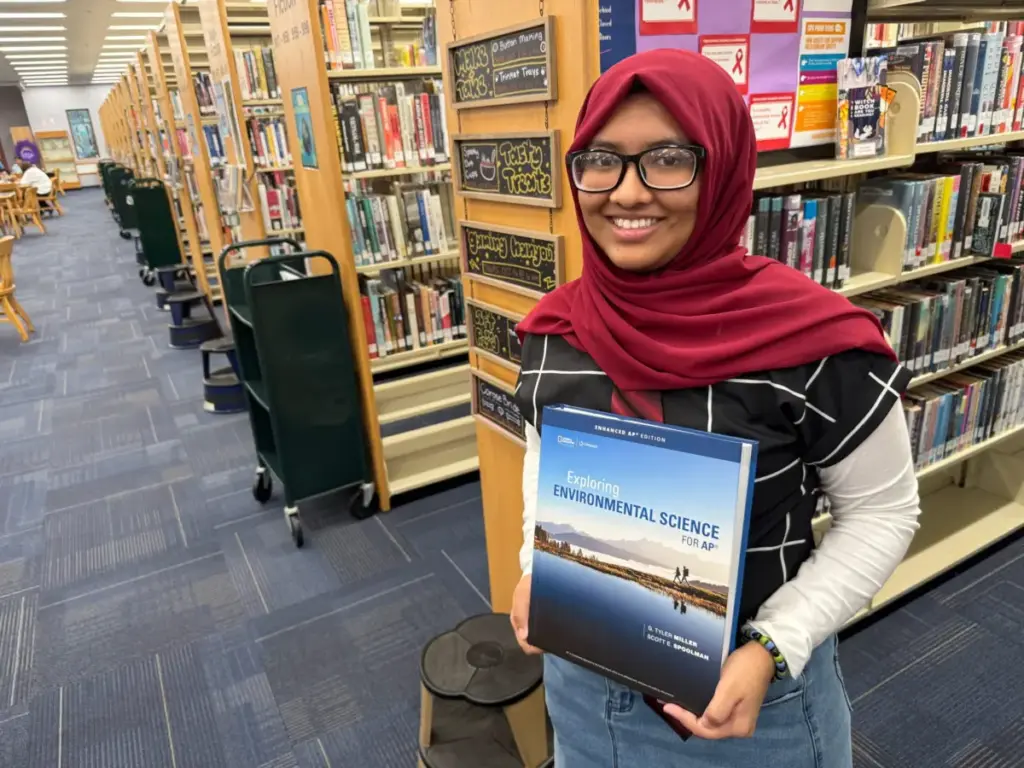
Meanwhile, students navigating this restricted academic ecosystem are acutely aware of what is missing. Alisha Imam, a high school graduate who previously led her school’s environmental club, noted that she had to rely entirely on Advanced Placement coursework and independent internet research to understand the forces driving the extreme weather events threatening her community.
"We have to learn about it and actually be educated and know what the problem is," Imam said. "Because if we don’t know the problem, then we won’t be able to fix it."