

Executive Overview
The United States clean energy sector closed out 2025 with a sobering reality check. What was once heralded as a historic, multi-year renaissance in domestic green manufacturing hit a severe structural wall, resulting in a dramatic economic reversal. According to comprehensive new project-tracking data released by E2 (Environmental Entrepreneurs), businesses abandoned a staggering $5.1 billion in large-scale factories and clean energy infrastructure projects in December alone.
This December wave served as a grim conclusion to a turbulent year. By the close of 2025, nearly $35 billion in clean energy investments had been officially canceled or heavily downsized nationwide. This contraction erased more than 38,000 current and future jobs across the country, fundamentally disrupting local economies, altering supply chain strategies, and threatening America’s competitive edge in the global transition toward sustainable energy.
For the first time since the post-pandemic economic recovery in 2022, the financial ledger of the US green economy flipped into the negative. For every single dollar of new clean energy investment announced by corporations in 2025, approximately three dollars were abandoned, closed, or scaled back. This startling divergence signals that private capital is growing increasingly cautious—and in many cases, outright averse—to building complex manufacturing ecosystems and domestic supply chains within the United States.
While companies did continue to push forward with select initiatives over the course of the year, the pace of new announcements slowed dramatically. This stagnation was eclipsed entirely by an avalanche of cancellations, leaving a massive vacuum in American manufacturing towns that had anticipated a long-term boom in jobs and regional development.
Detailed Chronology: The Unraveling of the 2025 Clean Energy Pipeline
To understand the scope of the 2025 downturn, it is essential to trace how a sector characterized by aggressive multi-billion-dollar expansions unraveled over a twelve-month period.
Q1–Q3 2025: Rising Headwinds and Creeping Uncertainty
Entering 2025, the momentum carrying over from the passage of landmark federal legislation—specifically the Inflation Reduction Act (IRA)—faced mounting headwinds. While initial factory groundbreakings continued through the early months of the year, corporate boardrooms began adjusting their financial risk assessments. Surging interest rates, fluctuating global demand for electric vehicles (EVs), and shifting political rhetoric created an atmosphere of profound unpredictability.
By mid-year, major automotive and energy conglomerates started quietly shelving expansion blueprints. Supply chain bottlenecks, combined with softening consumer adoption rates for early-generation passenger EVs, gave corporate leadership the justification needed to pause capital expenditures. What began as cautious pauses by mid-summer evolved into systemic cancellations by the final fiscal quarter.

December 2025: The Final Blow
The year’s final month crystallized the broader structural retreat. In December alone, businesses walked away from $5.1 billion in planned capital projects. Rather than a series of isolated corporate decisions, this final wave reflected a broad-based withdrawal from capital-intensive clean technology initiatives.
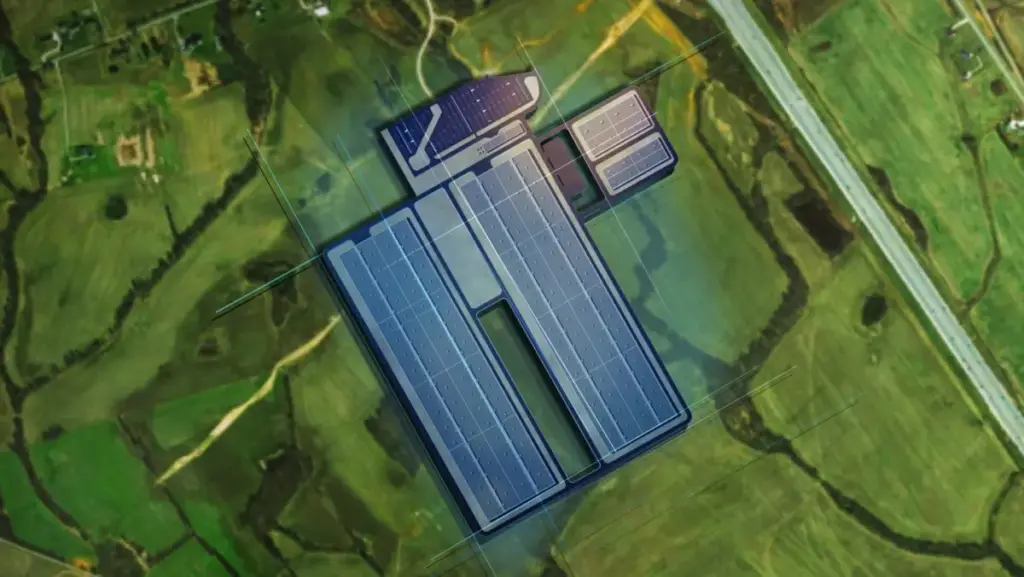
The most acute damage during this final stretch was absorbed by the electric vehicle and advanced battery manufacturing sectors. High-profile international and domestic players pulled the plug on multi-billion-dollar commitments that had taken years to negotiate. For instance, SK On officially scrapped a massive $2.8 billion planned investment in Tennessee, a move that instantly wiped out approximately 3,300 high-paying jobs. Simultaneously, Ford Motor Company canceled plans for a major manufacturing facility in Ohio, underscoring a wider corporate strategy to scale back, restructure, and decelerate its aggressive EV transition roadmap.
As a result, December closed with a staggering imbalance: companies announced a meager $238 million in new investments and roughly 3,060 jobs nationwide. When set against the $5.1 billion pulled back during the exact same thirty-day window, the influx of capital was outpaced by a factor of 21, culminating in a devastating net monthly loss of nearly 5,000 jobs.
Supporting Context & Metrics: The Anatomy of a $35 Billion Contraction
The numbers compiled in E2’s year-end analysis paint a stark picture of an industrial sector in retreat. By the end of December 2025, total project cancellations and downsizings ballooned to a cumulative $34.8 billion nationwide. To contextualize this figure, companies announced a paltry $12.3 billion in new clean energy investments throughout the entirety of 2025—marking the lowest annual total recorded since E2 began tracking these metrics four years ago.
Manufacturing Bears the Brunt of the Damage
A granular examination of the data reveals that manufacturing reversals accounted for the vast majority of the financial and employment destruction. Of the $34.8 billion lost, $30.2 billion stemmed directly from canceled or downsized manufacturing facilities. This undercuts years of targeted policy efforts aimed at bringing solar panel fabrication, wind turbine assembly, and battery cell production back onto American soil.
Within the manufacturing sector, EV and advanced battery projects experienced the most severe contractions:
- Electric Vehicle Sector: Suffered more than $21 billion in stripped investments.
- Battery Manufacturing Sector: Experienced parallel losses exceeding $21 billion, as gigafactory projects were either indefinitely delayed or permanently canceled.
These industrial sectors had previously served as the twin engines of the US clean energy manufacturing boom, drawing immense private capital into regions historically dependent on traditional heavy manufacturing or fossil fuels. Their sudden withdrawal leaves localized economies scrambling to replace promised industrial tax bases.

The Geographic Divide: Republican Districts Bear the Heaviest Losses
One of the most politically charged findings in E2’s 2025 analysis is the geographic distribution of these economic losses. Private-sector capital flight has disproportionately impacted Republican-held congressional districts.
Through the end of 2025, companies scrapped $19.9 billion in investments that were slated to create nearly 24,500 jobs in Republican districts. In contrast, Democratic-held districts experienced roughly $10.6 billion in canceled investments and approximately 12,600 lost jobs.
This disparity highlights a complex policy paradox: many of the factories and supply chain hubs originally planned for GOP-led states and congressional districts—attracted by regional labor pools and infrastructure readiness—are now falling victim to broader shifts in national political priorities and the subsequent legal and regulatory rollbacks targeting clean energy incentives.
The Few Bright Spots
Despite the overwhelming wave of capital flight, a handful of states managed to secure new clean energy projects in December, though their scale was nowhere near sufficient to offset the national deficit.
- Kentucky: Secured significant wins as Ford and CATL pressed forward with joint ventures projected to bring 2,100 jobs to the commonwealth. Additionally, Anthro Energy announced 110 new battery manufacturing jobs in the state.
- Texas: Landed targeted solar manufacturing investments, headlined by Toyo Solar’s pledge of a $26.7 million facility designed to create roughly 750 regional jobs.
While these localized victories demonstrate that the US green economy has not been entirely extinguished, they represent isolated flickers in a landscape dominated by widespread industrial contraction.
Official Statements and Industry Perspectives
The structural transformation of the US clean energy landscape has triggered urgent warnings from researchers, policy analysts, and industry leaders regarding America’s long-term economic competitiveness.
Michael Timberlake, Director of Research and Publications at E2, pulled no punches when evaluating the year-end data. Pointing out the stark three-to-one ratio of abandoned capital to announced investments, Timberlake emphasized the gravity of the shift:

"When nearly $3 in investment is abandoned for every $1 announced, it means capital is no longer choosing American communities," Timberlake stated. "That investment is increasingly heading to overseas markets, signaling even more lost jobs, stalled factories, and missed opportunities for workers and regions that were counting on this growth."
Timberlake’s warning underscores a foundational economic reality: global capital is highly mobile. When regulatory stability and financial incentives shift unpredictably within a domestic market, international conglomerates and domestic manufacturers alike will redirect their capital toward more stable foreign jurisdictions—such as the European Union or Asian markets—where long-term industrial policy remains consistent.
Future Outlook: Navigating Policy Instability and Global Competition
The trajectory of the US clean energy sector entering 2026 hinges almost entirely on regulatory clarity, trade policy, and macroeconomic stability. The reversal observed throughout 2025 was not merely a natural market correction; it was heavily catalyzed by shifting federal priorities.
The aggressive rollback of key Inflation Reduction Act incentives by the current administration, paired with renewed tariff threats and shifting international trade dynamics, has fundamentally altered corporate calculus. Large-scale manufacturing requires immense upfront capital expenditures. For these multi-billion-dollar investments to pencil out, executives and institutional investors require a high degree of policy visibility—assurance that tax credits, environmental standards, and trade frameworks established today will remain dependable anchors tomorrow.
When those policy supports are disrupted or called into question, corporate boards are forced to mitigate risk by freezing expansions, canceling construction contracts, or relocating development pipelines overseas.
As the United States moves further into 2026, the central question facing policymakers and industry leaders is whether the foundational policy environment can be sufficiently stabilized to restore investor confidence. Without renewed bipartisan consensus regarding domestic industrial policy and green manufacturing, the capital flight witnessed in 2025 risks becoming a permanent structural trend—leaving American workers and industrial communities to watch as the global clean energy economy is built elsewhere.



