Executive Overview
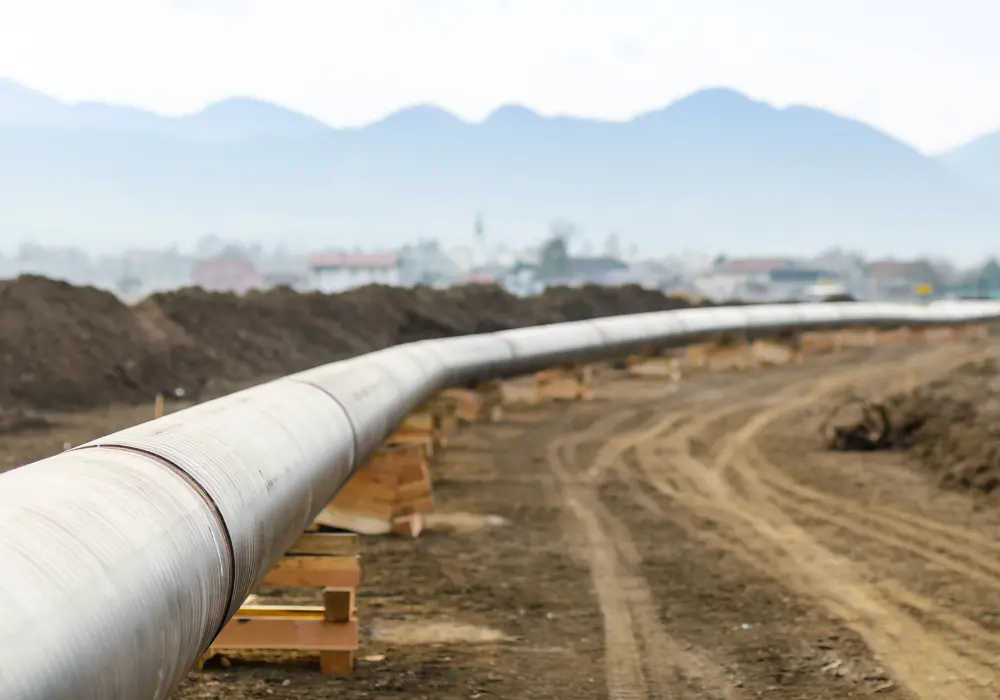
In a high-stakes policy shift that has ignited fierce debate across the nation, the federal government under Prime Minister Mark Carney and the government of Alberta, led by Premier Danielle Smith, have announced a sweeping joint venture to construct a massive new West Coast oil pipeline. The project is the centrepiece of an aggressive economic blueprint that places resource extraction firmly at the heart of Canada’s twenty-first-century development strategy.
Yet, beneath the rhetoric of national sovereignty and economic diversification lies a stark and telling reality: no private oil company is willing to foot the bill.
Under the proposed arrangement, Ottawa and Alberta will act as equal partners in holding the pipeline. Development is slated to be led by the federally owned Trans Mountain Corporation along an existing corridor, with public coffers absorbing approximately 90 percent of the total project costs. By stepping in to shoulder financial and operational risks that highly profitable private energy firms have explicitly declined, governments are executing a profound intervention in the national economy.
Critics, economists, and climate advocates argue this massive public capital commitment—potentially exceeding $100 billion when factoring in related liquefied natural gas (LNG) developments, marine terminals, and carbon capture infrastructure—represents a dangerous economic gamble. At a time when global energy markets are pivoting toward decarbonization and the International Energy Agency (IEA) projects oil demand to peak by 2030, Canada is doubling down on a sunset industry.
Worse still, this strategy relies on sweeping environmental rollbacks, weakens industrial carbon pricing, and diverts finite public capital away from healthcare, education, climate adaptation, and the clean energy transition. As the nation stands at a crossroads, the fundamental question remains: Who does this economy truly serve, and what are the long-term costs of anchoring Canada’s future to the fossil fuel economy of the past?
Detailed Chronology: How the Extractive Strategy Unfolded
The unveiling of the West Coast pipeline proposal was not an isolated policy announcement; it was the culmination of a coordinated, fast-tracked legislative and regulatory pivot designed to resurrect Canada’s resource extraction sector.
- May 14, 2026: Prime Minister Mark Carney announces a forthcoming national electricity strategy, raising expectations for a serious federal commitment to grid modernization and clean electrification. However, in parallel, key regulatory safeguards—including consumer carbon pricing frameworks, electric vehicle mandates, and clean-electricity regulations—begin to experience significant rollbacks or dilutions.
- May 15, 2026: Ottawa and Alberta formalize their alignment by signing an implementation agreement under a broader memorandum of understanding. The pact explicitly commits both governments to establishing regulatory frameworks that enable substantial oil-sands growth, setting the stage for fast-tracked industrial approvals.
- July 2, 2026: The federal government and British Columbia commit billions in public investments under the "Cooperative Prosperity Agreement" to fast-track LNG development, mining operations, and the expansion of the Roberts Bank port terminal south of Vancouver—the designated marine terminus for the forthcoming Alberta pipeline.
- Later on July 2, 2026: Prime Minister Carney and Premier Danielle Smith formally announce the West Coast pipeline proposal. The federal Major Projects Office simultaneously fast-tracks 23 "nation-building" initiatives worth well over $130 billion across LNG, nuclear, mining, and heavy transportation sectors.
- Early July 2026: Building on the momentum of the West Coast announcement, the governments of Alberta and Ontario propose a second trans-provincial pipeline. Much like its counterpart, this second line lacks a private proponent and immediately triggers warnings of massive public subsidization.
- August 1, 2026: The federal government formally publishes a proposal in the Canada Gazette to list the West Coast pipeline as an official "project of national interest," legally cementing its priority status and streamlining its path past regulatory and judicial hurdles.
Supporting Context & Metrics: Economics, Ownership, and the Risk of Stranded Assets
To understand the controversy surrounding the West Coast pipeline, one must examine the staggering financial figures, ownership structures, and global market dynamics underpinning the project.
The Cost to Taxpayers
According to Alberta’s formal submission to the Major Projects Office, the pipeline alone is projected to cost between $35.2 billion and $43.7 billion, excluding escalation, financing fees, and assuming best-case regulatory savings. The project is intended to be built by a newly formed corporate entity jointly owned by the Trans Mountain Corporation, the Alberta Petroleum Marketing Commission, and Pembina Pipeline. Crucially, Pembina’s non-binding 10 percent stake represents the entirety of private sector equity participation. Taxpayers are expected to carry the remaining 90 percent.
When adding complementary infrastructure to the public ledger—such as the Roberts Bank terminal (estimated at roughly $10 billion) and the linked Pathways carbon-capture initiative (officially slated at $16.5 billion, but projected by independent economists to exceed $20 billion)—total public exposure could easily top $100 billion. These projections mirror the painful fiscal history of the Trans Mountain Expansion (TMX), which Ottawa acquired in 2018 after private investors fled, ultimately ballooning to a final cost of roughly $34 billion—more than six times its original estimate.
Global Market Realities and Industry Hesitation
The reluctance of private oil companies to invest is rooted in cold, hard economics. Bitumen extracted from the oil sands remains among the highest-cost sources of global crude. It is exceptionally sensitive to market price volatility and highly exposed to structural declines in long-term demand as global decarbonization accelerates.
The International Energy Agency (IEA) has repeatedly noted that global oil demand is on course to peak by 2030, with supply capacity projected to comfortably outstrip it. Because a greenfield pipeline of this magnitude is unlikely to become operational before the early-to-mid 2030s, the project faces a severe risk of becoming a stranded asset—infrastructure that loses its economic value long before capital costs are recovered.
Major oil-sands producers have voted with their wallets. During the recent multi-year price boom, the four largest oil-sands operators actively reduced capital expenditures, averaging $15.9 billion annually between 2021 and 2024—a sharp drop from the $27.9 billion spent annually during the 2011–2014 boom. Rather than plowing cash into new production capacity, firms directed record windfalls toward shareholder dividends and share buybacks.
Where the Wealth Flows
Proponents of the extraction strategy frequently argue that pipelines and resource megaprojects build a sovereign, prosperous nation. However, empirical data from economic analyses—such as a landmark report by the Alberta Federation of Labour and Canadians for Tax Fairness—tell a drastically different story about who benefits:
- Profits Versus Wages: Between 2021 and 2023, the oil and gas sector raked in $135.2 billion in operating profits while paying out $43 billion in wages. This translates to $3.14 in corporate profit for every dollar paid to workers, a dramatic jump from $0.92 during the previous decade’s boom.
- Shrinking Employment: Despite record production and soaring profitability, the industry employs roughly 30,000 fewer workers today than it did at its peak in 2014.
- Foreign Ownership: The financial gains generated by Canadian resources are largely expatriated. The report estimates that the top four oil-sands producers are 73 percent foreign-owned and 60 percent U.S.-owned. Between 2021 and 2024, an estimated $58 billion in dividends and buybacks flowed directly out of the country to foreign shareholders.
The Decarbonization Mirage
To justify the pipeline environmentally, governments point to the Pathways Alliance initiative—a plan backed by major oil companies to capture 16 million tonnes of carbon dioxide annually by 2045. Yet, critics note the staggering math mismatch: the pipeline is designed to transport one million barrels of oil a day (365 million barrels annually), which, when ultimately burned by consumers, releases approximately 157 million tonnes of CO2.
Because production and transportation emissions account for only about 20 percent of a barrel’s total life-cycle footprint, while roughly 80 percent of emissions occur when the fuel is burned, carbon capture applied strictly at the extraction site addresses a fraction of the problem. Even if every target of the Pathways project is met, the "decarbonized oil" championed by political leaders will see its total life-cycle emissions reduced by less than 10 percent.
Official Statements and Stakeholder Perspectives
The pipeline proposal has triggered sharp polarization across federal, provincial, and Indigenous landscapes.
- Federal and Provincial Advocates: Prime Minister Mark Carney and Alberta Premier Danielle Smith have defended the initiative as a masterstroke of economic pragmatism, national sovereignty, and trade diversification. Proponents argue that securing reliable export routes to Asian and global markets through the West Coast is essential for generating the wealth required to fund public services and transition the economy over the long term.
- First Nations and Legal Challenges: Indigenous communities along the proposed southern pipeline corridors have raised serious objections, asserting they were left out of consultations prior to the July announcements. Currently, 14 First Nations are actively challenging the federal government’s fast-tracking legislation (Bill C-5) in court, arguing that bypassing rigorous environmental oversight violates constitutional duties to consult and accommodate.
- Market Critics and Economists: Financial analysts and market-oriented think tanks have expressed deep alarm over the open-ended nature of public financial liabilities. Warning against a return to what critics term "Laurentian capitalism spreading to Alberta," economists argue that deploying upwards of $100 billion of taxpayer funds into a high-risk fossil fuel megaproject crowds out more productive, future-proof investments.
Future Outlook: The Path Not Taken
As Canada locks itself into multi-decade commitments to fossil fuel extraction, the long-term consequences for the nation’s economic resilience, fiscal health, and climate obligations are profound.
Fiscal and political capital are finite resources. By pouring hundreds of billions of dollars over the coming decade into extractive infrastructure, nuclear megaprojects, and military expansion, governments are placing intense downward pressure on other vital public domains. Healthcare systems, public education networks, affordable housing initiatives, and climate adaptation programs are already experiencing funding strains, hiring freezes, and service reductions.
Furthermore, political alignment with provincial governments dedicated to fossil fuel expansion makes charting an alternative course increasingly difficult. Pipelines constructed in the 2030s will seek economic returns well into the 2060s, baking high emissions into the national trajectory at a time when Canada is already missing its greenhouse gas reduction targets and suffering the mounting financial costs of climate-fueled wildfires, floods, and droughts.
An Alternative Vision for National Development
Economists and environmental policy experts argue that Canada possesses the human capital, natural resources, and financial capacity to build a genuinely resilient, low-carbon economy. The exact same public investments and political capital currently dedicated to sunset industries could instead be channeled into:
- A modernized, interconnected national electrical grid powered entirely by renewables and advanced energy storage.
- Massive building retrofitting programs to drive energy efficiency and lower municipal emissions.
- Electrified public transit networks and sustainable mobility corridors.
- The expansion of a green circular economy and a robust care economy.
- A comprehensive, well-funded "just transition" framework to support energy workers and resource-dependent communities.
Unlike fossil fuel extraction—which is vulnerable to peak demand curves, heavy foreign profit leakage, and eventual market obsolescence—clean infrastructure builds enduring domestic value, creates more jobs per dollar invested, and cannot be stranded by global shifts in energy consumption.
Before committing another generation of public wealth to the industries of the last century, Canadian policymakers must answer a fundamental question: Why is a state-subsidized pipeline a superior investment in the nation’s future compared to the modern, sustainable alternatives competing for the exact same public support? To date, that justification remains glaringly absent.