Executive Overview
In the rapidly industrializing landscape of Southeast Asia, where economic expansion has historically been fueled by fossil fuels, the Kingdom of Cambodia is carving out a distinct decarbonization trajectory. Over the past decade, the nation has shifted away from reliance on heavy fuel oils and imported electricity, developing a domestic energy matrix where renewable resources now account for nearly half of its installed power capacity.
Driven by imperative economic and environmental priorities, the Cambodian government has established an ambitious national benchmark: sourcing 70% of its total electricity capacity from clean, domestic renewable energy by 2030. This objective positions Cambodia among the most ambitious energy transition frontrunners within the Association of Southeast Asian Nations (ASEAN).
However, translating this 70% target into operational reality requires navigating significant infrastructure and financial hurdles. The transition from a centralized base-load system to a decentralized, variable renewable energy (VRE) grid demands substantial capital investment, advanced grid modernization, scalable Battery Energy Storage Systems (BESS), and international policy support.
As highlighted by Phalkun Out, Manager of Energy Policy and Government Relations at EnergyLab Asia, achieving these targets hinges on international cooperation mechanisms designed to accelerate the Transitioning Away from Fossil Fuels (TAFF).
With international momentum building through initiatives championed by the COP30 Brazil presidency and foundational discussions held at the Santa Marta Conference in Colombia, Cambodia’s energy sector sits at a critical nexus. The country’s progress offers a case study in how developing nations can decouple economic expansion from carbon intensity when national policy aligns with international climate finance.
Detailed Chronology: The Evolution of Cambodia’s Energy Matrix
  2010–2018: Import Dependency & Early Hydro
  • Heavy reliance on electricity imports (Vietnam/Thailand) and oil.
  • Rapid buildout of large-scale domestic hydropower dams.

  2019: The Hydropower Vulnerability Crisis
  • Severe drought reduces hydro output, causing widespread blackouts.
  • Initial emergency pivot toward coal-fired power development.

  2021: The Net-Zero Realignment & COP26
  • Government pledges no new approval of coal-fired power plants.
  • Formal Long-Term Strategy for Carbon Neutrality (LTSCN) submitted.

  2022–2023: Power Development Masterplan (PDP 2022–2040)
  • Cancellation of proposed 700MW Botum Sakor coal project.
  • Adoption of the 70% renewable capacity target by 2030.

  2024 & Beyond: TAFF Alignment & Grid Modernization
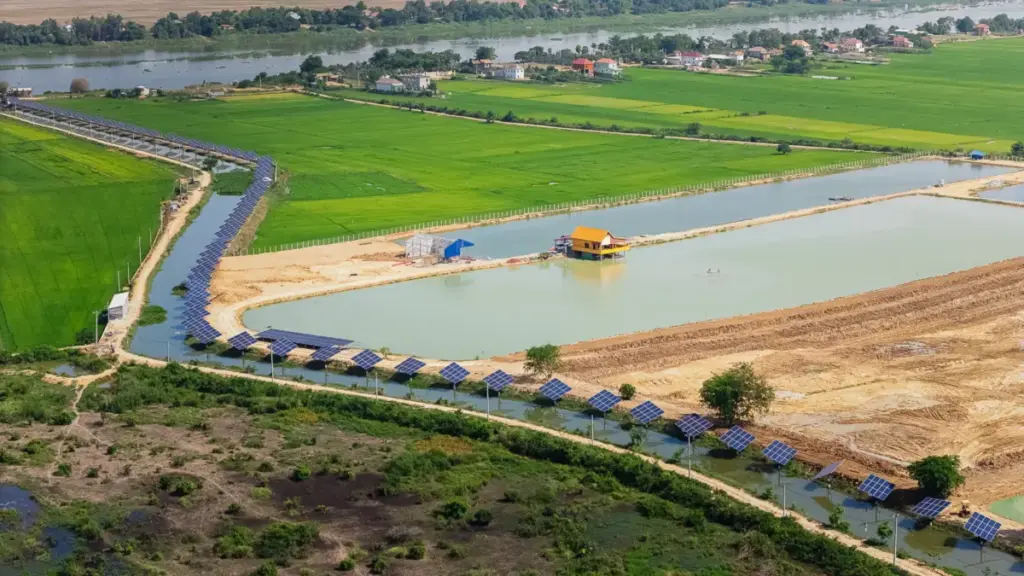
  • Scaling solar integration and Battery Energy Storage Systems (BESS).
  • International financial alignment via COP30 and global TAFF roadmaps.
The Era of High Import Reliance (2010–2018)
At the turn of the decade, Cambodia operated one of the most fragmented and expensive power grids in Southeast Asia. Rural communities depended on diesel-powered mini-grids, while urban centers relied heavily on high-cost electricity imports from neighboring Thailand and Vietnam.
To achieve energy security and lower tariffs for industrial consumers, the Cambodian government authorized a wave of large-scale run-of-river and reservoir hydropower developments along the Mekong basin tributaries. While this expanded renewable generation capacity, it introduced seasonal climate vulnerabilities.
The 2019 Energy Drought and the Coal Dilemma
The vulnerability of a hydro-centric grid became apparent in 2019. An El Niño-induced drought severely depleted reservoir levels across the country, creating an unprecedented electricity deficit. Rolling blackouts impacted industrial parks and urban centers for months.
In response, energy planning briefly pivoted toward coal. The Ministry of Mines and Energy (MME) approved plans for new coal-fired power projects, including the 700-megawatt Botum Sakor coal plant in Koh Kong province, raising concerns among international investors and environmental groups regarding long-term carbon lock-in.
The Strategic Pivot: COP26 and the 2021 Reversal
Recognizing the risks of stranded fossil fuel assets and reacting to shifting global supply chain demands—particularly from multinational garment and technology brands operating in the country—Phnom Penh executed a major policy pivot in late 2021. At COP26 in Glasgow, Cambodia announced it would approve no new coal-fired power projects beyond those already under construction.
Shortly thereafter, the government released its Long-Term Strategy for Carbon Neutrality (LTSCN), making Cambodia the first nation in Southeast Asia to submit a net-zero roadmap with a target date of 2050.
The Power Development Masterplan 2022–2040
This strategic shift was formalized with the release of the updated Power Development Masterplan (PDP 2022–2040). Under this revised framework, the government officially canceled the proposed Botum Sakor coal project, substituting it with a combination of solar utility farms and natural gas projects.
The masterplan established a target: increasing the share of renewable energy capacity (combining hydro, solar, and biomass) to 70% by 2030, while prioritizing domestic generation to eliminate reliance on imported fossil fuels.
Supporting Context & Metrics: Energy Mix and Economic Drivers
Cambodia’s rapid adoption of clean energy is driven by economic imperatives alongside environmental commitments. International export markets—particularly the European Union and North America—are enforcing stricter Scope 2 and Scope 3 carbon reporting standards. Major international manufacturers operating in Cambodia require access to clean power to maintain global supply chain compliance.
Cambodia’s Power Capacity Profile
Current Installed Capacity vs. 2030 Target Capacity

[Current Capacity Mix (~4.5 GW total)]
■ Hydropower:          45%  (Seasonal, Base-load)
■ Solar Photovoltaic:  12%  (Rapidly expanding VRE)
■ Biomass / Waste:      2%  (Emerging localized generation)
■ Thermal (Coal/Heavy): 41%  (Phasing down / No new builds)

[2030 Projected Capacity Target (~10 GW total Target)]
■ Hydro & Solar & Biomass: 70%  (Target Clean Capacity Share)
■ Natural Gas & Legacy:    30%  (Transition & Legacy Base-load)
Key Performance Indicators & Sector Trajectory
| Metric | 2018 Baseline | 2024 Current State | 2030 Official Target |
|---|---|---|---|
| Renewable Energy Share (Capacity) | ~35% (Hydro dominant) | ~49% (Hydro + Solar) | 70.0% |
| Utility-Scale Solar Capacity | < 10 MW | ~500 MW | > 3,000 MW |
| Grid Electrification Rate (Villages) | 86.8% | 98.5% | 100.0% |
| Base Electricity Tariff (Industrial) | ~$0.15 – $0.18 / kWh | ~$0.11 – $0.13 / kWh | <$0.10 / kWh (Target) |
| Coal Project Pipeline | Active Expansion | Legacy Only (Frozen) | Phase-down Mode |
Network Challenges: Storage and Variable Generation
Integrating high shares of solar photovoltaic (PV) generation presents technical challenges for Electricité du Cambodge (EDC), the state-owned utility provider. Solar energy generation peaks during mid-day hours when demand curves do not always align with industrial loads.
Furthermore, run-of-river hydro capacity fluctuates between the wet and dry seasons. To bridge these operational gaps without relying on coal, Cambodia requires investment in high-capacity Battery Energy Storage Systems (BESS) and smart-grid dispatch infrastructure capable of managing intermittent generation.
Official Statements & Stakeholder Perspectives
The debate surrounding Cambodia’s energy trajectory involves local policy experts, government administrators, and international climate finance organizations.
The Local Policy Imperative
Writing on the urgency of leveraging international climate momentum, Phalkun Out, Manager of Energy Policy and Government Relations at EnergyLab Asia, emphasized the strategic alignment between national policy and global transition support mechanisms:
"Cambodia has made impressive strides in transitioning from dirty coal and imported electricity to homegrown renewable energy that now accounts for nearly half of the electricity mix. The kingdom has a target to source 70% of its total power capacity from renewables by 2030. This is achievable but requires global support and cooperation.
The recent momentum on developing a formal process to assist countries in transitioning away from fossil fuels (TAFF) is very encouraging. The roadmap process championed by the COP30 Brazil presidency and at the Santa Marta conference in Colombia shows a clear appetite among countries to invest in a just and orderly transition."
Institutional Alignment
Senior officials from the Cambodian Ministry of Mines and Energy (MME) have echoed this stance, reinforcing that domestic decarbonization directly enhances national energy security. A senior policy representative noted during recent multilateral talks:
"Our transition is driven by economic realism. Renewable energy, particularly solar combined with our hydro capacity, offers the lowest marginal cost of power for our citizens. By stopping new coal commitments, Cambodia is protecting its economy from stranded asset risks while inviting international capital into clean tech development."
The Role of Multilateral Finance
Representatives from international financial institutions, including the Asian Development Bank (ADB), which has backed Cambodia’s National Solar Park Program, stress the need for blended finance models:
"Cambodia has demonstrated strong political will by canceling fossil fuel projects in favor of renewables. However, achieving the 70% target by 2030 requires substantial concessionary capital to de-risk investments in transmission infrastructure, grid stability technologies, and utility-scale storage."
Strategic Future Outlook: The TAFF Roadmap and International Capital
As global climate discussions shift toward implementation, Cambodia’s clean energy target hinges on the execution of emerging international finance frameworks.
                  ┌──────────────────────────────────────────┐
                  │    Global TAFF Mechanism Integration     │
                  └────────────────────┬─────────────────────┘
                                       │
         ┌─────────────────────────────┴─────────────────────────────┐
         ▼                                                           ▼
┌─────────────────────────────────┐                         ┌─────────────────────────────────┐
│     Multilateral Concession     │                         │      Grid Modernization &       │
│         Capital Flow            │                         │          BESS Rollout           │
└────────────────┬────────────────┘                         └────────────────┬────────────────┘
                 │                                                           │
                 ├─────────────────────────────┬─────────────────────────────┤
                 ▼                             ▼                             ▼
   ┌──────────────────────────┐  ┌──────────────────────────┐  ┌──────────────────────────┐
   │ Solar PV Integration     │  │ Cross-Border Inter-      │  │ Decarbonized Export      │
   │ Expansion (>3 GW)        │  │ connectivity (ASEAN Grid)│  │ Manufacturing Base       │
   └──────────────────────────┘  └──────────────────────────┘  └──────────────────────────┘
Navigating the TAFF Framework and COP30 Commitments
The global Transitioning Away from Fossil Fuels (TAFF) initiative—promoted through international forums such as the Santa Marta Conference in Colombia and integrated into the COP30 agenda led by Brazil—aims to provide developing economies with structured technical assistance and concessionary capital.
For Cambodia, participating in the TAFF roadmap offers a mechanism to access low-cost loans, grant-based technical assistance, and direct foreign investment. This support is directed toward decommissioning legacy fossil infrastructure and financing the expansion of smart transmission networks.
Overcoming Infrastructure Bottlenecks
To reach its 2030 goals, Cambodia must address several critical infrastructure needs:
- Utility-Scale Storage Systems (BESS): Deploying large-scale battery systems across key transmission nodes to stabilize voltage fluctuations caused by high solar penetration.
- High-Voltage Transmission Upgrades: Expanding 230kV and 500kV transmission lines from central solar installations and northern hydro plants to major load centers in Phnom Penh and the coastal industrial zones.
- Cross-Border Interconnectivity: Establishing strategic connections within the ASEAN Power Grid framework. This enables regional balancing by allowing Cambodia to trade surplus green power with neighbors such as Singapore and Vietnam during high-generation periods.
Economic and Environmental Impact
Achieving a 70% renewable energy capacity mix by 2030 would position Cambodia among the lower carbon-intensity economies in Southeast Asia. This transition reduces exposure to volatile global fossil fuel price swings, stabilizes electricity tariffs for domestic consumers, and strengthens the country’s position as a destination for foreign direct investment from companies seeking low-carbon manufacturing bases.
Cambodia’s path illustrates that while clear national targets provide a necessary foundation, successfully phasing out legacy fuels requires sustained international cooperation, concessionary finance, and rapid technological deployment. Alignment with global frameworks like TAFF will determine whether Cambodia can convert its 2030 renewable energy targets into a sustainable operational model.