Executive Overview
For generations, the sprawling boreal forests and temperate woodlands of Canada have served as an invaluable, silent ally in the global fight against climate change. Collectively, these ecosystems functioned as a reliable carbon sink—meaning they absorbed significantly more carbon dioxide from the atmosphere than they released, acting as a planetary sponge that locked away billions of tons of greenhouse gases in living biomass, dead organic matter, and rich forest soils.
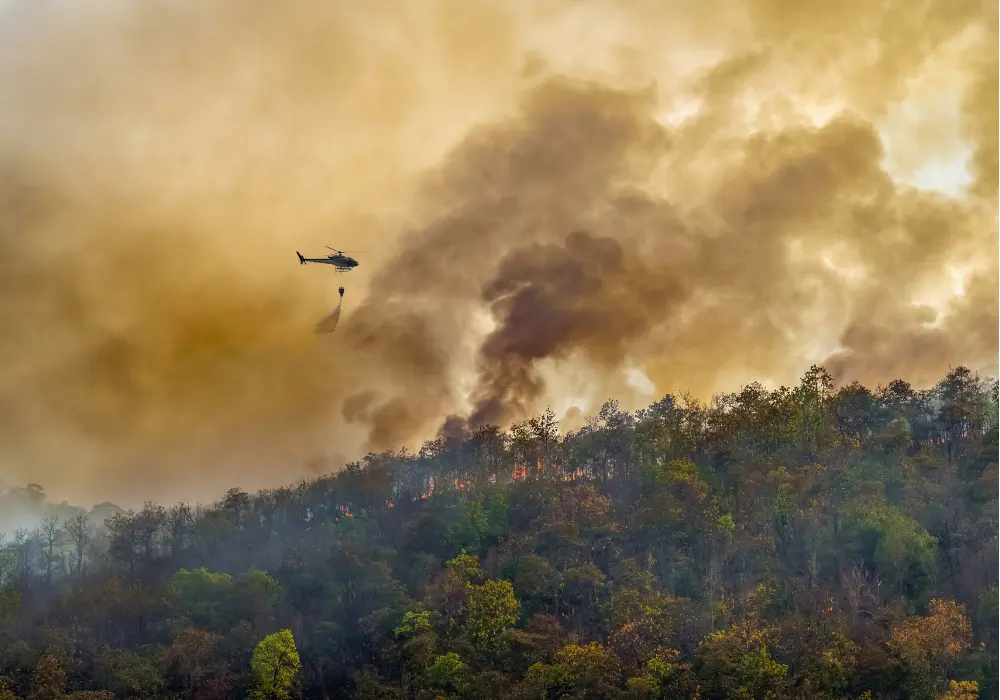
However, a groundbreaking scientific study published in the journal Global Change Biology reveals that this foundational ecological dynamic has fundamentally fractured. Driven by an unrelenting surge in catastrophic wildfire activity, Canada’s forests have crossed a historic threshold: they have officially shifted from acting as a net carbon sink to becoming a net carbon source.
According to the research, the immediate, devastating carbon emissions resulting from widespread forest disturbances—predominantly high-intensity wildfires—have begun to completely overwhelm the natural carbon absorption capacity driven by forest recovery and regrowth. The tipping point arrived around 2021, culminating a troubling trajectory that began to take shape in 2009. Researchers warn that this transformation is unprecedented over the past century.
This shift carries profound implications not only for Canada’s domestic climate targets and international accounting commitments, but also for the global carbon budget. As future fire seasons are projected to worsen in both frequency and severity under a rapidly warming climate, the resulting surge in emissions threatens to trigger a vicious feedback loop. Increased carbon release leads to heightened global warming, which in turn fuels more severe wildfires, driving up wildfire suppression expenditures, escalating forestry management costs, and severely imperilling traditional efforts to harness sustainable land management as a tool for climate mitigation.
Detailed Chronology: Unraveling the Historical Carbon Balance
To understand the gravity of the recent shift, researchers undertook a massive retrospective analysis, simulating carbon cycling across Canada’s vast forested and unforested landscapes from the year 1750 through 2023. By reconstructing historical wildfire regimes, timber harvesting patterns, forest regrowth rates, respiration, and the fertilization effect of elevated atmospheric carbon dioxide (known as "CO₂ fertilization"—where higher ambient CO₂ concentrations temporarily stimulate plant growth), the study mapped the long-term metabolic health of the country’s vegetation.
Centuries of Stability (1750–2000)
For nearly 250 years of the simulated timeline, Canadian forestlands acted, on average, as a dependable net carbon sink. While localized disturbances such as insect outbreaks, logging, and historical fires routinely released stored carbon, these emissions were consistently counterbalanced by the vast expanses of regenerating forests. Younger trees grew rapidly, pulling carbon dioxide out of the air and sequestering it in trunks, branches, roots, and soils. This historical equilibrium provided a stabilizing buffer for the global atmosphere.
The Early 21st-Century Stress Test (2001–2008)
The first cracks in this long-standing ecological balance began to appear at the dawn of the 21st century. The total area of disturbed forestland began to creep upward, driven by a warming climate, extended drought conditions in western and central provinces, and increasingly volatile weather patterns. During this period, carbon losses from disturbances began to catch up to the carbon stored through natural forest regeneration. The margin of safety that had protected the sink for centuries began to thin dramatically.
The Turning Point and the Tipping Point (2009–2021)
The year 2009 marked a critical inflection point in the modern carbon history of Canada’s ecosystems. According to the study’s models, that was the year the immediate, acute impacts of landscape disturbances began to permanently overwhelm the recovery-driven carbon sink.
Although forests continued to regrow and absorb carbon in patches that escaped destruction, the sheer scale, intensity, and frequency of subsequent disturbances meant that more carbon was being instantly vaulted back into the atmosphere than vegetation could capture. This imbalance compounded year over year until the inevitable transition occurred. The authors of the study note that "Canadian forests crossed the source-sink transition around 2021."
An Unprecedented Modern Reality (2022–Present)
Comparing the carbon dynamics of the last 15 years against the rest of the 273-year timeline, researchers concluded that the current trajectory is entirely without precedent over the last roughly 100 years. This contemporary source status is not merely a transient blip caused by a single anomalous summer, but rather a structural shift propelled by compounding ecological pressures centered primarily in the forests of central Canada.
Supporting Context & Metrics: The Science Behind the CLASSIC Model
The alarming conclusions of the recent study are built upon a foundation of advanced, high-resolution modeling designed to address glaring gaps in previous carbon accounting frameworks.
Overcoming Previous Knowledge Gaps
Past assessments of Canada’s forest carbon budget often relied on broad approximations, top-down atmospheric inversions, or models that struggled to accurately capture the complex geophysical realities of the Canadian landscape. These earlier estimates frequently lacked the granular spatial and temporal resolution required to track rapid shifts in carbon pools and fluxes across millions of square kilometers of remote terrain.
To rectify this, the research team deployed the Canadian Land Surface Scheme Including Biogeochemical Cycles (CLASSIC) model. Unlike observation-based forecasting tools that project future conditions primarily by extrapolating current trends, CLASSIC utilizes process-based modeling. This approach applies rigorous physical and chemical equations—grounded in fundamental scientific laws such as the conservation of energy and mass—to simulate real-life biological and ecological processes.
Tailored to Canadian Ecosystems
The CLASSIC model was parameterized using hyper-specific geophysical and plant data covering every inch of Canada’s forested and unforested landmasses. By simulating the intricate interactions between the atmosphere, soil moisture, permafrost dynamics, vegetation types, and disturbance regimes, the model generated what the authors describe as "the first physically coherent wall-to-wall estimates of all major carbon pools and fluxes for Canada."
Key Drivers of the Shift: Central Canadian Vulnerabilities
The study pinpointed wildfire disturbance concentrated in central Canadian forests as the primary engine driving the transition to a carbon source. In these specific regions, lower baseline rates of carbon uptake from plant growth (Net Primary Production) significantly slow down vegetation recovery following a fire.
When a forest burns in a high-productivity region with a long growing season, understory and canopy regeneration can happen relatively fast. However, in the harsher climates of central and northern boreal zones, the window for growth is short, soils are nutrient-poor, and moisture stress is increasingly common. Consequently, when these forests burn, they release massive volumes of carbon that take decades—or even centuries—to recover, if they recover at all before the next fire strikes.
Important Methodological Caveats
While the CLASSIC model represents a major leap forward in accuracy, the study’s authors transparently note a critical boundary in their research: the model does not explicitly simulate peatland carbon cycles, extensive peatland carbon stocks, or the specific role that peatlands play in boreal fire emissions from deep soil layers.
Boreal peatlands store immense quantities of carbon accumulated over millennia in waterlogged, decaying organic matter. When severe droughts dry out these peatlands, fires can smolder underground for months, releasing staggering amounts of ancient carbon that far exceed the emissions from surface tree biomass alone. Because peatland dynamics were left out of this specific model, the true carbon deficit of Canada’s disturbed landscapes may actually be even more severe than these already sobering projections indicate.
Official Statements and Expert Perspectives
The publication of the study in Global Change Biology has sent shockwaves through the scientific and environmental policy communities, prompting renewed scrutiny over how nations account for natural emissions in their climate strategies.
The study’s authors emphasize the compounding economic and ecological dangers of this transition in their published findings:
"Since 2009, the immediate impacts of disturbance have begun to overwhelm the recovery-driven carbon sink in Canadian forests," the researchers write.
They add a stark warning regarding the future trajectory of these ecosystems:
"The resulting rise in forest disturbance would lead to additional emissions, rising wildfire and forestry management costs, and imperil efforts to manage the carbon sink through sustainable land management practices and fire suppression."
For decades, international climate frameworks—including carbon accounting protocols under the United Nations Framework Convention on Climate Change (UNFCCC)—have often treated natural carbon sinks as reliable, self-sustaining constants. Countries could factor the natural absorption of their forests into national inventories to help offset industrial emissions. However, the realization that vast national ecosystems are now actively leaking more carbon than they absorb throws a wrench into these national accounting frameworks.
Independent forestry experts and climate scientists not directly involved in the study have echoed these concerns, noting that policy makers must urgently decouple the assumption of natural permanence from forest carbon management. As natural disturbance regimes shift beyond historical parameters due to anthropogenic climate change, relying on forests to permanently buffer fossil fuel emissions is becoming an increasingly precarious gamble.
Future Outlook: Managing a Volatile Carbon Landscape
Looking ahead, the outlook for Canada’s forests—and by extension, the global climate system—demands a radical reassessment of how land and fire are managed across the North American continent.
Escalating Wildfire Risks
Projections from climate scientists and fire management agencies indicate that Canada’s wildfire risks are slated to surge in lockstep with rapid regional climate warming. Higher spring temperatures, earlier snowmelt, prolonged summer heatwaves, and expanding drought zones are creating a perpetually primed landscape. As fire seasons grow longer and more intense, larger swaths of land will burn year after year, preventing forests from ever reaching maturity.
The Feedback Loop Threat
This dynamic creates a classic climate feedback loop:
- Industrial and natural emissions warm the global climate.
- Warming creates hotter, drier conditions in the boreal forest.
- Drier conditions drive catastrophic wildfires that release billions of tons of stored carbon.
- These massive emissions further accelerate global warming, reinforcing the cycle.
Policy and Management Implications
Mitigating this crisis will require a multi-faceted approach that moves far beyond traditional reactive firefighting. Key areas of focus for policymakers, indigenous land stewards, and forestry officials include:
- Proactive Landscape Management: Shifting resources from purely suppressing fires—which can sometimes lead to an accumulation of dense, highly combustible underbrush—toward ecological thinning, prescribed burning, and creating fire-resilient forest structures.
- Protecting Refugia: Identifying and safeguarding high-productivity forest zones and deep peatland carbon reserves that are more resilient to climate stress.
- Revising Carbon Accounting: Incorporating volatile natural disturbance emissions transparently into national climate planning, ensuring that reduction targets do not artificially rely on unstable natural sinks.
- Indigenous-Led Stewardship: Integrating traditional ecological knowledge and Indigenous fire management practices, which have successfully maintained boreal and temperate ecosystems for millennia through controlled burning and localized stewardship.
Conclusion
The transition of Canada’s forests from a carbon sink to a carbon source is more than a scientific milestone; it is a clear warning sign from the natural world. It demonstrates that the buffering capacity of the planet’s major ecosystems is finite and increasingly vulnerable to human-induced climate disruption. Addressing this reality will require unprecedented international cooperation, rigorous scientific monitoring, and a transformative pivot in how humanity interacts with and protects the world’s remaining wild landscapes.