

Executive Overview
The 81st United Nations General Assembly (UNGA 81) and New York Climate Week 2026 unfolded against a volatile backdrop of geopolitical fractures, economic instability, and escalating environmental emergencies. Convening in New York from September 18 to September 28, 2026, world leaders gathered under the guiding theme—championed by outgoing UN Secretary-General António Guterres—“Restoring Trust, Managing Transformation: A United Nations That Delivers for All.” Yet, this year’s high-level week was dominated by a stark, sobering reality check: the scientific consensus delivered by the United Nations Environment Programme (UNEP) warning that the global community is poised to overshoot the 1.5°C global warming threshold within the next few years.
For environmental watchdogs, particularly Greenpeace, UNGA 81 served as a critical litmus test for international cooperation. Throughout the week’s live blog coverage, activists, scientists, and regional leaders tracked the friction between soaring corporate fossil-fuel profits and the lived miseries of frontline communities facing extreme weather, disappearing coastlines, and systemic food insecurity. From the existential threats facing Pacific Island nations to the urgent push for binding global treaties on plastics and industrial methane, the overarching message of Greenpeace’s delegation was clear: passive climate commitments, voluntary pledges, and half-measures have expired. What is required now is an immediate, fully funded, and equitable transition away from fossil fuels, underpinned by legally binding mechanisms that force polluters to pay for the devastation they have wrought.
Detailed Chronology: Key Developments at UNGA 81 and New York Climate Week
September 18–21: Setting the Stage and the Call for Polluter Accountability
As the General Assembly opened its doors, outgoing UN Secretary-General António Guterres anchored his legacy in the climate fight, declaring that "the world stands at a juncture where joint leadership, not division, can save the planet." Concurrently, New York Climate Week kicked off with high-profile speeches, including an address by Australian Prime Minister Anthony Albanese titled “The New Stakes: Climate security is national security.”
While welcoming the recognition of climate threats as national security issues, Greenpeace Australia Pacific’s COP31 Lead, Dr. Simon Bradshaw, quickly challenged the rhetoric. He noted that while Australia vowed to protect the 1.5°C threshold during visits to Palau, its domestic actions—approving dozens of new coal and gas projects since taking office—undermine its claims to climate leadership as it prepares to co-chair COP31 with Türkiye.

The push for financial and legal accountability escalated sharply when the Make Polluters Pay International Coalition—comprising Greenpeace International, 350.org, Oxfam International, and GreenFaith—presented over two million petition signatures to UN Assistant Secretary-General for Climate Action, Selwin Hart. Backed by global polling indicating that over 80% of citizens support taxing oil and gas corporations to fund climate recovery, campaigners demanded permanent surtaxes, the elimination of fossil fuel subsidies, and strict polluter-pays liability rules.
September 22: Restoring Trust for Africa and Navigating Fossil-Fuel Phase-Out Roadmaps
On September 22, the focus shifted to regional equity and structural economic transformations. Dr. Oulie Keita, Executive Director of Greenpeace Africa, underscored that restoring trust for African nations requires more than rhetorical promises. With adaptation costs in sub-Saharan Africa surging to an estimated $30 billion to $50 billion annually, public finance remains tragically insufficient. Keita stressed that climate commitments must translate directly into national policies, accessible funds, and protections for vulnerable populations rather than empty diplomatic communiques.
Simultaneously, on the sidelines of UNGA, delegates convened to review the global roadmap for phasing out fossil fuels—an initiative spearheaded by Brazil’s COP30 Presidency. Greenpeace urged all nations to fast-track national transition plans, emphasizing that these roadmaps must be fast, fair, and funded, while explicitly protecting the rights of Indigenous Peoples and local communities who serve as the planet’s premier ecosystem guardians.
September 23: Methane, Plastics, and the COP31 Electrification Pledge
September 23 brought a flurry of high-level dialogues targeting specific drivers of the planetary crisis:
- Industrial Agriculture and Methane: Addressing the UN High-Level Solutions Dialogue on Methane, Greenpeace International Executive Director Mads Christensen warned against ignoring agricultural emissions. Pointing out that industrial livestock production is the single largest source of methane, Christensen criticized corporate lobbying for pushing policies that allow emissions to climb unchecked toward a projected 30% rise by 2050. He called for a shift toward nature-friendly farming systems.
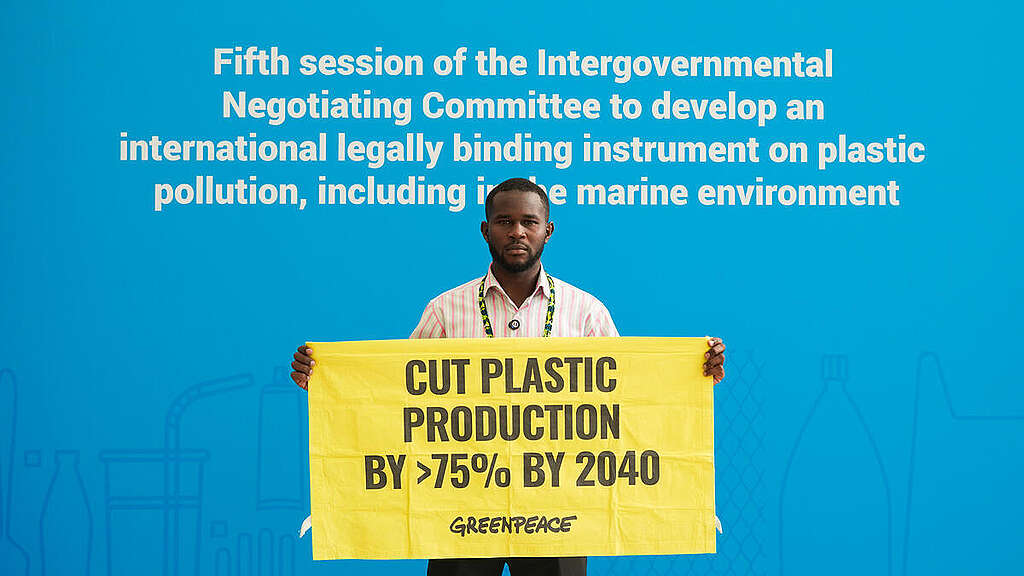
- The Global Plastics Treaty: Panama and Vanuatu hosted a ministerial dialogue on environmental multilateralism, utilizing the stalled Global Plastics Treaty negotiations as a primary case study. Greenpeace reiterated its demand for a legally binding treaty that mandates a minimum 75% reduction in global plastic production by 2040, combatting both toxic air pollution and the predatory global plastic waste trade.
- The "35 by 35" Electrification Push: Türkiye’s COP31 President-Designate, Murat Kurum, officially launched the "35 by 35" global electrification pledge, aiming to raise electricity’s share of global final energy consumption to 35% by 2035. While welcomed by energy experts, Greenpeace cautioned that electrification cannot be an end in itself. Without a corresponding commitment to phase out fossil-fuel-generated electricity and scale renewables to at least 75% of total generation by 2035, the target risks becoming a hollow distraction.
September 24: Sea Level Rise and the Existential Threat to the Pacific
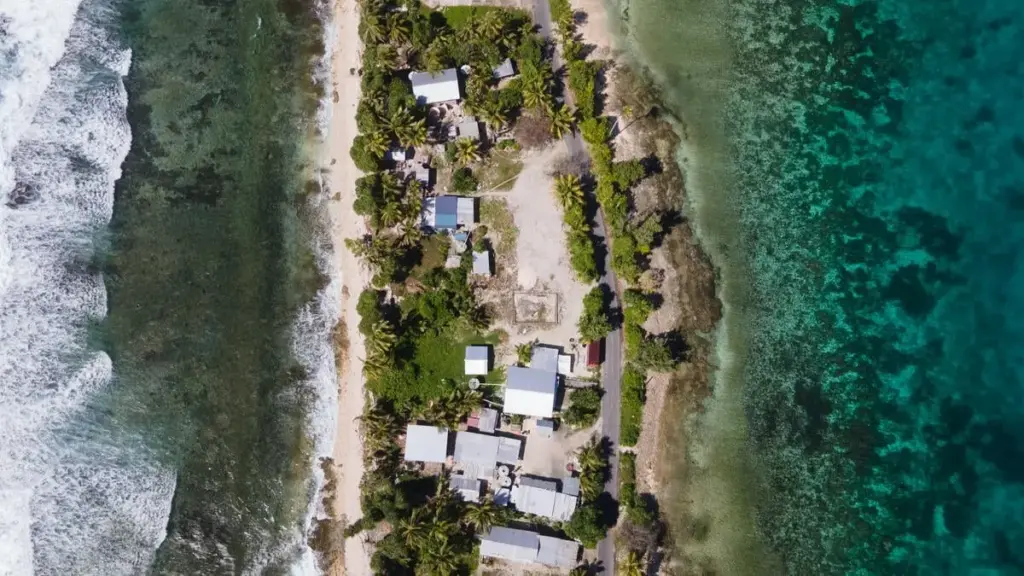
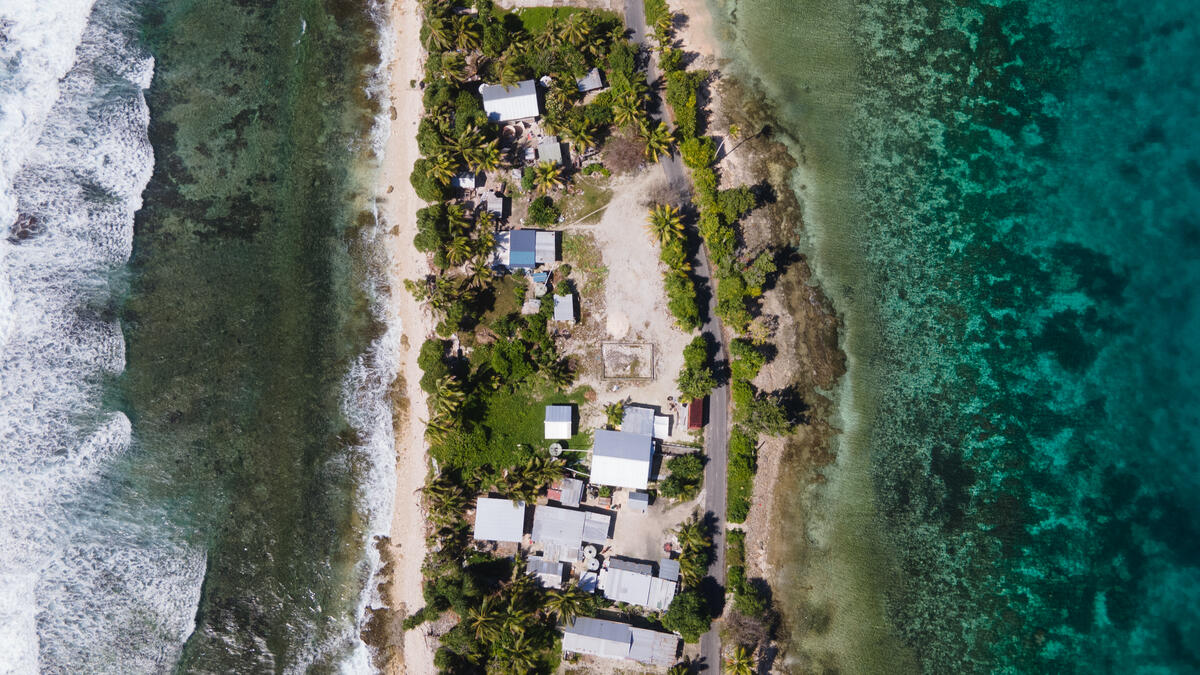
The final major thematic focus of Greenpeace’s live coverage centered on the high-level meeting examining the Existential Threats Posed by Sea Level Rise. Shiva Gounden, Head of Pacific at Greenpeace Australia Pacific, delivered a passionate indictment of global inaction, reminding world leaders that low-lying island states are already facing irreversible sea level rises of 15 to 20 cm over the next 30 years.
Detailing the cascading crises of saltwater intrusion destroying traditional crops like taro and cassava, forced internal relocations in Fiji, and complex migration agreements like the Tuvalu-Australia climate visa deal, Gounden emphasized that land and cultural identity are inextricably linked in the Pacific.
Supporting Context & Metrics: The Science Driving the Urgency
The urgency permeating UNGA 81 is anchored in hard, unyielding data released in the lead-up to the summit:
- The 1.5°C Overshoot Warning: A landmark UNEP report established that the world is on track to overshoot the Paris Agreement’s 1.5°C warming limit within the next few years, intensifying extreme weather risks globally.
- Economic Burdens and Sub-Saharan Adaptation: Adaptation costs in sub-Saharan Africa have skyrocketed to $30–$50 billion annually this decade, vastly outpacing current international public finance flows.
- The Electrification Gap: Special reports from the International Energy Agency (IEA) indicate that the "35 by 35" electrification goal could yield $400 billion in fuel import savings and shave 15% off household energy bills. However, International Renewable Energy Agency (IRENA) assessments warn that meeting the overarching 2030 target of tripling renewable energy requires more than doubling current installed capacity immediately.
- Public Consensus: Global surveys conducted by Greenpeace and Oxfam demonstrate overwhelming public backing, with more than 8 out of 10 people supporting direct taxes on oil and gas corporations to pay for climate-induced damages.
Official Statements and Interventions
Throughout the assembly, civil society leaders underscored the moral imperative of systemic reform:
"We are overshooting our climate limits while fossil fuel companies are overflowing with profits. As those most responsible for the climate crisis continue to cash in, this year’s repeated disasters pose a clear question: will politicians finally end the industry’s destruction? Talk is cheap, but life is priceless…"
— Jasper Inventor, Deputy Programme Director, Greenpeace International"Africa has heard decades of climate promises and the time has come to turn those promises into reality. Climate justice cannot remain a promise on paper. It must be felt in people’s lives, protected in their rights…"
— Dr. Oulie Keita, Executive Director, Greenpeace Africa"The ocean, our moana, our wansolwara… is transforming into a malevolent force; our cultures and way of life face an existential threat. This is why UN events must turn talk into action because limiting global warming to 1.5°C is a non-negotiable survival line for Pacific people."
— Shiva Gounden, Head of Pacific, Greenpeace Australia Pacific
Future Outlook: The Road Ahead to COP31 and Beyond
As the 81st United Nations General Assembly drew to a close, the focal points of international environmental diplomacy pivoted rapidly toward the remainder of the 2026 climate calendar.
- The Global Tax Treaty Negotiations: In late November, diplomatic efforts shift to Nairobi for the next round of negotiations under the UN Tax Convention. This process represents a historic opportunity to establish global tax rules that dismantle tax havens, curb corporate dodging, and compel fossil fuel extractors to finance community recovery and renewable infrastructure.
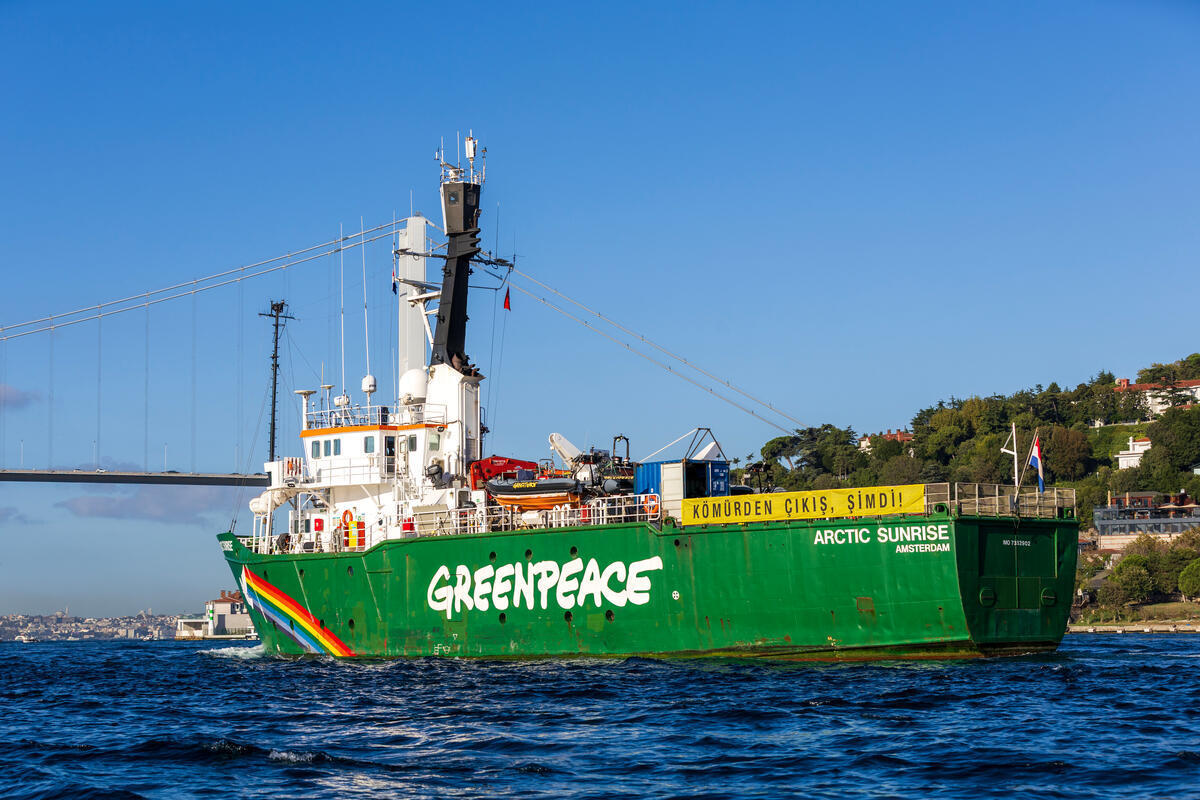
- National Roadmaps and COP31: With Türkiye hosting COP31 and Australia acting as co-chair of negotiations, international pressure is mounting for both nations to align domestic policy with global survival metrics. For Australia, this demands an immediate halt to the approval of new fossil fuel projects. For Türkiye, it requires canceling new coal infrastructure and setting a firm timeline for a coal phase-out.
- The Interlocking Crises: Greenpeace’s live coverage from UNGA 81 cemented the understanding that the triple planetary crisis—climate change, biodiversity loss, and systemic pollution—cannot be solved in silos. Whether addressing industrial agriculture’s methane output, enacting a robust Global Plastics Treaty, or securing loss-and-damage financing for vulnerable island states, the mandate for the international community is unmistakable.
The era of voluntary pledges has closed. As the 1.5°C threshold looms directly ahead, the credibility of global multilateralism depends entirely on whether political leaders possess the courage to prioritize human rights, ecological stability, and planetary survival over petrochemical and fossil-fuel profits.



