Executive Overview
Dog owners and coastal visitors along the Merseyside coastline have been placed on high alert following the discovery of suspected toxic palm oil washed ashore on Egremont Beach within the Metropolitan Borough of Wirral. Local emergency responders, including the Wirral Coastguard Rescue Team, mobilized quickly after receiving concerned reports from members of the public regarding unusual, waxy deposits scattered across the intertidal zone.
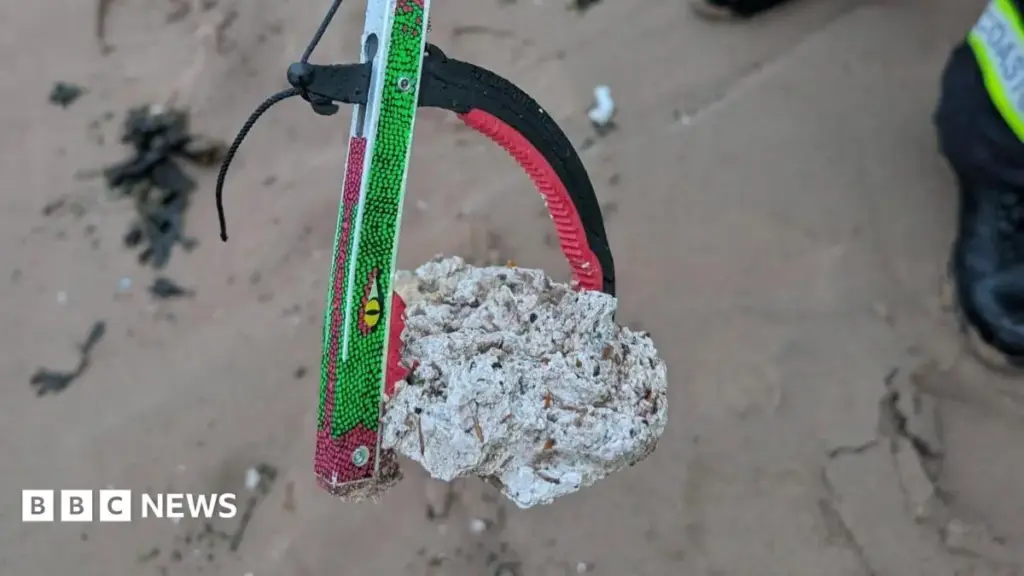
While palm oil is a ubiquitous commodity heavily utilized within the global food, cosmetic, and biofuel manufacturing sectors, its unmitigated disposal into marine environments transforms a benign commercial ingredient into a lethal environmental hazard. When industrial palm oil mixes with seawater and is weathered by maritime elements, it solidifies into waxy, paraffin-like blocks that frequently absorb persistent organic pollutants, bacteria, and fuel waste. These unassuming white or yellowish lumps emit a foul, petroleum- or diesel-like odor that paradoxically acts as an intense olfactory attractant to domestic canines.
For dogs, ingestion of this contaminated substance can trigger severe, rapid gastrointestinal distress, internal blockages, liver and kidney damage, and, in many documented cases, fatal systemic reactions. Rescue officers who surveyed Egremont Beach successfully bagged and removed several of the largest observable chunks, handing them over to the Wirral Council for safe containment and professional disposal. However, authorities emphasize that the danger has not passed. Changing tides, prevailing coastal currents, and hidden fragments buried beneath sand or seaweed mean that further toxic deposits could easily reappear over the coming days.
This incident underscores a recurring ecological and public safety crisis along the coastline of north-west England. A chilling precedent was set in January 2020, when the National Trust issued a widespread public warning after a beloved family dog tragically died following the ingestion of palm oil washed up on Formby Beach in neighboring Sefton. Environmental agencies, local councils, and animal welfare advocates are now locked in a familiar cycle of urgent warnings, calling for heightened vigilance from beachgoers, stricter maritime disposal regulations, and a comprehensive re-evaluation of how commercial shipping discharges industrial pollutants into shared marine ecosystems.
Detailed Chronology of the Egremont Beach Incident
The sequence of events unfolded rapidly on what was otherwise an ordinary coastal day along the Wirral peninsula, demonstrating the critical role local reporting networks play in safeguarding public spaces.
Initial Discovery and Public Reporting
The sequence began when observant beachgoers walking along Egremont Beach noticed unusual, irregular waxy formations strewn across the sand. Recognizing the potential hazard—either from past media campaigns or instinctive caution—these citizens immediately alerted local authorities. The primary notification was routed directly to the Wirral Coastguard Rescue Team, an agency accustomed to responding to maritime emergencies, coastal hazards, and environmental distress calls.
Coastguard Deployment and Assessment
Upon receiving the alert, maritime rescue officers were swiftly dispatched to the scene to conduct a comprehensive sweep of the shoreline. Upon arrival, the team verified the reports, locating multiple lumps of the suspicious waxy substance scattered across the high-tide mark. Recognizing the material’s visual characteristics—dense, yellowish-white blocks with a greasy texture and distinct chemical odor—officers immediately identified it as suspected industrial palm oil.
Remediation and Removal Operations
Understanding the acute danger posed to local wildlife and domestic pets, the coastguard initiated immediate mitigation procedures. Utilizing specialized personal protective equipment (PPE) to avoid direct dermal contact with potentially contaminated industrial waste, officers collected and bagged the larger, most accessible chunks of the substance.
Recognizing that municipal waste protocols were required for hazardous maritime debris, the coastguard coordinated directly with the Wirral Council. The bagged material was secured and handed over to local municipal sanitation teams for specialized collection and safe disposal, preventing the toxic waste from re-entering the local waste stream or accidentally poisoning scavengers.
Ongoing Monitoring and Tidal Warnings
Following the initial clearance operation, the Wirral Coastguard Rescue Team issued a public safety advisory warning that the immediate cleanup did not guarantee a risk-free environment. Because maritime currents and tidal shifts act as continuous conveyance systems for marine debris, authorities warned that additional fragments could easily wash ashore with subsequent tides or emerge from beneath shifting sands. Consequently, the operational posture along the Wirral coastline remains in an advisory state, with rescue teams urging continuous vigilance from the community.
Supporting Context & Metrics: The Mechanics of Marine Palm Oil Pollution
To fully grasp the severity of the Egremont Beach incident, one must examine the chemical properties of palm oil, the mechanics of maritime pollution, and the grim statistics associated with canine ingestion.
What is Industrial Palm Oil?
Palm oil is extracted from the fruit of the oil palm tree (Elaeis guineensis), native to West Africa but now cultivated extensively across Southeast Asia, particularly Indonesia and Malaysia. It is the most widely consumed vegetable oil on the planet, found in roughly half of all packaged supermarket products—ranging from margarine, chocolate, and bread to soaps, cosmetics, and industrial lubricants. In its refined, processed state, it is entirely safe for human consumption and industrial use.
The Transformation at Sea: From Commodity to Toxic Hazard
The environmental danger arises not from the oil itself, but from how it is transported and subsequently discarded. Cargo ships and oil tankers routinely carry bulk vegetable oils in their deep tanks. International maritime law permits vessels to wash out these cargo holds at sea under specific, highly regulated conditions governed by the International Convention for the Prevention of Pollution from Ships (MARPOL Annex II).
When bulk palm oil is discharged into the cold waters of the ocean, it rapidly cools, solidifies, and emulsifies into dense, waxy, paraffin-like blocks. These blocks do not dissolve readily; instead, they float on the surface, drift with ocean currents, and absorb heavy metals, chemical residues, bilge water, and harmful bacteria present in the shipping lanes. Thus, a substance that began as an agricultural product transforms into a concentrated vector for marine toxins.
The Canine Attraction Factor
The primary reason palm oil poses such a devastating threat to dogs lies in its sensory profile. Weathered palm oil blocks often develop a rancid, highly appealing odor resembling rotting meat, fish oil, or diesel fuel. To a dog with an exceptionally keen sense of smell, this odor is irresistible. When unleashed on a beach walk, dogs will frequently investigate, lick, or actively consume large quantities of the waxy material, completely unaware of its toxic payload.
Clinical Pathology of Ingestion
Veterinary toxicologists categorize palm oil ingestion in dogs as a multi-system medical emergency. The clinical consequences are severe and multifaceted:
- Gastrointestinal Blockage: Because the waxy lumps do not break down easily in the canine digestive tract, they can form dense, impermeable masses that block the stomach or intestines, requiring emergency surgical intervention.
- Systemic Toxicity: The heavy concentration of accumulated marine pollutants, bacteria, and hydrocarbons absorbed by the floating oil can induce acute poisoning, leading to severe vomiting, bloody diarrhea, lethargy, and dehydration.
- Secondary Organ Failure: In severe cases, the metabolic shock and systemic absorption of toxins can trigger acute pancreatitis, severe liver dysfunction, and kidney failure, rapidly escalating into a fatal medical crisis if immediate veterinary care is not administered.
Official Statements and Inter-Agency Guidance
The discovery on Egremont Beach prompted a coordinated response from maritime authorities, local government bodies, and animal welfare organizations, all issuing clear, authoritative guidance for the public.
Wirral Coastguard Rescue Team Advisory
In their official public communication, the Wirral Coastguard Rescue Team outlined precise safety protocols for residents, families, and pet owners frequenting the Merseyside coastline:
"Please take extra care when walking dogs on the beach over the next couple of days. Further pieces may still be present or could wash ashore with subsequent tides. Keep dogs and children away from any unusual waxy or oily substances and avoid handling them with bare hands."
This guidance highlights two critical safety directives:
- Strict Avoidance: Pet owners must maintain absolute control over their animals, using leashes if necessary in areas where hidden debris might be present. Parents must also ensure children do not touch or play with strange coastal objects.
- No Dermal Contact: Because the waxy lumps can carry unknown chemical pollutants and pathogenic bacteria, members of the public must never touch the material with bare hands. Any suspected finds should be reported immediately to the local council or coastguard rather than handled independently.
Wirral Council Response
Local municipal authorities reiterated their commitment to public safety, confirming that their environmental health and cleansing departments are on standby to handle hazardous debris removal. The council works in tandem with coastal rescue units to sweep affected shorelines, dispose of contaminated material via certified hazardous waste pathways, and monitor public access points for emerging hazards.
Environmental Watchdog Perspectives
Marine conservation groups and animal welfare charities, including the Royal Society for the Prevention of Cruelty to Animals (RSPCA) and various coastal protection trusts, have seized upon the incident to lobby for stricter enforcement of maritime discharge laws. These organizations argue that while ship-washing protocols may comply with outdated interpretations of international maritime treaties, the reality of recurring toxic slicks washing onto British beaches proves that current regulations are fundamentally inadequate for protecting local ecosystems and domestic animals.
Future Outlook: Mitigation, Legislation, and Public Vigilance
As coastal communities across the United Kingdom grapple with the recurring threat of maritime pollutants, the incident at Egremont Beach serves as a stark reminder of the urgent need for systemic changes in environmental policy, maritime enforcement, and public education.
The Threat of Recurrence: Historical Precedents
The danger highlighted by the Wirral Coastguard is far from an isolated anomaly. The coastline of north-west England and Wales has a documented history of toxic palm oil incursions. Most notably, in January 2020, the National Trust issued a widespread public health warning after a cherished family dog tragically died following the ingestion of palm oil washed ashore on Formby Beach in Sefton. Similar incidents have been recorded across Cornwall, Pembrokeshire, and the Wirral over the past decade.
Without proactive interventions at the international shipping level, these seasonal and weather-driven pollution events will continue to plague British beaches with alarming regularity.
Strengthening Regulatory Frameworks
Environmental legal experts and maritime policy analysts argue that preventing future incidents requires a fundamental overhaul of how bulk cargo washouts are regulated. Key policy recommendations include:
- Zero-Discharge Mandates: Implementing strict prohibitions against the discharge of any vegetable oils or industrial residues within designated coastal zones, marine protected areas, and busy shipping lanes close to the British coastline.
- Enhanced Satellite and Port Monitoring: Utilizing advanced remote sensing technology, drone surveillance, and mandatory port-reception facilities to ensure that cargo vessels clean their holds in controlled harbor environments rather than dumping waste at sea.
- Stricter Penalties: Imposing severe financial penalties, vessel impoundment, and criminal liability on shipping operators and captains who violate environmental discharge treaties.
The Role of Community Science and Rapid Response
While top-down regulatory reform is essential, grassroots vigilance remains the frontline defense for coastal ecosystems. The rapid discovery at Egremont Beach demonstrates the immense value of an informed, observant public. Empowering beachgoers, fishermen, and coastal walkers to act as citizen scientists—equipped with knowledge of what to look for and who to call—ensures that hazardous materials are identified and removed before they inflict catastrophic harm on wildlife and pets.
Conclusion
The appearance of suspected palm oil on Egremont Beach is a potent microcosm of the complex challenges facing modern marine environments. It bridges global industrial supply chains with local public health emergencies, demonstrating how an action taken miles out at sea can manifest as a lethal hazard on a local family beach.
As local authorities continue their monitoring operations and cleanup efforts, the primary defense rests on public awareness, uncompromising pet safety, and a collective demand for stricter environmental accountability across the maritime shipping industry. Until systemic reforms eliminate the root causes of offshore pollution, vigilance along the shoreline will remain an absolute necessity for all who cherish Britain’s coastal heritage.