Executive Overview
As the global energy transition accelerates, the search for reliable, round-the-clock, emissions-free electricity has never been more urgent. While solar and wind power lead the expansion of renewables, their inherent intermittency leaves critical gaps in the power grid that demand firm, baseload alternatives. Geothermal energy—harnessing the immense heat radiating from the Earth’s core—has long been hailed as the holy grail of clean power: capable of running 24 hours a day, seven days a week, with a minimal physical footprint. Yet, conventional geothermal energy has historically struggled with a high failure rate, steep exploration risks, and an over-reliance on serendipitous surface manifestations of underground heat.
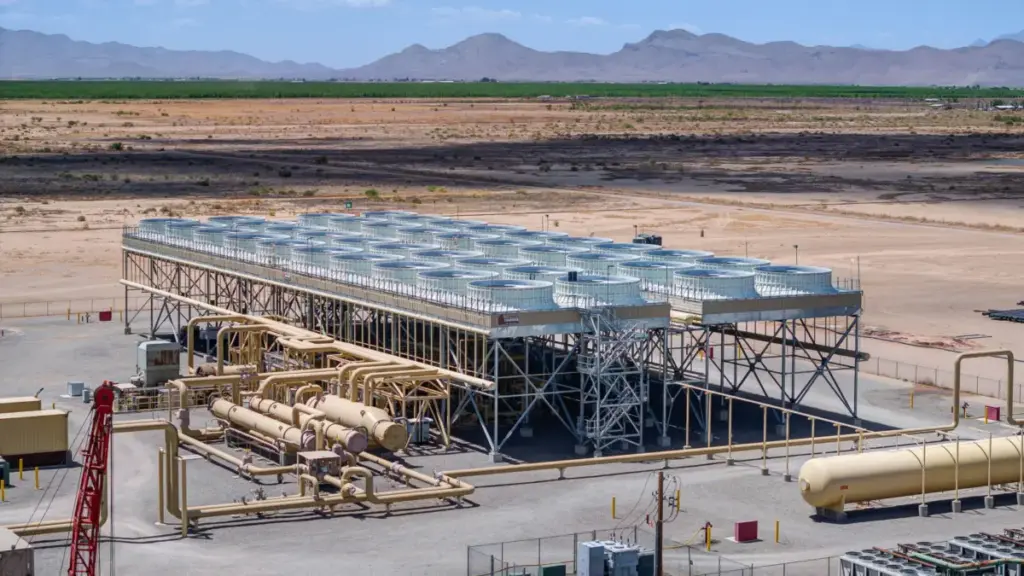
Enter Zanskar, an agile energy startup that is rewriting the rules of subterranean resource extraction. In June 2024, the company acquired the Lightning Dock geothermal power plant in New Mexico—a facility that was failing so rapidly it was on the verge of permanent closure. The underground reservoir feeding the plant was experiencing an unprecedented drop in temperature, rendering the facility economically nonviable. Traditional operators would have written off the asset as a stranded investment.
Instead, utilizing cutting-edge machine learning, advanced subsurface modeling, and modern deep-drilling techniques, Zanskar identified a completely overlooked zone beneath the existing footprint. By drilling down 8,000 feet—far deeper than the site’s original production wells—the company pulled off a remarkable turnaround. Today, the Lightning Dock facility is operating at full capacity, generating more than twice the electricity of its legacy setup, and proving that conventional hydrothermal resources harbor vast, untapped potential.
This deep dive examines how Zanskar rescued the New Mexico plant, the technological breakthroughs that made it possible, and what this success signifies for the future of clean baseload energy across the United States.
Detailed Chronology: The Rise, Fall, and Resurrection of Lightning Dock
The Genesis and Early Promise
Originally brought online in 2013, the Lightning Dock geothermal site in New Mexico was designed to tap into the region’s natural subterranean heat to supply clean electricity to the local grid. In theory, conventional geothermal plants operate through a straightforward hydrothermal cycle: naturally occurring water flows through fractured, superheated rock formations deep underground, absorbing thermal energy. This heated water is then pumped to the surface, where its thermal energy is converted into electricity via a power plant before being reinjected into the reservoir to maintain pressure.
For a time, Lightning Dock functioned as anticipated. However, like many conventional geothermal assets, it was subject to the gradual cooling of its production wells over time. Industry norms suggest a typical temperature decline of 1 to 2 degrees Fahrenheit per year as cold groundwater mixes into the system or heat is extracted faster than the earth can replenish it.
The Crisis: Accelerated Cooling
What happened at Lightning Dock in the years leading up to 2024, however, went far beyond normal degradation. The facility experienced an alarming temperature collapse: a drop of 50 degrees Fahrenheit over a mere five-year span, translating to a devastating rate of 10 degrees Fahrenheit per year.
By the time Zanskar stepped in to purchase the facility in mid-2024, the water feeding the power plant had plummeted to a tepid 250 degrees Fahrenheit. The plant itself was engineered to operate efficiently at a minimum temperature threshold of 310 degrees Fahrenheit. Without a radical intervention, the economics of the plant collapsed. Power generation fell off a cliff, maintenance costs mounted, and the facility faced imminent decommissioning.
The Intervention: Modern Modeling Meets Deep Drilling
Rather than viewing the plant as a lost cause, Zanskar’s technical team saw an analytical puzzle. Deploying advanced subsurface mapping and predictive modeling techniques, the company’s engineers re-evaluated the geological architecture of the Lightning Dock reservoir.
The investigation revealed a surprising oversight by previous operators: the legacy production wells were exceptionally shallow—peaking at just 2,500 feet—and were tapping merely the uppermost fringe of the underground reservoir. They were simply drinking from the shallowest, coolest puddle of a much larger, deeper heating system.
Armed with this data, Zanskar’s computational models pointed to a bold hypothesis: if the company drilled a significantly deeper well in a strategically mapped location, it could intersect the high-temperature core of the reservoir, bypassing the cooled upper strata altogether.
In late 2024, Zanskar mobilized drilling rigs to sink a new production well to a depth of 8,000 feet. The well successfully intercepted the target zone and was brought online in May 2025. The results were immediate and transformative. After a full year of continuous operation, the new well has maintained a robust flow rate exceeding 4,000 gallons per minute, injecting high-temperature water back into the plant and reversing years of decline.
Supporting Context & Metrics: Challenging Conventional Wisdom
The success of the Lightning Dock remediation project challenges deeply ingrained assumptions within the geothermal energy sector. To fully appreciate the magnitude of Zanskar’s achievement, it is necessary to examine the physical constraints and performance metrics governing deep-earth engineering.
Overcoming the Depth-Permeability Trade-Off
In the conventional wisdom of geothermal and oil-and-gas exploration, there exists an inverse relationship between depth and permeability. As drillers go deeper beneath the Earth’s surface, temperatures invariably rise—a desirable trait for energy generation. However, the immense lithostatic pressure at those depths typically compresses rock fractures, packing them tightly together.
This compaction poses a severe challenge for hydrothermal energy: even if the water down deep is blistering hot, tight rock formations prevent it from flowing freely. Without adequate fluid flow, a power plant cannot harvest enough thermal energy to generate commercial electricity.
Yet, when Zanskar drilled down to 8,000 feet at Lightning Dock, they discovered something that upended textbook expectations: fluid flow actually increased in the newly targeted zone. This unexpected geological behavior proved that high temperatures and high permeability could coexist in this formation.
Performance Metrics and Grid Impact
The quantitative results speak for themselves:
- Temperature Recovery: Water entering the plant has returned to operational thresholds well above the 310°F minimum required for efficiency.
- Flow Rate: The new 8,000-foot well maintains a steady output of over 4,000 gallons per minute.
- Generation Output: Over its first full year of revived operation, Lightning Dock generated more than twice the electricity it would have produced using its legacy shallow wells.
- Capacity and Scale: While modest in scale—operating at a capacity of 15 megawatts—the facility reliably feeds the local electrical grid, providing enough emissions-free baseload power to energize approximately 11,000 American homes.
Official Statements and Industry Perspectives
The turnaround at Lightning Dock has sent ripples through the clean energy sector, prompting industry leaders to reconsider the untapped potential of legacy assets across the United States.
Joel Edwards, co-founder and Chief Technology Officer (CTO) of Zanskar, emphasizes that patience and long-term data collection are essential when validating subsurface innovations.
"Ultimately, you need to run these things for long time frames to get confidence in their performance over long time frames," Edwards notes, reflecting on the first full year of successful operation. "The plant has completely turned around. It looks really exciting."
Edwards also points to parallel trajectories in the fossil fuel industry, noting how oil and gas developers progressively pushed operations deeper over the decades. While historical oil and gas extraction started close to the surface, modern wells routinely stretch 20,000 feet or more into the earth.
"I think that arc is going to play out in geothermal," Edwards predicts. While standard geothermal well fields have historically lingered between 3,000 and 5,000 feet deep, venturing deeper into the earth’s crust is poised to become standard practice for the industry.
Ben Brenner, Director of Federal Affairs at Zanskar, highlights the macro-level implications of the Lightning Dock discovery for national energy infrastructure.
"That fundamentally changes how you think about not just Lightning Dock, but all hydrothermal assets in America and what the potential can be for all of them," Brenner asserts.
While much of the contemporary investment and venture capital in the geothermal sector has flowed toward Enhanced Geothermal Systems (EGS)—such as the hydraulic fracturing techniques pioneered by companies like Fervo Energy to artificially create permeability in dry rock—Zanskar’s success proves that traditional hydrothermal resources still offer immense, unexploited opportunities.
"There’s still plenty of ‘low-hanging fruit’ in the geothermal world," Edwards observes. Many existing conventional resources are not dead; they simply require a technological second look.
Future Outlook: The Next Chapter for Geothermal Energy
The resurrection of the Lightning Dock power plant marks more than just a localized corporate victory; it serves as a proof-of-concept for the modernization of America’s geothermal fleet. As decarbonization mandates tighten and the demand for firm, non-weather-dependent clean energy soars, the ability to breathe new life into failing or underperforming assets offers a capital-efficient pathway to grid resilience.
Expansion Plans at Lightning Dock
Zanskar is far from finished with its New Mexico asset. According to company leadership, further development phases are already in the pipeline. Over the next few years, Zanskar plans to execute additional drilling campaigns and implement targeted upgrades to the surface power plant equipment. These enhancements are projected to squeeze even higher electrical output from the reservoir, maximizing the resource’s efficiency.
Implications for National Energy Policy
For policymakers and grid operators, the Lightning Dock turnaround underscores the value of supporting technology-driven mineral and subsurface exploration. Traditional geothermal energy has long suffered from high upfront exploration costs and the risk of dry wells. By applying artificial intelligence, machine learning, and advanced geophysical modeling to map underground reservoirs with unprecedented precision, companies like Zanskar are de-risking geothermal development.
If similar methodologies can be applied to aging or abandoned geothermal sites across the Western United States and beyond, the industry could experience a renaissance without requiring the massive land footprints associated with new greenfield developments.
Ultimately, the story of Lightning Dock sends a clear message to the energy sector: the answers to our clean energy future are quite literally beneath our feet. By combining modern computational power with a willingness to drill past conventional depth limits, we can unlock hidden reservoirs of heat and secure a truly resilient, 24/7 zero-carbon electrical grid.